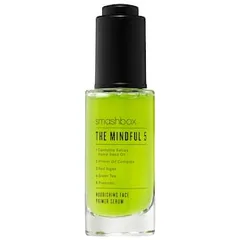
Works for:
based on ingredients and %- Moisturizing
Can it cause trouble?
- Irritation risk: medium
- Comedogenic risk ingredients: 4
Key actives
Works for
Moisturizing
What does the product description say?
Irritation will be calmed for longer-lasting comfort and hydration will be locked in for a smoother finish with fewer dehydrated areas.
Source: Lookfantastic
This product can help improve hydration of the skin with the two types of ingredients.
The first type is called “humectants”:
these ingredients help attract water.
When humectants are on the surface of the skin, they “pull in” the moisture from the outside environment, or from
within deeper layers of the skin. The following ingredients in this product do the job:
algae extract, glycerin.
This product also contains ingredients called “occlusives”. They help reduce the speed with which our skin loses moisture to the outside environment. These ingredients also help soften the upper layer of the skin, so it feels less tight and nicer to the touch. The following ingredients in this product do the job: helianthus annuus seed oil, algae extract.
Naturally present in skin and helps to attract water to its upper layer
A plant oil that due to its high linoleic acid content can help strengthen skin's barrier function and soften its upper layer
One of the best moisturizing ingredients. Naturally present in skin. It attracts water to the upper layer of the skin working as a humectant
Helps attract water to the upper layer of the skin and provide a longer-lasting hydration. Can create a thicker product consistency
A great emollient due to its high linoleic acid content. One of the most effective plant oils in helping skin hydration and repairing skin barrier function
A fermentation product created by bacteria Lactobacillus. The fermented product has anti-bacterial properties and might be helpful in calming down inflammation, but studies are lacking. Helps attract water to the upper layer of the skin. Can be used as a preservative
One of the best moisturizing ingredients. Attracts water into the upper layer of the skin
Helps attract water to the upper layer of the skin. Is often used to adjust the pH level of the product
Plant extract that helps the skin to attract water and make it more smooth for touch. Also shows promise of anti-aging properties, but research is not extensive yet
Used to create a nice product texture and help delivery of other ingredients. Might be somewhat helpful in attracting water to the upper layer of the skin
A type of silicone that helps soften the upper layer of the skin and create a nice product texture
Helps calm down inflammation in skin and can help reduce itching. Helps to repair the skin barrier and keep skin hydrated
An emollient that helps soften the skin
Softens the upper layer of skin and helps restore the healthy skin barrier. Has shown to help calm down inflammation in skin. It is a stable oil, meaning that it retains its properties even when exposed to air.
A good mix of fatty acids that forms a protective layer on the skin. Improves the shelf life of products. Derived from coconut and glycerin
Seaweed extract that helps the skin to attract water and make it more smooth for touch. Also shows promise of anti-aging properties, but good research is lacking at the moment
A plant extract containing sugars that might help attract water to the upper layer of the skin. Is claimed by the manufacturer to help reduce pore size but evidence is lacking
Can have some moisturizing properties due to its sugar content
Might be somewhat helpful in reducing hyperpigmentation and neutralizing free radicals but its typical concentration in a product is too low for having an effect
Can contain potent anti-oxidant compounds (abbreviated ECG, GCG, EGC, and EGCG) that might help protect the skin from free radicals. Can help calm down inflammation and has some anti-bacterial properties. Unfortunately, these antioxidants are unstable and lose their effectiveness very quickly in products. The concentration of the antioxidant compounds in the extract also tends to be low to be effective in topical formulation
How honest is this product?
| Promise | Can it deliver? |
|---|---|
| Moisturizing |
Total Promises Fulfilled score: 75/100.
We receive a small commission for purchases made through these links at no cost for you. Thank you for your support! Learn more
Affiliate link · supports WIMJ at no cost to you
Potential irritants
Comedogenic ingredients
User reviews (0)
Averages from community submissions.
No reviews yet for this product.
Be the first to share your experience!
Tried this product?
Help capture what the ingredient list can't—texture, finish, pilling, scent, and more. Answer what you can, skip the rest.
Takes ~30 seconds.
Reviews are shown in aggregate. No personal details.
Key Actives
Can contain potent anti-oxidant compounds (abbreviated ECG, GCG, EGC, and EGCG) that might help protect the skin from free radicals. Can help calm down inflammation and has some anti-bacterial properties. Unfortunately, these antioxidants are unstable and lose their effectiveness very quickly in products. The concentration of the antioxidant compounds in the extract also tends to be low to be effective in topical formulation
Helps calm down inflammation in skin and can help reduce itching. Helps to repair the skin barrier and keep skin hydrated
A fermentation product created by bacteria Lactobacillus. The fermented product has anti-bacterial properties and might be helpful in calming down inflammation, but studies are lacking. Helps attract water to the upper layer of the skin. Can be used as a preservative
Plant extract that helps the skin to attract water and make it more smooth for touch. Also shows promise of anti-aging properties, but research is not extensive yet
An emollient that helps soften the skin
One of the best moisturizing ingredients. Naturally present in skin. It attracts water to the upper layer of the skin working as a humectant
A plant oil that due to its high linoleic acid content can help strengthen skin's barrier function and soften its upper layer
One of the best moisturizing ingredients. Attracts water into the upper layer of the skin
A great emollient due to its high linoleic acid content. One of the most effective plant oils in helping skin hydration and repairing skin barrier function
Softens the upper layer of skin and helps restore the healthy skin barrier. Has shown to help calm down inflammation in skin. It is a stable oil, meaning that it retains its properties even when exposed to air.
Helps attract water to the upper layer of the skin. Is often used to adjust the pH level of the product
A good mix of fatty acids that forms a protective layer on the skin. Improves the shelf life of products. Derived from coconut and glycerin
Naturally present in skin and helps to attract water to its upper layer
Helps attract water to the upper layer of the skin and provide a longer-lasting hydration. Can create a thicker product consistency
Potential irritants
A plant oil that due to its high linoleic acid content can help strengthen skin's barrier function and soften its upper layer
A plant extract that can contain an antioxidant compound
Softens the upper layer of skin and helps restore the healthy skin barrier. Has shown to help calm down inflammation in skin. It is a stable oil, meaning that it retains its properties even when exposed to air.
A plant extract containing sugars that might help attract water to the upper layer of the skin. Is claimed by the manufacturer to help reduce pore size but evidence is lacking
Can have some moisturizing properties due to its sugar content
Used to thicken the product's consistency
Might be somewhat helpful in reducing hyperpigmentation and neutralizing free radicals but its typical concentration in a product is too low for having an effect
Helps attract water to the upper layer of the skin. Is often used to adjust the pH level of the product
A good mix of fatty acids that forms a protective layer on the skin. Improves the shelf life of products. Derived from coconut and glycerin
Helps attract water to the upper layer of the skin and provide a longer-lasting hydration. Can create a thicker product consistency
Comedogenic ingredients
Plant extract that helps the skin to attract water and make it more smooth for touch. Also shows promise of anti-aging properties, but research is not extensive yet
Seaweed extract that helps the skin to attract water and make it more smooth for touch. Also shows promise of anti-aging properties, but good research is lacking at the moment
Used to thicken the product's consistency
All ingredients
Used to create a nice product texture and help delivery of other ingredients. Might be somewhat helpful in attracting water to the upper layer of the skin
Used to dissolve other ingredients in a product and can enhance their ability to penetrate the skin
One of the best moisturizing ingredients. Naturally present in skin. It attracts water to the upper layer of the skin working as a humectant
A type of silicone that helps soften the upper layer of the skin and create a nice product texture
A plant oil that due to its high linoleic acid content can help strengthen skin's barrier function and soften its upper layer
One of the best moisturizing ingredients. Attracts water into the upper layer of the skin
A plant extract that can contain an antioxidant compound
Plant extract that helps the skin to attract water and make it more smooth for touch. Also shows promise of anti-aging properties, but research is not extensive yet
A fermentation product created by bacteria Lactobacillus. The fermented product has anti-bacterial properties and might be helpful in calming down inflammation, but studies are lacking. Helps attract water to the upper layer of the skin. Can be used as a preservative
A great emollient due to its high linoleic acid content. One of the most effective plant oils in helping skin hydration and repairing skin barrier function
Softens the upper layer of skin and helps restore the healthy skin barrier. Has shown to help calm down inflammation in skin. It is a stable oil, meaning that it retains its properties even when exposed to air.
A plant extract containing sugars that might help attract water to the upper layer of the skin. Is claimed by the manufacturer to help reduce pore size but evidence is lacking
Can have some moisturizing properties due to its sugar content
Seaweed extract that helps the skin to attract water and make it more smooth for touch. Also shows promise of anti-aging properties, but good research is lacking at the moment
Used to thicken the product's consistency
Might be somewhat helpful in reducing hyperpigmentation and neutralizing free radicals but its typical concentration in a product is too low for having an effect
Can contain potent anti-oxidant compounds (abbreviated ECG, GCG, EGC, and EGCG) that might help protect the skin from free radicals. Can help calm down inflammation and has some anti-bacterial properties. Unfortunately, these antioxidants are unstable and lose their effectiveness very quickly in products. The concentration of the antioxidant compounds in the extract also tends to be low to be effective in topical formulation
Helps calm down inflammation in skin and can help reduce itching. Helps to repair the skin barrier and keep skin hydrated
Helps attract water to the upper layer of the skin. Is often used to adjust the pH level of the product
A good mix of fatty acids that forms a protective layer on the skin. Improves the shelf life of products. Derived from coconut and glycerin
Naturally present in skin and helps to attract water to its upper layer
Helps attract water to the upper layer of the skin and provide a longer-lasting hydration. Can create a thicker product consistency
A preservative. It helps prevent bacterial growth in cosmetic products
Ingredient list view
Water, Peg-40 hydrogenated castor oil, Bis-peg-8 dimethicone, Butylene glycol, Dimethyl isosorbide, Glycerin, Bis-peg-18 methyl ether dimethyl silane, Cannabis sativa seed oil, Sodium hyaluronate, Citrullus lanatus fruit extract, Algae extract, Lactobacillus ferment, Prunus armeniaca kernel oil, Natto gum, Helianthus annuus seed oil, Simmondsia chinensis seed oil, Lens esculenta fruit extract, Pyrus malus fruit extract, Laminaria digitata extract, Ormenis multicaulis oil, Zea mays starch, Cucumis sativus fruit extract, Camellia sinensis leaf extract, Allantoin, Ethylhexylglycerin, Sodium hydroxide, Sodium lactate, Caprylic/capric triglyceride, Sodium pca, Glyceryl acrylate/acrylic acid copolymer, Polyacrylate crosspolymer-11, Phenoxyethanol, Potassium sorbate, Sodium benzoate, Ci 42090, Ci 16035, Ci 19140
- Amended Safety Assessment of PEGylated Oils as Used in Cosmetics
- Activity enhancement of ferulic acid with dimethyl isosorbride in cosmetic compositions
- Glycerol and the skin: holistic approach to its origin and functions
- Hemp (Cannabis sativa L.) seed oil: Analytical and phytochemical characterization of unsaponifiable fraction
- Hemp (Cannabis sativa L.) as a Resource for Green Cosmetics
- Hyaluronic acid: A key molecule in skin aging
- Hyaluronan (Hyaluronic Acid): a natural moisturizer for skin care
- Analyzing Lycopene Content in Fruits
- The effect of probiotics on immune regulation, acne, and photoaging
- Comparison of clinical and histological effects between lactobacillus-fermented Chamaecyparis obtusa and tea tree oil for the treatment of acne: an eight-week double-blind randomized controlled split-face study
- Use of Probiotics for Dermal Applications
- Effect of Olive and Sunflower Seed Oil on the Adult Skin Barrier: Implications for Neonatal Skin Care
- Topically Applied Sunflower Seed Oil Prevents Invasive Bacterial Infections in Preterm Infants in Egypt
- Effect of topically applied lipids on surfactant-irritated skin
- Impact of topical oils on the skin barrier: possible implications for neonatal health in developing countries
- Profile of wound healing process induced by allantoin
- Analysis of Dyes in Cosmetics: Challenges and Recent Developments