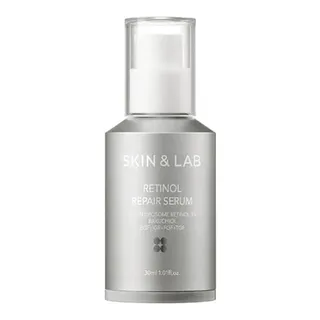
Works for
Anti-agingCamellia sinensis leaf extract, Tocopherol + 1 moreNot delivered
“Infused with Vegan Liposome Retinol, Bakuchiol, and Peptide to provide effective wrinkle care with less irritation.”
This product does not contain ingredients that are able to reduce fine lines and wrinkles or help with skin elasticity, but it can improve the look of the skin temporarily through moisturization. Well-moisturized skin might also be able to repair the sun damage better.
Anti-blemishCentella asiatica extract, Camellia sinensis leaf extract + 1 moreNot delivered
“This lightweight serum targets fine lines and wrinkles and helps firm skin without aggravating breakouts.”
Effective ingredients missing or their concentration is too low.
MoisturizingSide benefit · Ceramide np, Cyclopentasiloxane + 14 moreWorks well
This product can help improve hydration of the skin with the two types of ingredients.
The first type is called “humectants”:
these ingredients help attract water.
When humectants are on the surface of the skin, they “pull in” the moisture from the outside environment, or from
within deeper layers of the skin. The following ingredients in this product do the job:
glycerin, sodium hyaluronate.
This product also contains ingredients called “occlusives”. They help reduce the speed with which our skin loses moisture to the outside environment. These ingredients also help soften the upper layer of the skin, so it feels less tight and nicer to the touch. The following ingredients in this product do the job: phenyl trimethicone, cyclopentasiloxane.
The following ingredients in this product are especially good for supporting the skin barrier and helping with the hydration level: ceramide np
Can it cause trouble?
Irritancy1 strong irritant: Zingiber officinale root extractMedium risk
ComedogenicClean of flagged comedogenic ingredientsNone flagged

User reviews
Be the first — your take helps the next person decide.
Ingredients
Filter by role to see what each ingredient is doing.
Water~45–55%
Zinc oxide~11–14%
- Irritation risk
- Low
A broad spectrum sunblock (protects from both UVA and UVB rays). Is suitable for most sensitive skins. In small concentrations, can be used as a colorant
More about Zinc oxideCyclopentasiloxane~5.8–7.1%
- Irritation risk
- Low
A silicone that helps improve the product texture and spreadability. Can absorb oil creating a short-term mattifying effect on the skin
More about CyclopentasiloxaneHomosalate~4.1–5%
- Irritation risk
- Medium
A weak sunscreen that offers some protection against the sun rays that cause sunburn (UVB), but does not offer meaningful protection against protect against the most aging sun rays (UVA). It loses its effectiveness quickly when exposed to sunlight. It is an organic, or so called "chemical" sunscreen. When used in low concentrations, helps to stabilize the product formulation
More about HomosalateButyloctyl salicylate~2.9–3.6%
- Irritation risk
- Medium
A synthetic ester of salicylic acid that is used to help disperse pigments and boost effectiveness of sunscreen ingredients. It is able to absorb UV light (working as an organic, or chemical filter), but is not approved as a sunscreen ingredient on its own
More about Butyloctyl salicylatePropanediol~2.5–3.1%
- Irritation risk
- Low
Acts as a solvent for other ingredients. Speeds up the absorption of other ingredients into the skin
More about PropanediolEthylhexyl salicylate~2.7–3.3%
- Irritation risk
- Low
Octisalate. A UV filter. It offers some protection against the sun rays that cause sunburn (UVB), but does not protect against the most aging sun rays (UVA). It loses its effectiveness quickly when exposed to sunlight. It is an organic, or so called "chemical" sunscreen
More about Ethylhexyl salicylatePropylheptyl caprylate~2–2.4%
- Irritation risk
- Low
Helps soften the upper layer of the skin
More about Propylheptyl caprylatePolyglyceryl-4 diisostearate/polyhydroxystearate/sebacate~1.4–1.7%
- Irritation risk
- Medium
Helps water and oil mix together
More about Polyglyceryl-4 diisostearate/polyhydroxystearate/sebacateTitanium dioxide~1.5–1.9%
- Irritation risk
- Low
Works as a UV filter when used in high concentrations. It is photostable and is effective mostly against the UVB light, with some protection in the UVA range. In small concentrations, used for its ability to improve the color of cosmetic products. Is usually well tolerated by the skin
More about Titanium dioxideDisteardimonium hectorite~0.8–1.2%
- Irritation risk
- Low
A type of clay that is used to thicken the product consistency
More about Disteardimonium hectoritePolyglyceryl-3 polydimethylsiloxyethyl dimethicone~0.7–1.05%
- Irritation risk
- Low
Magnesium sulfate~0.7–1.05%
Phenyl trimethicone~0.65–0.95%
- Irritation risk
- Low
A type of silicone that can decrease loss of moisture from the skin surface. It helps create a nice product texture
More about Phenyl trimethicone1,2-hexanediol~0.55–0.8%
Polymethylsilsesquioxane~0.6–0.9%
- Irritation risk
- Low
A silicone that improves product texture and helps dissolve other ingredients. Can form a non-greasy film on the skin to prevent moisture loss
More about PolymethylsilsesquioxaneAcrylates/dimethicone copolymer~0.55–0.8%
- Irritation risk
- Medium
Used to stabilize product formulation, help create an even product layer over skin (for example, in sunscreen), evenly disperse pigements and create a nice product consistency
More about Acrylates/dimethicone copolymerTriethoxycaprylylsilane~0.5–0.8%
- Irritation risk
- Low
A type of silicone that helps oil and water mix well together. Helps to disperse other ingredients, e.g. pigments, evenly in a formulation
More about TriethoxycaprylylsilaneStearic acid~0.6–0.9%
- Irritation risk
- Low
Helps oil and water mix together and works as an emollient
More about Stearic acidAluminum hydroxide~0.5–0.7%
- Irritation risk
- Low
Is used to add opaque (non-transparent) appearance to formulations. Can be used to coat other ingredients for even dispersion. This is a different ingredient compared to the ones used in antipersperants (aluminium chloride and aluminium chlorohydrate)
More about Aluminum hydroxideGlyceryl caprylate~0.5–0.7%
- Irritation risk
- Low
An emollient that can also help water and oil mix together, as well as prevent bacteria growth in products
More about Glyceryl caprylateCaprylyl glycol~0.45–0.65%
- Irritation risk
- Medium
Helps preserve products and creates a nice product texture
More about Caprylyl glycolEthylhexylglycerin~0.35–0.65%
Tocopherol~0.4–0.6%
- Irritation risk
- Low
Pure form of vitamin E. Can help moisturise and protect the skin from free radicals. Often used to help stabilise other ingredients or the formula itself
More about TocopherolAllantoin~0.3–0.55%
- Irritation risk
- Low
Helps calm down inflammation in skin and can help reduce itching. Helps to repair the skin barrier and keep skin hydrated
More about AllantoinCeramide np~0.4–0.65%
- Irritation risk
- Low
A type of lipid similar to ceramides naturally present in skin. Helps to soften the upper layer of the skin and supports the skin barrier function to keep it hydrated. Can help to prevent inflammation in skin
More about Ceramide npSodium hyaluronate~0.35–0.65%
- Irritation risk
- Low
One of the best moisturizing ingredients. Attracts water into the upper layer of the skin
More about Sodium hyaluronateButylene glycol~0.35–0.6%
- Irritation risk
- Low
Used to create a nice product texture and help delivery of other ingredients. Might be somewhat helpful in attracting water to the upper layer of the skin
More about Butylene glycolDipropylene glycol~0.3–0.55%
- Irritation risk
- Low
Helps to dissolve other ingredients in a formulation. Slows down the rate of product drying
More about Dipropylene glycolGlycerin~0.4–0.65%
- Irritation risk
- Low
One of the best moisturizing ingredients. Naturally present in skin. It attracts water to the upper layer of the skin working as a humectant
More about GlycerinCamellia sinensis leaf extract~0.4–0.6%
- Irritation risk
- Low
Can contain potent anti-oxidant compounds (abbreviated ECG, GCG, EGC, and EGCG) that might help protect the skin from free radicals. Can help calm down inflammation and has some anti-bacterial properties. Unfortunately, these antioxidants are unstable and lose their effectiveness very quickly in products. The concentration of the antioxidant compounds in the extract also tends to be low to be effective in topical formulation
More about Camellia sinensis leaf extractArtemisia princeps leaf extract~0.3–0.6%
- Irritation risk
- Low
Centella asiatica extract~0.4–0.6%
- Irritation risk
- Medium
A plant extract that has been shown to be able to reduce inflammation in skin, support restoration of skin barrier function, as well as support collagen production. Contains active compounds called centelloids: asiaticoside, madecasosside, asiatic acid and madecassic acid. Might be helpful in preventing stretch marks. It can be itself be irritating though.
More about Centella asiatica extractHouttuynia cordata extract~0.3–0.55%
- Irritation risk
- Low
Glycyrrhiza glabra root extract~0.25–0.45%
- Irritation risk
- Medium
A plant extract that can help lighten the skin and calm down inflammation. Might be helpful in neutralizing free radicals
More about Glycyrrhiza glabra root extractAllium victorialis extract~0.25–0.5%
- Irritation risk
- Low
Lonicera japonica flower extract~0.25–0.45%
- Irritation risk
- High
A plant extract that might help neutralize free radicals in skin. Can contain volalite oils and be irritating
More about Lonicera japonica flower extractSalicornia herbacea extract~0.25–0.45%
- Irritation risk
- Low
Xanthium strumarium fruit extract~0.2–0.4%
- Irritation risk
- Low
Sophora angustifolia root extract~0.2–0.35%
- Irritation risk
- High
Zingiber officinale root extract~0.15–0.25%
- Irritation risk
- High
A plant extract that can contain an irritating essential oil. Might have some anti-oxidant effect, but evidence is lacking
More about Zingiber officinale root extractPoncirus trifoliata fruit extract~0.15–0.25%
- Irritation risk
- Low
Ulmus davidiana root extract~0.1–0.2%
- Irritation risk
- High
A plant root extract that helps attract water to the upper layer of the skin. It might have an anti-inflammatory effect and could help neturalize free radicals in skin
More about Ulmus davidiana root extractIngredient list view
Water, Zinc oxide, Cyclopentasiloxane, Homosalate, Butyloctyl salicylate, Propanediol, Ethylhexyl salicylate, Propylheptyl caprylate, Polyglyceryl-4 diisostearate/polyhydroxystearate/sebacate, Titanium dioxide, Disteardimonium hectorite, Polyglyceryl-3 polydimethylsiloxyethyl dimethicone, Magnesium sulfate, Phenyl trimethicone, 1,2-hexanediol, Polymethylsilsesquioxane, Acrylates/dimethicone copolymer, Triethoxycaprylylsilane, Stearic acid, Aluminum hydroxide, Glyceryl caprylate, Caprylyl glycol, Ethylhexylglycerin, Tocopherol, Allantoin, Ceramide np, Sodium hyaluronate, Butylene glycol, Dipropylene glycol, Glycerin, Camellia sinensis leaf extract, Artemisia princeps leaf extract, Centella asiatica extract, Houttuynia cordata extract, Glycyrrhiza glabra root extract, Allium victorialis extract, Lonicera japonica flower extract, Salicornia herbacea extract, Xanthium strumarium fruit extract, Sophora angustifolia root extract, Zingiber officinale root extract, Poncirus trifoliata fruit extract, Ulmus davidiana root extract
Compare prices
Retailers ranked by price — lowest first.

Worth comparing, line by line.
Match % combines shared ingredients, the first five ingredients, shared actives and hero ingredients, irritancy (lower counts in the alternative's favour), texture and body area. Only products in the same routine step are compared.
| SkinLabRetinol Repair SerumYOUR PRODUCT | La ClinicaHydrating & Healing Serum | FationNosca9 Trouble serum | Simply PureSuperdrug Simply Pure Hydrating Serum | |
|---|---|---|---|---|
| Match | — | 55% | 54% | 53% |
| Price | — | $37.31 | $19.99 | $4.66 |
| Shared key ingredients | — | 5 of 14 | 5 of 14 | 4 of 14 |
| Key difference | — | Niacinamide | Panthenol | Lactic Acid |
| Irritancy | Medium | Low | Low | Low |
| Drying alcohol | — | — | — | — |
| View product | Shop | Shop | Shop |


More alternatives: Dr. Barbara Sturm The Good C Vitamin C SerumBYOMA Brightening Serum
Product summary
"SkinLab - Buy SkinLab Retinol Repair Serum in Australia - Korean Skincare Online" is effective for: Moisturizing
Ingredient callouts
- Ceramides (ceramide np 0.40% - 0.65%). Ceramides are a type of lipids that our skin produces itself. They are a building block of the skin's barrier. Ceramides used in skincare are synthetic or extracted from plants. They work well for softening the skin surface and "patch holes" in the skin's barrier.
- Humectants (glycerin 0.40% - 0.65% and sodium hyaluronate 0.35% - 0.65%). These ingredients help attract water to the upper layer of the skin and improve the skin hydration.
Price
The product retails for 23.95A$ in Australia.
For a detailed price comparison: click here.
Sources cited in this review
Every concentration estimate and effectiveness label is anchored to one of these 32 studies and safety reviews.
- 1A review of inorganic UV filters zinc oxide and titanium dioxideonlinelibrary.wiley.com
- 2
- 3
- 4
- 5
- 6

Affiliate links · As an Amazon Associate, WIMJ earns from qualifying purchases.