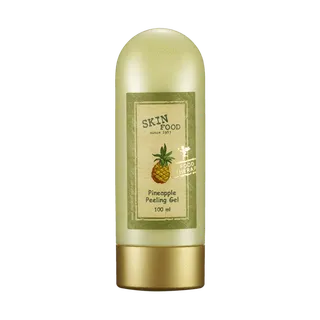
Skinfood Pineapple Peeling Gel

Skinfood Pineapple Peeling Gel

Efficacy75/100IrritancyMedium

Works for

Exfoliation
Tartaric acid, Glycolic acid + 2 more
Works well
What the product description says
“Pineapple Peeling Gel”
Source: Yesstyle

This product can help exfoliate the skin. In other words, it helps break down the bonds between dead cells on the surface of the skin and speed up the skin turnover. Skin often appears softer and brighter after exfoliation, but overdoing it can result in disrupted skin barrier. The following ingredient is doing the exfoliating job in this product: glycolic acid.

Tartaric acidKey activeEffect: MediumAn AHA (alpha-hydroxy acid). It oxidizes quickly which makes it less effective in skincare formulations. It can support skin's barrier and moisture levels~0.1–0.35%
Glycolic acidKey activeEffect: HighAn alpha-hydroxy acid (AHA) that helps to remove the dead skin cells on the surface of the skin reveling a more even, smoother complexation. It is also able to stimulate collagen production with long-term use. Could help to reduce pore congestion. It can be irritating to the skin. Apply sunscreen daily if using products with glycolic acid~0.05–0.2%
AllantoinEffect: LowHelps calm down inflammation in skin and can help reduce itching. Helps to repair the skin barrier and keep skin hydrated~0.45–1.1%
Lactic acidUnder-dosedAn exfoliating and moisturizing alpha-hydroxy acid (AHA). Typically causes less irritation than other AHAs, for example, glycolic acid. At high concentrations (about 15%), lactic acid can help reduce lines and wrinkles. Recent studies show that lactic acid can support the "good" bacteria living on skin's surface (healthy skin microbiome)~0.15–0.65%
Anti-blemish
Glycolic acid, Allantoin
Not delivered
What the product description says
“Unclogs pores and eliminates excess sebum for smoother skin.”
Source: Lila Beauty

This product contains ingredients (glycolic acid) that could help reduce blemishes and clogged pores in theory, but there is not enough evidence that they actually work.

Glycolic acidEffect: MediumAn alpha-hydroxy acid (AHA) that helps to remove the dead skin cells on the surface of the skin reveling a more even, smoother complexation. It is also able to stimulate collagen production with long-term use. Could help to reduce pore congestion. It can be irritating to the skin. Apply sunscreen daily if using products with glycolic acid~0.05–0.2%
AllantoinEffect: LowHelps calm down inflammation in skin and can help reduce itching. Helps to repair the skin barrier and keep skin hydrated~0.45–1.1%
Anti-aging
Side benefit · Glycolic acid, Lactic acid
Works well

This product can help reduce and prevent fine lines and wrinkles, improve skin elasticity and firmness because it contains glycolic acid.

Keep in mind that it typically takes at least 6 weeks to notice any results because the changes that are needed to improve fine lines and elasticity happen in the deeper layers of the skin. No topical anti-aging product can “erase” wrinkles or fully reverse signs of aging.

Glycolic acidKey activeEffect: HighAn alpha-hydroxy acid (AHA) that helps to remove the dead skin cells on the surface of the skin reveling a more even, smoother complexation. It is also able to stimulate collagen production with long-term use. Could help to reduce pore congestion. It can be irritating to the skin. Apply sunscreen daily if using products with glycolic acid~0.05–0.2%
Lactic acidUnder-dosedAn exfoliating and moisturizing alpha-hydroxy acid (AHA). Typically causes less irritation than other AHAs, for example, glycolic acid. At high concentrations (about 15%), lactic acid can help reduce lines and wrinkles. Recent studies show that lactic acid can support the "good" bacteria living on skin's surface (healthy skin microbiome)~0.15–0.65%
Moisturizing
Side benefit · Panthenol, Allantoin + 7 more
Works well

This product contains good ingredients to attract water to the upper layer of the skin. These ingredients are called "humectants": allantoin, butylene glycol.

When humectants are on the surface of the skin, they “pull in” the moisture from the outside environment, or from within deeper layers of the skin. If the air is dry, humectants can speed up the moisture loss from the skin. This is why it is a good idea to use another product on top of this one to help "seal in" the moisture (look for ingredients like dimethicone, squalane, oils and butters).

The following ingredients in this product are especially good for supporting the skin barrier and helping with the hydration level: panthenol

PanthenolHero· HumectantEffect: HighHelps attract water to the upper layer of the skin and can help improve skin barrier function~2.1–3.2%
AllantoinKey active· HumectantEffect: HighHelps calm down inflammation in skin and can help reduce itching. Helps to repair the skin barrier and keep skin hydrated~0.45–1.1%
Tartaric acidKey activeEffect: MediumAn AHA (alpha-hydroxy acid). It oxidizes quickly which makes it less effective in skincare formulations. It can support skin's barrier and moisture levels~0.1–0.35%
Butylene glycol· HumectantEffect: LowUsed to create a nice product texture and help delivery of other ingredients. Might be somewhat helpful in attracting water to the upper layer of the skin~3.7–5.5%
Ananas sativus fruit extractEffect: LowA fruit extract that might help to attract water to the upper layer of the skin, but there is no evidence for any other benefits to the skin~0.45–1.05%
Portulaca oleracea extract· HumectantEffect: LowA plant extract that has some anti-oxidant activity, but solid research is lacking. Can help attract water to the upper layer of the skin~0.35–0.75%
Aloe barbadensis leaf extractEffect: Low, below effective doseTraditionally used to treat sunburns, dermatitis and inflammation, but evidence for its effectiveness is lacking. The extract can contain humectants that help attract water into the skin~0.35–0.8%
Pyrus malus fruit extractUnder-dosedCan have some moisturizing properties due to its sugar content~0.35–0.85%
Lactic acidUnder-dosedAn exfoliating and moisturizing alpha-hydroxy acid (AHA). Typically causes less irritation than other AHAs, for example, glycolic acid. At high concentrations (about 15%), lactic acid can help reduce lines and wrinkles. Recent studies show that lactic acid can support the "good" bacteria living on skin's surface (healthy skin microbiome)~0.15–0.65%
Evens skin tone
Side benefit · Glycolic acid, Lactic acid
Works well

This product can help reduce hypepigmentation and even out the skin tone because it contains the following effective ingredients: glycolic acid

Keep in mind that you would need to apply any topical skincare targetted at hypigmentation consistently for a couple of months to get a result. No topical skincare product can help get rid of hyperpigmentation (including post-acne marks and age spots) instantly.

Glycolic acidKey activeEffect: HighAn alpha-hydroxy acid (AHA) that helps to remove the dead skin cells on the surface of the skin reveling a more even, smoother complexation. It is also able to stimulate collagen production with long-term use. Could help to reduce pore congestion. It can be irritating to the skin. Apply sunscreen daily if using products with glycolic acid~0.05–0.2%
Lactic acidUnder-dosedAn exfoliating and moisturizing alpha-hydroxy acid (AHA). Typically causes less irritation than other AHAs, for example, glycolic acid. At high concentrations (about 15%), lactic acid can help reduce lines and wrinkles. Recent studies show that lactic acid can support the "good" bacteria living on skin's surface (healthy skin microbiome)~0.15–0.65%
Anti-oxidation
Side benefit · Tartaric acid, Portulaca oleracea extract + 1 more
May help

This product contains antioxidants (tartaric acid) that might be able to help neutralize free radicals in skin to lessen the damage it gets from the UV light (sun). There is not enough evidence to confirm their effectiveness in skin though.

Tartaric acidKey activeEffect: MediumAn AHA (alpha-hydroxy acid). It oxidizes quickly which makes it less effective in skincare formulations. It can support skin's barrier and moisture levels~0.1–0.35%
Portulaca oleracea extractEffect: LowA plant extract that has some anti-oxidant activity, but solid research is lacking. Can help attract water to the upper layer of the skin~0.35–0.75%
Pyrus malus fruit extractEffect: Low, below effective doseCan have some moisturizing properties due to its sugar content~0.35–0.85%

Can it cause trouble?

Irritancy
2 strong irritants: Alcohol, Parfum
Medium risk
We flagged 15 ingredients with irritancy potential. Severity depends on your sensitivity threshold; the table lists the worst offenders first.
IngredientFunctionIrritationEst. amount
AlcoholCan be drying and contribute to skin irritation. Used in formulars to dissolve other ingredients, create a thinner product consistency or for its antibacterial propertiesHigh~2.8–4.3%est.
Glycolic acidAn alpha-hydroxy acid (AHA) that helps to remove the dead skin cells on the surface of the skin reveling a more even, smoother complexation. It is also able to stimulate collagen production with long-term use. Could help to reduce pore congestion. It can be irritating to the skin. Apply sunscreen daily if using products with glycolic acidHigh~0.05–0.2%est.
Ci 19140A yellow dyeHigh~0.05–0.15%est.
ParfumAn aromatic blend of unspecified and possibly irritating ingredientsHigh~0.01–0.05%est.
Ppg-26-buteth-26Helps oil and water mix togetherMedium~1.8–2.7%est.
Peg-40 hydrogenated castor oilHelps oil and water mix togetherMedium~1.5–2.3%est.
TriethanolamineUsed to adjust pH of the product and can help improve the product's smellMedium~1–1.5%est.
Ananas sativus fruit extractA fruit extract that might help to attract water to the upper layer of the skin, but there is no evidence for any other benefits to the skinMedium~0.45–1.05%est.
Pyrus malus fruit extractCan have some moisturizing properties due to its sugar contentMedium~0.35–0.85%est.
Portulaca oleracea extractA plant extract that has some anti-oxidant activity, but solid research is lacking. Can help attract water to the upper layer of the skinMedium~0.35–0.75%est.
Aloe barbadensis leaf extractTraditionally used to treat sunburns, dermatitis and inflammation, but evidence for its effectiveness is lacking. The extract can contain humectants that help attract water into the skinMedium~0.35–0.8%est.
Lactic acidAn exfoliating and moisturizing alpha-hydroxy acid (AHA). Typically causes less irritation than other AHAs, for example, glycolic acid. At high concentrations (about 15%), lactic acid can help reduce lines and wrinkles. Recent studies show that lactic acid can support the "good" bacteria living on skin's surface (healthy skin microbiome)Medium~0.15–0.65%est.
Citric acidCan work as an exfoliant but is typically used to adjust the product pHMedium~0.15–0.5%est.
Tartaric acidAn AHA (alpha-hydroxy acid). It oxidizes quickly which makes it less effective in skincare formulations. It can support skin's barrier and moisture levelsMedium~0.1–0.35%est.
Disodium edtaStabilizes the product formulationMedium~0.05–0.2%est.
Comedogenic
Clean of flagged comedogenic ingredients
None flagged

User reviews

Would you recommend?
No community reviews yet.

Be the first — your take helps the next person decide.

Ingredients

Filter by role to see what each ingredient is doing.

Water~40–60%
Formula
Irritation risk
Low

Plain old water

More about Water
Cellulose~5.2–7.8%
Formula
Irritation risk
Low
Works for
Mattifying

Can be used to help absorb oil as well as add volume and imporve texture of products.

More about Cellulose
Butylene glycol~3.7–5.5%
Formula
Irritation risk
Low
Works for
Moisturizing

Used to create a nice product texture and help delivery of other ingredients. Might be somewhat helpful in attracting water to the upper layer of the skin

More about Butylene glycol
Alcohol~2.8–4.3%
Irritant · high
Irritation risk
High
Works for
Antibacterial

Can be drying and contribute to skin irritation. Used in formulars to dissolve other ingredients, create a thinner product consistency or for its antibacterial properties

More about Alcohol
Panthenol~2.1–3.2%
Hero · Moisturizing
Irritation risk
Low
Works for
MoisturizingReduces rednessReduces irritation

Helps attract water to the upper layer of the skin and can help improve skin barrier function

More about Panthenol
Ppg-26-buteth-26~1.8–2.7%
Irritant · medium
Irritation risk
Medium

Helps oil and water mix together

More about Ppg-26-buteth-26
Peg-40 hydrogenated castor oil~1.5–2.3%
Irritant · medium
Irritation risk
Medium
Works for
Cleansing

Helps oil and water mix together

More about Peg-40 hydrogenated castor oil
Carbomer~1.3–1.9%
Formula
Irritation risk
Low
Works for
Cleansing

Helps create a thicker or gel-like product texture. It is not a surfactant but can be used in gentle cleansing formulations

More about Carbomer
Triethanolamine~1–1.5%
Irritant · medium
Irritation risk
Medium
Works for
Cleansing

Used to adjust pH of the product and can help improve the product's smell

More about Triethanolamine
Allantoin~0.45–1.1%
Key active
Irritation risk
Low
Works for
MoisturizingAnti-inflammatoryReduces irritationReduces rednessAnti-blemishExfoliation

Helps calm down inflammation in skin and can help reduce itching. Helps to repair the skin barrier and keep skin hydrated

More about Allantoin
Ananas sativus fruit extract~0.45–1.05%
Irritant · medium
Irritation risk
Medium
Works for
Moisturizing

A fruit extract that might help to attract water to the upper layer of the skin, but there is no evidence for any other benefits to the skin

More about Ananas sativus fruit extract
Pyrus malus fruit extract~0.35–0.85%
Under-dosedIrritant · medium
Irritation risk
Medium
Works for
MoisturizingAnti-oxidation

Can have some moisturizing properties due to its sugar content

More about Pyrus malus fruit extract
Portulaca oleracea extract~0.35–0.75%
Irritant · medium
Irritation risk
Medium
Works for
Anti-oxidationMoisturizing

A plant extract that has some anti-oxidant activity, but solid research is lacking. Can help attract water to the upper layer of the skin

More about Portulaca oleracea extract
Aloe barbadensis leaf extract~0.35–0.8%
Irritant · medium
Irritation risk
Medium
Works for
Moisturizing

Traditionally used to treat sunburns, dermatitis and inflammation, but evidence for its effectiveness is lacking. The extract can contain humectants that help attract water into the skin

More about Aloe barbadensis leaf extract
Lactic acid~0.15–0.65%
Under-dosedIrritant · medium
Irritation risk
Medium
Works for
Evens skin toneMoisturizingExfoliationAnti-aging

An exfoliating and moisturizing alpha-hydroxy acid (AHA). Typically causes less irritation than other AHAs, for example, glycolic acid. At high concentrations (about 15%), lactic acid can help reduce lines and wrinkles. Recent studies show that lactic acid can support the "good" bacteria living on skin's surface (healthy skin microbiome)

More about Lactic acid
Citric acid~0.15–0.5%
Irritant · medium
Irritation risk
Medium

Can work as an exfoliant but is typically used to adjust the product pH

More about Citric acid
Malic acid~0.1–0.4%
Formula
Irritation risk
Low

Helps adjust the product pH

More about Malic acid
Tartaric acid~0.1–0.35%
Key activeIrritant · medium
Irritation risk
Medium
Works for
MoisturizingAnti-oxidationExfoliation

An AHA (alpha-hydroxy acid). It oxidizes quickly which makes it less effective in skincare formulations. It can support skin's barrier and moisture levels

More about Tartaric acid
Glycolic acid~0.05–0.2%
Key activeIrritant · high
Irritation risk
High
Works for
Anti-agingEvens skin toneExfoliationAnti-blemish

An alpha-hydroxy acid (AHA) that helps to remove the dead skin cells on the surface of the skin reveling a more even, smoother complexation. It is also able to stimulate collagen production with long-term use. Could help to reduce pore congestion. It can be irritating to the skin. Apply sunscreen daily if using products with glycolic acid

More about Glycolic acid
Disodium edta~0.05–0.2%
Irritant · medium
Irritation risk
Medium

Stabilizes the product formulation

More about Disodium edta
Propylparaben~0.05–0.2%
Formula
Irritation risk
Low

A preservative

More about Propylparaben
Methylparaben~0.05–0.2%
Formula
Irritation risk
Low

A preservative

More about Methylparaben
Ci 19140~0.05–0.15%
Irritant · high
Irritation risk
High

A yellow dye

More about Ci 19140
Parfum~0.01–0.05%
Irritant · high
Irritation risk
High

An aromatic blend of unspecified and possibly irritating ingredients

More about Parfum
Ingredient list view

Water, Cellulose, Butylene glycol, Alcohol, Panthenol, Ppg-26-buteth-26, Peg-40 hydrogenated castor oil, Carbomer, Triethanolamine, Allantoin, Ananas sativus fruit extract, Pyrus malus fruit extract, Portulaca oleracea extract, Aloe barbadensis leaf extract, Lactic acid, Citric acid, Malic acid, Tartaric acid, Glycolic acid, Disodium edta, Propylparaben, Methylparaben, Ci 19140, Parfum

Compare prices

Retailers ranked by price — lowest first.

Yesstyle100 ml
$11.62
Buy
Amazon USPrice as of 11/10 21:24 GMT
$12.00
Buy

Affiliate links · As an Amazon Associate, WIMJ earns from qualifying purchases.

Worth comparing, line by line.

Match % combines shared ingredients, the first five ingredients, shared actives and hero ingredients, irritancy (lower counts in the alternative's favour), texture and body area. Only products in the same routine step are compared.

Side-by-side comparison of this product against its closest alternatives
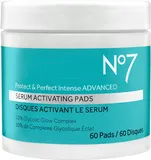
SkinfoodPineapple Peeling GelYOUR PRODUCTQ+AApple AHA Exfoliating GelKrave BeautyKale-Lalu-yAHANo7Protect & Perfect Intense Advanced Serum Activating Pads
Match—64%58%55%
Price$11.62$6.79−$4.83$24.56+$12.94$20.37+$8.75
Shared key ingredients—3 of 43 of 43 of 4
Key difference—Lactic AcidDipotassium GlycyrrhizateGluconolactone
Irritancy Medium Low Low Low
Drying alcohol Contains drying alcohol ———
View product Shop Shop Shop

More alternatives: Pixi Clarity Acid PeelSkin Control Peel Pads

Cheaper alternatives? See how this stacks up against similar formulas.
We compare ingredient profiles across our catalog — pick the closest match for your budget.
Open dupe finder

Product summary

"Skinfood - Pineapple Peeling Gel" is effective for: Anti-inflammatory, Exfoliation, Evens skin tone, Anti-aging and Moisturizing

Ingredient callouts

  • Panthenol (pro-vitamin B5) at about 1.80% - 2.60% concentration. In this concentration, Panthenol works effectively to improve the skin barrier and reduce inflammation.
  • Humectants (urea 0.15% - 0.55%, sucrose 0.15% - 0.55%, sodium lactate 0.20% - 0.75%, panthenol 1.80% - 2.60% and glycerin 0.35% - 0.75%). These ingredients help attract water to the upper layer of the skin and improve the skin hydration.

Price

The product retails from 9.80$ up to 13.00$ in the United States, for 18.99CA$ in Canada and for 28.89£ in the United Kingdom.

For a detailed price comparison: click here.

Affiliate links · As an Amazon Associate, WIMJ earns from qualifying purchases.

As an Amazon Associate, WIMJ earns from qualifying purchases.