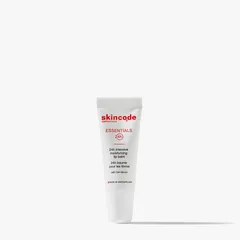
Works for:
based on ingredients and %- Moisturizing
Can it cause trouble?
- Irritation risk: medium
- Comedogenic risk ingredients: 1
Key actives
Works for
Moisturizing
What does the product description say?
A deeply moisturizing balm replenishes natural moisture levels, while soothing and comforting.
Source: Skincode
This product can help improve hydration of the skin with the two types of ingredients.
The first type is called “humectants”:
these ingredients help attract water.
When humectants are on the surface of the skin, they “pull in” the moisture from the outside environment, or from
within deeper layers of the skin. The following ingredients in this product do the job:
glycerin, polyglycerin-3.
This product also contains ingredients called “occlusives”. They help reduce the speed with which our skin loses moisture to the outside environment. These ingredients also help soften the upper layer of the skin, so it feels less tight and nicer to the touch. The following ingredients in this product do the job: butyrospermum parkii butter, caprylic/capric triglyceride.
A great moisturising ingredient that softens the skin and reduces water loss from its upper layer. It also can be helpful in protecting skin from free radicals
A good mix of fatty acids that forms a protective layer on the skin. Improves the shelf life of products. Derived from coconut and glycerin
One of the best moisturizing ingredients. Naturally present in skin. It attracts water to the upper layer of the skin working as a humectant
A great emollient due to its high linoleic acid content. One of the most effective plant oils in helping skin hydration and repairing skin barrier function
Helps soften the upper layer of the skin and support skin's barrier function while creating a thicker product consistency
An emollient made of jojoba oil. Helps soften the skin and support its barrier function
Helps to attract water to the upper layer of the skin
Helps attract water to the upper layer of the skin
A plant oil that can help soften the skin. It might be helpful in calming down inflammation, but solid research is lacking. Is often used in lip products to create the needed product consistency
An emollient that helps to soften the skin and create a pleasant product texture and stabilize the formulation
An emollient that softens the skin and forms a protective layer on its surface. Helps water and oil mix together
An oil from a mixture of different vegetables. Helps soften the upper layer of the skin
Used to create a thicker product consistency and soften the upper layer of the skin
Pure form of vitamin E. Can help moisturise and protect the skin from free radicals. Often used to help stabilise other ingredients or the formula itself
How honest is this product?
| Promise | Can it deliver? |
|---|---|
| Moisturizing |
Total Promises Fulfilled score: 75/100.
We receive a small commission for purchases made through these links at no cost for you. Thank you for your support! Learn more
Affiliate link · supports WIMJ at no cost to you
Potential irritants
Comedogenic ingredients
User reviews (0)
Averages from community submissions.
No reviews yet for this product.
Be the first to share your experience!
Tried this product?
Help capture what the ingredient list can't—texture, finish, pilling, scent, and more. Answer what you can, skip the rest.
Takes ~30 seconds.
Reviews are shown in aggregate. No personal details.
| Product | Similarity | Price | Irritancy |
|---|---|---|---|
 skincode-Swiss 24h Intensive Moisturizing Lip Balm | Current | ≈ $16.90 | |
 SVR Topialyse Plant-Based Nourishing Lip Balm | 39% | ≈ $6.00 | |
 Pipette Calming Balm | 38% | - | |
 Elcie Cosmetics Lip Balm Treatment | 37% | - | |
 Allies of Skin Peptide & Ceramide Repair Lip Balm | 34% | - | |
 Eucerin Aquaphor SOS Lip Repair | 34% | ≈ $8.60 |
Key Actives
A great moisturising ingredient that softens the skin and reduces water loss from its upper layer. It also can be helpful in protecting skin from free radicals
A good mix of fatty acids that forms a protective layer on the skin. Improves the shelf life of products. Derived from coconut and glycerin
A great emollient due to its high linoleic acid content. One of the most effective plant oils in helping skin hydration and repairing skin barrier function
One of the best moisturizing ingredients. Naturally present in skin. It attracts water to the upper layer of the skin working as a humectant
An emollient made of jojoba oil. Helps soften the skin and support its barrier function
Helps soften the upper layer of the skin and support skin's barrier function while creating a thicker product consistency
Helps to attract water to the upper layer of the skin
Helps attract water to the upper layer of the skin
Potential irritants
Can be drying and contribute to skin irritation. Used in formulars to dissolve other ingredients, create a thinner product consistency or for its antibacterial properties
A good mix of fatty acids that forms a protective layer on the skin. Improves the shelf life of products. Derived from coconut and glycerin
A plant oil that can help soften the skin. It might be helpful in calming down inflammation, but solid research is lacking. Is often used in lip products to create the needed product consistency
An emollient made of jojoba oil. Helps soften the skin and support its barrier function
Used to create a thicker product consistency and help soften the upper layer of the skin
Helps to control the skin's pH level. Maintains the skin's natural film of amino-lactic acids and oils. Helps to preserve products
Can work as an exfoliant but is typically used to adjust the product pH
Comedogenic ingredients
A great moisturising ingredient that softens the skin and reduces water loss from its upper layer. It also can be helpful in protecting skin from free radicals
All ingredients
A good mix of fatty acids that forms a protective layer on the skin. Improves the shelf life of products. Derived from coconut and glycerin
A great emollient due to its high linoleic acid content. One of the most effective plant oils in helping skin hydration and repairing skin barrier function
An emollient that helps to soften the skin and create a pleasant product texture and stabilize the formulation
An oil from a mixture of different vegetables. Helps soften the upper layer of the skin
One of the best moisturizing ingredients. Naturally present in skin. It attracts water to the upper layer of the skin working as a humectant
A great moisturising ingredient that softens the skin and reduces water loss from its upper layer. It also can be helpful in protecting skin from free radicals
A plant oil that can help soften the skin. It might be helpful in calming down inflammation, but solid research is lacking. Is often used in lip products to create the needed product consistency
An emollient that softens the skin and forms a protective layer on its surface. Helps water and oil mix together
An emollient made of jojoba oil. Helps soften the skin and support its barrier function
Used to create a thicker product consistency and soften the upper layer of the skin
Helps soften the upper layer of the skin and support skin's barrier function while creating a thicker product consistency
Used to create a thicker product consistency and help soften the upper layer of the skin
Can be drying and contribute to skin irritation. Used in formulars to dissolve other ingredients, create a thinner product consistency or for its antibacterial properties
Pure form of vitamin E. Can help moisturise and protect the skin from free radicals. Often used to help stabilise other ingredients or the formula itself
Helps to control the skin's pH level. Maintains the skin's natural film of amino-lactic acids and oils. Helps to preserve products
Can work as an exfoliant but is typically used to adjust the product pH
Ingredient list view
Caprylic/capric triglyceride, Helianthus annuus seed oil, Octyldodecanol, Olus oil, Glycerin, Butyrospermum parkii butter, Hydrogenated castor oil, Glyceryl dibehenate, Glyceryl stearate, Jojoba esters, Tribehenin, Helianthus annuus seed wax, Polyglycerin-3, Sodium carboxymethyl betaglucan, Saccharide isomerate, Stevia rebaudiana leaf extract, Glyceryl behenate, Acacia decurrens flower wax, Water, Alcohol, Tocopherol, Sodium citrate, Vanillin, Citric acid
- Effect of Olive and Sunflower Seed Oil on the Adult Skin Barrier: Implications for Neonatal Skin Care
- Topically Applied Sunflower Seed Oil Prevents Invasive Bacterial Infections in Preterm Infants in Egypt
- Effect of topically applied lipids on surfactant-irritated skin
- Impact of topical oils on the skin barrier: possible implications for neonatal health in developing countries
- Glycerol and the skin: holistic approach to its origin and functions
- Final report on the safety assessment of Ricinus Communis (Castor) Seed Oil, Hydrogenated Castor Oil, Glyceryl Ricinoleate, Glyceryl Ricinoleate SE, Ricinoleic Acid, Potassium Ricinoleate, Sodium Ricinoleate, Zinc Ricinoleate, Cetyl Ricinoleate, Ethyl Ricinoleate, Glycol Ricinoleate, Isopropyl Ricinoleate, Methyl Ricinoleate, and Octyldodecyl Ricinoleate
- Castor Oil: Properties, Uses, and Optimization of Processing Parameters in Commercial Production
- Effect of ricinoleic acid in acute and subchronic experimental models of inflammation
- Final Report of the Safety Assessment of Acacia Catechu Gum, Acacia Concinna Fruit Extract, Acacia Dealbata Leaf Extract, Acacia Dealbata Leaf Wax, Acacia Decurrens Extract, Acacia Farnesiana Extract, Acacia Farnesiana Flower Wax, Acacia Farnesiana Gum, Acacia Senegal Extract, Acacia Senegal Gum, and Acacia Senegal Gum Extract1
- Vitamin E in dermatology
- Vitamin E and Skin Health