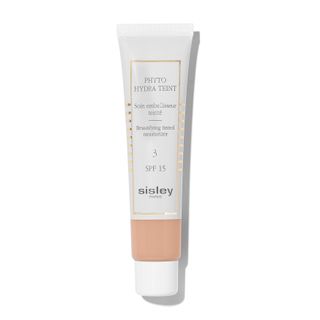
Sisley-Paris Phyto-Hydra Teint
Works for
1 of 2 advertised claims delivered
MoisturizingDimethicone, Glycerin + 4 moreGood evidence
“Phyto-Hydra Teint”
This product can help improve hydration of the skin with the two types of ingredients.
The first type is called “humectants”:
these ingredients help attract water.
When humectants are on the surface of the skin, they “pull in” the moisture from the outside environment, or from
within deeper layers of the skin. The following ingredients in this product do the job:
glycerin, butylene glycol.
This product also contains ingredients called “occlusives”. They help reduce the speed with which our skin loses moisture to the outside environment. These ingredients also help soften the upper layer of the skin, so it feels less tight and nicer to the touch. The following ingredients in this product do the job: dimethicone, hydrogenated polyisobutene.
Evens skin toneNo ingredient credited for this claimNo evidence
“The velvety-soft formula provides a light veil of colour to even out skin tone, while plant extracts nourish the complexion and improve texture, promoting a radiant glow.”
Effective ingredients missing or their concentration is too low
Can it cause trouble?
Irritancy4 strong irritants: Citrus grandis fruit extract, Lilium candidum flower extract + 2 more — patch-test recommendedHigh risk
ComedogenicClean of flagged comedogenic ingredientsNone flagged
User reviews
Be the first — your take helps the next person decide.
Ingredients
Filter by role to see what each ingredient is doing.
Water~45–55%
Dimethicone~6.5–7.9%
- Irritation risk
- Low
A silicone that helps to reduce water loss from the surface of the skin. Can temporarily "fill in" lines and wrinkles, absorb oil, and create a nice product finish
More about DimethiconeGlycerin~4.4–5.3%
- Irritation risk
- Low
One of the best moisturizing ingredients. Naturally present in skin. It attracts water to the upper layer of the skin working as a humectant
More about GlycerinTitanium dioxide~3.8–4.7%
- Irritation risk
- Low
Works as a UV filter when used in high concentrations. It is photostable and is effective mostly against the UVB light, with some protection in the UVA range. In small concentrations, used for its ability to improve the color of cosmetic products. Is usually well tolerated by the skin
More about Titanium dioxideHydrogenated polyisobutene~2.7–3.2%
- Irritation risk
- Low
Used to improve the product consistency and soften the upper layer of the skin
More about Hydrogenated polyisobuteneButylene glycol~2.1–2.6%
- Irritation risk
- Low
Used to create a nice product texture and help delivery of other ingredients. Might be somewhat helpful in attracting water to the upper layer of the skin
More about Butylene glycolAcrylates/ethylhexyl acrylate crosspolymer~1.8–2.2%
- Irritation risk
- Low
Pentylene glycol~1.5–1.9%
- Irritation risk
- Medium
Used to preserve products, dissolve other ingredients and create a nice product texture
More about Pentylene glycolLauryl peg-10 tris(trimethylsiloxy)silylethyl dimethicone~1.2–1.4%
- Irritation risk
- Low
Polyglyceryl-3 polydimethylsiloxyethyl dimethicone~0.95–1.15%
- Irritation risk
- Low
Tocopheryl acetate~0.7–1.05%
- Irritation risk
- Medium
A more stable but less bio-available form of vitamin E compared to Tocopherol. Might help moisturize and protect the skin from free radicals, but mostly used in low concentrations to stabilize other ingredients.
More about Tocopheryl acetatePolygonum fagopyrum seed extract~0.6–0.85%
- Irritation risk
- Low
Cydonia oblonga leaf extract~0.5–0.75%
- Irritation risk
- Low
Citrus grandis fruit extract~0.45–0.65%
- Irritation risk
- High
Actinidia chinensis fruit extract~0.5–0.7%
- Irritation risk
- High
A plant extract that might have some anti-oxidant properties, but evidence of effectiveness in skin is lacking
More about Actinidia chinensis fruit extractLilium candidum flower extract~0.45–0.65%
Aluminum hydroxide~0.5–0.75%
- Irritation risk
- Low
Is used to add opaque (non-transparent) appearance to formulations. Can be used to coat other ingredients for even dispersion. This is a different ingredient compared to the ones used in antipersperants (aluminium chloride and aluminium chlorohydrate)
More about Aluminum hydroxideSodium chloride~0.4–0.65%
- Irritation risk
- Low
Used to stabilize mixtures of oil and water, and create thicker, gel-like product textures
More about Sodium chlorideDimethicone/peg-10/15 crosspolymer~0.3–0.6%
Stearic acid~0.45–0.7%
- Irritation risk
- Low
Helps oil and water mix together and works as an emollient
More about Stearic acidSynthetic fluorphlogopite~0.3–0.6%
- Irritation risk
- Low
A mineral that is used as an optical filter (makes the skin looks nicer through light reflection) and to improve the texture of cosmetic products
More about Synthetic fluorphlogopiteTriethoxycaprylylsilane~0.3–0.55%
- Irritation risk
- Low
A type of silicone that helps oil and water mix well together. Helps to disperse other ingredients, e.g. pigments, evenly in a formulation
More about TriethoxycaprylylsilaneDipropylene glycol~0.25–0.45%
- Irritation risk
- Low
Helps to dissolve other ingredients in a formulation. Slows down the rate of product drying
More about Dipropylene glycolSodium hydroxide~0.25–0.5%
Citric acid~0.25–0.45%
- Irritation risk
- Medium
Can work as an exfoliant but is typically used to adjust the product pH
More about Citric acidParfum~0.2–0.4%
- Irritation risk
- High
An aromatic blend of unspecified and possibly irritating ingredients
More about ParfumPhenoxyethanol~0.25–0.45%
- Irritation risk
- Low
A preservative. It helps prevent bacterial growth in cosmetic products
More about PhenoxyethanolSorbic acid~0.2–0.4%
Sodium benzoate~0.15–0.3%
Potassium sorbate~0.15–0.3%
Limonene~0.15–0.25%
- Irritation risk
- High
A common frangrance that can easily irritate skin, especially if exposed to air, light or heat
More about LimoneneTitanium dioxide~0.15–0.3%
- Irritation risk
- Low
Works as a UV filter when used in high concentrations. It is photostable and is effective mostly against the UVB light, with some protection in the UVA range. In small concentrations, used for its ability to improve the color of cosmetic products. Is usually well tolerated by the skin
More about Titanium dioxideCi 77891~0.1–0.15%
- Irritation risk
- Low
Iron oxides~0.05–0.15%
- Irritation risk
- Low
An umbrella term for the following three colorants: CI 77491, CI 77492, CI 77499. They might be able to offer some protection against visible light, but the degree of the protection is not clear
More about Iron oxidesIngredient list view
Water, Dimethicone, Glycerin, Titanium dioxide, Hydrogenated polyisobutene, Butylene glycol, Acrylates/ethylhexyl acrylate crosspolymer, Pentylene glycol, Lauryl peg-10 tris(trimethylsiloxy)silylethyl dimethicone, Polyglyceryl-3 polydimethylsiloxyethyl dimethicone, Tocopheryl acetate, Polygonum fagopyrum seed extract, Cydonia oblonga leaf extract, Citrus grandis fruit extract, Actinidia chinensis fruit extract, Lilium candidum flower extract, Aluminum hydroxide, Sodium chloride, Dimethicone/peg-10/15 crosspolymer, Stearic acid, Synthetic fluorphlogopite, Triethoxycaprylylsilane, Dipropylene glycol, Sodium hydroxide, Citric acid, Parfum, Phenoxyethanol, Sorbic acid, Sodium benzoate, Potassium sorbate, Limonene, Titanium dioxide, Ci 77891, Iron oxides
Compare prices
Retailers ranked by price — lowest first.
Affiliate links · prices updated regularly · As an Amazon Associate, WIMJ earns from qualifying purchases.
Sources cited in this review
Every concentration estimate and effectiveness label is anchored to one of these 5 studies and safety reviews.
- 1
- 2Final Report on the Safety Assessment of Dimethicone Copolyoljournals.sagepub.com
- 3
- 4
- 5

Affiliate links · As an Amazon Associate, WIMJ earns from qualifying purchases.