Works for
MoisturizingHelianthus annuus seed oil, Glycerin + 12 moreWorks
“Plant-Origin Glycerin: hydrates”
This product can help improve hydration of the skin with the two types of ingredients.
The first type is called “humectants”:
these ingredients help attract water.
When humectants are on the surface of the skin, they “pull in” the moisture from the outside environment, or from
within deeper layers of the skin. The following ingredients in this product do the job:
glycerin, hydrolyzed rice protein.
This product also contains ingredients called “occlusives”. They help reduce the speed with which our skin loses moisture to the outside environment. These ingredients also help soften the upper layer of the skin, so it feels less tight and nicer to the touch. The following ingredients in this product do the job: butyrospermum parkii butter, helianthus annuus seed oil.
Anti-agingSide benefit · Adenosine, Butyrospermum parkii butter + 1 moreWorks well
This product can help reduce and prevent fine lines and wrinkles, improve skin elasticity and firmness because it contains adenosine.
Keep in mind that it typically takes at least 6 weeks to notice any results because the changes that are needed to improve fine lines and elasticity happen in the deeper layers of the skin. No topical anti-aging product can “erase” wrinkles or fully reverse signs of aging.
Anti-oxidationSide benefit · Ginkgo biloba leaf extract, Butyrospermum parkii butter + 6 moreMay help
This product contains antioxidants (ginkgo biloba leaf extract) that might be able to help neutralize free radicals in skin to lessen the damage it gets from the UV light (sun). There is not enough evidence to confirm their effectiveness in skin though.
Can it cause trouble?
Irritancy8 strong irritants: Humulus lupulus extract, Rosmarinus officinalis leaf extract + 6 more — patch-test recommendedHigh risk
Comedogenic1 ingredient rated 2 or more on the 0–5 pore-clogging scale1 flagged


User reviews
Be the first — your take helps the next person decide.
Ingredients
Filter by role to see what each ingredient is doing.
Water~45–55%
Helianthus annuus seed oil~6.3–7.7%
- Irritation risk
- Low
A great emollient due to its high linoleic acid content. One of the most effective plant oils in helping skin hydration and repairing skin barrier function
More about Helianthus annuus seed oilGlycerin~4–4.8%
- Irritation risk
- Low
One of the best moisturizing ingredients. Naturally present in skin. It attracts water to the upper layer of the skin working as a humectant
More about GlycerinButylene glycol~3–3.7%
- Irritation risk
- Low
Used to create a nice product texture and help delivery of other ingredients. Might be somewhat helpful in attracting water to the upper layer of the skin
More about Butylene glycolCaprylyl methicone~2.3–2.8%
- Irritation risk
- Low
A type of silicone that helps to soften the upper layer of the skin and create a nice product finish on the skin
More about Caprylyl methiconeButyrospermum parkii butter~2–2.4%
- Irritation risk
- Low
- Comedogenicity
- 3/5
A great moisturising ingredient that softens the skin and reduces water loss from its upper layer. It also can be helpful in protecting skin from free radicals
More about Butyrospermum parkii butterSodium acrylates copolymer~1.5–1.9%
- Irritation risk
- Medium
Used to create a thicker product consistency
More about Sodium acrylates copolymerGlyceryl stearate citrate~1.5–1.8%
- Irritation risk
- Low
Helps oil and water mix together while softening the upper layer of the skin
More about Glyceryl stearate citrateTocopheryl acetate~1.1–1.4%
- Irritation risk
- Medium
A more stable but less bio-available form of vitamin E compared to Tocopherol. Might help moisturize and protect the skin from free radicals, but mostly used in low concentrations to stabilize other ingredients.
More about Tocopheryl acetateAdenosine~0.95–1.15%
- Irritation risk
- Low
Might help improve cell turnover and reduce inflammation in skin. One study shows that the ingredients might be able to help reduce dynamic wrinkles (for example, in the corners of the eyes or on the forehead)
More about AdenosineGinkgo biloba leaf extract~0.65–1%
- Irritation risk
- High
A plant extract that might help neutralize free radicals and reduce inflammation in skin. It can be irritating
More about Ginkgo biloba leaf extractHumulus lupulus extract~0.55–0.85%
- Irritation risk
- High
Hops extract. Can contain common irritants and allergens geraniol, limonene, linalool
More about Humulus lupulus extractRosmarinus officinalis leaf extract~0.5–0.75%
- Irritation risk
- High
Can be helpful in reducing inflammation in skin, including inflamed acne. It can be irritating
More about Rosmarinus officinalis leaf extractChamomilla recutita flower extract~0.45–0.65%
- Irritation risk
- High
Plant extract that can have healing and anti-inflammatory properties. It is a potential allergen and can be irritating
More about Chamomilla recutita flower extractHydrolyzed vegetable protein~0.4–0.6%
Hydrolyzed rice protein~0.4–0.6%
- Irritation risk
- Low
Helps attract water to the upper layer of the skin. Might have some anti-oxidant properties
More about Hydrolyzed rice proteinLavandula angustifolia oil~0.35–0.65%
- Irritation risk
- High
An essential oil. Potential allergen and can be irritating. It has some anti-bacterial properties
More about Lavandula angustifolia oilRosmarinus officinalis leaf oil~0.3–0.6%
- Irritation risk
- High
A plant oil with high content of volatile compounds that can irritate the skin. Can be used as a fragrance. Has anti-bacterial properties and might help neutralize free radicals on the surface of the skin
More about Rosmarinus officinalis leaf oilThymus mastichina flower oil~0.3–0.55%
- Irritation risk
- High
Salvia officinalis oil~0.25–0.5%
- Irritation risk
- High
Propylheptyl caprylate~0.3–0.55%
- Irritation risk
- Low
Helps soften the upper layer of the skin
More about Propylheptyl caprylateHydrogenated polyisobutene~0.3–0.5%
- Irritation risk
- Low
Used to improve the product consistency and soften the upper layer of the skin
More about Hydrogenated polyisobutenePolyglyceryl-10 stearate~0.25–0.4%
- Irritation risk
- Medium
Helps water and oil mix together and softens the upper layer of the skin
More about Polyglyceryl-10 stearatePhospholipids~0.25–0.4%
- Irritation risk
- Low
Emollients that are naturaly present in skin. In addition, they help water and oil mix together in the product
More about PhospholipidsHydroxypropyl starch phosphate~0.25–0.45%
- Irritation risk
- Medium
Helps oil and water mix together and used to stabilize product formulations
More about Hydroxypropyl starch phosphateDisodium edta~0.2–0.4%
Ppg-26-buteth-26~0.25–0.4%
Peg-40 hydrogenated castor oil~0.25–0.45%
- Irritation risk
- Medium
Helps oil and water mix together
More about Peg-40 hydrogenated castor oilXanthan gum~0.2–0.4%
- Irritation risk
- Low
Used to create a thicker product consistency
More about Xanthan gumSodium hydroxide~0.2–0.35%
Citric acid~0.2–0.35%
- Irritation risk
- Medium
Can work as an exfoliant but is typically used to adjust the product pH
More about Citric acidPhenoxyethanol~0.2–0.35%
- Irritation risk
- Low
A preservative. It helps prevent bacterial growth in cosmetic products
More about PhenoxyethanolSorbic acid~0.15–0.3%
Sodium benzoate~0.15–0.25%
Potassium sorbate~0.15–0.25%
Tocopherol~0.15–0.25%
- Irritation risk
- Low
Pure form of vitamin E. Can help moisturise and protect the skin from free radicals. Often used to help stabilise other ingredients or the formula itself
More about TocopherolLinalool~0.1–0.2%
Limonene~0.05–0.15%
- Irritation risk
- High
A common frangrance that can easily irritate skin, especially if exposed to air, light or heat
More about LimoneneIngredient list view
Water, Helianthus annuus seed oil, Glycerin, Butylene glycol, Caprylyl methicone, Butyrospermum parkii butter, Sodium acrylates copolymer, Glyceryl stearate citrate, Tocopheryl acetate, Adenosine, Ginkgo biloba leaf extract, Humulus lupulus extract, Rosmarinus officinalis leaf extract, Chamomilla recutita flower extract, Hydrolyzed vegetable protein, Hydrolyzed rice protein, Lavandula angustifolia oil, Rosmarinus officinalis leaf oil, Thymus mastichina flower oil, Salvia officinalis oil, Propylheptyl caprylate, Hydrogenated polyisobutene, Polyglyceryl-10 stearate, Phospholipids, Hydroxypropyl starch phosphate, Disodium edta, Ppg-26-buteth-26, Peg-40 hydrogenated castor oil, Xanthan gum, Sodium hydroxide, Citric acid, Phenoxyethanol, Sorbic acid, Sodium benzoate, Potassium sorbate, Tocopherol, Linalool, Limonene
Compare prices
Retailers ranked by price — lowest first.
Affiliate links · As an Amazon Associate, WIMJ earns from qualifying purchases.
Worth comparing, line by line.
Match % combines shared ingredients, the first five ingredients, shared actives and hero ingredients, irritancy (lower counts in the alternative's favour), texture and body area. Only products in the same routine step are compared.
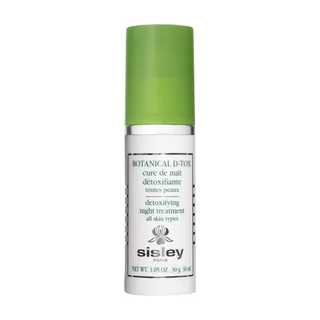
| Sisley-ParisBotanical D-ToxYOUR PRODUCT | APLBIntensive Repair Horse Oil Cream | J.OneHana Cream | AMOREPACIFICTIME RESPONSE Skin Reserve Crème | |
|---|---|---|---|---|
| Match | — | 61% | 59% | 59% |
| Price | $116.61 | $24.00−$92.61 | $36.32−$80.29 | — |
| Shared key ingredients | — | 4 of 6 | 4 of 6 | 4 of 6 |
| Key difference | — | Niacinamide | Acetyl Dipeptide-1 Cetyl Ester | Niacinamide |
| Irritancy | High | Medium | Medium | Medium |
| Drying alcohol | — | — | Contains drying alcohol | — |
| View product | Shop | Shop | Shop |


More alternatives: Mizon S-Venom Wrinkle Tox CreamCOSRX Moisturizer The Retinol 0.3 Cream
Sources cited in this review
Every concentration estimate and effectiveness label is anchored to one of these 26 studies and safety reviews.
- 1
- 2
- 3Effect of topically applied lipids on surfactant-irritated skinonlinelibrary.wiley.com
- 4
- 5
- 6

Affiliate links · As an Amazon Associate, WIMJ earns from qualifying purchases.