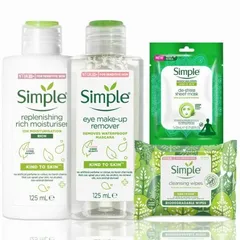
Works for:
based on ingredients and %- Cleansing
Can it cause trouble?
- Irritation risk: high
- Comedogenic risk ingredients: 3
Key actives


Works for
Cleansing
What does the product description say?
Kind to Skin Eye Makeup Remover x , Rich Moisturiser x , Cleansing Wipes x 20 Mask x 1
Source: From product name
This product works by removing dirt and oil from the surface of the skin. It uses a combination of mild cleansing agents (ceteareth-12, ceteareth-20, cetearyl alcohol, ceteth-20, glyceryl arachidonate, glyceryl stearate, hydrogenated lecithin, laureth-23, laureth-7, peg-20 glyceryl laurate, peg-40 hydrogenated castor oil, poloxamer 184, polyglyceryl-3 methylglucose distearate, stearyl alcohol, xanthan gum) and should be able to cleanse the skin gently. Still keep in mind that any cleansing can disrupt the skin barrier, and most people do not need to cleanse their skin more than once per day.
Used to create a thicker product consistency
Helps oil and water mix together. Has some emollient properties
A non-drying alcohol. Works as an emollient. Helps water and oil mix together and creates a nice product texture
Helps water and oil mix together
Helps water and oil mix together
An emollient that softens the skin and forms a protective layer on its surface. Helps water and oil mix together
Helps to retain moisture by creating a protective barrier on the skin. Rich in fatty acids. Improves product texture and helps with the penetration of other ingredients.
Helps oil and water mix together
Helps oil and water mix together
Helps oil and water mix together
Helps water and oil mix together
Helps water and oil mix together
An emollient that helps soften the skin
Helps oil and water mix together and works as an emollient
How honest is this product?
| Promise | Can it deliver? |
|---|---|
| Cleansing |
Total Promises Fulfilled score: 100/100.
Potential irritants
Comedogenic ingredients
User reviews (0)
Averages from community submissions.
No reviews yet for this product.
Be the first to share your experience!
Tried this product?
Help capture what the ingredient list can't—texture, finish, pilling, scent, and more. Answer what you can, skip the rest.
Takes ~30 seconds.
Reviews are shown in aggregate. No personal details.
| Product | Similarity | Price | Irritancy |
|---|---|---|---|
 Simple Kind to Skin Eye Makeup Remover x , Rich Moisturiser x , Cleansing Wipes x 20 Mask x 1 | Current | - | |
CeraVe Makeup Remover Cleansing Cloths Ultra | 69% | $9.99 | |
Superdrug Essential Face Cleansing Wipes | 66% | ≈ $1.31 | |
 Petite 'n Pretty My Stellar Micellar Makeup Remover Wipes | 66% | $10.00 | |
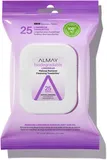 Almay Biodegradable Longwear Makeup Remover Cleansing Towelettes | 66% | $4.13 | |
 Olay Cleanse Makeup Remover Wipes Fragrance-Free | 65% | $5.99 |
Key Actives
Is proven to be effective in reducing blemishes, evening out skin tone and helping to improve lines and wrinkles. It helps the skin to repair sun damage, calm down inflammation and keep maintain good levels of moisture. The concentration of about 2% is effective for supporting the skin barrier and evening out the skin tone. Concentration of 4-6% is better for helping with acne and balancing the sebum production
Helps calm down inflammation in skin and can help reduce itching. Helps to repair the skin barrier and keep skin hydrated
An exfoliating and moisturizing alpha-hydroxy acid (AHA). Typically causes less irritation than other AHAs, for example, glycolic acid. At high concentrations (about 15%), lactic acid can help reduce lines and wrinkles. Recent studies show that lactic acid can support the "good" bacteria living on skin's surface (healthy skin microbiome)
Three steps removed from the active form of vitamin A - retinoic acid. To have an effect in the skin, it first needs to be converted twice to become the retinoic acid. This means it is less potent than retinol, but could also be less irritating. Once converted to the retinoic acid in the skin, it helps against all signs of aging, improves skin cell turnover and helps fight blemishes and clogged pores. However, in many cosmetic formulations, it is used in a concentration that is too low to have the full effect
Helps attract water to the upper layer of the skin and can help improve skin barrier function
An active component of chamomile plant that historically has been used to calm down irritated skin. A recent study shows that bisabolol indeed can have some anti-inflammatory effect on skin, even though conclusive data is lacking. Bisabolol has a sweet floral scent and can be added to products for its aromatic properties
Helps attract water to the upper layer of the skin and can help improve skin barrier function
Helps attract water to the upper layer of the skin and can help improve skin barrier function
One of the best moisturizing ingredients. Attracts water into the upper layer of the skin. Naturally present in skin. Typically has large molecule size unless advertised otherwise on the product label. Helps support skin's barrier function and may help to reduce inflammation
Helps attract water to the upper layer of the skin and can help improve skin barrier function
An amino-acid that helps to attract water to the upper layer of the skin. In combination with other amino-acids, might help to reduce fine lines and wrinkles
Helps oil and water mix together and works as an emollient
Naturally present in skin (urea makes up about 7% of natural moisturizing factors in skin). Attracts water to the upper layer of the skin. Also has a positive effect on the skin barrier beyond the humectant action. Can enhance penetration of other ingredients. Is an exfoliating ingredient when used in high concentrations
A non-drying alcohol. Works as an emollient. Helps water and oil mix together and creates a nice product texture
An emollient that softens the skin and forms a protective layer on its surface. Helps water and oil mix together
Might be helpful in neutralizing free radicals. Can have a dehydration effect that might somewhat decrease the look of puffy eyes
Helps oil and water mix together
Helps attract water to the upper layer of the skin
One of the best moisturizing ingredients. Naturally present in skin. It attracts water to the upper layer of the skin working as a humectant
Helps water and oil mix together
Octinoxate. When used in higher concentrations, works as a sunscreen protecting the skin from UVB rays. When used in lower concentration, helps to preserve the product formulation. Is shown to be harmful to coral reefs - consider avoiding bathing in coral reef areas when wearing a product with this ingredient. It can be irritating
An emollient that helps soften the skin
Avobenzone. An organic, or so-called "chemical" UV filter. Protects against both UVA and UVB rays. Needs to be combined with other filters in a formulation to be stable.
Helps attract water to the upper layer of the skin
Helps attract water to the upper layer of the skin. Is often used to adjust the pH level of the product
Helps oil and water mix together. Has some emollient properties
One of the best moisturizing ingredients. Naturally present in skin. It attracts water to the upper layer of the skin working as a humectant
Helps attract water to the upper layer of the skin
One of the best moisturizing ingredients. Naturally present in skin. It attracts water to the upper layer of the skin working as a humectant
Helps water and oil mix together
Helps to retain moisture by creating a protective barrier on the skin. Rich in fatty acids. Improves product texture and helps with the penetration of other ingredients.
One of the best moisturizing ingredients. Attracts water into the upper layer of the skin. A version of it is naturally present in skin
Helps oil and water mix together
One of the best moisturizing ingredients. Attracts water into the upper layer of the skin
Used to create a thicker product consistency
Potential irritants
Octinoxate. When used in higher concentrations, works as a sunscreen protecting the skin from UVB rays. When used in lower concentration, helps to preserve the product formulation. Is shown to be harmful to coral reefs - consider avoiding bathing in coral reef areas when wearing a product with this ingredient. It can be irritating
Three steps removed from the active form of vitamin A - retinoic acid. To have an effect in the skin, it first needs to be converted twice to become the retinoic acid. This means it is less potent than retinol, but could also be less irritating. Once converted to the retinoic acid in the skin, it helps against all signs of aging, improves skin cell turnover and helps fight blemishes and clogged pores. However, in many cosmetic formulations, it is used in a concentration that is too low to have the full effect
Used to stabilize product formulations and help soften the upper layer of the skin
A more stable but less bio-available form of vitamin E compared to Tocopherol. Might help moisturize and protect the skin from free radicals, but mostly used in low concentrations to stabilize other ingredients.
Avobenzone. An organic, or so-called "chemical" UV filter. Protects against both UVA and UVB rays. Needs to be combined with other filters in a formulation to be stable.
Helps preserve products and creates a nice product texture
An exfoliating and moisturizing alpha-hydroxy acid (AHA). Typically causes less irritation than other AHAs, for example, glycolic acid. At high concentrations (about 15%), lactic acid can help reduce lines and wrinkles. Recent studies show that lactic acid can support the "good" bacteria living on skin's surface (healthy skin microbiome)
Used to preserve products, dissolve other ingredients and create a nice product texture
Used to improve product texture and help oil and water mix together
Helps attract water to the upper layer of the skin. Is often used to adjust the pH level of the product
Helps oil and water mix together. Has some emollient properties
Can work as an exfoliant but is typically used to adjust the product pH
Helps to control the skin's pH level. Maintains the skin's natural film of amino-lactic acids and oils. Helps to preserve products
Being a lipid soluble form of vitamin C, it is more stable and can penetrate the skin better than L-Ascorbic acid. It is effective in protecting the skin from free radicals, as well as evening the skin tone, but is less effective in stimulating collagen production compared to L-Ascorbic acid.
Might be helpful in neutralizing free radicals. Can have a dehydration effect that might somewhat decrease the look of puffy eyes
Helps water and oil mix together and softens the upper layer of the skin
A stable derivative of vitamin C. It is oil-soluble which means it is more likely to penetrate the skin compared to the pure form of vitamin C (which is water-soluble), but it is less bio-available and is way less effective in stimulating collagen and reducing wrinkles compared to the pure form of vitamin C (L-ascorbic acid) and its other derivatives (for example, magnesium ascorbyl phosphate). At the same time, this vitamin C derivative has been shown in studies to be effective in reducing acne, blemishes and clogged pores. It is less irritating then the pure form of vitamin C
Comedogenic ingredients
Helps oil and water mix together. Has some emollient properties
A non-drying alcohol. Works as an emollient. Helps water and oil mix together and creates a nice product texture
All ingredients
Used to create a nice product texture and help delivery of other ingredients. Might be somewhat helpful in attracting water to the upper layer of the skin
Helps attract water to the upper layer of the skin and can help improve skin barrier function
A preservative. It helps prevent bacterial growth in cosmetic products
Helps adjust the product pH and stabilize the formulation
Used to stabilize product formulations and help soften the upper layer of the skin
A more stable but less bio-available form of vitamin E compared to Tocopherol. Might help moisturize and protect the skin from free radicals, but mostly used in low concentrations to stabilize other ingredients.
One of the best moisturizing ingredients. Naturally present in skin. It attracts water to the upper layer of the skin working as a humectant
Helps to soften the upper layer of the skin without creating a greasy texture
Octinoxate. When used in higher concentrations, works as a sunscreen protecting the skin from UVB rays. When used in lower concentration, helps to preserve the product formulation. Is shown to be harmful to coral reefs - consider avoiding bathing in coral reef areas when wearing a product with this ingredient. It can be irritating
An active component of chamomile plant that historically has been used to calm down irritated skin. A recent study shows that bisabolol indeed can have some anti-inflammatory effect on skin, even though conclusive data is lacking. Bisabolol has a sweet floral scent and can be added to products for its aromatic properties
Avobenzone. An organic, or so-called "chemical" UV filter. Protects against both UVA and UVB rays. Needs to be combined with other filters in a formulation to be stable.
Helps soften the upper layer of the skin, dissolve other ingredients and create a thicker product consistency
Helps preserve products and creates a nice product texture
An exfoliating and moisturizing alpha-hydroxy acid (AHA). Typically causes less irritation than other AHAs, for example, glycolic acid. At high concentrations (about 15%), lactic acid can help reduce lines and wrinkles. Recent studies show that lactic acid can support the "good" bacteria living on skin's surface (healthy skin microbiome)
Helps attract water to the upper layer of the skin and can help improve skin barrier function
Used to preserve products, dissolve other ingredients and create a nice product texture
A preservative. It helps prevent bacterial growth in cosmetic products
Used to improve product texture and help oil and water mix together
An amino-acid that helps to attract water to the upper layer of the skin. In combination with other amino-acids, might help to reduce fine lines and wrinkles
Helps attract water to the upper layer of the skin. Is often used to adjust the pH level of the product
Helps attract water to the upper layer of the skin and improves the product texture
A more stable but less bio-available form of vitamin E compared to Tocopherol. Might help moisturize and protect the skin from free radicals, but mostly used in low concentrations to stabilize other ingredients.
Naturally present in skin (urea makes up about 7% of natural moisturizing factors in skin). Attracts water to the upper layer of the skin. Also has a positive effect on the skin barrier beyond the humectant action. Can enhance penetration of other ingredients. Is an exfoliating ingredient when used in high concentrations
An emollient that softens the skin and helps prevent moisture loss.
Helps oil and water mix together. Has some emollient properties
A non-drying alcohol. Works as an emollient. Helps water and oil mix together and creates a nice product texture
Can work as an exfoliant but is typically used to adjust the product pH
One of the best moisturizing ingredients. Naturally present in skin. It attracts water to the upper layer of the skin working as a humectant
An emollient that softens the skin and forms a protective layer on its surface. Helps water and oil mix together
Helps attract water to the upper layer of the skin and can help improve skin barrier function
A preservative. It helps prevent bacterial growth in cosmetic products
Helps to control the skin's pH level. Maintains the skin's natural film of amino-lactic acids and oils. Helps to preserve products
A more stable but less bio-available form of vitamin E compared to Tocopherol. Might help moisturize and protect the skin from free radicals, but mostly used in low concentrations to stabilize other ingredients.
Helps calm down inflammation in skin and can help reduce itching. Helps to repair the skin barrier and keep skin hydrated
Being a lipid soluble form of vitamin C, it is more stable and can penetrate the skin better than L-Ascorbic acid. It is effective in protecting the skin from free radicals, as well as evening the skin tone, but is less effective in stimulating collagen production compared to L-Ascorbic acid.
Might have some moisturising properties. Is not effective when applied topically beyond some moisturizing effect
Used to create a nice product texture and help delivery of other ingredients. Might be somewhat helpful in attracting water to the upper layer of the skin
Might be helpful in neutralizing free radicals. Can have a dehydration effect that might somewhat decrease the look of puffy eyes
Helps preserve products and creates a nice product texture
One of the best moisturizing ingredients. Naturally present in skin. It attracts water to the upper layer of the skin working as a humectant
One of the best moisturizing ingredients. Attracts water into the upper layer of the skin. Naturally present in skin. Typically has large molecule size unless advertised otherwise on the product label. Helps support skin's barrier function and may help to reduce inflammation
Helps to retain moisture by creating a protective barrier on the skin. Rich in fatty acids. Improves product texture and helps with the penetration of other ingredients.
One of the best moisturizing ingredients. Attracts water into the upper layer of the skin. A version of it is naturally present in skin
Might help to reduce inflammation in skin, but solid research is lacking
Is proven to be effective in reducing blemishes, evening out skin tone and helping to improve lines and wrinkles. It helps the skin to repair sun damage, calm down inflammation and keep maintain good levels of moisture. The concentration of about 2% is effective for supporting the skin barrier and evening out the skin tone. Concentration of 4-6% is better for helping with acne and balancing the sebum production
Helps attract water to the upper layer of the skin and can help improve skin barrier function
Used to preserve products, dissolve other ingredients and create a nice product texture
Helps water and oil mix together and softens the upper layer of the skin
Three steps removed from the active form of vitamin A - retinoic acid. To have an effect in the skin, it first needs to be converted twice to become the retinoic acid. This means it is less potent than retinol, but could also be less irritating. Once converted to the retinoic acid in the skin, it helps against all signs of aging, improves skin cell turnover and helps fight blemishes and clogged pores. However, in many cosmetic formulations, it is used in a concentration that is too low to have the full effect
A stable derivative of vitamin C. It is oil-soluble which means it is more likely to penetrate the skin compared to the pure form of vitamin C (which is water-soluble), but it is less bio-available and is way less effective in stimulating collagen and reducing wrinkles compared to the pure form of vitamin C (L-ascorbic acid) and its other derivatives (for example, magnesium ascorbyl phosphate). At the same time, this vitamin C derivative has been shown in studies to be effective in reducing acne, blemishes and clogged pores. It is less irritating then the pure form of vitamin C
One of the best moisturizing ingredients. Attracts water into the upper layer of the skin
A more stable but less bio-available form of vitamin E compared to Tocopherol. Might help moisturize and protect the skin from free radicals, but mostly used in low concentrations to stabilize other ingredients.
Ingredient list view
Water, Poloxamer 184, Butylene glycol, Ceteth-20, Peg-20 glyceryl laurate, Laureth-23, Panthenol, Phenoxyethanol, Disodium phosphate, Sodium phosphate, Calcium disodium edta, Hydroxypropyl cyclodextrin, Pantolactone, Tocopheryl acetate, Iodopropynyl butylcarbamate, Bht, Water, Glycerin, Coco-caprylate/caprate, Polyglyceryl-3 methylglucose distearate, Ethylhexyl methoxycinnamate, Stearyl alcohol, Bht, Bisabolol, Butyl methoxydibenzoylmethane, C13-14 isoparaffin, Caprylyl glycol, Disodium edta, Lactic acid, Laureth-7, Panthenol, Pantolactone, Pentylene glycol, Phenoxyethanol, Polyacrylamide, Serine, Sodium hydroxide, Sodium lactate, Sorbitol, Stearic acid, Tocopheryl acetate, Urea, Water, Cetearyl isononanoate, Benzoic acid, Ceteareth-12, Ceteareth-20, Cetearyl alcohol, Citric acid, Dehydroacetic acid, Disodium edta, Glycerin, Glyceryl stearate, Panthenol, Pantolactone, Phenoxyethanol, Sodium citrate, Tocopheryl acetate, Water, Methylpropanediol, Agave americana stem extract, 1,2-hexanediol, Allantoin, Aloe barbadensis leaf polysaccharides, Althaea rosea flower extract, Ascorbyl palmitate, Biotin, Butylene glycol, Caffeine, Caprylyl glycol, Disodium edta, Ethylhexylglycerin, Glycerin, Glyceryl arachidonate, Glyceryl linolenate, Hyaluronic acid, Hydrogenated lecithin, Hydrolyzed hyaluronic acid, Hydroxyacetophenone, Hydroxyphenyl propamidobenzoic acid, Niacinamide, Panthenol, Peg-40 hydrogenated castor oil, Pentylene glycol, Polyglyceryl-10 stearate, Retinyl palmitate, Sodium ascorbyl phosphate, Sodium hyaluronate, Tocopheryl acetate, Xanthan gum
- Skin moisturizing effects of panthenol-based formulations
- Safety Assessment of Panthenol, Pantothenic Acid, and Derivatives as Used in Cosmetics
- Safety Assessment of Panthenol, Pantothenic Acid, and Derivatives as Used in Cosmetics
- Safety Assessment of Iodopropynyl Butylcarbamate as Used in Cosmetics
- Glycerol and the skin: holistic approach to its origin and functions
- Safety Assessment of Alkyl Esters as Used in Cosmetics
- α-(-)-Bisabolol Reduces Pro-Inflammatory Cytokine Production and Ameliorates Skin Inflammation
- Safety Assessment of Isoparaffins as Used in Cosmetics
- Epidermal and dermal effects of topical lactic acid
- Dual Effects of Alpha-Hydroxy Acids on the Skin
- Topical palmitoyl pentapeptide provides improvement in photoaged human facial skin
- Topical urea in skincare: A review
- 4 Final Report on the Safety Assessment of Sodium Dehydroacetate and Dehydroacetic Acid
- The influence of alkane chain length on the skin irritation potential of 1,2-alkanediols
- Profile of wound healing process induced by allantoin
- Efficacy of a New Topical Nano-hyaluronic Acid in Humans
- Physiochemical properties and application of hyaluronic acid: a systematic review
- Niacinamide - mechanisms of action and its topical use in dermatology
- Gehring, W. (2004). Nicotinic acid/niacinamide and the skin. Journal of Cosmetic Dermatology, 3(2), 88–93. doi:10.1111/j.1473-2130.2004.00115.x
- Amended Safety Assessment of PEGylated Oils as Used in Cosmetics
- Safety Assessment of Polyglyceryl Fatty Acid Esters as Used in Cosmetics
- Sodium ascorbyl phosphate shows in vitro and in vivo efficacy in the prevention and treatment of acne vulgaris
- Sodium ascorbyl phosphate in topical microemulsions
- Final report of the safety assessment of L-Ascorbic Acid, Calcium Ascorbate, Magnesium Ascorbate, Magnesium Ascorbyl Phosphate, Sodium Ascorbate, and Sodium Ascorbyl Phosphate as used in cosmetics
- Regulation of collagen synthesis in human dermal fibroblasts by the sodium and magnesium salts of ascorbyl-2-phosphate
- Comparison of clinical efficacies of sodium ascorbyl phosphate, retinol and their combination in acne treatment
- Application of l-ascorbic acid and its derivatives (sodium ascorbyl phosphate and magnesium ascorbyl phosphate) in topical cosmetic formulations: stability studies
- Sodium L-ascorbyl-2-phosphate 5% lotion for the treatment of acne vulgaris: a randomized, double-blind, controlled trial
- Hyaluronic acid: A key molecule in skin aging
- Hyaluronan (Hyaluronic Acid): a natural moisturizer for skin care