Works for:
based on ingredients and %- Anti-aging
- Evens skin tone
- Moisturizing
- Anti-oxidation
Can it cause trouble?
- Irritation risk: high
- Comedogenic risk ingredients: 8
Key actives
Evens skin tone
This product can help reduce hypepigmentation and even out the skin tone because it contains the following effective ingredients: potassium methoxysalicylate
Keep in mind that you would need to apply any topical skincare targetted at hypigmentation consistently for a couple of months to get a result. No topical skincare product can help get rid of hyperpigmentation (including post-acne marks and age spots) instantly.
Can help reduce hyperpigmentation
An extract from fungus (mold) that typically appears on rice. It can help attract water to the upper layer of the skin, might help neutralize free radicals and possibly somewhat reduce hyperpigmentation
Can contain potent anti-oxidant compounds (abbreviated ECG, GCG, EGC, and EGCG) that might help protect the skin from free radicals. Can help calm down inflammation and has some anti-bacterial properties. Unfortunately, these antioxidants are unstable and lose their effectiveness very quickly in products. The concentration of the antioxidant compounds in the extract also tends to be low to be effective in topical formulation
Anti-aging
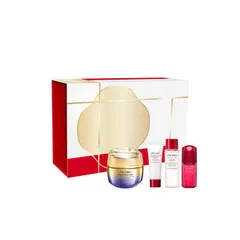
What does the product description say?
LIFTING AND FIRMING
Source: Shiseido UK
This product contains serine. This ingredient might be able to help reduce and prevent fine lines and wrinkles, improve skin elasticity and firmness, but there is not enough evidence that it actually works.
An amino-acid that helps to attract water to the upper layer of the skin. In combination with other amino-acids, might help to reduce fine lines and wrinkles
Is helpful in restoring skin barrier function supporting its moisture levels. Is claimed to stimulte collagen production in skin but evidence is lacking
Pure form of vitamin E. Can help moisturise and protect the skin from free radicals. Often used to help stabilise other ingredients or the formula itself
Can contain potent anti-oxidant compounds (abbreviated ECG, GCG, EGC, and EGCG) that might help protect the skin from free radicals. Can help calm down inflammation and has some anti-bacterial properties. Unfortunately, these antioxidants are unstable and lose their effectiveness very quickly in products. The concentration of the antioxidant compounds in the extract also tends to be low to be effective in topical formulation
Anti-oxidation
This product contains antioxidants (camellia japonica flower extract) that might be able to help neutralize free radicals in skin to lessen the damage it gets from the UV light (sun). There is not enough evidence to confirm their effectiveness in skin though.
A plant extract that might help neutralize free radicals in skin
An extract from fungus (mold) that typically appears on rice. It can help attract water to the upper layer of the skin, might help neutralize free radicals and possibly somewhat reduce hyperpigmentation
A plant extract that might help neutralize free radicals in skin
A plant extract that might have anti-oxidant properties
A plant extract that can contain saponins. Might have anti-bactrial and anti-oxidant effect in skin. Also can be used to help oil and water mix together
A fragrant plant extract. Might have some anti-oxidant properties. Can be irritating
A mix of amino acids and plant-based lipids. Helps to soften the upper layer of the skin and reduce water loss over time
Pure form of vitamin E. Can help moisturise and protect the skin from free radicals. Often used to help stabilise other ingredients or the formula itself
Can contain potent anti-oxidant compounds (abbreviated ECG, GCG, EGC, and EGCG) that might help protect the skin from free radicals. Can help calm down inflammation and has some anti-bacterial properties. Unfortunately, these antioxidants are unstable and lose their effectiveness very quickly in products. The concentration of the antioxidant compounds in the extract also tends to be low to be effective in topical formulation
Might be helpful in neutralizing free radicals. Can have a dehydration effect that might somewhat decrease the look of puffy eyes
Can be helpful in reducing inflammation in skin, including inflamed acne. It can be irritating
A more stable but less bio-available form of vitamin E compared to Tocopherol. Might help moisturize and protect the skin from free radicals, but mostly used in low concentrations to stabilize other ingredients.
A plant extract that might have some anti-inflammatory properties, but solid evidence is lacking. It can be irritating
Used to add a nice rose smell to the product. Might help attract water to the upper layer of the skin and have some anti-oxidant effect. Can be irritating
Moisturizing
This product can help improve hydration of the skin with the two types of ingredients.
The first type is called “humectants”:
these ingredients help attract water.
When humectants are on the surface of the skin, they “pull in” the moisture from the outside environment, or from
within deeper layers of the skin. The following ingredients in this product do the job:
diglycerin, erythritol.
This product also contains ingredients called “occlusives”. They help reduce the speed with which our skin loses moisture to the outside environment. These ingredients also help soften the upper layer of the skin, so it feels less tight and nicer to the touch. The following ingredients in this product do the job: bis-diglyceryl polyacyladipate-2, dimethicone.
Softens the upper layer of the skin and can support skin barrier function
Helps to attract water to the upper layer of the skin
One of the best moisturizing ingredients. Naturally present in skin. It attracts water to the upper layer of the skin working as a humectant
Is helpful in restoring skin barrier function supporting its moisture levels. Is claimed to stimulte collagen production in skin but evidence is lacking
Helps soften the upper layer of the skin
A mix of amino acids and plant-based lipids. Helps to soften the upper layer of the skin and reduce water loss over time
An amino-acid that helps to attract water to the upper layer of the skin. In combination with other amino-acids, might help to reduce fine lines and wrinkles
A type of hyaluronic acid that works as an excellent moisturizer by attracting water into the upper layer of the skin. Is typically feels less sticky on the skin compared to the usual hyaluronic acid
Helps soften the upper layer of the skin
Helps soften the upper layer of the skin and reduce water loss from its surface
Helps attract water to the upper layer of the skin
A silicone that helps to reduce water loss from the surface of the skin. Can temporarily "fill in" lines and wrinkles, absorb oil, and create a nice product finish
Helps attract water to the upper layer of the skin
Used to stabilize the product formulations and works as an emollient
An extract from fungus (mold) that typically appears on rice. It can help attract water to the upper layer of the skin, might help neutralize free radicals and possibly somewhat reduce hyperpigmentation
An emollient that helps soften the skin. It also forms a protective on its surface to reduce water loss
A non-drying alcohol. Works as an emollient. Helps water and oil mix together and creates a nice product texture
Improves the texture of the product and helps soften the skin. Helps oil and water mix together and can be used as a cleansing agent
Used to create a nice product texture and help delivery of other ingredients. Might be somewhat helpful in attracting water to the upper layer of the skin
Used to create a nice product consistency
A plant extract that might help to attract water to the upper layer of the skin, but it is not well studied. It can be irritating
Used to create a nice product consistency while softening the upper layer of the skin
Helps to soften the upper layer of the skin and create a nice product texture
Non-drying alcohol that helps water and oil mix together. Also serves as an emollient
An emollient. Is not recommended for acne-prone skin as it can be comedogenic
Helps attract water to the upper layer of the skin and improves the product texture
A sugar that attracts water to the upper layer of the skin
Used to add a nice rose smell to the product. Might help attract water to the upper layer of the skin and have some anti-oxidant effect. Can be irritating
Helps attract water to the upper layer of the skin and improves the product texture
Helps oil and water mix together and works as an emollient
Pure form of vitamin E. Can help moisturise and protect the skin from free radicals. Often used to help stabilise other ingredients or the formula itself
An emollient that helps soften the skin. It also forms a protective on its surface to reduce water loss.
Can contain potent anti-oxidant compounds (abbreviated ECG, GCG, EGC, and EGCG) that might help protect the skin from free radicals. Can help calm down inflammation and has some anti-bacterial properties. Unfortunately, these antioxidants are unstable and lose their effectiveness very quickly in products. The concentration of the antioxidant compounds in the extract also tends to be low to be effective in topical formulation
How honest is this product?
| Promise | Can it deliver? |
|---|---|
| Anti-aging |
Total Promises Fulfilled score: 75/100.
We receive a small commission for purchases made through these links at no cost for you. Thank you for your support! Learn more
Affiliate link · supports WIMJ at no cost to you
Potential irritants
Comedogenic ingredients
User reviews (0)
Averages from community submissions.
No reviews yet for this product.
Be the first to share your experience!
Tried this product?
Help capture what the ingredient list can't—texture, finish, pilling, scent, and more. Answer what you can, skip the rest.
Takes ~30 seconds.
Reviews are shown in aggregate. No personal details.
Key Actives
Is helpful in restoring skin barrier function supporting its moisture levels. Is claimed to stimulte collagen production in skin but evidence is lacking
A silicone that helps to reduce water loss from the surface of the skin. Can temporarily "fill in" lines and wrinkles, absorb oil, and create a nice product finish
A mix of amino acids and plant-based lipids. Helps to soften the upper layer of the skin and reduce water loss over time
A type of clay that consists mainly of aluminum silicate. Helps absorb oil and creates a thicker product consistency. Can be used to add a white color
An amino-acid that helps to attract water to the upper layer of the skin. In combination with other amino-acids, might help to reduce fine lines and wrinkles
A silicone that helps to reduce water loss from the surface of the skin. Can temporarily "fill in" lines and wrinkles, absorb oil, and create a nice product finish
A mix of amino acids and plant-based lipids. Helps to soften the upper layer of the skin and reduce water loss over time
One of the best moisturizing ingredients. Naturally present in skin. It attracts water to the upper layer of the skin working as a humectant
An emollient. Is not recommended for acne-prone skin as it can be comedogenic
Helps soften the upper layer of the skin and reduce water loss from its surface
Can help reduce hyperpigmentation
One of the best moisturizing ingredients. Naturally present in skin. It attracts water to the upper layer of the skin working as a humectant
Helps soften the upper layer of the skin
A type of hyaluronic acid that works as an excellent moisturizer by attracting water into the upper layer of the skin. Is typically feels less sticky on the skin compared to the usual hyaluronic acid
One of the best moisturizing ingredients. Naturally present in skin. It attracts water to the upper layer of the skin working as a humectant
Helps attract water to the upper layer of the skin
Helps to attract water to the upper layer of the skin
A type of hyaluronic acid that works as an excellent moisturizer by attracting water into the upper layer of the skin. Is typically feels less sticky on the skin compared to the usual hyaluronic acid
One of the best moisturizing ingredients. Naturally present in skin. It attracts water to the upper layer of the skin working as a humectant
Helps attract water to the upper layer of the skin
Softens the upper layer of the skin and can support skin barrier function
A plant extract that might help neutralize free radicals in skin
Helps soften the upper layer of the skin
Potential irritants
Can be drying and contribute to skin irritation. Used in formulars to dissolve other ingredients, create a thinner product consistency or for its antibacterial properties
Used to add a nice rose smell to the product. Might help attract water to the upper layer of the skin and have some anti-oxidant effect. Can be irritating
An essential oil. Potential allergen and can be irritating. It has some anti-bacterial properties
A fragrant plant extract. Might have some anti-oxidant properties. Can be irritating
A plant extract that might have some anti-inflammatory properties, but solid evidence is lacking. It can be irritating
Can be helpful in reducing inflammation in skin, including inflamed acne. It can be irritating
A plant extract that might help to attract water to the upper layer of the skin, but it is not well studied. It can be irritating
A common frangrance that can easily irritate skin, especially if exposed to air, light or heat
An aromatic blend of unspecified and possibly irritating ingredients
Helps water and oil mix together. Used as a cleansing ingredient. Could be an allergen
Helps oil and water mix together. Can be used as cleansing agent
An aromatic blend of unspecified and possibly irritating ingredients
A cleansing agent (SLS). It can be irritating
Can be drying and contribute to skin irritation. Used in formulars to dissolve other ingredients, create a thinner product consistency or for its antibacterial properties
An aromatic blend of unspecified and possibly irritating ingredients
A plant extract that can help calm down inflammation in skin. Can, however, itself be irritating
Produces temporary toning effect. Can help dissolve other ingredients or preserve products
Used to add a nice rose smell to the product. Might help attract water to the upper layer of the skin and have some anti-oxidant effect. Can be irritating
A plant extract that might help neutralize free radicals in skin
Can be drying and contribute to skin irritation. Used in formulars to dissolve other ingredients, create a thinner product consistency or for its antibacterial properties
An aromatic blend of unspecified and possibly irritating ingredients
An emollient. Is not recommended for acne-prone skin as it can be comedogenic
A more stable but less bio-available form of vitamin E compared to Tocopherol. Might help moisturize and protect the skin from free radicals, but mostly used in low concentrations to stabilize other ingredients.
Might be helpful in neutralizing free radicals. Can have a dehydration effect that might somewhat decrease the look of puffy eyes
Helps to control the skin's pH level. Maintains the skin's natural film of amino-lactic acids and oils. Helps to preserve products
Can work as an exfoliant but is typically used to adjust the product pH
Helps oil and water mix together. Could be comedogenic
Helps water and oil mix together. Has anti-bacterial properties that might be helpful in preventing blemishes
Used to stabilize product formulation, help create an even product layer over skin (for example, in sunscreen) and create a thicker product consistency
A plant extract that can contain saponins. Might have anti-bactrial and anti-oxidant effect in skin. Also can be used to help oil and water mix together
Helps create a thicker product consistency. Might be irritating
Used to stabilize product formulations
A more stable but less bio-available form of vitamin E compared to Tocopherol. Might help moisturize and protect the skin from free radicals, but mostly used in low concentrations to stabilize other ingredients.
A plant extract that might help neutralize free radicals in skin
A plant extract that might have anti-oxidant properties
Maintains the texture of skincare products. Allows the product to spread evenly. Helps oil and water mix together
Comedogenic ingredients
Used to stabilize the product formulations and works as an emollient
A non-drying alcohol. Works as an emollient. Helps water and oil mix together and creates a nice product texture
An emollient. Is not recommended for acne-prone skin as it can be comedogenic
Helps oil and water mix together. Could be comedogenic
Helps water and oil mix together. Has anti-bacterial properties that might be helpful in preventing blemishes
Used to stabilize the product formulations and works as an emollient
A cleansing agent (SLS). It can be irritating
All ingredients
Used to create a nice product texture and help delivery of other ingredients. Might be somewhat helpful in attracting water to the upper layer of the skin
One of the best moisturizing ingredients. Naturally present in skin. It attracts water to the upper layer of the skin working as a humectant
A silicone that helps to reduce water loss from the surface of the skin. Can temporarily "fill in" lines and wrinkles, absorb oil, and create a nice product finish
Can be drying and contribute to skin irritation. Used in formulars to dissolve other ingredients, create a thinner product consistency or for its antibacterial properties
Used to stabilize the product formulations and works as an emollient
Used to create a nice product consistency while softening the upper layer of the skin
A non-drying alcohol. Works as an emollient. Helps water and oil mix together and creates a nice product texture
Helps to soften the upper layer of the skin and create a nice product texture
An emollient. Is not recommended for acne-prone skin as it can be comedogenic
Helps oil and water mix togehter and creates a nice product texture
Helps soften the upper layer of the skin and reduce water loss from its surface
A more stable but less bio-available form of vitamin E compared to Tocopherol. Might help moisturize and protect the skin from free radicals, but mostly used in low concentrations to stabilize other ingredients.
An emollient that helps soften the skin. It also forms a protective on its surface to reduce water loss
Used to add a nice rose smell to the product. Might help attract water to the upper layer of the skin and have some anti-oxidant effect. Can be irritating
Might be helpful in neutralizing free radicals. Can have a dehydration effect that might somewhat decrease the look of puffy eyes
An essential oil. Potential allergen and can be irritating. It has some anti-bacterial properties
A mix of amino acids and plant-based lipids. Helps to soften the upper layer of the skin and reduce water loss over time
A fragrant plant extract. Might have some anti-oxidant properties. Can be irritating
A plant extract that might have some anti-inflammatory properties, but solid evidence is lacking. It can be irritating
Can contain potent anti-oxidant compounds (abbreviated ECG, GCG, EGC, and EGCG) that might help protect the skin from free radicals. Can help calm down inflammation and has some anti-bacterial properties. Unfortunately, these antioxidants are unstable and lose their effectiveness very quickly in products. The concentration of the antioxidant compounds in the extract also tends to be low to be effective in topical formulation
Can be helpful in reducing inflammation in skin, including inflamed acne. It can be irritating
A plant extract that might help to attract water to the upper layer of the skin, but it is not well studied. It can be irritating
Non-drying alcohol that helps water and oil mix together. Also serves as an emollient
Used to create a thicker product consistency
Improves the texture of the product and helps soften the skin. Helps oil and water mix together and can be used as a cleansing agent
Helps to control the skin's pH level. Maintains the skin's natural film of amino-lactic acids and oils. Helps to preserve products
Can work as an exfoliant but is typically used to adjust the product pH
A common frangrance that can easily irritate skin, especially if exposed to air, light or heat
Pure form of vitamin E. Can help moisturise and protect the skin from free radicals. Often used to help stabilise other ingredients or the formula itself
A preservative. It helps prevent bacterial growth in cosmetic products
An aromatic blend of unspecified and possibly irritating ingredients
An umbrella term for the following three colorants: CI 77491, CI 77492, CI 77499. They might be able to offer some protection against visible light, but the degree of the protection is not clear
An umbrella term for the following three colorants: CI 77491, CI 77492, CI 77499. They might be able to offer some protection against visible light, but the degree of the protection is not clear
Helps oil and water mix together. Could be comedogenic
One of the best moisturizing ingredients. Naturally present in skin. It attracts water to the upper layer of the skin working as a humectant
Helps to dissolve other ingredients in a formulation. Slows down the rate of product drying
Helps water and oil mix together. Has anti-bacterial properties that might be helpful in preventing blemishes
Used to stabilize the product formulations and works as an emollient
Helps attract water to the upper layer of the skin and improves the product texture
Helps water and oil mix together. Used as a cleansing ingredient. Could be an allergen
Helps oil and water mix together. Can be used as cleansing agent
An aromatic blend of unspecified and possibly irritating ingredients
Helps soften the upper layer of the skin and create a nice product finish
A type of clay that consists mainly of aluminum silicate. Helps absorb oil and creates a thicker product consistency. Can be used to add a white color
Used to create a nice product texture and help delivery of other ingredients. Might be somewhat helpful in attracting water to the upper layer of the skin
Used to stabilize product formulation, help create an even product layer over skin (for example, in sunscreen) and create a thicker product consistency
Helps attract water to the upper layer of the skin and improves the product texture
Pure form of vitamin E. Can help moisturise and protect the skin from free radicals. Often used to help stabilise other ingredients or the formula itself
A type of hyaluronic acid that works as an excellent moisturizer by attracting water into the upper layer of the skin. Is typically feels less sticky on the skin compared to the usual hyaluronic acid
A cleansing agent (SLS). It can be irritating
Helps to dissolve other ingredients in a formulation. Slows down the rate of product drying
Can be drying and contribute to skin irritation. Used in formulars to dissolve other ingredients, create a thinner product consistency or for its antibacterial properties
One of the best moisturizing ingredients. Naturally present in skin. It attracts water to the upper layer of the skin working as a humectant
An emollient that helps soften the skin. It also forms a protective on its surface to reduce water loss
A preservative. It helps prevent bacterial growth in cosmetic products
Helps create a thicker or gel-like product texture. It is not a surfactant but can be used in gentle cleansing formulations
An aromatic blend of unspecified and possibly irritating ingredients
Used to create a nice product texture and help delivery of other ingredients. Might be somewhat helpful in attracting water to the upper layer of the skin
A plant extract that can contain saponins. Might have anti-bactrial and anti-oxidant effect in skin. Also can be used to help oil and water mix together
Helps create a thicker product consistency. Might be irritating
An amino-acid that helps to attract water to the upper layer of the skin. In combination with other amino-acids, might help to reduce fine lines and wrinkles
A plant extract that can help calm down inflammation in skin. Can, however, itself be irritating
A type of hyaluronic acid that works as an excellent moisturizer by attracting water into the upper layer of the skin. Is typically feels less sticky on the skin compared to the usual hyaluronic acid
Pure form of vitamin E. Can help moisturise and protect the skin from free radicals. Often used to help stabilise other ingredients or the formula itself
One of the best moisturizing ingredients. Naturally present in skin. It attracts water to the upper layer of the skin working as a humectant
Used to create a nice product texture and help delivery of other ingredients. Might be somewhat helpful in attracting water to the upper layer of the skin
Produces temporary toning effect. Can help dissolve other ingredients or preserve products
A silicone that helps to reduce water loss from the surface of the skin. Can temporarily "fill in" lines and wrinkles, absorb oil, and create a nice product finish
An emollient that helps soften the skin. It also forms a protective on its surface to reduce water loss.
Used to stabilize product formulations
A more stable but less bio-available form of vitamin E compared to Tocopherol. Might help moisturize and protect the skin from free radicals, but mostly used in low concentrations to stabilize other ingredients.
An emollient that helps soften the skin. It also forms a protective on its surface to reduce water loss
A mix of amino acids and plant-based lipids. Helps to soften the upper layer of the skin and reduce water loss over time
Used to add a nice rose smell to the product. Might help attract water to the upper layer of the skin and have some anti-oxidant effect. Can be irritating
Softens the upper layer of the skin and can support skin barrier function
Helps attract water to the upper layer of the skin and repair the skin barrier function
Is helpful in restoring skin barrier function supporting its moisture levels. Is claimed to stimulte collagen production in skin but evidence is lacking
A plant oil that helps to soften the upper layer of the skin and can help restore skin's barrier function. Might have an anti-oxidant effect
A plant extract that might help neutralize free radicals in skin
Helps thicken the product formulation and create a gel-like texture
A plant extract that might help neutralize free radicals in skin
A plant extract that might have anti-oxidant properties
Maintains the texture of skincare products. Allows the product to spread evenly. Helps oil and water mix together
Can be drying and contribute to skin irritation. Used in formulars to dissolve other ingredients, create a thinner product consistency or for its antibacterial properties
An extract from fungus (mold) that typically appears on rice. It can help attract water to the upper layer of the skin, might help neutralize free radicals and possibly somewhat reduce hyperpigmentation
Pure form of vitamin E. Can help moisturise and protect the skin from free radicals. Often used to help stabilise other ingredients or the formula itself
A preservative. It helps prevent bacterial growth in cosmetic products
An aromatic blend of unspecified and possibly irritating ingredients
Ingredient list view
Water, Butylene glycol, Glycerin, Dimethicone, Alcohol, Ppg-3 dipivalate, Glyceryl stearate se, Pentaerythrityl tetraethylhexanoate, Cetearyl alcohol, Hydrogenated polydecene, Myristyl myristate, Peg-100 stearate, Silica, Bis-diglyceryl polyacyladipate-2, Potassium methoxysalicylate, Maltitol, Tocopheryl acetate, Peg/ppg-14/7 dimethyl ether, Peg/ppg-17/4 dimethyl ether, Rosa damascena flower water, Caffeine, Lavandula angustifolia oil, Phytosteryl/octyldodecyl lauroyl glutamate, Angelica keiskei leaf/stem extract, Crataegus monogyna flower extract, Lamium album flower/leaf/stem extract, Panax ginseng root extract, Camellia sinensis leaf extract, Inositol, Carthamus tinctorius flower extract, Ziziphus jujuba fruit extract, Rosmarinus officinalis leaf extract, Bupleurum falcatum root extract, Behenyl alcohol, Sodium acrylate/sodium acryloyldimethyl taurate copolymer, Stearyl alcohol, Polyvinyl alcohol, Isohexadecane, Polysorbate 80, Sorbitan tristearate, Trisodium edta, Sodium citrate, Succinoglycan, Sorbitan oleate, Citric acid, Sodium metaphosphate, Limonene, Hexyl cinnamal, Sodium metabisulfite, Tocopherol, Linalool, Citronellol, Alpinia speciosa leaf extract, Phenoxyethanol, Parfum, Iron oxides, Iron oxides, Water, Stearic acid, Peg-8, Myristic acid, Glycerin, Potassium hydroxide, Dipropylene glycol, Lauric acid, Glyceryl stearate se, Sorbitol, Cocamidopropyl betaine, Peg-60 glyceryl isostearate, Sodium methyl cocoyl taurate, Phytosteryl macadamiate, Parfum, Polyquaternium-39, Disodium edta, Water, Oryza sativa germ oil, Linalool, Geraniol, Citronellol, Kaolin, Sodium benzoate, Butylene glycol, Acrylates copolymer, Betaine, Silk powder, Tocopherol, Sodium acetylated hyaluronate, Artemisia princeps leaf extract, Sodium lauryl sulfate, Water, Dipropylene glycol, Alcohol, Glycerin, Diglycerin, Peg/ppg-14/7 dimethyl ether, Peg-20, Hydrogenated dimer dilinoleyl peg-44/poly(1,2-butanediol)-15 dimethyl ether, Phenoxyethanol, Methylparaben, Carbomer, Water, Erythritol, Parfum, Disodium edta, Potassium hydroxide, Butylene glycol, Linalool, Sapindus mukorossi peel extract, Sodium metabisulfite, Citronellol, Geraniol, Magnesium chloride, Theanine, Calcium chloride, Serine, Hamamelis virginiana leaf extract, Zingiber aromaticus extract, Sodium acetylated hyaluronate, Tocopherol, Artemisia princeps leaf extract, Water, Glycerin, Butylene glycol, Alcohol denat., Dimethicone, Diglycerin, Peg/ppg-17/4 dimethyl ether, Peg-8, Isodecyl neopentanoate, Trehalose, Ammonium acryloyldimethyltaurate/beheneth-25 methacrylate crosspolymer, Peg-14m, Tocopheryl acetate, Peg/ppg-14/7 dimethyl ether, Phytosteryl/octyldodecyl lauroyl glutamate, Rosa damascena flower water, Ectoin, Xylitol, Lauryl betaine, Origanum majorana leaf extract, Hydroxyproline, Camellia japonica seed oil, Camellia japonica flower extract, Houttuynia cordata extract, Sodium carboxymethyl beta-glucan, Camellia japonica leaf extract, Camellia japonica seed extract, Lactobacillus/hibiscus sabdariffa flower ferment filtrate, Iris florentina root extract, Ganoderma lucidum stem extract, Triethylhexanoin, Acrylates/c10-30 alkyl acrylate crosspolymer, Alcohol, Disodium edta, Potassium hydroxide, Silica, Isoceteth-10, Linalool, Sodium metabisulfite, Citronellol, Aspergillus ferment, Bht, Sodium bicarbonate, Tocopherol, Phenoxyethanol, Chlorphenesin, Sodium benzoate, Parfum
- Glycerol and the skin: holistic approach to its origin and functions
- Dimethicone as a protective ingredient in topical medications
- Final Report on the Safety Assessment of Dimethicone Copolyol
- Safety Assessment of Pentaerythrityl Tetraesters as Used in Cosmetics
- Safety Assessment of Polyene Group as Used in Cosmetics
- Safety assessment of bis-diglyceryl polyacyladipate-2 and bis-diglyceryl polyacyladipate-1 as used in cosmetics
- Quasi-Drugs Developed in Japan for the Prevention or Treatment of Hyperpigmentary Disorders
- Annex I: Clinical evidence regarding sensitisation to individual fragrance chemicals and to natural extracts
- Ginseng in Dermatology: A Review
- Antiaging effects of the mixture of Panax ginseng and Crataegus pinnatifida in human dermal fibroblasts and healthy human skin
- Allergic contact dermatitis induced by rosemary leaf extract in a cleansing gel
- Safety Assessment of Rosmarinus officinalis (Rosemary)-Derived Ingredients as Used in Cosmetics
- Rosmarinus officinalis Extract Suppresses Propionibacterium acnes–Induced Inflammatory Responses
- Final report on the safety assessment of sorbitan caprylate, sorbitan cocoate, sorbitan diisostearate, sorbitan dioleate, sorbitan distearate, sorbitan isostearate, sorbitan olivate, sorbitan sesquiisostearate, sorbitan sesquistearate, and sorbitan triisostearate
- Final report on the safety assessment of EDTA, calcium disodium EDTA, diammonium EDTA, dipotassium EDTA, disodium EDTA, TEA-EDTA, tetrasodium EDTA, tripotassium EDTA, trisodium EDTA, HEDTA, and trisodium HEDTA
- Surfactants and experimental irritant contact dermatitis
- Final report on the safety assessment of Sodium Metaphosphate, Sodium Trimetaphosphate, and Sodium Hexametaphosphate
- Final report on the safety assessment of sodium sulfite, potassium sulfite, ammonium sulfite, sodium bisulfite, ammonium bisulfite, sodium metabisulfite and potassium metabisulfite
- Vitamin E in dermatology
- Vitamin E and Skin Health
- The fatty acid profile of the skin surface lipid layer in papulopustular rosacea
- Safety Assessment of Alkyl Taurate Amides and Taurate Salts as Used in Cosmetics
- Safety Assessment of Phytosterols as Used in Cosmetics
- Final Report on the Safety Assessment of Acrylates Copolymer and 33 Related Cosmetic Ingredients
- Amended Safety Assessment of Acrylates Copolymers as Used in Cosmetics
- Acetylated Hyaluronic Acid: Enhanced Bioavailability and Biological Studies
- Tyrosinase inhibition, free radical scavenging, antimicroorganism and anticancer proliferation activities of Sapindus mukorossi extracts
- Application of Saponins in Foods and Cosmetics: Saponins of Mohave Yucca and Sapindus Mukurossi
- Analysis of the bioactive components of Sapindus saponins
- Evaluation of aqueous extract of Soapnut as surfactant in cosmetics
- Topical palmitoyl pentapeptide provides improvement in photoaged human facial skin
- Safety Assessment of Acryloyldimethyltaurate Polymers as Used in Cosmetics
- Topical effects of N-acetyl-L-hydroxyproline on ceramide synthesis and alleviation of pruritus
- Anti-photoaging capability of antioxidant extract from Camellia japonica leaf
- Amended Safety Assessment of Triglycerides as Used in Cosmetics
- Brewer's rice: A potential substrate for cosmeceutical bio-ingredient production by solid state fermentation using Aspergillus oryzae