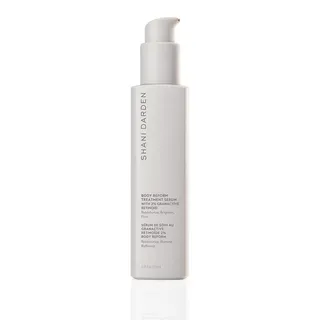
Shani Darden Skin Care Body Reform Treatment Serum
Works for
MoisturizingPanthenol, Acetyl hexapeptide-8 + 14 moreWorks well
“smoother, and softer”
This product can help improve hydration of the skin with the two types of ingredients.
The first type is called “humectants”:
these ingredients help attract water.
When humectants are on the surface of the skin, they “pull in” the moisture from the outside environment, or from
within deeper layers of the skin. The following ingredients in this product do the job:
glycerin, sodium lactate.
This product also contains ingredients called “occlusives”. They help reduce the speed with which our skin loses moisture to the outside environment. These ingredients also help soften the upper layer of the skin, so it feels less tight and nicer to the touch. The following ingredients in this product do the job: butyrospermum parkii butter, caprylic/capric triglyceride.
The following ingredients in this product are especially good for supporting the skin barrier and helping with the hydration level: acetyl hexapeptide-8, panthenol
Anti-agingHydroxypinacolone retinoate, Acetyl hexapeptide-8 + 4 moreWorks well
“firm crepiness”
This product can help reduce and prevent fine lines and wrinkles, improve skin elasticity and firmness because it contains hydroxypinacolone retinoate.
These ingredients in the product can also be helpful, even though there is less evidence for their effectiveness: acetyl hexapeptide-8.
Keep in mind that it typically takes at least 6 weeks to notice any results because the changes that are needed to improve fine lines and elasticity happen in the deeper layers of the skin. No topical anti-aging product can “erase” wrinkles or fully reverse signs of aging.
Evens skin toneHydroxypinacolone retinoate, Camellia sinensis leaf extract + 1 moreWorks well
“brighten dark spots”
This product can help reduce hypepigmentation and even out the skin tone because it contains the following effective ingredients: hydroxypinacolone retinoate.
Keep in mind that you would need to apply any topical skincare targetted at hypigmentation consistently for a couple of months to get a result. No topical skincare product can help get rid of hyperpigmentation (including post-acne marks and age spots) instantly.
Anti-blemishSide benefit · Hydroxypinacolone retinoate, Camellia sinensis leaf extract + 1 moreWorks well
This product can help reduce breakouts and clogged pores because it contains the following ingredient: hydroxypinacolone retinoate. This ingredient is used for treating acne and can have a noticeable effect.
Anti-oxidationSide benefit · Camellia sinensis leaf extract, Butyrospermum parkii butter + 2 moreMay help
This product contains antioxidants (camellia sinensis leaf extract) that can help neutralize free radicals in skin to lessen the damage it gets from the UV light (sun). There is some human evidence for this effect in skin, though it is smaller or less consistent than the evidence for the best antioxidants.
Can it cause trouble?
Irritancy1 strong irritant: Hydroxypinacolone retinoateMedium risk
Comedogenic2 ingredients rated 2 or more on the 0–5 pore-clogging scale2 flagged
User reviews
Be the first — your take helps the next person decide.
Ingredients
Filter by role to see what each ingredient is doing.
Water~45–55%
Caprylic/capric triglyceride~6.6–8%
- Irritation risk
- Medium
A good mix of fatty acids that forms a protective layer on the skin. Improves the shelf life of products. Derived from coconut and glycerin
More about Caprylic/capric triglycerideGlycerin~4.2–5.2%
- Irritation risk
- Low
One of the best moisturizing ingredients. Naturally present in skin. It attracts water to the upper layer of the skin working as a humectant
More about GlycerinDiheptyl succinate~3.3–4%
- Irritation risk
- Low
Helps to soften the upper layer of the skin and creates a nice product finish on the skin
More about Diheptyl succinatePanthenol~2.4–3%
- Irritation risk
- Low
Helps attract water to the upper layer of the skin and can help improve skin barrier function
More about PanthenolDimethyl isosorbide~2–2.4%
- Irritation risk
- Low
Used to dissolve other ingredients in a product and can enhance their ability to penetrate the skin
More about Dimethyl isosorbideArachidyl alcohol~1.7–2.1%
- Irritation risk
- Low
Used to soften the upper layer of the skin and create a thicker product consistency
More about Arachidyl alcoholAloe barbadensis leaf juice~1.5–1.8%
- Irritation risk
- Medium
Traditionally used to treat sunburns, dermatitis and inflammation, but evidence for its effectiveness is lacking. The extract can contain humectants that help attract water into the skin
More about Aloe barbadensis leaf juiceBehenyl alcohol~1.3–1.6%
- Irritation risk
- Low
Non-drying alcohol that helps water and oil mix together. Also serves as an emollient
More about Behenyl alcoholButyrospermum parkii butter~1–1.3%
- Irritation risk
- Low
- Comedogenicity
- 3/5
A great moisturising ingredient that softens the skin and reduces water loss from its upper layer. It also can be helpful in protecting skin from free radicals
More about Butyrospermum parkii butterTetrahexyldecyl ascorbate~0.7–1.1%
- Irritation risk
- Medium
Being a lipid soluble form of vitamin C, it is more stable than ascorbic acid, but still degrades quickly and needs to be stabilized in a formulation with another ingredient. It is claimed to penetrate skin better than pure vitamin C and have the the similar benefits, but solid studies of its effectiveness are lacking. Is likely to require a higher concentration in a product than pure vitamin C to be effective. It might be able to help reduce pore clogging.
More about Tetrahexyldecyl ascorbateHydroxypinacolone retinoate~0.15–0.3%
- Irritation risk
- High
A derivative of the most potent form of vitamin A, retinoic acid. The ingredient can be sold under name Granactive Retinoid. Note that if a skincare brand discloses the concentration of Granactive Retinoid in a product, the concentration refers to a diluted form of Hydroxypinacolone Retinoate: 1% of Granactive Retinoid corresponds to 0.1% of Hydroxypinacolone Retinoate. Hydroxypinacolone Retinoate (HPR) is a unique derivative of retinoic acid because it can directly work in the skin and does not require additional conversion steps. According to studies done by the manufacturer on models of human skin (not real people), this derivative is more effective than other cosmetic versions of retinoids (such as retinol, retinaldehyde, and retinyl palmitate), and, at the same time, causes less irritation. It has been also demonstrated to be more stable than retinol which makes formulating with easier and increases the chances that a product with it will maintain its effectiveness after opening. The packaging should still ideally be air-tight. HPR is available over the counter in the EU, UK, Asia, Australia and New Zealand, but is only with a prescription in Canada.
More about Hydroxypinacolone retinoateCamellia sinensis leaf extract~0.55–0.8%
- Irritation risk
- Low
Can contain potent anti-oxidant compounds (abbreviated ECG, GCG, EGC, and EGCG) that might help protect the skin from free radicals. Can help calm down inflammation and has some anti-bacterial properties. Unfortunately, these antioxidants are unstable and lose their effectiveness very quickly in products. The concentration of the antioxidant compounds in the extract also tends to be low to be effective in topical formulation
More about Camellia sinensis leaf extractSodium lactate~0.5–0.75%
- Irritation risk
- Medium
Helps attract water to the upper layer of the skin. Is often used to adjust the pH level of the product
More about Sodium lactateC20-22 alkyl phosphate~0.45–0.7%
Salinicoccus lysate filtrate~0.45–0.65%
- Irritation risk
- Low
Arachidyl glucoside~0.45–0.7%
Sodium acrylate/sodium acryloyldimethyl taurate copolymer~0.35–0.65%
- Irritation risk
- Low
Used to create a thicker product consistency
More about Sodium acrylate/sodium acryloyldimethyl taurate copolymerTocopheryl acetate~0.35–0.65%
- Irritation risk
- Medium
A more stable but less bio-available form of vitamin E compared to Tocopherol. Might help moisturize and protect the skin from free radicals, but mostly used in low concentrations to stabilize other ingredients.
More about Tocopheryl acetatePentylene glycol~0.4–0.6%
- Irritation risk
- Medium
Used to preserve products, dissolve other ingredients and create a nice product texture
More about Pentylene glycolC15-19 alkane~0.3–0.55%
- Irritation risk
- Low
Helps soften the upper layer of the skin and create a nice product texture
More about C15-19 alkanePolyglyceryl-6 laurate~0.3–0.55%
- Irritation risk
- Medium
Helps oil and water mix together
More about Polyglyceryl-6 laurateCapryloyl glycerin/sebacic acid copolymer~0.25–0.5%
- Irritation risk
- Low
Helps soften the upper layer of the skin
More about Capryloyl glycerin/sebacic acid copolymerDisodium phosphate~0.25–0.5%
- Irritation risk
- Low
Helps adjust the product pH and stabilize the formulation
More about Disodium phosphatePolyglycerin-6~0.25–0.5%
- Irritation risk
- Medium
Helps attract water to the upper layer of the skin
More about Polyglycerin-6Sorbitan oleate~0.25–0.5%
- Irritation risk
- Medium
- Comedogenicity
- 2/5
Helps oil and water mix together
More about Sorbitan oleateSorbitan isostearate~0.25–0.5%
- Irritation risk
- Low
Helps oil and water mix together
More about Sorbitan isostearateTetrasodium glutamate diacetate~0.25–0.45%
- Irritation risk
- Low
Helps stabilize the product formulation
More about Tetrasodium glutamate diacetateSodium phosphate~0.25–0.45%
Caprylyl glycol~0.25–0.5%
- Irritation risk
- Medium
Helps preserve products and creates a nice product texture
More about Caprylyl glycolPotassium sorbate~0.2–0.4%
Sodium benzoate~0.2–0.35%
Acetyl hexapeptide-8~0.2–0.35%
- Irritation risk
- Low
A type of peptide. Peptides are excellent moisturizers and might be able support collagen production reducing fine lines and wrinkles
More about Acetyl hexapeptide-8Citric acid~0.15–0.3%
- Irritation risk
- Medium
Can work as an exfoliant but is typically used to adjust the product pH
More about Citric acidXanthan gum~0.15–0.3%
- Irritation risk
- Low
Used to create a thicker product consistency
More about Xanthan gumEthylhexylglycerin~0.1–0.2%
C20-22 alcohols~0.1–0.2%
- Irritation risk
- Low
Phenoxyethanol~0.15–0.25%
- Irritation risk
- Low
A preservative. It helps prevent bacterial growth in cosmetic products
More about PhenoxyethanolIngredient list view
Water, Caprylic/capric triglyceride, Glycerin, Diheptyl succinate, Panthenol, Dimethyl isosorbide, Arachidyl alcohol, Aloe barbadensis leaf juice, Behenyl alcohol, Butyrospermum parkii butter, Tetrahexyldecyl ascorbate, Hydroxypinacolone retinoate, Camellia sinensis leaf extract, Sodium lactate, C20-22 alkyl phosphate, Salinicoccus lysate filtrate, Arachidyl glucoside, Sodium acrylate/sodium acryloyldimethyl taurate copolymer, Tocopheryl acetate, Pentylene glycol, C15-19 alkane, Polyglyceryl-6 laurate, Capryloyl glycerin/sebacic acid copolymer, Disodium phosphate, Polyglycerin-6, Sorbitan oleate, Sorbitan isostearate, Tetrasodium glutamate diacetate, Sodium phosphate, Caprylyl glycol, Potassium sorbate, Sodium benzoate, Acetyl hexapeptide-8, Citric acid, Xanthan gum, Ethylhexylglycerin, C20-22 alcohols, Phenoxyethanol
Compare prices
Retailers ranked by price — lowest first.
Affiliate links · As an Amazon Associate, WIMJ earns from qualifying purchases.
Worth comparing, line by line.
Match % combines shared ingredients, the first five ingredients, shared actives and hero ingredients, irritancy (lower counts in the alternative's favour), texture and body area. Only products in the same routine step are compared.
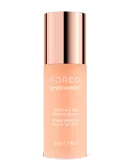
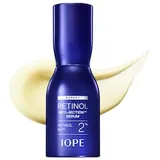
| Shani Darden Skin CareBody Reform Treatment SerumYOUR PRODUCT | FOREOSUPERCHARGED Triple-Action Firming Serum | IOPEExpert Retinol RX 2% Reti-Jection Serum for Wrinkles | BeautyBioThe Nightly Retinol Repair Serum | |
|---|---|---|---|---|
| Match | — | 64% | 62% | 60% |
| Price | — | $46.06 | $53.90 | — |
| Shared key ingredients | — | 5 of 9 | 5 of 9 | 5 of 9 |
| Key difference | — | Adenosine | Niacinamide | Palmitoyl Tripeptide-28 |
| Irritancy | Medium | Medium | Medium | Medium |
| Drying alcohol | — | — | — | — |
| View product | Shop | Shop | Shop |


More alternatives: Clinique Smart Clinical Repair Wrinkle Correcting SerumROUND LAB Camellia Deep Collagen Ampoule
Sources cited in this review
Every concentration estimate and effectiveness label is anchored to one of these 9 studies and safety reviews.
- 1
- 2Skin moisturizing effects of panthenol-based formulationspdfs.semanticscholar.org
- 3
- 4
- 5
- 6

Affiliate links · As an Amazon Associate, WIMJ earns from qualifying purchases.