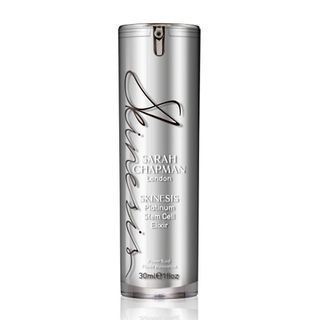
Sarah Chapman Skinesis Platinum Stem Cell Elixir
Works for
1 of 1 advertised claim delivered
Anti-aging4 ingredients credited for this claimStrong support
“The skin barrier is supported by botanical omega rich oils while vitamin C radiance boosters and skin brighteners promote a youthful glow.”
This product can help reduce and prevent fine lines and wrinkles, improve skin elasticity and firmness because it contains retinol.
These ingredients in the product can also be helpful, even though there is less evidence for their effectiveness: acetyl tetrapeptide-17.
Keep in mind that it typically takes at least 6 weeks to notice any results because the changes that are needed to improve fine lines and elasticity happen in the deeper layers of the skin. No topical anti-aging product can “erase” wrinkles or fully reverse signs of aging.
Anti-oxidationNot advertised by the brand · 13 ingredients credited for this claimStrong support
This product contains antioxidants (glutathione, retinol) that can help neutralize free radicals in skin. By doing so, they can lessen the damage the skin gets from the UV light (sun).
The following ingredients - arbutin also can have an antioxidant effect, but there is less evidence to confirm their effectiveness in skin.
Evens skin toneNot advertised by the brand · 4 ingredients credited for this claimStrong support
This product can help reduce hypepigmentation and even out the skin tone because it contains the following effective ingredients: retinol.
In addition, this product contains glutathione. This ingredient (ingredients) might help reduce hyperpigmentation, but the effect, if any, is likely to be small.
The following ingredient (ingredients) in this product might be helpful, but there is no evidence to confirm that it actually can help even out the skin tone: arbutin.
Keep in mind that you would need to apply any topical skincare targetted at hypigmentation consistently for a couple of months to get a result. No topical skincare product can help get rid of hyperpigmentation (including post-acne marks and age spots) instantly.
MoisturizingNot advertised by the brand · 21 ingredients credited for this claimStrong support
This product can help improve hydration of the skin with the two types of ingredients.
The first type is called “humectants”:
these ingredients help attract water.
When humectants are on the surface of the skin, they “pull in” the moisture from the outside environment, or from
within deeper layers of the skin. The following ingredients in this product do the job:
glycerin, leontopodium alpinum callus culture extract.
This product also contains ingredients called “occlusives”. They help reduce the speed with which our skin loses moisture to the outside environment. These ingredients also help soften the upper layer of the skin, so it feels less tight and nicer to the touch. The following ingredients in this product do the job: beeswax, cera alba.
The following ingredients in this product are especially good for supporting the skin barrier and helping with the hydration level: acetyl tetrapeptide-17, linoleic acid
ExfoliationNot advertised by the brand · 1 ingredient credited for this claimStrong support
This product can help exfoliate the skin. In other words, it helps break down the bonds between dead cells on the surface of the skin and speed up the skin turnover. Skin often appears softer and brighter after exfoliation, but overdoing it can result in disrupted skin barrier. The following ingredient is doing the exfoliating job in this product: retinol.
Anti-blemishNot advertised by the brand · 2 ingredients credited for this claimStrong support
This product can help reduce breakouts and clogged pores because it contains the following ingredient: retinol. This ingredient is used for treating acne and can have a noticeable effect.
The following ingredient (ingredients) in this product might be helpful, but there is no evidence to confirm that it actually works: linoleic acid
Can it cause trouble?
Irritancy23 strong irritants: Alcohol, Parfum + 21 more — patch-test recommendedHigh risk
Comedogenic3 ingredients rated 2 or more on the 0–5 pore-clogging scale3 flagged


User reviews
Be the first — your take helps the next person decide.
Ingredients
Filter by role to see what each ingredient is doing.
Prunus armeniaca kernel oil~28–35%
- Irritation risk
- Medium
An emollient that helps soften the skin
More about Prunus armeniaca kernel oilMacadamia ternifolia seed oil~6.3–7.7%
- Irritation risk
- Medium
Plant oil from nuts that helps soften the upper layer of the skin. Contains a high concentration of oleic acid that can weaken skin's barrier function and increase water-loss while enhancing penetration of other ingredients
More about Macadamia ternifolia seed oilVitis vinifera seed oil~5.9–7.2%
- Irritation risk
- Medium
A great emollient that can also have anti-oxidant properties
More about Vitis vinifera seed oilCocos nucifera oil~4.4–5.4%
- Irritation risk
- Low
- Comedogenicity
- 3/5
An emollient. Found to be as effective as a moisturizer for dry skin as mineral oil. Could be comedogenic
More about Cocos nucifera oilWater~3.2–3.9%
Glycerin~2.5–3.1%
- Irritation risk
- Low
One of the best moisturizing ingredients. Naturally present in skin. It attracts water to the upper layer of the skin working as a humectant
More about GlycerinBorago officinalis seed oil~2–2.4%
- Irritation risk
- Low
A plant oil that is effective in reducing irritation in skin, restore the barrier function and support its hydration
More about Borago officinalis seed oilCoconut alkanes~1.6–2%
- Irritation risk
- Medium
- Comedogenicity
- 2/5
An emollient that helps soften the skin
More about Coconut alkanesAscorbyl tetraisopalmitate~1.3–1.6%
- Irritation risk
- Medium
A vitamin C derivative. Studies show that is might be effective in reducing hyperpigmentation, but there are no studies confirming that it is effectively converted into the bioavailable form of Vitamin C in skin. It is not clear how this derivative compares in effectiveness to the topical application of bioavailable form of vitamin C (L-ascorbic acid)
More about Ascorbyl tetraisopalmitateMaltodextrin~1.3–1.6%
- Irritation risk
- Low
Used to stabilize the product formulation and can help absorb oil
More about MaltodextrinTriticum vulgare germ oil~1–1.2%
- Irritation risk
- Low
- Comedogenicity
- 3/5
A good emoillient. Contains vitamin E which can help neutralise free radicals, however the oil is unstable. Avoid if you have gluten or wheat sensitivity (including food allergies).
More about Triticum vulgare germ oilAlcohol~0.75–1.1%
- Irritation risk
- High
Can be drying and contribute to skin irritation. Used in formulars to dissolve other ingredients, create a thinner product consistency or for its antibacterial properties
More about AlcoholParfum~0.7–1.05%
- Irritation risk
- High
An aromatic blend of unspecified and possibly irritating ingredients
More about ParfumCaprylic/capric triglyceride~0.75–1.15%
- Irritation risk
- Medium
A good mix of fatty acids that forms a protective layer on the skin. Improves the shelf life of products. Derived from coconut and glycerin
More about Caprylic/capric triglycerideBrassica campestris/aleurites fordi oil copolymer~0.95–1.15%
- Irritation risk
- Low
Butylene glycol~0.65–0.95%
- Irritation risk
- Low
Used to create a nice product texture and help delivery of other ingredients. Might be somewhat helpful in attracting water to the upper layer of the skin
More about Butylene glycolPolyglyceryl-4 laurate/sebacate~0.6–0.9%
Polyglyceryl-6 caprylate/caprate~0.6–0.85%
Polysorbate 20~0.55–0.85%
Leontopodium alpinum callus culture extract~0.5–0.75%
- Irritation risk
- Low
A plant stem cell extract that might help neutralize free radicals and reduce inflammation in skin
More about Leontopodium alpinum callus culture extractPlantago lanceolata leaf extract~0.5–0.75%
- Irritation risk
- Medium
A plant extract that might have anti-oxidant properties
More about Plantago lanceolata leaf extractCoco-caprylate/caprate~0.6–0.9%
- Irritation risk
- Low
Helps to soften the upper layer of the skin without creating a greasy texture
More about Coco-caprylate/caprateHydroxypropyl cyclodextrin~0.55–0.85%
- Irritation risk
- Medium
Used to stabilize product formulations and help soften the upper layer of the skin
More about Hydroxypropyl cyclodextrinLecithin~0.6–0.85%
- Irritation risk
- Low
Used mostly for creating emulsions - helping oil and water mix together. Helps soften the upper layer of the skin
More about LecithinOnopordum acanthium flower/leaf/stem extract~0.5–0.75%
- Irritation risk
- Low
Retinol~0.5–0.7%
- Irritation risk
- High
Two steps removed from the active form of vitamin A - retinoic acid. Once converted to the retinoic acid in the skin, retinol is proven to be effective against all signs of aging. It improves skin cell turnover, helps fight blemishes and clogged pores, can regulate excess oil production and even skin tone. It can, however, be quite irritating
More about RetinolSwertia chirata extract~0.5–0.75%
- Irritation risk
- Medium
A plant extract that can have an anti-bacterial and anti-inflammatory effect, but evidence of effectiveness is lacking
More about Swertia chirata extractSpilanthes acmella flower extract~0.5–0.75%
- Irritation risk
- High
Plant extract that might hep calm down inflammation in skin
More about Spilanthes acmella flower extractXanthan gum~0.5–0.75%
- Irritation risk
- Low
Used to create a thicker product consistency
More about Xanthan gumArbutin~0.5–0.75%
- Irritation risk
- Medium
Beta-arbutin. Can help to reduce hyperpigmentation and has an anti-oxidant effect when used in high enough concentration. Is less effective compared to alpha-arbutin
More about ArbutinLinoleic acid~0.6–0.9%
- Irritation risk
- Low
An excellent emollient. Helps soften the skin, restore its barrier function, and can help to calm down inflammation. It can be helpful to prevent blemishes and clogged pores
More about Linoleic acidTocopheryl acetate~0.5–0.75%
- Irritation risk
- Medium
A more stable but less bio-available form of vitamin E compared to Tocopherol. Might help moisturize and protect the skin from free radicals, but mostly used in low concentrations to stabilize other ingredients.
More about Tocopheryl acetateGlutathione~0.5–0.75%
- Irritation risk
- Medium
A peptide that can help neutralize free radicals in skin and reduce melanin production resulting in skin lightening effect and reduction in hyperpigmentation. It can also help attract moisture to the upper layer of the skin
More about GlutathioneMyristoyl tripeptide-31~0.5–0.75%
- Irritation risk
- Low
Ascorbyl palmitate~0.5–0.75%
- Irritation risk
- Medium
Being a lipid soluble form of vitamin C, it is more stable and can penetrate the skin better than L-Ascorbic acid. It is effective in protecting the skin from free radicals, as well as evening the skin tone, but is less effective in stimulating collagen production compared to L-Ascorbic acid.
More about Ascorbyl palmitateAcetyl tetrapeptide-17~0.5–0.75%
- Irritation risk
- Low
A type of peptide. Peptides are excellent moisturizers and might be able support collagen production reducing fine lines and wrinkles
More about Acetyl tetrapeptide-17Colloidal platinum~0.5–0.75%
- Irritation risk
- Low
Citrus aurantium amara leaf/twig oil~0.5–0.75%
- Irritation risk
- High
Citrus aurantium amara flower oil~0.5–0.75%
- Irritation risk
- High
Used as a fragrance. Can be irritating
More about Citrus aurantium amara flower oilCitrus aurantium dulcis peel oil expressed~0.45–0.7%
- Irritation risk
- High
Myrocarpus fastigiatus oil~0.5–0.75%
- Irritation risk
- Low
Cedrus atlantica bark oil~0.45–0.7%
- Irritation risk
- Low
Cedrus atlantica bark extract~0.45–0.7%
- Irritation risk
- Low
Cananga odorata flower oil~0.45–0.7%
Pelargonium graveolens oil~0.5–0.7%
Vetiveria zizanoides root oil~0.45–0.7%
- Irritation risk
- Low
Apium graveolens seed oil~0.45–0.7%
- Irritation risk
- Low
Rosa damascena flower extract~0.5–0.7%
Polianthes tuberosa flower extract~0.5–0.7%
- Irritation risk
- High
Jasminum officinale flower extract~0.45–0.7%
Styrax tonkinensis resin extract~0.45–0.7%
- Irritation risk
- Low
Bulnesia sarmientoi wood oil~0.5–0.75%
- Irritation risk
- Low
Salvia sclarea oil~0.45–0.7%
- Irritation risk
- High
Santalum album oil~0.5–0.75%
Cera alba~0.7–1.05%
- Irritation risk
- Medium
Forms a protective barrier that holds water and keeps dry skin hydrated. Keeps an emulsion from separating into its oil and liquid components, and increases the thickness of a product. Can be an allergen
More about Cera albaBeeswax~0.5–0.7%
- Irritation risk
- Low
Forms a protective barrier that holds water and keeps dry skin hydrated. Keeps an emulsion from separating into its oil and liquid components, and increases the thickness of a product. Can be an allergen
More about BeeswaxAnthemis nobilis flower oil~0.35–0.65%
- Irritation risk
- High
An essential oil that is used as a fragrance and can be irritating. It might have some anti-oxidant effect in skin
More about Anthemis nobilis flower oilViola odorata leaf extract~0.4–0.6%
- Irritation risk
- Low
Aniba rosaeodora wood oil~0.3–0.6%
- Irritation risk
- High
Juniperus mexicana wood oil~0.3–0.6%
- Irritation risk
- Low
Menthol~0.3–0.6%
- Irritation risk
- High
Linum usitatissimum seed oil~0.3–0.55%
Pogostemon cablin leaf oil~0.3–0.55%
Eugenia caryophyllus leaf oil~0.25–0.45%
- Irritation risk
- High
An essential oil. Used as a fragrance. Can be irritating and sensitizing
More about Eugenia caryophyllus leaf oilCupressus funebris wood oil~0.2–0.4%
- Irritation risk
- Low
Benzyl salicylate~0.15–0.3%
Citronellol~0.15–0.3%
Geraniol~0.2–0.35%
Hydroxycitronellal~0.15–0.3%
- Irritation risk
- High
A fragrance. A likely allergen and can be irritating
More about HydroxycitronellalLimonene~0.1–0.2%
- Irritation risk
- High
A common frangrance that can easily irritate skin, especially if exposed to air, light or heat
More about LimoneneLinalool~0.1–0.2%
Ingredient list view
Prunus armeniaca kernel oil, Macadamia ternifolia seed oil, Vitis vinifera seed oil, Cocos nucifera oil, Water, Glycerin, Borago officinalis seed oil, Coconut alkanes, Ascorbyl tetraisopalmitate, Maltodextrin, Triticum vulgare germ oil, Alcohol, Parfum, Caprylic/capric triglyceride, Brassica campestris/aleurites fordi oil copolymer, Butylene glycol, Polyglyceryl-4 laurate/sebacate, Polyglyceryl-6 caprylate/caprate, Polysorbate 20, Leontopodium alpinum callus culture extract, Plantago lanceolata leaf extract, Coco-caprylate/caprate, Hydroxypropyl cyclodextrin, Lecithin, Onopordum acanthium flower/leaf/stem extract, Retinol, Swertia chirata extract, Spilanthes acmella flower extract, Xanthan gum, Arbutin, Unknown, Linoleic acid, Tocopheryl acetate, Glutathione, Myristoyl tripeptide-31, Ascorbyl palmitate, Acetyl tetrapeptide-17, Colloidal platinum, Citrus aurantium amara leaf/twig oil, Citrus aurantium amara flower oil, Citrus aurantium dulcis peel oil expressed, Myrocarpus fastigiatus oil, Cedrus atlantica bark oil, Cedrus atlantica bark extract, Cananga odorata flower oil, Pelargonium graveolens oil, Vetiveria zizanoides root oil, Apium graveolens seed oil, Rosa damascena flower extract, Polianthes tuberosa flower extract, Jasminum officinale flower extract, Styrax tonkinensis resin extract, Bulnesia sarmientoi wood oil, Salvia sclarea oil, Santalum album oil, Cera alba, Beeswax, Anthemis nobilis flower oil, Viola odorata leaf extract, Aniba rosaeodora wood oil, Juniperus mexicana wood oil, Menthol, Linum usitatissimum seed oil, Pogostemon cablin leaf oil, Eugenia caryophyllus leaf oil, Cupressus funebris wood oil, Benzyl salicylate, Citronellol, Geraniol, Hydroxycitronellal, Limonene, Linalool
Compare prices
Retailers ranked by price — lowest first.
Worth comparing, line by line.
Match % combines shared ingredients, the first five ingredients, shared actives and hero ingredients, irritancy (lower counts in the alternative's favour), texture and body area. Only products in the same routine step are compared.
| Sarah ChapmanSkinesis Platinum Stem Cell ElixirYOUR PRODUCT | NaturiumRetinol Cream 2.5% | HydroPeptideTravel-Size Nimni Cream | ZO Skin HealthIntense Eye Creme | |
|---|---|---|---|---|
| Match | — | 57% | 57% | 57% |
| Price | $200.95 | $15.99−$184.96 | $45.00−$155.95 | $100.63−$100.32 |
| Shared key ingredients | — | 4 of 16 | 4 of 16 | 4 of 16 |
| Key difference | — | Retinyl Palmitate | Ceramide Np | Acetyl Tetrapeptide-5 |
| Irritancy | High | Medium | Medium | Medium |
| Drying alcohol | Contains drying alcohol | — | — | — |
| View product | Shop | Shop | Shop |


Product summary
"Sarah Chapman - Skinesis Platinum Stem Cell Elixir" is a well-rounded moisturizing product. To work well, any moisturizer needs to include a combination of water-binding and emollient ingredients. Sarah Chapman - Skinesis Platinum Stem Cell Elixir ticks this box. Humectants in this product (glycerin, leontopodium alpinum callus culture extract and butylene glycol) help to increase the water content in the upper layer of the skin. (These ingredients do so by "capturing" water molecules from the outside air or from within the deeper layers of the skin). Linoleic acid, borago officinalis seed oil, prunus armeniaca kernel oil, triticum vulgare germ oil and vitis vinifera seed oil in this product help decrease the water evoporation from the skin, so that it stays hydrated for longer. These ingredients also soften the skin and take away the feeling of tightness and dryness.
Ingredient callouts
- this moisturizer contains an effective form of retinoids (vitamin A): retinol 0.50% - 0.70%. Retinoids are potent multitasking actives. They work to improve and prevent early signs of aging, reduce hyperpigmentation (age spots and post-acne marks), and prevent inflamed blemishes and clogged pores. The downside of retinoids is that they can be irritating. If you are not already using a retinoid in your routine, it is best to start slowly and apply the retinoid product only a few times per week. If your skin tolerates it well, you can gradually increase the frequency to daily. Because of the irritation risk of retinoids, we recommend to have another, retinoid-free moisturizer in your routine to use on the alternative days or when your skin feels dry.
- This moistruizer also contains peptides (acetyl tetrapeptide-17 0.50% - 0.75%). Peptides is a very big group of ingredients. They all consist of a different combination of amino-acids. Our skin produces peptides naturally. Some of them work as natural anti-biotics, promote wound-healing and production of collagen. The scientists are still studying how effective the topical application of peptides is, but it is very likely that peptides in skincare are helpful. They might be able to support skin barrier restoration and even have an anti-aging benefit. At the very least, they certainly help attract water to the skin and support the hydration in this way.
- Another helpful ingredient in this moisturizer is Linoleic Acid. It is one of the fatty acids naturally present in skin. It is part of the skin barrier. Preliminary research shows that it might be able to reduce clogged pores.
Irritation risk
This moisturizer contains a bunch of common irritants, including ingredients that do not provide any known benefit for the skin. It might not be the best choice if your skin is sensitive. We assess the overall irritancy of this moisturizer to be high. For a detailed overview of all potential irritants: click here
You can see the detailed formula review with the breakdown of all actives in the product and the full ingredient list with estimated concentrations in the tables below.
Price
The product retails from 152.00£ up to 173.28£ in the United Kingdom.
For a detailed price comparison: click here.
Sources cited in this review
Every concentration estimate and effectiveness label is anchored to one of these 28 studies and safety reviews.
- 1
- 2
- 3
- 4
- 5
- 6

Affiliate links · As an Amazon Associate, WIMJ earns from qualifying purchases.