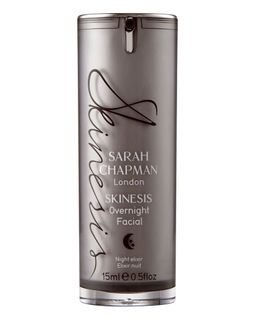
Sarah Chapman Overnight Facial

Sarah Chapman Overnight Facial

Efficacy50/100IrritancyHigh
Edit

Works for

1 of 2 advertised claims delivered

Anti-aging
6 ingredients credited for this claim
Strong support
What the product description says
“Sarah Chapman Overnight Facial 15ml Awaken your skin’s plump, smooth, youthful and rejuvenated glow overnight with Sarah Chapman’s Overnight Facial, a serum-oil elixir that’s been (rightfully) lauded with beauty awards for its transformative benefits, now available in a sized-to-try edition.”
Source: Cultbeauty

This product can help reduce and prevent fine lines and wrinkles, improve skin elasticity and firmness because it contains palmitoyl hexapeptide-12.

Keep in mind that it typically takes at least 6 weeks to notice any results because the changes that are needed to improve fine lines and elasticity happen in the deeper layers of the skin. No topical anti-aging product can “erase” wrinkles or fully reverse signs of aging.

Palmitoyl hexapeptide-12Key activeEffect: HighA type of peptide. Peptides are excellent moisturizers and might be able support collagen production reducing fine lines and wrinkles~0.15–0.6%
Thioctic acidEffect: Low~0.15–0.6%
UbiquinoneEffect: LowCoenzyme Q10. It helps neutralize free radicals in skin, improves skin hydration and might be helpful agains fine lines and wrinkles. It can be an allergen~0.2–0.75%
Limnanthes alba seed oilEffect: LowThis oil's cmposition is closest to rapeseed oil. It is a very stable oil and serves as an emoillient~0.6–1.35%
Tetrahexyldecyl ascorbateUnder-dosedEffect: HighBeing a lipid soluble form of vitamin C, it is more stable than ascorbic acid, but still degrades quickly and needs to be stabilized in a formulation with another ingredient. It is claimed to penetrate skin better than pure vitamin C and have the the similar benefits, but solid studies of its effectiveness are lacking. Is likely to require a higher concentration in a product than pure vitamin C to be effective. It might be able to help reduce pore clogging.~1.5–2.3%
Retinyl palmitateUnder-dosedEffect: MediumThree steps removed from the active form of vitamin A - retinoic acid. To have an effect in the skin, it first needs to be converted twice to become the retinoic acid. This means it is less potent than retinol, but could also be less irritating. Once converted to the retinoic acid in the skin, it helps against all signs of aging, improves skin cell turnover and helps fight blemishes and clogged pores. However, in many cosmetic formulations, it is used in a concentration that is too low to have the full effect~0.15–0.6%
Evens skin tone
2 ingredients credited for this claim
Weak support
What the product description says
“Familiar ingredients such as vitamins C and A brighten skin tone and defy signs of ageing, alongside more advanced technologies, including ‘Renovage’ (which helps to increase the life span of cells) and ‘Dermaxyl’ (which boosts collagen via advanced peptide technology).”
Source: Cultbeauty

Effective ingredients missing or their concentration is too low

Tetrahexyldecyl ascorbateUnder-dosedEffect: HighBeing a lipid soluble form of vitamin C, it is more stable than ascorbic acid, but still degrades quickly and needs to be stabilized in a formulation with another ingredient. It is claimed to penetrate skin better than pure vitamin C and have the the similar benefits, but solid studies of its effectiveness are lacking. Is likely to require a higher concentration in a product than pure vitamin C to be effective. It might be able to help reduce pore clogging.~1.5–2.3%
Retinyl palmitateUnder-dosedEffect: MediumThree steps removed from the active form of vitamin A - retinoic acid. To have an effect in the skin, it first needs to be converted twice to become the retinoic acid. This means it is less potent than retinol, but could also be less irritating. Once converted to the retinoic acid in the skin, it helps against all signs of aging, improves skin cell turnover and helps fight blemishes and clogged pores. However, in many cosmetic formulations, it is used in a concentration that is too low to have the full effect~0.15–0.6%
Anti-oxidation
Not advertised by the brand · 7 ingredients credited for this claim
Strong support

This product contains antioxidants (thioctic acid, ubiquinone) that can help neutralize free radicals in skin. By doing so, they can lessen the damage the skin gets from the UV light (sun).

UbiquinoneKey activeEffect: HighCoenzyme Q10. It helps neutralize free radicals in skin, improves skin hydration and might be helpful agains fine lines and wrinkles. It can be an allergen~0.2–0.75%
Thioctic acidKey activeEffect: High~0.15–0.6%
Pelargonium graveolens flower oilEffect: LowAn essential oil. Can be irritating. Can become an allergen with oxidation~0.15–0.6%
Limnanthes alba seed oilEffect: LowThis oil's cmposition is closest to rapeseed oil. It is a very stable oil and serves as an emoillient~0.6–1.35%
Tetrahexyldecyl ascorbateUnder-dosedEffect: HighBeing a lipid soluble form of vitamin C, it is more stable than ascorbic acid, but still degrades quickly and needs to be stabilized in a formulation with another ingredient. It is claimed to penetrate skin better than pure vitamin C and have the the similar benefits, but solid studies of its effectiveness are lacking. Is likely to require a higher concentration in a product than pure vitamin C to be effective. It might be able to help reduce pore clogging.~1.5–2.3%
Tocopheryl acetateEffect: Low, below effective doseA more stable but less bio-available form of vitamin E compared to Tocopherol. Might help moisturize and protect the skin from free radicals, but mostly used in low concentrations to stabilize other ingredients.~0.35–0.75%
Anthemis nobilis flower oilEffect: Low, below effective doseAn essential oil that is used as a fragrance and can be irritating. It might have some anti-oxidant effect in skin~0.15–0.5%
Moisturizing
Not advertised by the brand · 16 ingredients credited for this claim
Strong support

This product can help soften the skin and reduce its moisture loss with emollients and occlusives: caprylic/capric triglyceride, phenyl trimethicone.

Keep in mind that this product does not contain effective ingredients to attract water to the upper layer of the skin. This is why an additional product with humectants like glycerin or hyaluronic acid can be helpful (apply it before this product for the best results).

The following ingredients in this product are especially good for supporting the skin barrier and helping with the hydration level: ceramide 2, palmitoyl hexapeptide-12

Limnanthes alba seed oilKey active· EmollientEffect: HighThis oil's cmposition is closest to rapeseed oil. It is a very stable oil and serves as an emoillient~0.6–1.35%
Palmitoyl hexapeptide-12HeroEffect: HighA type of peptide. Peptides are excellent moisturizers and might be able support collagen production reducing fine lines and wrinkles~0.15–0.6%
Phenyl trimethiconeKey active· OcclusiveEffect: HighA type of silicone that can decrease loss of moisture from the skin surface. It helps create a nice product texture~0.9–1.35%
Caprylic/capric triglycerideKey active· Emollient, OcclusiveEffect: HighA good mix of fatty acids that forms a protective layer on the skin. Improves the shelf life of products. Derived from coconut and glycerin~2.2–3.3%
Ceramide 2Hero· EmollientEffect: HighA type of lipid similar to ceramides naturally present in skin. Helps to soften the upper layer of the skin and supports the skin barrier function to keep it hydrated. Can help to prevent inflammation in skin~0.2–0.75%
UbiquinoneKey activeEffect: HighCoenzyme Q10. It helps neutralize free radicals in skin, improves skin hydration and might be helpful agains fine lines and wrinkles. It can be an allergen~0.2–0.75%
Simmondsia chinensis seed oilKey active· Emollient, OcclusiveEffect: HighSoftens the upper layer of skin and helps restore the healthy skin barrier. Has shown to help calm down inflammation in skin. It is a stable oil, meaning that it retains its properties even when exposed to air.~25–37%
Cannabis sativa seed oilKey active· EmollientEffect: HighA plant oil that due to its high linoleic acid content can help strengthen skin's barrier function and soften its upper layer~0.4–0.95%
Adansonia digitata seed oilKey active· EmollientEffect: MediumHelps soften the upper layer of the skin~0.2–0.75%
C12-15 alkyl benzoateKey active· EmollientEffect: MediumEnhances the product texture and makes it more spreadable. Helps reduce water loss from the outer layer of skin. Extands the shelf life by preventing bacteria growth~0.45–1.05%
Crambe abyssinica seed oilKey activeEffect: MediumHelps soften the upper layer of the skin~0.45–1%
CyclopentasiloxaneKey active· EmollientEffect: MediumA silicone that helps improve the product texture and spreadability. Can absorb oil creating a short-term mattifying effect on the skin~4.6–7%
Cetearyl ethylhexanoate· EmollientEffect: LowAn emollient that helps soften the skin~4.7–7%
Tribehenin· EmollientEffect: LowUsed to create a thicker product consistency and soften the upper layer of the skin~0.3–0.7%
Cyclohexasiloxane· EmollientEffect: LowA silicone that serves as an emollient. Helps create a nice non-greasy feels~3.3–5%
Rosa damascena flower oilEffect: LowUsed as a fragrance. Can be irritating~0.15–0.6%

Can it cause trouble?

Irritancy
22 strong irritants: Hydroxycinnamic acid, Retinyl palmitate + 20 more — patch-test recommended
High risk
We flagged 33 ingredients with irritancy potential. Severity depends on your sensitivity threshold; the table lists the worst offenders first.
IngredientFunctionIrritationEst. amount
Hydroxycinnamic acid—High~0.2–0.8%est.
Retinyl palmitateThree steps removed from the active form of vitamin A - retinoic acid. To have an effect in the skin, it first needs to be converted twice to become the retinoic acid. This means it is less potent than retinol, but could also be less irritating. Once converted to the retinoic acid in the skin, it helps against all signs of aging, improves skin cell turnover and helps fight blemishes and clogged pores. However, in many cosmetic formulations, it is used in a concentration that is too low to have the full effectHigh~0.15–0.6%est.
ParfumAn aromatic blend of unspecified and possibly irritating ingredientsHigh~0.15–0.55%est.
Jasminum officinale flower extractFragrance. Can be irritatingHigh~0.15–0.55%est.
Santalum spicata wood oil—High~0.15–0.55%est.
Citrus paradisi peel oilUsed as a fragrance. Can be irritatingHigh~0.15–0.55%est.
Pelargonium graveolens flower oilAn essential oil. Can be irritating. Can become an allergen with oxidationHigh~0.15–0.6%est.
Cananga odorata flower oilAn essential oil. Can be irritatingHigh~0.15–0.55%est.
Rosa damascena flower oilUsed as a fragrance. Can be irritatingHigh~0.15–0.6%est.
Anthemis nobilis flower oilAn essential oil that is used as a fragrance and can be irritating. It might have some anti-oxidant effect in skinHigh~0.15–0.5%est.
Lavandula angustifolia oilAn essential oil. Potential allergen and can be irritating. It has some anti-bacterial propertiesHigh~0.15–0.55%est.
Citrus aurantium bergamia fruit oilA plant oil with a high content of volatile compounds that can irritate the skin and lead to allergic reactions. Can lead to photosensitivityHigh~0.1–0.5%est.
LinaloolA fragrance. Can be irritatingHigh~0.15–0.5%est.
LimoneneA common frangrance that can easily irritate skin, especially if exposed to air, light or heatHigh~0.1–0.5%est.
Benzyl benzoateFragrance with sweet balsamic smell. Help to preserve products and dissolve other ingredients. Could trigger allergic reactions and be irritatingHigh~0.1–0.45%est.
CitronellolA fragrance. Can be irritatingHigh~0.1–0.45%est.
GeraniolA fragrance. Can be irritatingHigh~0.1–0.45%est.
FarnesolAdded to create a nice product smell. Can be irritatingHigh~0.1–0.4%est.
Benzyl cinnamateFragrance. Can be irritatingHigh~0.1–0.35%est.
Benzyl salicylateA fragrance. Is a likely irritantHigh~0.1–0.35%est.
EugenolA fragrance. Is a likely irritantHigh~0.1–0.35%est.
Benzyl alcoholA preservative. Can be used to mask unpleasant smell. Can be irritatingHigh~0.1–0.35%est.
CitralA fragrance with a lemon scent. A likely irritantHigh~0.05–0.2%est.
HydroxycitronellalA fragrance. A likely allergen and can be irritatingHigh~0.05–0.2%est.
Simmondsia chinensis seed oilSoftens the upper layer of skin and helps restore the healthy skin barrier. Has shown to help calm down inflammation in skin. It is a stable oil, meaning that it retains its properties even when exposed to air.Medium~25–37%est.
Di-ppg-2 myreth-10 adipate—Medium~2.4–3.6%est.
Caprylic/capric triglycerideA good mix of fatty acids that forms a protective layer on the skin. Improves the shelf life of products. Derived from coconut and glycerinMedium~2.2–3.3%est.
Tetrahexyldecyl ascorbateBeing a lipid soluble form of vitamin C, it is more stable than ascorbic acid, but still degrades quickly and needs to be stabilized in a formulation with another ingredient. It is claimed to penetrate skin better than pure vitamin C and have the the similar benefits, but solid studies of its effectiveness are lacking. Is likely to require a higher concentration in a product than pure vitamin C to be effective. It might be able to help reduce pore clogging.Medium~1.5–2.3%est.
Crambe abyssinica seed oilHelps soften the upper layer of the skinMedium~0.45–1%est.
Cannabis sativa seed oilA plant oil that due to its high linoleic acid content can help strengthen skin's barrier function and soften its upper layerMedium~0.4–0.95%est.
Tocopheryl acetateA more stable but less bio-available form of vitamin E compared to Tocopherol. Might help moisturize and protect the skin from free radicals, but mostly used in low concentrations to stabilize other ingredients.Medium~0.35–0.75%est.
Peg-10 phytosterolHelps oil and water mix togetherMedium~0.15–0.65%est.
Adansonia digitata seed oilHelps soften the upper layer of the skinMedium~0.2–0.75%est.
Comedogenic
Clean of flagged comedogenic ingredients
None flagged
Edit
Cheaper Alternatives
Similar formulations, better price
No cheaper similar product found.

User reviews

Would you recommend?
No community reviews yet.

Be the first — your take helps the next person decide.

Write a review · ~30s

Ingredients

Filter by role to see what each ingredient is doing.

Simmondsia chinensis seed oil~25–37%
Key activeIrritant · medium
Irritation risk
Medium
Works for
Moisturizing

Softens the upper layer of skin and helps restore the healthy skin barrier. Has shown to help calm down inflammation in skin. It is a stable oil, meaning that it retains its properties even when exposed to air.

More about Simmondsia chinensis seed oil
Cetearyl ethylhexanoate~4.7–7%
Formula
Irritation risk
Low
Works for
Moisturizing

An emollient that helps soften the skin

More about Cetearyl ethylhexanoate
Cyclopentasiloxane~4.6–7%
Key active
Irritation risk
Low
Works for
MattifyingMoisturizing

A silicone that helps improve the product texture and spreadability. Can absorb oil creating a short-term mattifying effect on the skin

More about Cyclopentasiloxane
Cyclohexasiloxane~3.3–5%
Formula
Irritation risk
Low
Works for
Moisturizing

A silicone that serves as an emollient. Helps create a nice non-greasy feels

More about Cyclohexasiloxane
Di-ppg-2 myreth-10 adipate~2.4–3.6%
Irritant · medium
Irritation risk
Medium
Works for
Cleansing
More about Di-ppg-2 myreth-10 adipate
Caprylic/capric triglyceride~2.2–3.3%
Key activeIrritant · medium
Irritation risk
Medium
Works for
Moisturizing

A good mix of fatty acids that forms a protective layer on the skin. Improves the shelf life of products. Derived from coconut and glycerin

More about Caprylic/capric triglyceride
Tetrahexyldecyl ascorbate~1.5–2.3%
Under-dosedIrritant · medium
Irritation risk
Medium
Works for
Anti-oxidationEvens skin toneAnti-aging

Being a lipid soluble form of vitamin C, it is more stable than ascorbic acid, but still degrades quickly and needs to be stabilized in a formulation with another ingredient. It is claimed to penetrate skin better than pure vitamin C and have the the similar benefits, but solid studies of its effectiveness are lacking. Is likely to require a higher concentration in a product than pure vitamin C to be effective. It might be able to help reduce pore clogging.

More about Tetrahexyldecyl ascorbate
Ethylene/propylene/styrene copolymer~1.3–2%
Formula
Irritation risk
Low

Used to create a thicker product consistency

More about Ethylene/propylene/styrene copolymer
Peg-4~1.1–1.6%
Formula
Irritation risk
Low
More about Peg-4
Phenyl trimethicone~0.9–1.35%
Key active
Irritation risk
Low
Works for
Moisturizing

A type of silicone that can decrease loss of moisture from the skin surface. It helps create a nice product texture

More about Phenyl trimethicone
Limnanthes alba seed oil~0.6–1.35%
Key active
Irritation risk
Low
Works for
MoisturizingAnti-agingAnti-oxidation

This oil's cmposition is closest to rapeseed oil. It is a very stable oil and serves as an emoillient

More about Limnanthes alba seed oil
Crambe abyssinica seed oil~0.45–1%
Key activeIrritant · medium
Irritation risk
Medium
Works for
Moisturizing

Helps soften the upper layer of the skin

More about Crambe abyssinica seed oil
C12-15 alkyl benzoate~0.45–1.05%
Key active
Irritation risk
Low
Works for
Moisturizing

Enhances the product texture and makes it more spreadable. Helps reduce water loss from the outer layer of skin. Extands the shelf life by preventing bacteria growth

More about C12-15 alkyl benzoate
Cannabis sativa seed oil~0.4–0.95%
Key activeIrritant · medium
Irritation risk
Medium
Works for
Moisturizing

A plant oil that due to its high linoleic acid content can help strengthen skin's barrier function and soften its upper layer

More about Cannabis sativa seed oil
Butylene/ethylene/styrene copolymer~0.35–0.8%
Formula
Irritation risk
Low

Used to create a gel-like product texture

More about Butylene/ethylene/styrene copolymer
Tocopheryl linoleate/oleate~0.35–0.8%
Formula
Tocopheryl acetate~0.35–0.75%
Irritant · medium
Irritation risk
Medium
Works for
Anti-oxidation

A more stable but less bio-available form of vitamin E compared to Tocopherol. Might help moisturize and protect the skin from free radicals, but mostly used in low concentrations to stabilize other ingredients.

More about Tocopheryl acetate
Hydroxycinnamic acid~0.2–0.8%
Irritant · high
Ubiquinone~0.2–0.75%
Key active
Irritation risk
Low
Works for
Anti-oxidationMoisturizingAnti-aging

Coenzyme Q10. It helps neutralize free radicals in skin, improves skin hydration and might be helpful agains fine lines and wrinkles. It can be an allergen

More about Ubiquinone
Tribehenin~0.3–0.7%
Formula
Irritation risk
Low
Works for
Moisturizing

Used to create a thicker product consistency and soften the upper layer of the skin

More about Tribehenin
Teprenone~0.15–0.65%
Formula
Irritation risk
Low
More about Teprenone
Retinyl palmitate~0.15–0.6%
Under-dosedIrritant · high
Irritation risk
High
Works for
Evens skin toneAnti-blemishAnti-agingExfoliation

Three steps removed from the active form of vitamin A - retinoic acid. To have an effect in the skin, it first needs to be converted twice to become the retinoic acid. This means it is less potent than retinol, but could also be less irritating. Once converted to the retinoic acid in the skin, it helps against all signs of aging, improves skin cell turnover and helps fight blemishes and clogged pores. However, in many cosmetic formulations, it is used in a concentration that is too low to have the full effect

More about Retinyl palmitate
Ceramide 2~0.2–0.75%
Hero · Moisturizing
Irritation risk
Low
Works for
MoisturizingAnti-inflammatory

A type of lipid similar to ceramides naturally present in skin. Helps to soften the upper layer of the skin and supports the skin barrier function to keep it hydrated. Can help to prevent inflammation in skin

More about Ceramide 2
Peg-10 phytosterol~0.15–0.65%
Irritant · medium
Irritation risk
Medium
Works for
Cleansing

Helps oil and water mix together

More about Peg-10 phytosterol
Thioctic acid~0.15–0.6%
Key active
Irritation risk
Low
Works for
Anti-oxidationAnti-aging
More about Thioctic acid
Palmitoyl hexapeptide-12~0.15–0.6%
Hero · Moisturizing
Irritation risk
Low
Works for
MoisturizingAnti-aging

A type of peptide. Peptides are excellent moisturizers and might be able support collagen production reducing fine lines and wrinkles

More about Palmitoyl hexapeptide-12
Adansonia digitata seed oil~0.2–0.75%
Key activeIrritant · medium
Irritation risk
Medium
Works for
Moisturizing

Helps soften the upper layer of the skin

More about Adansonia digitata seed oil
Cedrus atlantica bark oil~0.15–0.55%
Formula
Parfum~0.15–0.55%
Irritant · high
Irritation risk
High

An aromatic blend of unspecified and possibly irritating ingredients

More about Parfum
Jasminum officinale flower extract~0.15–0.55%
Irritant · high
Irritation risk
High

Fragrance. Can be irritating

More about Jasminum officinale flower extract
Santalum spicata wood oil~0.15–0.55%
Irritant · high
Citrus paradisi peel oil~0.15–0.55%
Irritant · high
Irritation risk
High

Used as a fragrance. Can be irritating

More about Citrus paradisi peel oil
Pelargonium graveolens flower oil~0.15–0.6%
Irritant · high
Irritation risk
High
Works for
Anti-oxidation

An essential oil. Can be irritating. Can become an allergen with oxidation

More about Pelargonium graveolens flower oil
Cananga odorata flower oil~0.15–0.55%
Irritant · high
Irritation risk
High

An essential oil. Can be irritating

More about Cananga odorata flower oil
Rosa damascena flower oil~0.15–0.6%
Irritant · high
Irritation risk
High
Works for
Moisturizing

Used as a fragrance. Can be irritating

More about Rosa damascena flower oil
Dalbergia sissoo wood oil
Not recognized
Anthemis nobilis flower oil~0.15–0.5%
Irritant · high
Irritation risk
High
Works for
Anti-inflammatoryAnti-oxidation

An essential oil that is used as a fragrance and can be irritating. It might have some anti-oxidant effect in skin

More about Anthemis nobilis flower oil
Lavandula angustifolia oil~0.15–0.55%
Irritant · high
Irritation risk
High

An essential oil. Potential allergen and can be irritating. It has some anti-bacterial properties

More about Lavandula angustifolia oil
Citrus aurantium bergamia fruit oil~0.1–0.5%
Irritant · high
Irritation risk
High

A plant oil with a high content of volatile compounds that can irritate the skin and lead to allergic reactions. Can lead to photosensitivity

More about Citrus aurantium bergamia fruit oil
Linalool~0.15–0.5%
Irritant · high
Irritation risk
High

A fragrance. Can be irritating

More about Linalool
Limonene~0.1–0.5%
Irritant · high
Irritation risk
High

A common frangrance that can easily irritate skin, especially if exposed to air, light or heat

More about Limonene
Benzyl benzoate~0.1–0.45%
Irritant · high
Irritation risk
High

Fragrance with sweet balsamic smell. Help to preserve products and dissolve other ingredients. Could trigger allergic reactions and be irritating

More about Benzyl benzoate
Citronellol~0.1–0.45%
Irritant · high
Irritation risk
High

A fragrance. Can be irritating

More about Citronellol
Geraniol~0.1–0.45%
Irritant · high
Irritation risk
High

A fragrance. Can be irritating

More about Geraniol
Farnesol~0.1–0.4%
Irritant · high
Irritation risk
High

Added to create a nice product smell. Can be irritating

More about Farnesol
Benzyl cinnamate~0.1–0.35%
Irritant · high
Irritation risk
High

Fragrance. Can be irritating

More about Benzyl cinnamate
Benzyl salicylate~0.1–0.35%
Irritant · high
Irritation risk
High

A fragrance. Is a likely irritant

More about Benzyl salicylate
Eugenol~0.1–0.35%
Irritant · high
Irritation risk
High

A fragrance. Is a likely irritant

More about Eugenol
Benzyl alcohol~0.1–0.35%
Irritant · high
Irritation risk
High

A preservative. Can be used to mask unpleasant smell. Can be irritating

More about Benzyl alcohol
Citral~0.05–0.2%
Irritant · high
Irritation risk
High

A fragrance with a lemon scent. A likely irritant

More about Citral
Hydroxycitronellal~0.05–0.2%
Irritant · high
Irritation risk
High

A fragrance. A likely allergen and can be irritating

More about Hydroxycitronellal
Ingredient list view

Simmondsia chinensis seed oil, Cetearyl ethylhexanoate, Cyclopentasiloxane, Cyclohexasiloxane, Di-ppg-2 myreth-10 adipate, Caprylic/capric triglyceride, Tetrahexyldecyl ascorbate, Ethylene/propylene/styrene copolymer, Peg-4, Phenyl trimethicone, Limnanthes alba seed oil, Crambe abyssinica seed oil, C12-15 alkyl benzoate, Cannabis sativa seed oil, Butylene/ethylene/styrene copolymer, Tocopheryl linoleate/oleate, Tocopheryl acetate, Hydroxycinnamic acid, Ubiquinone, Tribehenin, Teprenone, Retinyl palmitate, Ceramide 2, Peg-10 phytosterol, Thioctic acid, Palmitoyl hexapeptide-12, Adansonia digitata seed oil, Cedrus atlantica bark oil, Parfum, Jasminum officinale flower extract, Santalum spicata wood oil, Citrus paradisi peel oil, Pelargonium graveolens flower oil, Cananga odorata flower oil, Rosa damascena flower oil, Unknown, Anthemis nobilis flower oil, Lavandula angustifolia oil, Citrus aurantium bergamia fruit oil, Linalool, Limonene, Benzyl benzoate, Citronellol, Geraniol, Farnesol, Benzyl cinnamate, Benzyl salicylate, Eugenol, Benzyl alcohol, Citral, Hydroxycitronellal

Compare prices

Retailers ranked by price — lowest first.

Amazon US
Price unavailable
Check

Affiliate links · prices updated regularly · As an Amazon Associate, WIMJ earns from qualifying purchases.

Cheaper alternatives? See how this stacks up against similar formulas.
We compare ingredient profiles across our catalog — pick the closest match for your budget.
Open dupe finder

Product summary

Based on the ingredient list, "Sarah Chapman - Overnight Facial" can work well for skin moisturization.

Ingredient callouts

  • this moisturizer includes a form of Retinoids (vitamin A) - retinyl palmitate 0.15% - 0.60%, but this type of vitamin A is not very effective. It could in theory help with fine lines and wrinkles, but the effect is most likely minimal.
  • Another benefit is that this moisturizer contain ceramides (ceramide 2 0.20% - 0.75%). Ceramides are an important part of our natural skin barrier. The Ceramides used in skincare are synthetic or come from plants. They help soften the skin and can help "fill the gaps" in the skin barrier, keeping the skin hydrated and resilient for longer.
  • This moisturizer also contains Peptides (palmitoyl hexapeptide-12 0.15% - 0.60%). Peptides are a very big group of ingredients. They all consist of a different combination of aminoacids. Our skin produces Peptides naturally. Some of them work as natural antibiotics, promote wound-healing and production of collagen. The scientists are still studying how effective the topical application of Peptides is, but it is very likely that they are helpful. Peptides might be able to support skin barrier restoration and even have an anti-aging benefit. At the very least, they certainly help attract water to the skin and support the hydration in this way.
This product contains ingredients that could be beneficial, but their concentrations are too low in this formulation: tetrahexyldecyl ascorbate

Irritation risk

This moisturizer contains a bunch of common irritants, including ingredients that do not provide any known benefit for the skin. It might not be the best choice if your skin is sensitive. We assess the overall irritancy of this moisturizer to be high. For a detailed overview of all potential irritants: click here

You can see the detailed formula review with the breakdown of all actives in the product and the full ingredient list with estimated concentrations in the tables below.

Price

The product retails for 98.99$ in the United States and from 23.00£ up to 62.00£ in the United Kingdom.

For a detailed price comparison: click here.

Sarah Chapman Overnight Facial
Sarah ChapmanOvernight Facial

Affiliate links · As an Amazon Associate, WIMJ earns from qualifying purchases.

As an Amazon Associate, WIMJ earns from qualifying purchases.