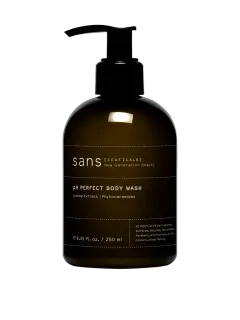
Sans Ceuticals pH Perfect Body + Hand Wash
Works for
CleansingSodium lauroyl methyl isethionate, Cocamidopropyl betaine + 4 moreCleanses gently
“pH Perfect Body + Hand Wash”
This product works by removing dirt and oil from the surface of the skin. It uses a combination of mild cleansing agents (cocamidopropyl betaine, cocamidopropyl dimethylamine, coco-glucoside, glycol distearate, sodium lauroyl methyl isethionate) and should be able to cleanse the skin gently. Still keep in mind that any cleansing can disrupt the skin barrier, and most people do not need to cleanse their skin more than once per day.
Even though this formulation is mild, the following cleansing agents could trigger an irritation or allergy for some people: cocamidopropyl betaine, cocamidopropyl dimethylamine, coco-glucoside
Can it cause trouble?
Irritancy7 strong irritants: Retinyl palmitate, Parfum + 5 more — patch-test recommendedHigh risk
ComedogenicClean of flagged comedogenic ingredientsNone flagged
User reviews
Be the first — your take helps the next person decide.
Ingredients
Filter by role to see what each ingredient is doing.
Water~45–55%
Sodium lauroyl methyl isethionate~9.8–12%
- Irritation risk
- Medium
Works as a cleansing agent
More about Sodium lauroyl methyl isethionateGlycerin~4.2–5.1%
- Irritation risk
- Low
One of the best moisturizing ingredients. Naturally present in skin. It attracts water to the upper layer of the skin working as a humectant
More about GlycerinCocamidopropyl betaine~4.4–5.4%
- Irritation risk
- High
Helps water and oil mix together. Used as a cleansing ingredient. Could be an allergen
More about Cocamidopropyl betaineBetaine~2.3–2.9%
- Irritation risk
- Low
Helps attract water to the upper layer of the skin and improves the product texture
More about BetainePanthenol~1.9–2.3%
- Irritation risk
- Low
Helps attract water to the upper layer of the skin and can help improve skin barrier function
More about PanthenolPolyquaternium-7~1.6–2%
- Irritation risk
- Low
Helps soften the upper layer of the skin and create a nice product finish
More about Polyquaternium-7Helianthus annuus seed oil~1.5–1.9%
- Irritation risk
- Low
A great emollient due to its high linoleic acid content. One of the most effective plant oils in helping skin hydration and repairing skin barrier function
More about Helianthus annuus seed oilRetinyl palmitate~1.1–1.4%
- Irritation risk
- High
Three steps removed from the active form of vitamin A - retinoic acid. To have an effect in the skin, it first needs to be converted twice to become the retinoic acid. This means it is less potent than retinol, but could also be less irritating. Once converted to the retinoic acid in the skin, it helps against all signs of aging, improves skin cell turnover and helps fight blemishes and clogged pores. However, in many cosmetic formulations, it is used in a concentration that is too low to have the full effect
More about Retinyl palmitateTocopherol~0.95–1.15%
- Irritation risk
- Low
Pure form of vitamin E. Can help moisturise and protect the skin from free radicals. Often used to help stabilise other ingredients or the formula itself
More about TocopherolLitchi chinensis pericarp extract~0.65–1%
- Irritation risk
- Low
Ascorbyl palmitate~0.55–0.85%
- Irritation risk
- Medium
Being a lipid soluble form of vitamin C, it is more stable and can penetrate the skin better than L-Ascorbic acid. It is effective in protecting the skin from free radicals, as well as evening the skin tone, but is less effective in stimulating collagen production compared to L-Ascorbic acid.
More about Ascorbyl palmitateSphingolipids~0.55–0.8%
- Irritation risk
- Low
Sphingolipids are a group of lipids with a common chemical structure. Some of them are naturally present in skin and can be converted to ceramides
More about SphingolipidsCoco-glucoside~0.5–0.8%
- Irritation risk
- High
Used as a cleansing agent (surfactant) in cleansers. Helps water and oil mix together in lotions. Can be irritating
More about Coco-glucosideGlycol distearate~0.45–0.7%
- Irritation risk
- Medium
Helps water and oil mix together
More about Glycol distearateCocamidopropyl dimethylamine~0.45–0.65%
- Irritation risk
- High
Helps oil and water mix together. Can work as a cleansing agent. Can be irritating
More about Cocamidopropyl dimethylamineTrisodium ethylenediamine disuccinate~0.4–0.6%
- Irritation risk
- Medium
Used to improve stability of the formulation
More about Trisodium ethylenediamine disuccinatePhospholipids~0.35–0.6%
- Irritation risk
- Low
Emollients that are naturaly present in skin. In addition, they help water and oil mix together in the product
More about PhospholipidsLecithin~0.35–0.65%
- Irritation risk
- Low
Used mostly for creating emulsions - helping oil and water mix together. Helps soften the upper layer of the skin
More about LecithinBenzyl alcohol~0.25–0.45%
- Irritation risk
- High
A preservative. Can be used to mask unpleasant smell. Can be irritating
More about Benzyl alcoholSodium chloride~0.3–0.5%
- Irritation risk
- Low
Used to stabilize mixtures of oil and water, and create thicker, gel-like product textures
More about Sodium chlorideGuar hydroxypropyltrimonium chloride~0.25–0.45%
- Irritation risk
- Low
Helps water and oil mix together and create a nice product texture
More about Guar hydroxypropyltrimonium chloridePotassium sorbate~0.2–0.4%
Citric acid~0.2–0.35%
- Irritation risk
- Medium
Can work as an exfoliant but is typically used to adjust the product pH
More about Citric acidDehydroacetic acid~0.2–0.35%
Fumaric acid~0.2–0.35%
- Irritation risk
- Low
Phenoxyethanol~0.2–0.35%
- Irritation risk
- Low
A preservative. It helps prevent bacterial growth in cosmetic products
More about PhenoxyethanolHydrogenated palm glycerides citrate~0.2–0.4%
- Irritation risk
- Low
Helps soften the upper layer of the skin
More about Hydrogenated palm glycerides citrateParfum~0.1–0.25%
- Irritation risk
- High
An aromatic blend of unspecified and possibly irritating ingredients
More about ParfumLimonene~0.1–0.25%
- Irritation risk
- High
A common frangrance that can easily irritate skin, especially if exposed to air, light or heat
More about LimoneneLinalool~0.1–0.2%
Coumarin~0.1–0.15%
Citral~0.05–0.1%
Eugenol~0.05–0.1%
Ingredient list view
Water, Sodium lauroyl methyl isethionate, Glycerin, Cocamidopropyl betaine, Betaine, Panthenol, Polyquaternium-7, Helianthus annuus seed oil, Retinyl palmitate, Tocopherol, Litchi chinensis pericarp extract, Ascorbyl palmitate, Sphingolipids, Coco-glucoside, Glycol distearate, Cocamidopropyl dimethylamine, Trisodium ethylenediamine disuccinate, Phospholipids, Lecithin, Benzyl alcohol, Sodium chloride, Guar hydroxypropyltrimonium chloride, Potassium sorbate, Citric acid, Dehydroacetic acid, Fumaric acid, Phenoxyethanol, Hydrogenated palm glycerides citrate, Parfum, Limonene, Linalool, Coumarin, Citral, Eugenol
Compare prices
Retailers ranked by price — lowest first.

Worth comparing, line by line.
Match % combines shared ingredients, the first five ingredients, shared actives and hero ingredients, irritancy (lower counts in the alternative's favour), texture and body area. Only products in the same routine step are compared.
| Sans CeuticalspH Perfect Body + Hand WashYOUR PRODUCT | DavinesOI Absolute Beautifying Body Wash | CicaBiafineNourishing Surfatty Shower Balm | BaleaCream Soap Ginger Lemon | |
|---|---|---|---|---|
| Match | — | 37% | 36% | 35% |
| Price | — | $26.24 | $11.82 | $2.49 |
| Shared key ingredients | — | 6 of 13 | 6 of 13 | 7 of 13 |
| Key difference | — | Lauryl Betaine | Butyrospermum Parkii Butter | Sodium Lactate |
| Irritancy | High | Medium | Medium | Medium |
| Drying alcohol | — | — | — | — |
| View product | Shop | Shop | Shop |
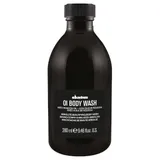


More alternatives: Comfort Zone Tranquillity Shower CreamNaturium The Calmer Ceramide Body Wash
Sources cited in this review
Every concentration estimate and effectiveness label is anchored to one of these 16 studies and safety reviews.
- 1
- 2Skin moisturizing effects of panthenol-based formulationspdfs.semanticscholar.org
- 3
- 4
- 5
- 6Effect of topically applied lipids on surfactant-irritated skinonlinelibrary.wiley.com

Affiliate links · As an Amazon Associate, WIMJ earns from qualifying purchases.