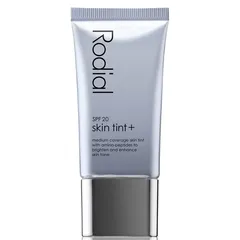
Works for:
based on ingredients and %- Moisturizing
- Anti-aging
Doesn't work for:
based on ingredients and %- Sun protection
Can it cause trouble?
- Irritation risk: low
- Comedogenic risk ingredients: 0
Key actives
Product Summary
"Rodial - SPF20 Skin Tint" does not provide enough UVA protection. UVA rays do not cause sunburn, but still damage the skin, leading to early signs of aging and pigmentation issues.
It also works as a moisturizer, so you do not have to use an additional hydrating product.
Sunscreen filters
This product is a mineral sunscreen. It uses titanium dioxide for sun protection. Titanium dioxide almost never irritates the skin or stings eyes, but it can leave a white cast.
Irritation risk
This product does not contain known common irritants and is suitable for sensitive skin. We assess the overall irritancy of it to be low. For a detailed overview of all potential irritants: click here
You can see the detailed formula review with the breakdown of all actives in the product and the full ingredient list with estimated concentrations in the tables below.
About the brand
According to Cruelty-Free Kitty "Rodial" is cruelty free and so is its parent company.
Price
The product retails from 36.75$ up to 49.00$ in the United States, from 41.65£ up to 62.80£ in the United Kingdom, for 47.30CA$ in Canada and for 57.40A$ in Australia.
For a detailed price comparison: click here.
Moisturizing
What does the product description say?
Perfect and protect your complexion with the Rodial SPF20 Skin Tint , a tinted moisturiser fortified with SPF20 and a unique blend of amino-peptides to help combat multiple signs of ageing.
Source: Mankind
This product can help soften the skin and reduce its moisture loss with emollients and occlusives: dimethicone, methicone.
Keep in mind that this product does not contain effective ingredients to attract water to the upper layer of the skin. This is why an additional product with humectants like glycerin or hyaluronic acid can be helpful (apply it before this product for the best results).
The following ingredients in this product are especially good for supporting the skin barrier and helping with the hydration level: hexapeptide-3, tripeptide-3
A silicone that helps to reduce water loss from the surface of the skin. Can temporarily "fill in" lines and wrinkles, absorb oil, and create a nice product finish
A type of peptide. Peptides are excellent moisturizers and might be able support collagen production reducing fine lines and wrinkles
A type of silicone that helps soften the upper layer of the skin and reduces the water loss from the skin surface
A type of silicone that can decrease loss of moisture from the skin surface. It helps create a nice product texture
Enhances the product texture and makes it more spreadable. Helps reduce water loss from the outer layer of skin. Extands the shelf life by preventing bacteria growth
A silicone that helps improve the product texture and spreadability. Can absorb oil creating a short-term mattifying effect on the skin
Forms a protective film on the surface of the skin to prevent moisture loss. Gives a velvety feel to products while reducing tackiness
Used to create a nice product texture and help delivery of other ingredients. Might be somewhat helpful in attracting water to the upper layer of the skin
A type of silicone that helps water and oil mix together. Can help to soften upper layer of the skin
A good mix of fatty acids that forms a protective layer on the skin. Improves the shelf life of products. Derived from coconut and glycerin
Anti-aging
What does the product description say?
Perfect and protect your complexion with the Rodial SPF20 Skin Tint , a tinted moisturiser fortified with SPF20 and a unique blend of amino-peptides to help combat multiple signs of ageing.
Source: Mankind
This product contains hexapeptide-3, tripeptide-3. These ingredients might be able to help reduce and prevent fine lines and wrinkles, improve skin elasticity and firmness, but there is not enough evidence that it actually works. The biggest anti-aging effect in this product comes from sun protection. Sun damage is the main factor causing early signs of skin aging. We, however, do not recommend using this product as a sunscreen because the protection it offers is not strong enough).
A type of peptide. Peptides are excellent moisturizers and might be able support collagen production reducing fine lines and wrinkles
Sun protection
What does the product description say?
SPF20 Skin Tint
Source: Mankind
This product does not offer good protection against UVA rays.
This product can be considered "reef safe" because it does not contain the UV filters (oxybenzone and octinoxate) that can be harmful to coral reefs when present in the water in high concentrations.
Works as a UV filter when used in high concentrations. It is photostable and is effective mostly against the UVB light, with some protection in the UVA range. In small concentrations, used for its ability to improve the color of cosmetic products. Is usually well tolerated by the skin
How honest is this product?
| Promise | Can it deliver? |
|---|---|
| Sun protection | |
| Moisturizing | |
| Anti-aging |
Total Promises Fulfilled score: 75/100.
We receive a small commission for purchases made through these links at no cost for you. Thank you for your support! Learn more
Affiliate link · supports WIMJ at no cost to you
Potential irritants
Comedogenic ingredients
No comedogenic ingredients detected
User reviews (0)
Averages from community submissions.
No reviews yet for this product.
Be the first to share your experience!
Tried this product?
Help capture what the ingredient list can't—texture, finish, pilling, scent, and more. Answer what you can, skip the rest.
Takes ~30 seconds.
Reviews are shown in aggregate. No personal details.
Key Actives
A silicone that helps improve the product texture and spreadability. Can absorb oil creating a short-term mattifying effect on the skin
A silicone that helps to reduce water loss from the surface of the skin. Can temporarily "fill in" lines and wrinkles, absorb oil, and create a nice product finish
A type of peptide. Peptides are excellent moisturizers and might be able support collagen production reducing fine lines and wrinkles
Works as a UV filter when used in high concentrations. It is photostable and is effective mostly against the UVB light, with some protection in the UVA range. In small concentrations, used for its ability to improve the color of cosmetic products. Is usually well tolerated by the skin
A type of silicone that can decrease loss of moisture from the skin surface. It helps create a nice product texture
A type of silicone that helps soften the upper layer of the skin and reduces the water loss from the skin surface
A good mix of fatty acids that forms a protective layer on the skin. Improves the shelf life of products. Derived from coconut and glycerin
Potential irritants
A more stable but less bio-available form of vitamin E compared to Tocopherol. Might help moisturize and protect the skin from free radicals, but mostly used in low concentrations to stabilize other ingredients.
A type of silicone that helps water and oil mix together
A good mix of fatty acids that forms a protective layer on the skin. Improves the shelf life of products. Derived from coconut and glycerin
Used to improve stability of the formulation
Comedogenic ingredients
We couldn't find any comedogenic ingredients in this product
All ingredients
A silicone that helps improve the product texture and spreadability. Can absorb oil creating a short-term mattifying effect on the skin
Used to create a nice product texture and help delivery of other ingredients. Might be somewhat helpful in attracting water to the upper layer of the skin
Works as a UV filter when used in high concentrations. It is photostable and is effective mostly against the UVB light, with some protection in the UVA range. In small concentrations, used for its ability to improve the color of cosmetic products. Is usually well tolerated by the skin
Forms a protective film on the surface of the skin to prevent moisture loss. Gives a velvety feel to products while reducing tackiness
A type of silicone that helps water and oil mix together. Can help to soften upper layer of the skin
A type of silicone that can decrease loss of moisture from the skin surface. It helps create a nice product texture
Enhances the product texture and makes it more spreadable. Helps reduce water loss from the outer layer of skin. Extands the shelf life by preventing bacteria growth
A type of clay that is used to thicken the product consistency
A preservative. It helps prevent bacterial growth in cosmetic products
A more stable but less bio-available form of vitamin E compared to Tocopherol. Might help moisturize and protect the skin from free radicals, but mostly used in low concentrations to stabilize other ingredients.
Used to stabilize mixtures of oil and water, and create thicker, gel-like product textures
A type of silicone that helps water and oil mix together
The same compound that is used safely in dental implants and bone cements. In cosmetics, it is used to improve the consistency of products
A type of silicone that helps soften the upper layer of the skin and reduces the water loss from the skin surface
A type of silicone that helps oil and water mix well together. Helps to disperse other ingredients, e.g. pigments, evenly in a formulation
A good mix of fatty acids that forms a protective layer on the skin. Improves the shelf life of products. Derived from coconut and glycerin
Used to improve stability of the formulation
A silicone that helps to reduce water loss from the surface of the skin. Can temporarily "fill in" lines and wrinkles, absorb oil, and create a nice product finish
A type of peptide. Peptides are excellent moisturizers and might be able support collagen production reducing fine lines and wrinkles
Ingredient list view
Water, Cyclopentasiloxane, Butylene glycol, Titanium dioxide, Isononyl isononanoate, Behenyl dimethicone, Cetyl peg/ppg-10/1 dimethicone, Phenyl trimethicone, C12-15 alkyl benzoate, Disteardimonium hectorite, Glyceryl ethylhexanoate/stearate/adipate, Phenoxyethanol, Sucrose acetate isobutyrate, Tocopheryl acetate, Sodium chloride, Lauryl peg-8 dimethicone, Alumina, Sodium dehydroacetate, Methicone, Triethoxycaprylylsilane, Caprylic/capric triglyceride, Trisodium ethylenediamine disuccinate, Dimethicone, Tropolone, Tripeptide-3, Hexapeptide-3, Ci 77891, Ci 77492, Ci 77491, Ci 77499