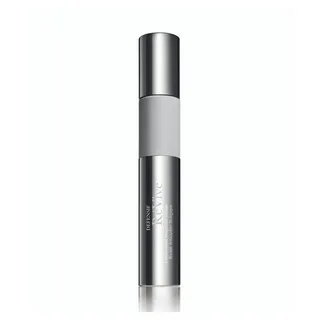
RéVive DEFENSIF Environmental Antioxidant Booster
Works for
MoisturizingOligopeptide-24, Glycerin + 16 moreWorks well
“As if that wasn’t enough, the formula is also infused with a Bio-Renewal Protein, an important ingredient that works to strengthen the skin, reinforcing its natural barriers for added protection.”
This product can help improve hydration of the skin with the two types of ingredients.
The first type is called “humectants”:
these ingredients help attract water.
When humectants are on the surface of the skin, they “pull in” the moisture from the outside environment, or from
within deeper layers of the skin. The following ingredients in this product do the job:
glycerin, saccharomyces/copper ferment.
This product also contains ingredients called “occlusives”. They help reduce the speed with which our skin loses moisture to the outside environment. These ingredients also help soften the upper layer of the skin, so it feels less tight and nicer to the touch. The following ingredients in this product do the job: glycine soja oil, diisopropyl adipate.
The following ingredients in this product are especially good for supporting the skin barrier and helping with the hydration level: oligopeptide-24
Anti-oxidationSide benefit · Yeast extract, Superoxide dismutase + 5 moreWorks well
This product contains antioxidants (dimethylmethoxy chromanol, superoxide dismutase) that can help neutralize free radicals in skin. By doing so, they can lessen the damage the skin gets from the UV light (sun).
The following ingredients - yeast extract also can have an antioxidant effect, but there is less evidence to confirm their effectiveness in skin.
Anti-agingSide benefit the brand mentions · Oligopeptide-24, Prunus amygdalus dulcis oil + 3 moreMay help
“Our skin is regularly bombarded with damaging urban stressors, such as UV rays, infrared light, blue light and pollution, which can prematurely age the complexion.”
This product contains oligopeptide-24. There is some human evidence that this ingredient helps reduce and prevent fine lines and wrinkles and improve skin elasticity and firmness, though it is smaller or less consistent than the evidence for the best anti-aging ingredients.
Can it cause trouble?
Irritancy2 strong irritants: Salvia officinalis leaf extract, Retinyl palmitateMedium risk
Comedogenic2 ingredients rated 2 or more on the 0–5 pore-clogging scale2 flagged

User reviews
Be the first — your take helps the next person decide.
Ingredients
Filter by role to see what each ingredient is doing.
Water~40–60%
Propanediol~3.9–5.8%
- Irritation risk
- Low
Acts as a solvent for other ingredients. Speeds up the absorption of other ingredients into the skin
More about PropanediolGlycerin~3.2–4.8%
- Irritation risk
- Low
One of the best moisturizing ingredients. Naturally present in skin. It attracts water to the upper layer of the skin working as a humectant
More about GlycerinYeast extract~2.4–3.5%
- Irritation risk
- Low
Helps attract water to the upper layer of the skin and might have some anti-oxidant and skin lightening properties. It can help calm down inflammation in skin
More about Yeast extractSalvia officinalis leaf extract~1.9–2.9%
- Irritation risk
- High
Sage leaf extract. It can be irritating
More about Salvia officinalis leaf extractGlechoma hederacea extract~1.4–2.1%
- Irritation risk
- Low
Aesculus hippocastanum bark extract~1.2–1.8%
- Irritation risk
- Low
Phospholipids~1–1.5%
- Irritation risk
- Low
Emollients that are naturaly present in skin. In addition, they help water and oil mix together in the product
More about PhospholipidsSaccharomyces/copper ferment~0.6–1.35%
- Irritation risk
- Low
Yeast extract that contains copper. Can help to attract water to the upper layer of the skin and can help in skin wound healing
More about Saccharomyces/copper fermentSaccharomyces/selenium ferment~0.5–1.1%
- Irritation risk
- Low
Saccharomyces/platinum ferment~0.4–0.95%
- Irritation risk
- Low
Saccharomyces/zinc ferment~0.3–0.75%
- Irritation risk
- Low
Yeast extract that contains zinc. Can help to attract water to the upper layer of the skin. Evidence of effectiveness for other benefits is missing
More about Saccharomyces/zinc fermentLeontopodium alpinum extract~0.2–0.75%
- Irritation risk
- Low
Ectoin~0.2–0.7%
- Irritation risk
- Low
Softens the upper layer of the skin and can support skin barrier function
More about EctoinSuperoxide dismutase~0.15–0.65%
- Irritation risk
- Low
An antioxidant enzyme that is naturally present in skin. It can help support skin barrier function and reduce inflammation in skin. It is used in topical medications for inflammatory skin conditions including atopic dermatitis (eczema) and psoriasis. There are three types of natural Superoxide Dismutase in human skin. The compound used in topical treatments and cosmetics are mimics of typically one of these natural variants
More about Superoxide dismutaseLecithin~0.2–0.75%
- Irritation risk
- Low
Used mostly for creating emulsions - helping oil and water mix together. Helps soften the upper layer of the skin
More about LecithinOligopeptide-24~0.15–0.65%
- Irritation risk
- Low
A type of peptide. Peptides are excellent moisturizers and might be able support collagen production reducing fine lines and wrinkles
More about Oligopeptide-24Hydroxyectoin~0.15–0.65%
- Irritation risk
- Low
Curcuma longa root extract~0.1–0.5%
- Irritation risk
- High
A plant extract that can contain an active compound curcumin, that may have some anti-inflammatory properties when applied to the skin, but solid research is lacking and the typical concentration used in skincare products is too low. Can be an irritant
More about Curcuma longa root extractHydrolyzed pea protein~0.15–0.55%
- Irritation risk
- Low
Sodium hyaluronate~0.1–0.5%
- Irritation risk
- Low
One of the best moisturizing ingredients. Attracts water into the upper layer of the skin
More about Sodium hyaluronateMel~0.15–0.55%
- Irritation risk
- Low
Helps to soften the upper layer of the skin and attract water to it
More about MelTocopheryl acetate~0.1–0.45%
- Irritation risk
- Medium
A more stable but less bio-available form of vitamin E compared to Tocopherol. Might help moisturize and protect the skin from free radicals, but mostly used in low concentrations to stabilize other ingredients.
More about Tocopheryl acetateRetinyl palmitate~0.1–0.4%
- Irritation risk
- High
Three steps removed from the active form of vitamin A - retinoic acid. To have an effect in the skin, it first needs to be converted twice to become the retinoic acid. This means it is less potent than retinol, but could also be less irritating. Once converted to the retinoic acid in the skin, it helps against all signs of aging, improves skin cell turnover and helps fight blemishes and clogged pores. However, in many cosmetic formulations, it is used in a concentration that is too low to have the full effect
More about Retinyl palmitateGlyceryl caprylate~0.15–0.55%
- Irritation risk
- Low
An emollient that can also help water and oil mix together, as well as prevent bacteria growth in products
More about Glyceryl caprylateDimethylmethoxy chromanol~0.1–0.45%
- Irritation risk
- Low
Can help neutralize free radicals in skin
More about Dimethylmethoxy chromanolAscorbyl palmitate~0.1–0.4%
- Irritation risk
- Medium
Being a lipid soluble form of vitamin C, it is more stable and can penetrate the skin better than L-Ascorbic acid. It is effective in protecting the skin from free radicals, as well as evening the skin tone, but is less effective in stimulating collagen production compared to L-Ascorbic acid.
More about Ascorbyl palmitatePrunus amygdalus dulcis oil~0.15–0.5%
- Irritation risk
- Low
An emollient that softens the skin
More about Prunus amygdalus dulcis oilHydrogenated vegetable oil~0.1–0.5%
- Irritation risk
- Low
- Comedogenicity
- 2/5
An oil from a mixture of different vegetables. Helps soften the upper layer of the skin
More about Hydrogenated vegetable oilGlucose~0.1–0.45%
- Irritation risk
- Low
Helps attract water to the upper layer of the skin. Could be helpful in restoring the skin barrier function
More about GlucoseBiphenyl azepanyl methanone~0.1–0.4%
- Irritation risk
- Low
Tocopherol~0.1–0.45%
- Irritation risk
- Low
Pure form of vitamin E. Can help moisturise and protect the skin from free radicals. Often used to help stabilise other ingredients or the formula itself
More about TocopherolCamellia sinensis leaf powder~0.1–0.4%
- Irritation risk
- Low
Sodium succinate~0.1–0.45%
- Irritation risk
- Low
Sodium oleate~0.45–1.05%
- Irritation risk
- Medium
Helps oil and water mix together and create a thicker product consistency
More about Sodium oleateGlycine soja oil~0.1–0.4%
- Irritation risk
- Medium
- Comedogenicity
- 2/5
A good emollient that helps soften the skin and helps repair its barrier function. It can clog pores if used in high concentrations.
More about Glycine soja oilEthylhexylglycerin~0.1–0.35%
Diisopropyl adipate~0.1–0.45%
- Irritation risk
- Low
Helps soften the upper layer of the skin
More about Diisopropyl adipateHydrogenated lecithin~0.1–0.45%
- Irritation risk
- Low
Helps to retain moisture by creating a protective barrier on the skin. Rich in fatty acids. Improves product texture and helps with the penetration of other ingredients.
More about Hydrogenated lecithinPhenoxyethanol~0.1–0.4%
- Irritation risk
- Low
A preservative. It helps prevent bacterial growth in cosmetic products
More about PhenoxyethanolAmmonium acryloyldimethyltaurate/carboxyethyl acrylate crosspolymer~0.1–0.3%
Acrylic acid/acrylamidomethyl propane sulfonic acid copolymer~0.05–0.3%
- Irritation risk
- Low
Leuconostoc/radish root ferment filtrate~0.05–0.25%
- Irritation risk
- Medium
A preservative that comes from radishes fermented by a bacteria. New research suggests that the preservation properties in the ingredient come from an ammonium salt that is not present naturally in radish root but used in its cultivation. Is problematic because the exact amount of the preservative agents is difficult to determine
More about Leuconostoc/radish root ferment filtrateXanthan gum~0.05–0.2%
- Irritation risk
- Low
Used to create a thicker product consistency
More about Xanthan gumSodium benzoate~0.01–0.05%
Potassium sorbate~0.05–0.15%
Citric acid~0.01–0.1%
- Irritation risk
- Medium
Can work as an exfoliant but is typically used to adjust the product pH
More about Citric acidSodium chloride~0.05–0.1%
- Irritation risk
- Low
Used to stabilize mixtures of oil and water, and create thicker, gel-like product textures
More about Sodium chlorideDisodium edta~0.01–0.05%
Ingredient list view
Water, Propanediol, Glycerin, Yeast extract, Salvia officinalis leaf extract, Glechoma hederacea extract, Aesculus hippocastanum bark extract, Phospholipids, Saccharomyces/copper ferment, Saccharomyces/selenium ferment, Saccharomyces/platinum ferment, Saccharomyces/zinc ferment, Leontopodium alpinum extract, Ectoin, Superoxide dismutase, Lecithin, Oligopeptide-24, Hydroxyectoin, Curcuma longa root extract, Hydrolyzed pea protein, Sodium hyaluronate, Mel, Tocopheryl acetate, Retinyl palmitate, Glyceryl caprylate, Dimethylmethoxy chromanol, Ascorbyl palmitate, Prunus amygdalus dulcis oil, Hydrogenated vegetable oil, Glucose, Biphenyl azepanyl methanone, Tocopherol, Camellia sinensis leaf powder, Sodium succinate, Sodium oleate, Glycine soja oil, Ethylhexylglycerin, Diisopropyl adipate, Hydrogenated lecithin, Phenoxyethanol, Ammonium acryloyldimethyltaurate/carboxyethyl acrylate crosspolymer, Acrylic acid/acrylamidomethyl propane sulfonic acid copolymer, Leuconostoc/radish root ferment filtrate, Xanthan gum, Sodium benzoate, Potassium sorbate, Citric acid, Sodium chloride, Disodium edta
Compare prices
Retailers ranked by price — lowest first.


Worth comparing, line by line.
Match % combines shared ingredients, the first five ingredients, shared actives and hero ingredients, irritancy (lower counts in the alternative's favour), texture and body area. Only products in the same routine step are compared.
| RéViveDEFENSIF Environmental Antioxidant BoosterYOUR PRODUCT | Jan MariniHyla3D Face Serum Hylaruonic Acid Complex | MZ SkinHydra-Boost Ampoules | Centellian24Lifting Peptide Serum | |
|---|---|---|---|---|
| Match | — | 52% | 41% | 41% |
| Price | $175.00 | $220.65+$45.65 | $66.11−$108.89 | $19.23−$155.77 |
| Shared key ingredients | — | 4 of 11 | 4 of 11 | 3 of 11 |
| Key difference | — | Panthenol | Sh-Oligopeptide-1 | Dipeptide-2 |
| Irritancy | Medium | Medium | High | High |
| Drying alcohol | — | Contains drying alcohol | Contains drying alcohol | Contains drying alcohol |
| View product | Shop | Shop | Shop |


More alternatives: Goldfaden MD Radical DifferenceREMEDY SCIENCE REMEDY Multi-Depth Moisture Advanced Hydrating Serum
Sources cited in this review
Every concentration estimate and effectiveness label is anchored to one of these 19 studies and safety reviews.
- 1
- 2
- 3
- 4Allergic contact dermatitis caused by Salvia officinalis extractpubmed.ncbi.nlm.nih.gov
- 5
- 6

Affiliate links · As an Amazon Associate, WIMJ earns from qualifying purchases.