Works for:
based on ingredients and %- Moisturizing
- Anti-oxidation
Doesn't work for:
based on ingredients and %- Anti-aging
Can it cause trouble?
- Irritation risk: high
- Comedogenic risk ingredients: 4
Key actives

Anti-oxidation
This product contains antioxidants (vaccinium macrocarpon seed oil) that might be able to help neutralize free radicals in skin to lessen the damage it gets from the UV light (sun). There is not enough evidence to confirm their effectiveness in skin though.
A plant oil that can help neutralize free radicals, soften the upper layer of the skin, and support skin's barrier function
A plant extract that might help neutralize free radicals in skin, but research on its effectiveness is lacking
A great moisturising ingredient that softens the skin and reduces water loss from its upper layer. It also can be helpful in protecting skin from free radicals
An anti-oxidant that helps stabilize product formulations. Might help neutralise free radicals in skin
Might have some anti-oxidant properties. Can be used as a fragrance. Can be irritating
An emollient that does not leave a greasy finish
An essential oil. Can be irritating. Can become an allergen with oxidation
An emollient. Can be helpful for restoring skin barrier function.
A plant extract that has some anti-oxidant and anti-bacterial properties. Can be irritating
Pure form of vitamin E. Can help moisturise and protect the skin from free radicals. Often used to help stabilise other ingredients or the formula itself
An active component of chamomile plant that historically has been used to calm down irritated skin. A recent study shows that bisabolol indeed can have some anti-inflammatory effect on skin, even though conclusive data is lacking. Bisabolol has a sweet floral scent and can be added to products for its aromatic properties
Can be helpful in reducing inflammation in skin, including inflamed acne. It can be irritating
An essential oil that is used as a fragrance and can be irritating. It might have some anti-oxidant effect in skin
Moisturizing
What does the product description say?
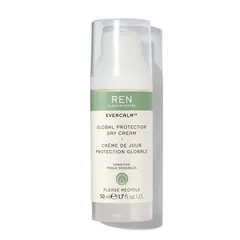
Evercalm Global Protection Day Cream
Source: From product name
This product can help improve hydration of the skin with the two types of ingredients.
The first type is called “humectants”:
these ingredients help attract water.
When humectants are on the surface of the skin, they “pull in” the moisture from the outside environment, or from
within deeper layers of the skin. The following ingredients in this product do the job:
glycerin, glucose.
This product also contains ingredients called “occlusives”. They help reduce the speed with which our skin loses moisture to the outside environment. These ingredients also help soften the upper layer of the skin, so it feels less tight and nicer to the touch. The following ingredients in this product do the job: butyrospermum parkii butter, caprylic/capric triglyceride.
A synthetic triglyceride. Helps soften the upper layer of the skin
A great moisturising ingredient that softens the skin and reduces water loss from its upper layer. It also can be helpful in protecting skin from free radicals
An emollient that does not leave a greasy finish
A good mix of fatty acids that forms a protective layer on the skin. Improves the shelf life of products. Derived from coconut and glycerin
Helps attract water to the upper layer of the skin
An emollient. Is not recommended for acne-prone skin as it can be comedogenic
An emollient. Can be helpful for restoring skin barrier function.
A good moisturizing plant oil. Due to the high linoleic acid content, it helps soften the upper layer of the skin, reduce water loss and support skin barrier function
A plant oil that can help neutralize free radicals, soften the upper layer of the skin, and support skin's barrier function
One of the best moisturizing ingredients. Naturally present in skin. It attracts water to the upper layer of the skin working as a humectant
A great emollient due to its high linoleic acid content. One of the most effective plant oils in helping skin hydration and repairing skin barrier function
A non-drying alcohol. Works as an emollient. Helps water and oil mix together and creates a nice product texture
Helps attract water to the upper layer of the skin. Could be helpful in restoring the skin barrier function
An emollient that helps soften the skin
An exfoliating and moisturizing alpha-hydroxy acid (AHA). Typically causes less irritation than other AHAs, for example, glycolic acid. At high concentrations (about 15%), lactic acid can help reduce lines and wrinkles. Recent studies show that lactic acid can support the "good" bacteria living on skin's surface (healthy skin microbiome)
Pure form of vitamin E. Can help moisturise and protect the skin from free radicals. Often used to help stabilise other ingredients or the formula itself
Anti-aging
What does the product description say?
This moisturizer combats the feeling of chronic discomfort, redness and sensitivity that can lead to premature aging and ensures skin glows with renewed health. Vegan. Who is this for? Ideal for those with sensitive skin.
Source: SkincareRX
This product does not contain ingredients that are able to reduce fine lines and wrinkles or help with skin elasticity, but it can improve the look of the skin temporarily through moisturization. Well-moisturized skin might also be able to repair the sun damage better.This ingredient - butyrospermum parkii butter - could be helpful for preventing or repairing signs of aging in theory, but there is no evidence that it actually works.
This ingredient vaccinium macrocarpon seed oil might be able to help neutralize free radicals in skin and help it fight off some of the sun damage.
A great moisturising ingredient that softens the skin and reduces water loss from its upper layer. It also can be helpful in protecting skin from free radicals
An exfoliating and moisturizing alpha-hydroxy acid (AHA). Typically causes less irritation than other AHAs, for example, glycolic acid. At high concentrations (about 15%), lactic acid can help reduce lines and wrinkles. Recent studies show that lactic acid can support the "good" bacteria living on skin's surface (healthy skin microbiome)
Pure form of vitamin E. Can help moisturise and protect the skin from free radicals. Often used to help stabilise other ingredients or the formula itself
How honest is this product?
| Promise | Can it deliver? |
|---|---|
| Moisturizing | |
| Anti-aging |
Total Promises Fulfilled score: 62/100.
We receive a small commission for purchases made through these links at no cost for you. Thank you for your support! Learn more
Potential irritants
Comedogenic ingredients
User reviews (0)
Averages from community submissions.
No reviews yet for this product.
Be the first to share your experience!
Tried this product?
Help capture what the ingredient list can't—texture, finish, pilling, scent, and more. Answer what you can, skip the rest.
Takes ~30 seconds.
Reviews are shown in aggregate. No personal details.
Key Actives
Pure form of vitamin E. Can help moisturise and protect the skin from free radicals. Often used to help stabilise other ingredients or the formula itself
A great moisturising ingredient that softens the skin and reduces water loss from its upper layer. It also can be helpful in protecting skin from free radicals
A plant oil that can help neutralize free radicals, soften the upper layer of the skin, and support skin's barrier function
An active component of chamomile plant that historically has been used to calm down irritated skin. A recent study shows that bisabolol indeed can have some anti-inflammatory effect on skin, even though conclusive data is lacking. Bisabolol has a sweet floral scent and can be added to products for its aromatic properties
Can be helpful in reducing inflammation in skin, including inflamed acne. It can be irritating
An emollient that does not leave a greasy finish
A synthetic triglyceride. Helps soften the upper layer of the skin
An emollient. Can be helpful for restoring skin barrier function.
An emollient. Is not recommended for acne-prone skin as it can be comedogenic
A good moisturizing plant oil. Due to the high linoleic acid content, it helps soften the upper layer of the skin, reduce water loss and support skin barrier function
One of the best moisturizing ingredients. Naturally present in skin. It attracts water to the upper layer of the skin working as a humectant
A good mix of fatty acids that forms a protective layer on the skin. Improves the shelf life of products. Derived from coconut and glycerin
A great emollient due to its high linoleic acid content. One of the most effective plant oils in helping skin hydration and repairing skin barrier function
Helps attract water to the upper layer of the skin
Potential irritants
A plant oil with high content of volatile compounds that, especially when exposed to air, can cause allergic reactions and irritate the skin
An essential oil that is used as a fragrance and can be irritating. It might have some anti-oxidant effect in skin
An essential oil. Can be irritating. Can become an allergen with oxidation
A plant extract that has some anti-oxidant and anti-bacterial properties. Can be irritating
An aromatic blend of unspecified and possibly irritating ingredients
Can be helpful in reducing inflammation in skin, including inflamed acne. It can be irritating
A common frangrance that can easily irritate skin, especially if exposed to air, light or heat
An emollient that does not leave a greasy finish
An emollient. Is not recommended for acne-prone skin as it can be comedogenic
A good mix of fatty acids that forms a protective layer on the skin. Improves the shelf life of products. Derived from coconut and glycerin
Helps water and oil in the product mix well together and improves product texture
A plant oil that can help neutralize free radicals, soften the upper layer of the skin, and support skin's barrier function
An emollient. Can be helpful for restoring skin barrier function.
A plant extract that might help neutralize free radicals in skin, but research on its effectiveness is lacking
Might have some anti-oxidant properties. Can be used as a fragrance. Can be irritating
An exfoliating and moisturizing alpha-hydroxy acid (AHA). Typically causes less irritation than other AHAs, for example, glycolic acid. At high concentrations (about 15%), lactic acid can help reduce lines and wrinkles. Recent studies show that lactic acid can support the "good" bacteria living on skin's surface (healthy skin microbiome)
Comedogenic ingredients
A non-drying alcohol. Works as an emollient. Helps water and oil mix together and creates a nice product texture
An emollient. Is not recommended for acne-prone skin as it can be comedogenic
A great moisturising ingredient that softens the skin and reduces water loss from its upper layer. It also can be helpful in protecting skin from free radicals
Helps attract water to the upper layer of the skin
All ingredients
A non-drying alcohol. Works as an emollient. Helps water and oil mix together and creates a nice product texture
An emollient that does not leave a greasy finish
An emollient. Is not recommended for acne-prone skin as it can be comedogenic
A good moisturizing plant oil. Due to the high linoleic acid content, it helps soften the upper layer of the skin, reduce water loss and support skin barrier function
One of the best moisturizing ingredients. Naturally present in skin. It attracts water to the upper layer of the skin working as a humectant
A great moisturising ingredient that softens the skin and reduces water loss from its upper layer. It also can be helpful in protecting skin from free radicals
A good mix of fatty acids that forms a protective layer on the skin. Improves the shelf life of products. Derived from coconut and glycerin
A synthetic triglyceride. Helps soften the upper layer of the skin
Helps water and oil in the product mix well together and improves product texture
An anti-oxidant that helps stabilize product formulations. Might help neutralise free radicals in skin
A great emollient due to its high linoleic acid content. One of the most effective plant oils in helping skin hydration and repairing skin barrier function
A plant oil that can help neutralize free radicals, soften the upper layer of the skin, and support skin's barrier function
An active component of chamomile plant that historically has been used to calm down irritated skin. A recent study shows that bisabolol indeed can have some anti-inflammatory effect on skin, even though conclusive data is lacking. Bisabolol has a sweet floral scent and can be added to products for its aromatic properties
An emollient. Can be helpful for restoring skin barrier function.
Helps create a thicker or gel-like product texture. It is not a surfactant but can be used in gentle cleansing formulations
A plant extract that might help neutralize free radicals in skin, but research on its effectiveness is lacking
A plant oil with high content of volatile compounds that, especially when exposed to air, can cause allergic reactions and irritate the skin
Pure form of vitamin E. Can help moisturise and protect the skin from free radicals. Often used to help stabilise other ingredients or the formula itself
An essential oil that is used as a fragrance and can be irritating. It might have some anti-oxidant effect in skin
An essential oil. Can be irritating. Can become an allergen with oxidation
A preservative. It helps prevent bacterial growth in cosmetic products
Helps attract water to the upper layer of the skin
Might have some anti-oxidant properties. Can be used as a fragrance. Can be irritating
A plant extract that has some anti-oxidant and anti-bacterial properties. Can be irritating
Helps attract water to the upper layer of the skin. Could be helpful in restoring the skin barrier function
An aromatic blend of unspecified and possibly irritating ingredients
Can be helpful in reducing inflammation in skin, including inflamed acne. It can be irritating
An exfoliating and moisturizing alpha-hydroxy acid (AHA). Typically causes less irritation than other AHAs, for example, glycolic acid. At high concentrations (about 15%), lactic acid can help reduce lines and wrinkles. Recent studies show that lactic acid can support the "good" bacteria living on skin's surface (healthy skin microbiome)
A common frangrance that can easily irritate skin, especially if exposed to air, light or heat
An aromatic blend of unspecified and possibly irritating ingredients
Ingredient list view
Water, Cetearyl alcohol, Camellia oleifera seed oil, Cetearyl ethylhexanoate, Myristyl myristate, Sesamum indicum seed oil, Glycerin, Butyrospermum parkii butter, Caprylic/capric triglyceride, Triheptanoin, Cetearyl glucoside, Myristyl laurate, Oryzanol, Helianthus annuus seed oil, Ethylhexylglycerin, Vaccinium macrocarpon seed oil, Bisabolol, Ribes nigrum seed oil, Carbomer, Hippophae rhamnoides fruit extract, Citrus nobilis peel oil, Tocopherol, Anthemis nobilis flower oil, Cinnamomum camphora linalooliferum leaf oil, Pelargonium graveolens flower oil, Phenoxyethanol, Sodium dehydroacetate, Pueraria lobata symbiosome extract, Laminaria ochroleuca extract, Cassia alata leaf extract, Calendula officinalis flower extract, Glucose, Parfum, Rosmarinus officinalis leaf extract, Lactic acid, Sodium hydroxide, Citronellol, Geraniol, Limonene, Linalool, Parfum
- Protein and oil composition of sesame seeds (Sesamum indicum, L.) grown in the Gizan area of Saudi Arabia
- Triglyceride composition of Sesamum indicum seed oil
- Seed oil content and fatty acid composition in East African sesame (Sesamum indicum L.) accessions evaluated over 3 years
- Glycerol and the skin: holistic approach to its origin and functions
- Antioxidant activity of gamma-oryzanol: Mechanism of action and its effect on oxidative stability of pharmaceutical oils
- Skin Anti-aging Assays of Proanthocyanidin Rich Red Rice Extract, Oryzanol and Other Phenolic Compounds
- Effect of Olive and Sunflower Seed Oil on the Adult Skin Barrier: Implications for Neonatal Skin Care
- Topically Applied Sunflower Seed Oil Prevents Invasive Bacterial Infections in Preterm Infants in Egypt
- Effect of topically applied lipids on surfactant-irritated skin
- Impact of topical oils on the skin barrier: possible implications for neonatal health in developing countries
- Wound‐healing Properties of the Oils of Vitis vinifera and Vaccinium macrocarpon
- BERRY SEEDS: A SOURCE OF SPECIALTY OILS WITH HIGH CONTENT OF BIOACTIVES AND NUTRITIONAL VALUE
- α-(-)-Bisabolol Reduces Pro-Inflammatory Cytokine Production and Ameliorates Skin Inflammation
- Abundance of active ingredients in sea-buckthorn oil
- Safety Assessment of Citrus-Derived Peel Oils as Used in Cosmetics
- Oxidized citrus oil (R-limonene): A frequent skin sensitizer in Europe
- Air oxidation increases skin irritation from fragrance terpenes
- Vitamin E in dermatology
- Vitamin E and Skin Health
- Safety Assessment of Anthemis nobilis– Derived Ingredients as Used in Cosmetics
- Fragrance Compound Geraniol Forms Contact Allergens on Air Exposure. Identification and Quantification of Oxidation Products and Effect on Skin Sensitization
- 4 Final Report on the Safety Assessment of Sodium Dehydroacetate and Dehydroacetic Acid
- Topical application of Calendula officinalis (L.): Formulation and evaluation of hydrophilic cream with antioxidant activity
- The seamy side of natural medicines: contact sensitization to arnica (Arnica montana L.) and marigold (Calendula officinalis L.)
- Final report on the safety assessment of Calendula officinalis extract and Calendula officinalis
- Contact dermatitis as an adverse reaction to some topically used European herbal medicinal products – part 1: Achillea millefolium–Curcuma longa
- Topical Glucose Induces Claudin-1 and Filaggrin Expression in a Mouse Model of Atopic Dermatitis and in Keratinocyte Culture, Exerting Anti-inflammatory Effects by Repairing Skin Barrier Function
- Allergic contact dermatitis induced by rosemary leaf extract in a cleansing gel
- Safety Assessment of Rosmarinus officinalis (Rosemary)-Derived Ingredients as Used in Cosmetics
- Rosmarinus officinalis Extract Suppresses Propionibacterium acnes–Induced Inflammatory Responses
- Epidermal and dermal effects of topical lactic acid
- Dual Effects of Alpha-Hydroxy Acids on the Skin
- Annex I: Clinical evidence regarding sensitisation to individual fragrance chemicals and to natural extracts