Works for:
based on ingredients and %- Cleansing
Can it cause trouble?
- Irritation risk: high
- Comedogenic risk ingredients: 2
Key actives

Works for
Cleansing
What does the product description say?
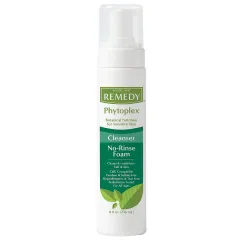
Phytoplex Cleanser No Rinse Foam
Source: Walgreens
This product works by removing dirt and oil from the surface of the skin. It uses a combination of mild cleansing agents (cocamidopropyl betaine, coco-glucoside, dimethicone peg-7 phosphate, hydrogenated lecithin, peg-40 hydrogenated castor oil, zea mays oil) and should be able to cleanse the skin gently. Still keep in mind that any cleansing can disrupt the skin barrier, and most people do not need to cleanse their skin more than once per day.
Even though this formulation is mild, the following cleansing agents could trigger an irritation or allergy for some people: cocamidopropyl betaine, coco-glucoside
Helps water and oil mix together. Used as a cleansing ingredient. Could be an allergen
Used as a cleansing agent (surfactant) in cleansers. Helps water and oil mix together in lotions. Can be irritating
Helps oil and water mix together
Helps to retain moisture by creating a protective barrier on the skin. Rich in fatty acids. Improves product texture and helps with the penetration of other ingredients.
Helps oil and water mix together
A good moisturizing plant oil. Due to the high linoleic acid content, it helps soften the upper layer of the skin, reduce water loss and support skin barrier function
How honest is this product?
| Promise | Can it deliver? |
|---|---|
| Cleansing |
Total Promises Fulfilled score: 100/100.
We receive a small commission for purchases made through these links at no cost for you. Thank you for your support! Learn more
Potential irritants
Comedogenic ingredients
User reviews (0)
Averages from community submissions.
No reviews yet for this product.
Be the first to share your experience!
Tried this product?
Help capture what the ingredient list can't—texture, finish, pilling, scent, and more. Answer what you can, skip the rest.
Takes ~30 seconds.
Reviews are shown in aggregate. No personal details.
Key Actives
Can contain potent anti-oxidant compounds (abbreviated ECG, GCG, EGC, and EGCG) that might help protect the skin from free radicals. Can help calm down inflammation and has some anti-bacterial properties. Unfortunately, these antioxidants are unstable and lose their effectiveness very quickly in products. The concentration of the antioxidant compounds in the extract also tends to be low to be effective in topical formulation
An extract from ablue-green algae. Can help attract water to the upper layer of the skin and might help to neutralize free radicals
A good moisturizing plant oil. Due to the high linoleic acid content, it helps soften the upper layer of the skin, reduce water loss and support skin barrier function
Used as a cleansing agent (surfactant) in cleansers. Helps water and oil mix together in lotions. Can be irritating
Helps water and oil mix together. Used as a cleansing ingredient. Could be an allergen
Pro-vitamin D. It is claimed to have anti-inflammatory effect in skin, but there is no research available confirming that this compound converts to vitamin D in skin or has any other benefits apart from softening the upper layer of the skin. This compound is different from the Vitamin D3 analogues used in medicine to treat psoriasis
One of the best moisturizing ingredients. Naturally present in skin. It attracts water to the upper layer of the skin working as a humectant
Helps oil and water mix together
A good mix of fatty acids that forms a protective layer on the skin. Improves the shelf life of products. Derived from coconut and glycerin
Helps oil and water mix together
Helps to retain moisture by creating a protective barrier on the skin. Rich in fatty acids. Improves product texture and helps with the penetration of other ingredients.
An emollient that helps soften the skin. Could be comedogenic
Potential irritants
Used as a cleansing agent (surfactant) in cleansers. Helps water and oil mix together in lotions. Can be irritating
Helps water and oil mix together. Used as a cleansing ingredient. Could be an allergen
A plant extract used as a fragrance. Can be irritating
Pro-vitamin D. It is claimed to have anti-inflammatory effect in skin, but there is no research available confirming that this compound converts to vitamin D in skin or has any other benefits apart from softening the upper layer of the skin. This compound is different from the Vitamin D3 analogues used in medicine to treat psoriasis
A more stable but less bio-available form of vitamin E compared to Tocopherol. Might help moisturize and protect the skin from free radicals, but mostly used in low concentrations to stabilize other ingredients.
A good mix of fatty acids that forms a protective layer on the skin. Improves the shelf life of products. Derived from coconut and glycerin
Can work as an exfoliant but is typically used to adjust the product pH
Used to improve stability of the formulation
Comedogenic ingredients
A good moisturizing plant oil. Due to the high linoleic acid content, it helps soften the upper layer of the skin, reduce water loss and support skin barrier function
An emollient that helps soften the skin. Could be comedogenic
All ingredients
Used as a cleansing agent (surfactant) in cleansers. Helps water and oil mix together in lotions. Can be irritating
Helps water and oil mix together. Used as a cleansing ingredient. Could be an allergen
An extract from ablue-green algae. Can help attract water to the upper layer of the skin and might help to neutralize free radicals
Can contain potent anti-oxidant compounds (abbreviated ECG, GCG, EGC, and EGCG) that might help protect the skin from free radicals. Can help calm down inflammation and has some anti-bacterial properties. Unfortunately, these antioxidants are unstable and lose their effectiveness very quickly in products. The concentration of the antioxidant compounds in the extract also tends to be low to be effective in topical formulation
Helps attract water to the upper layer of the skin. Might have some anti-aging, anti-oxidant, and skin lightening properties, but solid evidence is missing
Pro-vitamin D. It is claimed to have anti-inflammatory effect in skin, but there is no research available confirming that this compound converts to vitamin D in skin or has any other benefits apart from softening the upper layer of the skin. This compound is different from the Vitamin D3 analogues used in medicine to treat psoriasis
A good moisturizing plant oil. Due to the high linoleic acid content, it helps soften the upper layer of the skin, reduce water loss and support skin barrier function
Emollients that are naturaly present in skin. In addition, they help water and oil mix together in the product
A more stable but less bio-available form of vitamin E compared to Tocopherol. Might help moisturize and protect the skin from free radicals, but mostly used in low concentrations to stabilize other ingredients.
One of the best moisturizing ingredients. Naturally present in skin. It attracts water to the upper layer of the skin working as a humectant
A good mix of fatty acids that forms a protective layer on the skin. Improves the shelf life of products. Derived from coconut and glycerin
Helps to retain moisture by creating a protective barrier on the skin. Rich in fatty acids. Improves product texture and helps with the penetration of other ingredients.
Can work as an exfoliant but is typically used to adjust the product pH
Used to improve stability of the formulation
A plant extract used as a fragrance. Can be irritating
An emollient that helps soften the skin. Could be comedogenic
Ingredient list view
Water, Coco-glucoside, Cocamidopropyl betaine, Aphanizomenon flos-aquae extract, Camellia sinensis leaf extract, Yeast ferment extract, Hydrolyzed soy protein, 7-dehydrocholesterol, Zea mays oil, Calophyllum tacamahaca seed oil, Phospholipids, Tocopheryl acetate, Glycerin, Dimethicone peg-7 phosphate, Caprylic/capric triglyceride, Peg-40 hydrogenated castor oil, Hydrogenated lecithin, Citric acid, Trisodium ethylenediamine disuccinate, Methylisothiazolinone, Ethylene brassylate, Vanilla planifolia fruit extract, Isopropyl myristate, Methyldihydrojasmonate
- In Vitro Assessment of Skin Irritation Potential of Surfactant-based Formulations by Using a 3-D Skin Reconstructed Tissue Model and Cytokine Response
- Allergen of the Year—Alkyl Glucoside
- Effects of the Aphanizomenon flos-aquae Extract (Klamin®) on a Neurodegeneration Cellular Model
- Extracts from Glycine max (soybean) induce elastin synthesis and inhibit elastase activity
- Dermatological and cosmeceutical benefits of Glycine max (soybean) and its active components
- Safety Assessment of Soy Peptides as Used in Cosmetics
- Vitamin D Regulation of Cathelicidin in the Skin: Toward a Renaissance of Vitamin D in Dermatology?
- Off-Label Uses of Topical Vitamin D in Dermatology: A Systematic Review
- The Rationale Behind Topical Vitamin D Analogs in the Treatment of Psoriasis
- Content of fatty acids in corn (Zea mays L.) oil from Ecuador
- Glycerol and the skin: holistic approach to its origin and functions
- Amended Safety Assessment of PEGylated Oils as Used in Cosmetics
- Methylisothiazolinone contact allergy: a review
- Fragrance material review on ethylene brassylate