Works for
1 of 1 advertised claim delivered
Moisturizing19 ingredients credited for this claimStrong support
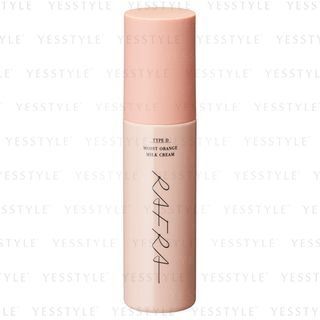
“Moist Orange Milk Cream Type D”
This product can help improve hydration of the skin with the two types of ingredients.
The first type is called “humectants”:
these ingredients help attract water.
When humectants are on the surface of the skin, they “pull in” the moisture from the outside environment, or from
within deeper layers of the skin. The following ingredients in this product do the job:
glycerin, glyceryl glucoside.
This product also contains ingredients called “occlusives”. They help reduce the speed with which our skin loses moisture to the outside environment. These ingredients also help soften the upper layer of the skin, so it feels less tight and nicer to the touch. The following ingredients in this product do the job: peg-10 dimethicone, glycine soja oil.
The following ingredients in this product are especially good for supporting the skin barrier and helping with the hydration level: ceramide ap, ceramide ng, ceramide np
Can it cause trouble?
Irritancy5 strong irritants: Citrus reticulata extract, Citrus aurantium dulcis peel extract + 3 more — patch-test recommendedHigh risk
Comedogenic2 ingredients rated 2 or more on the 0–5 pore-clogging scale2 flagged


User reviews
Be the first — your take helps the next person decide.
Ingredients
Filter by role to see what each ingredient is doing.
Water~45–55%
Cyclopentasiloxane~6.8–8.3%
- Irritation risk
- Low
A silicone that helps improve the product texture and spreadability. Can absorb oil creating a short-term mattifying effect on the skin
More about CyclopentasiloxaneButylene glycol~4.3–5.2%
- Irritation risk
- Low
Used to create a nice product texture and help delivery of other ingredients. Might be somewhat helpful in attracting water to the upper layer of the skin
More about Butylene glycolPeg-10 dimethicone~3.3–4.1%
- Irritation risk
- Low
A silicone that works to soften the upper layer of the skin and reduce its water loss
More about Peg-10 dimethiconeDiphenylsiloxy phenyl trimethicone~2.4–3%
- Irritation risk
- Low
Help improve the product's texture
More about Diphenylsiloxy phenyl trimethiconePentylene glycol~2.1–2.5%
- Irritation risk
- Medium
Used to preserve products, dissolve other ingredients and create a nice product texture
More about Pentylene glycolDistearyldimonium chloride~1.7–2%
- Irritation risk
- Low
Myrothamnus flabellifolia leaf/stem extract~1.4–1.7%
- Irritation risk
- Low
Dihydroxypropyl arginine hcl~1.2–1.4%
- Irritation risk
- Low
Citrus reticulata extract~0.95–1.15%
- Irritation risk
- High
Citrus aurantium dulcis peel extract~0.65–0.95%
Glyceryl glucoside~0.55–0.85%
- Irritation risk
- Low
Can help to restore skin barrier function and soften its upper layer
More about Glyceryl glucosideMacadamia ternifolia seed oil~0.55–0.85%
- Irritation risk
- Medium
Plant oil from nuts that helps soften the upper layer of the skin. Contains a high concentration of oleic acid that can weaken skin's barrier function and increase water-loss while enhancing penetration of other ingredients
More about Macadamia ternifolia seed oilSimmondsia chinensis seed oil~0.55–0.8%
- Irritation risk
- Medium
Softens the upper layer of skin and helps restore the healthy skin barrier. Has shown to help calm down inflammation in skin. It is a stable oil, meaning that it retains its properties even when exposed to air.
More about Simmondsia chinensis seed oilCitrus aurantium dulcis peel oil~0.45–0.65%
- Irritation risk
- High
An essentil oil from orange peel. Potential allergen and can be irritating
More about Citrus aurantium dulcis peel oilRetinyl palmitate~0.4–0.6%
- Irritation risk
- High
Three steps removed from the active form of vitamin A - retinoic acid. To have an effect in the skin, it first needs to be converted twice to become the retinoic acid. This means it is less potent than retinol, but could also be less irritating. Once converted to the retinoic acid in the skin, it helps against all signs of aging, improves skin cell turnover and helps fight blemishes and clogged pores. However, in many cosmetic formulations, it is used in a concentration that is too low to have the full effect
More about Retinyl palmitateHydrolyzed elastin~0.45–0.65%
- Irritation risk
- Low
Polyquaternium-51~0.4–0.6%
- Irritation risk
- Low
An emollient that helps create a nice silky finish on the skin
More about Polyquaternium-51Hydrolyzed collagen~0.35–0.65%
- Irritation risk
- Low
A typically plant-derived compound that is supposed mimic human collagen. Cannot penetrate the skin barrier so is not particularly useful in skincare products beyond attracting water to the upper layer of the skin
More about Hydrolyzed collagenHydrolyzed hyaluronic acid~0.3–0.55%
- Irritation risk
- Low
One of the best moisturizing ingredients. Attracts water into the upper layer of the skin. A version of it is naturally present in skin
More about Hydrolyzed hyaluronic acidCeramide ap~0.25–0.5%
- Irritation risk
- Low
A type of lipid similar to ceramides naturally present in skin. Helps to soften the upper layer of the skin and supports the skin barrier function to keep it hydrated. Can help to prevent inflammation in skin
More about Ceramide apCeramide ng~0.3–0.55%
- Irritation risk
- Low
A type of lipid similar to ceramides naturally present in skin. Helps to soften the upper layer of the skin and supports the skin barrier function to keep it hydrated. Can help to prevent inflammation in skin
More about Ceramide ngCeramide np~0.3–0.5%
- Irritation risk
- Low
A type of lipid similar to ceramides naturally present in skin. Helps to soften the upper layer of the skin and supports the skin barrier function to keep it hydrated. Can help to prevent inflammation in skin
More about Ceramide npAscorbic acid~0.25–0.45%
- Irritation risk
- High
The most well-researched antioxidant that works in skin. Helps neutralize free radicals supporting collagen production, helping to even out the skin tone and preventing early signs of aging
More about Ascorbic acidHoney~0.25–0.45%
- Irritation risk
- Low
Helps attract water to the skin and might have some anti-bacterial properties. Can be an allergen
More about HoneyGlycine soja oil~0.25–0.45%
- Irritation risk
- Medium
- Comedogenicity
- 2/5
A good emollient that helps soften the skin and helps repair its barrier function. It can clog pores if used in high concentrations.
More about Glycine soja oilZea mays oil~0.2–0.4%
- Irritation risk
- Low
- Comedogenicity
- 3/5
A good moisturizing plant oil. Due to the high linoleic acid content, it helps soften the upper layer of the skin, reduce water loss and support skin barrier function
More about Zea mays oilDaucus carota sativa root extract~0.2–0.4%
- Irritation risk
- Low
Carrot extract. Might have anti-oxidant properties and be used to add orange color
More about Daucus carota sativa root extractGlycerin~0.25–0.45%
- Irritation risk
- Low
One of the best moisturizing ingredients. Naturally present in skin. It attracts water to the upper layer of the skin working as a humectant
More about GlycerinCitrus aurantium dulcis oil~0.15–0.3%
- Irritation risk
- High
Used as a fragrance. It can be irritating and cause photosensitivity
More about Citrus aurantium dulcis oilCitric acid~0.15–0.25%
- Irritation risk
- Medium
Can work as an exfoliant but is typically used to adjust the product pH
More about Citric acidPropanediol~0.15–0.3%
- Irritation risk
- Low
Acts as a solvent for other ingredients. Speeds up the absorption of other ingredients into the skin
More about PropanediolPhenoxyethanol~0.15–0.25%
- Irritation risk
- Low
A preservative. It helps prevent bacterial growth in cosmetic products
More about PhenoxyethanolTocopherol~0.1–0.2%
- Irritation risk
- Low
Pure form of vitamin E. Can help moisturise and protect the skin from free radicals. Often used to help stabilise other ingredients or the formula itself
More about TocopherolIngredient list view
Water, Cyclopentasiloxane, Butylene glycol, Peg-10 dimethicone, Diphenylsiloxy phenyl trimethicone, Pentylene glycol, Unknown, Distearyldimonium chloride, Myrothamnus flabellifolia leaf/stem extract, Unknown, Dihydroxypropyl arginine hcl, Citrus reticulata extract, Citrus aurantium dulcis peel extract, Glyceryl glucoside, Macadamia ternifolia seed oil, Simmondsia chinensis seed oil, Citrus aurantium dulcis peel oil, Retinyl palmitate, Hydrolyzed elastin, Polyquaternium-51, Hydrolyzed collagen, Hydrolyzed hyaluronic acid, Ceramide ap, Ceramide ng, Ceramide np, Ascorbic acid, Honey, Glycine soja oil, Zea mays oil, Daucus carota sativa root extract, Glycerin, Citrus aurantium dulcis oil, Citric acid, Propanediol, Phenoxyethanol, Tocopherol
Compare prices
Retailers ranked by price — lowest first.

Affiliate links · prices updated regularly
Worth comparing, line by line.
Match % combines shared ingredients, the first five ingredients, shared actives and hero ingredients, irritancy (lower counts in the alternative's favour), texture and body area. Only products in the same routine step are compared.
| RAFRAMoist Orange Milk Cream Type DYOUR PRODUCT | TSUDA SETSUKOSkin Barrier Cream Fragrance Free | Rephrintense hydration cream 1.0 | BeautyBioThe Quench Quadralipid Skin Recovery Cream | |
|---|---|---|---|---|
| Match | — | 59% | 58% | 56% |
| Price | $55.70 | $89.60+$33.90 | — | $170.54+$114.84 |
| Shared key ingredients | — | 6 of 13 | 5 of 13 | 5 of 13 |
| Key difference | — | Petrolatum | Niacinamide | Palmitoyl Hexapeptide-12 |
| Irritancy | High | Medium | Medium | Medium |
| Drying alcohol | — | — | — | — |
| View product | Shop | Shop | Shop |


Product summary
"RAFRA - Moist Orange Milk Cream Type D" is a well-rounded moisturizing product. To work well, any moisturizer needs to include a combination of water-binding and emollient ingredients. RAFRA - Moist Orange Milk Cream Type D ticks this box. Humectants in this product (glycerin, glyceryl glucoside, hydrolyzed collagen, hydrolyzed hyaluronic acid and honey) help to increase the water content in the upper layer of the skin. (These ingredients do so by "capturing" water molecules from the outside air or from within the deeper layers of the skin). Ceramide ng, ceramide np, glycine soja oil, hydrolyzed collagen and peg-10 dimethicone in this product help decrease the water evoporation from the skin, so that it stays hydrated for longer. These ingredients also soften the skin and take away the feeling of tightness and dryness.
Ingredient callouts
- This product also contains Vitamin C (Ascorbic Acid). It can be an effective active for anti-aging and evening out the skin tone, but in this moisturizer it is used for stabilizing other ingredients in the formulation. In this concentration (0.25% - 0.45%) it cannot have a noticeable benefit for the skin.
- This moisturizer includes a form of Retinoids (vitamin A) - retinyl palmitate 0.40% - 0.60%, but this type of vitamin A is not very effective. It could in theory help with fine lines and wrinkles, but the effect is most likely minimal.
- Another benefit is that this moisturizer contain ceramides (ceramide np 0.30% - 0.50%, ceramide ng 0.30% - 0.55% and ceramide ap 0.25% - 0.50%). Ceramides are an important part of our natural skin barrier. The Ceramides used in skincare are synthetic or come from plants. They help soften the skin and can help "fill the gaps" in the skin barrier, keeping the skin hydrated and resilient for longer.
Irritation risk
We assess the overall irritancy of this moisturizer to be high. For a detailed overview of all potential irritants: click here
You can see the detailed formula review with the breakdown of all actives in the product and the full ingredient list with estimated concentrations in the tables below.
Price
The product retails for 55.70$ in the United States.
For a detailed price comparison: click here.
Sources cited in this review
Every concentration estimate and effectiveness label is anchored to one of these 15 studies and safety reviews.
- 1
- 2
- 3
- 4Efficacy of a New Topical Nano-hyaluronic Acid in Humansncbi.nlm.nih.gov
- 5Physiochemical properties and application of hyaluronic acid: a systematic reviewonlinelibrary.wiley.com
- 6

Affiliate links · As an Amazon Associate, WIMJ earns from qualifying purchases.