Works for:
based on ingredients and %- Moisturizing
Can it cause trouble?
- Irritation risk: high
- Comedogenic risk ingredients: 3
Key actives

Works for
Moisturizing
What does the product description say?
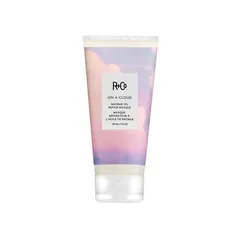
For cloud-like softness, the ON A CLOUD Baobab Oil Repair Masque transforms and renews damaged lengths via intense nourishment to restore strength and elasticity to depleted tresses.
Source: Cultbeauty
This product can help improve hydration of the skin with the two types of ingredients.
The first type is called “humectants”:
these ingredients help attract water.
When humectants are on the surface of the skin, they “pull in” the moisture from the outside environment, or from
within deeper layers of the skin. The following ingredients in this product do the job:
glycerin, caprylyl glycol.
This product also contains ingredients called “occlusives”. They help reduce the speed with which our skin loses moisture to the outside environment. These ingredients also help soften the upper layer of the skin, so it feels less tight and nicer to the touch. The following ingredients in this product do the job: butyrospermum parkii butter, dimethicone.
One of the best moisturizing ingredients. Naturally present in skin. It attracts water to the upper layer of the skin working as a humectant
A good emollient that helps soften the skin and helps repair its barrier function. It can clog pores if used in high concentrations.
Helps soften the upper layer of the skin and can be helpful in restoring the skin barrier function
Helps soften the upper layer of the skin
A great moisturising ingredient that softens the skin and reduces water loss from its upper layer. It also can be helpful in protecting skin from free radicals
A silicone that helps to reduce water loss from the surface of the skin. Can temporarily "fill in" lines and wrinkles, absorb oil, and create a nice product finish
An emollient that softens the skin
Helps soften the upper layer of the skin
A non-drying alcohol. Works as an emollient. Helps water and oil mix together and creates a nice product texture
A non-drying alcohol that works to soften the skin and stabilize product formulations helping oil and water mix together
Helps soften upper layer of the skin and can enhance penetration of other ingredients into the upper layer of the skin
Plant oil from nuts that helps soften the upper layer of the skin. Contains a high concentration of oleic acid that can weaken skin's barrier function and increase water-loss while enhancing penetration of other ingredients
An emollient that helps soften the skin but is not effective for restoring its barrier function. Might be helpful to calm down inflammation
Helps preserve products and creates a nice product texture
Pure form of vitamin E. Can help moisturise and protect the skin from free radicals. Often used to help stabilise other ingredients or the formula itself
How honest is this product?
| Promise | Can it deliver? |
|---|---|
| Moisturizing |
Total Promises Fulfilled score: 75/100.
We receive a small commission for purchases made through these links at no cost for you. Thank you for your support! Learn more
Potential irritants
Comedogenic ingredients
User reviews (0)
Averages from community submissions.
No reviews yet for this product.
Be the first to share your experience!
Tried this product?
Help capture what the ingredient list can't—texture, finish, pilling, scent, and more. Answer what you can, skip the rest.
Takes ~30 seconds.
Reviews are shown in aggregate. No personal details.
Key Actives
A great moisturising ingredient that softens the skin and reduces water loss from its upper layer. It also can be helpful in protecting skin from free radicals
A silicone that helps to reduce water loss from the surface of the skin. Can temporarily "fill in" lines and wrinkles, absorb oil, and create a nice product finish
Helps soften the upper layer of the skin and can be helpful in restoring the skin barrier function
One of the best moisturizing ingredients. Naturally present in skin. It attracts water to the upper layer of the skin working as a humectant
A good emollient that helps soften the skin and helps repair its barrier function. It can clog pores if used in high concentrations.
Helps soften the upper layer of the skin
Potential irritants
A drying alcohol. Can increase skin's sensitivity and cause dryness and irritation
An aromatic blend of unspecified and possibly irritating ingredients
Can be drying and contribute to skin irritation. Used in formulars to dissolve other ingredients, create a thinner product consistency or for its antibacterial properties
A common frangrance that can easily irritate skin, especially if exposed to air, light or heat
An emollient that helps soften the skin but is not effective for restoring its barrier function. Might be helpful to calm down inflammation
Plant oil from nuts that helps soften the upper layer of the skin. Contains a high concentration of oleic acid that can weaken skin's barrier function and increase water-loss while enhancing penetration of other ingredients
Helps preserve products and creates a nice product texture
A good emollient that helps soften the skin and helps repair its barrier function. It can clog pores if used in high concentrations.
Being a lipid soluble form of vitamin C, it is more stable and can penetrate the skin better than L-Ascorbic acid. It is effective in protecting the skin from free radicals, as well as evening the skin tone, but is less effective in stimulating collagen production compared to L-Ascorbic acid.
Can work as an exfoliant but is typically used to adjust the product pH
Comedogenic ingredients
A non-drying alcohol. Works as an emollient. Helps water and oil mix together and creates a nice product texture
A great moisturising ingredient that softens the skin and reduces water loss from its upper layer. It also can be helpful in protecting skin from free radicals
A good emollient that helps soften the skin and helps repair its barrier function. It can clog pores if used in high concentrations.
All ingredients
A non-drying alcohol. Works as an emollient. Helps water and oil mix together and creates a nice product texture
A great moisturising ingredient that softens the skin and reduces water loss from its upper layer. It also can be helpful in protecting skin from free radicals
A non-drying alcohol that works to soften the skin and stabilize product formulations helping oil and water mix together
Helps soften upper layer of the skin and can enhance penetration of other ingredients into the upper layer of the skin
Helps to dissolve other ingredients in a formulation. Slows down the rate of product drying
An emollient that helps soften the skin but is not effective for restoring its barrier function. Might be helpful to calm down inflammation
A silicone that helps to reduce water loss from the surface of the skin. Can temporarily "fill in" lines and wrinkles, absorb oil, and create a nice product finish
Plant oil from nuts that helps soften the upper layer of the skin. Contains a high concentration of oleic acid that can weaken skin's barrier function and increase water-loss while enhancing penetration of other ingredients
A preservative. It helps prevent bacterial growth in cosmetic products
Helps water and oil mix together and create a nice product texture
A drying alcohol. Can increase skin's sensitivity and cause dryness and irritation
An aromatic blend of unspecified and possibly irritating ingredients
Helps soften the upper layer of the skin and can be helpful in restoring the skin barrier function
Used to thicken product formulations and create gel-like textures
One of the best moisturizing ingredients. Naturally present in skin. It attracts water to the upper layer of the skin working as a humectant
Helps preserve products and creates a nice product texture
A good emollient that helps soften the skin and helps repair its barrier function. It can clog pores if used in high concentrations.
Can be drying and contribute to skin irritation. Used in formulars to dissolve other ingredients, create a thinner product consistency or for its antibacterial properties
Pure form of vitamin E. Can help moisturise and protect the skin from free radicals. Often used to help stabilise other ingredients or the formula itself
Being a lipid soluble form of vitamin C, it is more stable and can penetrate the skin better than L-Ascorbic acid. It is effective in protecting the skin from free radicals, as well as evening the skin tone, but is less effective in stimulating collagen production compared to L-Ascorbic acid.
Can work as an exfoliant but is typically used to adjust the product pH
Acts as a solvent for other ingredients. Speeds up the absorption of other ingredients into the skin
Helps adjust the product pH and stabilize the formulation
Carrot extract. Might have anti-oxidant properties and be used to add orange color
Used to increase stability of product formulations
A common frangrance that can easily irritate skin, especially if exposed to air, light or heat
Ingredient list view
Water, Behentrimonium chloride, Cetearyl alcohol, Amodimethicone, Butyrospermum parkii butter, Cetyl alcohol, Hydrogenated castor oil/sebacic acid copolymer, Behentrimonium methosulfate, Cetyl esters, Dipropylene glycol, C18-38 alkyl hydroxystearoyl stearate, Olea europaea fruit oil, Propylene glycol dibenzoate, Prunus amygdalus dulcis oil, Dimethicone, Macadamia ternifolia seed oil, Quaternium-87, Phenoxyethanol, Guar hydroxypropyltrimonium chloride, Isopropyl alcohol, Parfum, Polysilicone-29, Cetrimonium chloride, Shorea stenoptera seed butter, Hydroxyethylcellulose, C11-15 pareth-7, Laureth-9, Disodium edta, Glycerin, Trideceth-12, Bht, Caprylyl glycol, Trideceth-15, Trideceth-3, Acetic acid, Glycine soja oil, Adansonia digitata seed oil, Mauritia flexuosa fruit oil, Astrocaryum vulgare kernel oil, Quaternium-95, Cinnamidopropyltrimonium chloride, Alcohol, Tocopherol, Ascorbyl palmitate, Citric acid, Propanediol, Disodium phosphate, Polysorbate 60, Disiloxane, Trisiloxane, Sodium phosphate, Beta-carotene, Daucus carota sativa root extract, Pentaerythrityl tetra-di-t-butyl hydroxyhydrocinnamate, Sodium hydroxide, Limonene, Hydroxycitronellal
- Comparison of skin calming effects of cosmetic products containing 4-t-butylcyclohexanol or acetyl dipeptide-1 cetyl ester on capsaicin-induced facial stinging in volunteers with sensitive skin
- Amended Safety Assessment of Alkyl Esters as Used in Cosmetics
- Use of “natural” oils for moisturization: Review of olive, coconut, and sunflower seed oil
- Anti-Inflammatory and Skin Barrier Repair Effects of Topical Application of Some Plant Oils
- Dimethicone as a protective ingredient in topical medications
- Final Report on the Safety Assessment of Dimethicone Copolyol
- Fatty acids profile of oil from nine varieties of Macadamia nut
- Final Report on On the Safety Assessment of Galactomannans As Used in Cosmetics
- Glycerol and the skin: holistic approach to its origin and functions
- Vitamin E in dermatology
- Vitamin E and Skin Health
- Safety Assessment of Pentaerythrityl Tetra-Di-t-Butyl Hydroxyhydrocinnamate as Used in Cosmetics