Works for
1 of 1 advertised claim delivered
Moisturizing9 ingredients credited for this claimGood evidence
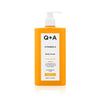
“Vitamin C Body Cream”
This product can help improve hydration of the skin with the two types of ingredients.
The first type is called “humectants”:
these ingredients help attract water.
When humectants are on the surface of the skin, they “pull in” the moisture from the outside environment, or from
within deeper layers of the skin. The following ingredients in this product do the job:
glycerin, hyaluronic acid.
This product also contains ingredients called “occlusives”. They help reduce the speed with which our skin loses moisture to the outside environment. These ingredients also help soften the upper layer of the skin, so it feels less tight and nicer to the touch. The following ingredients in this product do the job: butyrospermum parkii butter, oenothera biennis oil.
Can it cause trouble?
Irritancy7 strong irritants: Zingiber officinale root extract, Citrus sinensis peel oil expressed + 5 more — patch-test recommendedHigh risk
Comedogenic1 ingredient rated 2 or more on the 0–5 pore-clogging scale1 flagged


User reviews
Be the first — your take helps the next person decide.
Ingredients
Filter by role to see what each ingredient is doing.
Water~40–60%
Brassica campestris seed oil~5.3–7.9%
- Irritation risk
- Low
Helps soften the upper layer of the skin
More about Brassica campestris seed oilGlycerin~3.4–5.1%
- Irritation risk
- Low
One of the best moisturizing ingredients. Naturally present in skin. It attracts water to the upper layer of the skin working as a humectant
More about GlycerinC14-22 alcohols~2.8–4.2%
- Irritation risk
- Low
A non-drying alcohol that helps stabilize product formulations
More about C14-22 alcoholsButyrospermum parkii butter~2.2–3.3%
- Irritation risk
- Low
- Comedogenicity
- 3/5
A great moisturising ingredient that softens the skin and reduces water loss from its upper layer. It also can be helpful in protecting skin from free radicals
More about Butyrospermum parkii butterHydroxyethyl acrylate/sodium acryloyldimethyl taurate copolymer~1.7–2.5%
- Irritation risk
- Medium
A gelling agent that thickens the product consistency and leaves the skin with a velvety finish
More about Hydroxyethyl acrylate/sodium acryloyldimethyl taurate copolymerAscorbic acid~1.5–2.3%
- Irritation risk
- High
The most well-researched antioxidant that works in skin. Helps neutralize free radicals supporting collagen production, helping to even out the skin tone and preventing early signs of aging
More about Ascorbic acidSodium ascorbyl phosphate~1.2–1.8%
- Irritation risk
- Medium
A stable derivative of vitamin C. It is oil-soluble which means it is more likely to penetrate the skin compared to the pure form of vitamin C (which is water-soluble), but it is less bio-available and is way less effective in stimulating collagen and reducing wrinkles compared to the pure form of vitamin C (L-ascorbic acid) and its other derivatives (for example, magnesium ascorbyl phosphate). At the same time, this vitamin C derivative has been shown in studies to be effective in reducing acne, blemishes and clogged pores. It is less irritating then the pure form of vitamin C
More about Sodium ascorbyl phosphateZingiber officinale root extract~0.95–1.4%
- Irritation risk
- High
A plant extract that can contain an irritating essential oil. Might have some anti-oxidant effect, but evidence is lacking
More about Zingiber officinale root extractHyaluronic acid~0.8–1.2%
- Irritation risk
- Low
One of the best moisturizing ingredients. Attracts water into the upper layer of the skin. Naturally present in skin. Typically has large molecule size unless advertised otherwise on the product label. Helps support skin's barrier function and may help to reduce inflammation
More about Hyaluronic acidVolcanic soil~0.5–1.1%
- Irritation risk
- Low
Citrus sinensis peel oil expressed~0.4–0.9%
- Irritation risk
- High
Citrus limon peel oil~0.35–0.8%
Citrus paradisi peel oil~0.3–0.7%
Oenothera biennis oil~0.3–0.75%
- Irritation risk
- Medium
Helps soften the upper layer of the skin and can support skin barrier function
More about Oenothera biennis oilCoco-caprylate/caprate~0.3–0.7%
- Irritation risk
- Low
Helps to soften the upper layer of the skin without creating a greasy texture
More about Coco-caprylate/caprateCaprylic/capric triglyceride~0.3–0.75%
- Irritation risk
- Medium
A good mix of fatty acids that forms a protective layer on the skin. Improves the shelf life of products. Derived from coconut and glycerin
More about Caprylic/capric triglycerideC12-20 alkyl glucoside~0.15–0.7%
- Irritation risk
- Medium
Helps water and oil mix together
More about C12-20 alkyl glucosideXanthan gum~0.15–0.65%
- Irritation risk
- Low
Used to create a thicker product consistency
More about Xanthan gumCaprylyl glycol~0.15–0.6%
- Irritation risk
- Medium
Helps preserve products and creates a nice product texture
More about Caprylyl glycolGlucose~0.15–0.55%
- Irritation risk
- Low
Helps attract water to the upper layer of the skin. Could be helpful in restoring the skin barrier function
More about GlucoseAmylopectin~0.15–0.5%
- Irritation risk
- Low
Sorbitan isostearate~0.1–0.45%
- Irritation risk
- Low
Helps oil and water mix together
More about Sorbitan isostearatePolysorbate 60~0.1–0.5%
1,2-hexanediol~0.1–0.35%
Ethylhexylglycerin~0.1–0.4%
Phenoxyethanol~0.1–0.35%
- Irritation risk
- Low
A preservative. It helps prevent bacterial growth in cosmetic products
More about PhenoxyethanolSodium hydroxide~0.1–0.35%
Citric acid~0.05–0.3%
- Irritation risk
- Medium
Can work as an exfoliant but is typically used to adjust the product pH
More about Citric acidLimonene~0.05–0.2%
- Irritation risk
- High
A common frangrance that can easily irritate skin, especially if exposed to air, light or heat
More about LimoneneLinalool~0.05–0.15%
Citral~0.05–0.1%
Ingredient list view
Water, Brassica campestris seed oil, Glycerin, C14-22 alcohols, Butyrospermum parkii butter, Hydroxyethyl acrylate/sodium acryloyldimethyl taurate copolymer, Ascorbic acid, Sodium ascorbyl phosphate, Zingiber officinale root extract, Hyaluronic acid, Volcanic soil, Citrus sinensis peel oil expressed, Citrus limon peel oil, Citrus paradisi peel oil, Oenothera biennis oil, Coco-caprylate/caprate, Caprylic/capric triglyceride, C12-20 alkyl glucoside, Xanthan gum, Caprylyl glycol, Glucose, Amylopectin, Sorbitan isostearate, Polysorbate 60, 1,2-hexanediol, Ethylhexylglycerin, Phenoxyethanol, Sodium hydroxide, Citric acid, Limonene, Linalool, Citral
Compare prices
Retailers ranked by price — lowest first.
Affiliate links · prices updated regularly · As an Amazon Associate, WIMJ earns from qualifying purchases.
Worth comparing, line by line.
Match % combines shared ingredients, the first five ingredients, shared actives and hero ingredients, irritancy (lower counts in the alternative's favour), texture and body area. Only products in the same routine step are compared.
| Q+AVitamin C Body CreamYOUR PRODUCT | Brickell Men's ProductsClearing Scar Cream for Men | AlaffiaVanilla Coconut Hand + Body Cream | NiveaQ10 Energy Fresh Look Eye Cream with Vitamin C | |
|---|---|---|---|---|
| Match | — | 72% | 72% | 71% |
| Price | $10.66 | $40.00+$29.34 | $11.60+$0.94 | $10.04−$0.62 |
| Shared key ingredients | — | 2 of 7 | 2 of 7 | 4 of 7 |
| Key difference | — | Panthenol | Cocos Nucifera Oil | Panthenol |
| Irritancy | High | High | High | Low |
| Drying alcohol | — | — | — | — |
| View product | Shop | Shop | Shop |


Sources cited in this review
Every concentration estimate and effectiveness label is anchored to one of these 16 studies and safety reviews.
- 1
- 2
- 3Sodium ascorbyl phosphate in topical microemulsionssciencedirect.com
- 4
- 5
- 6

Affiliate links · As an Amazon Associate, WIMJ earns from qualifying purchases.