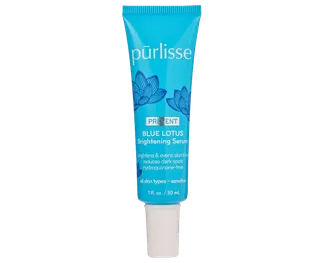
Works for
Evens skin toneAlpha-arbutin, Hydrolyzed soy protein + 3 moreWorks well
“Our Blue Lotus Brightening Serum is enhanced with 9 powerful plant extracts that work together to visibly improve uneven skin tone, dullness, discoloration, redness and age spots without harsh ingredients.”
This product can help reduce hypepigmentation and even out the skin tone because it contains the following effective ingredients: alpha-arbutin
Keep in mind that you would need to apply any topical skincare targetted at hypigmentation consistently for a couple of months to get a result. No topical skincare product can help get rid of hyperpigmentation (including post-acne marks and age spots) instantly.
MoisturizingSide benefit · Caprylic/capric triglyceride, Diglycerin + 16 moreWorks
This product can help improve hydration of the skin with the two types of ingredients.
The first type is called “humectants”:
these ingredients help attract water.
When humectants are on the surface of the skin, they “pull in” the moisture from the outside environment, or from
within deeper layers of the skin. The following ingredients in this product do the job:
diglycerin, glycerin.
This product also contains ingredients called “occlusives”. They help reduce the speed with which our skin loses moisture to the outside environment. These ingredients also help soften the upper layer of the skin, so it feels less tight and nicer to the touch. The following ingredients in this product do the job: caprylic/capric triglyceride, dimethicone.
Can it cause trouble?
Irritancy9 strong irritants: Geraniol, Limonene + 7 more — patch-test recommendedHigh risk
Comedogenic1 ingredient rated 2 or more on the 0–5 pore-clogging scale1 flagged
User reviews
Be the first — your take helps the next person decide.
Ingredients
Filter by role to see what each ingredient is doing.
Water~45–55%
Caprylic/capric triglyceride~5.8–7.1%
- Irritation risk
- Medium
A good mix of fatty acids that forms a protective layer on the skin. Improves the shelf life of products. Derived from coconut and glycerin
More about Caprylic/capric triglycerideDiglycerin~4.2–5.2%
- Irritation risk
- Low
Helps attract water to the upper layer of the skin
More about DiglycerinCetearyl alcohol~2.6–3.2%
- Irritation risk
- Low
- Comedogenicity
- 2/5
A non-drying alcohol. Works as an emollient. Helps water and oil mix together and creates a nice product texture
More about Cetearyl alcoholDimethicone~2.5–3.1%
- Irritation risk
- Low
A silicone that helps to reduce water loss from the surface of the skin. Can temporarily "fill in" lines and wrinkles, absorb oil, and create a nice product finish
More about DimethiconeSqualane~2.1–2.6%
- Irritation risk
- Low
An oil naturally present in skin. Works as an emollient to soften the skin and form a protective layer on its surface without a greasy feeling.
More about SqualaneTrimethylpentanediol/adipic acid copolymer~1.7–2.1%
- Irritation risk
- Medium
Helps create a nice, clear product finish on the skin
More about Trimethylpentanediol/adipic acid copolymerTocopheryl acetate~1.4–1.7%
- Irritation risk
- Medium
A more stable but less bio-available form of vitamin E compared to Tocopherol. Might help moisturize and protect the skin from free radicals, but mostly used in low concentrations to stabilize other ingredients.
More about Tocopheryl acetatePersea gratissima oil~1.3–1.6%
- Irritation risk
- Medium
An emollient that helps soften the skin and could be helpful in repairing its barrier function
More about Persea gratissima oilSodium hyaluronate~0.95–1.2%
- Irritation risk
- Low
One of the best moisturizing ingredients. Attracts water into the upper layer of the skin
More about Sodium hyaluronateButylene glycol~0.7–1.05%
- Irritation risk
- Low
Used to create a nice product texture and help delivery of other ingredients. Might be somewhat helpful in attracting water to the upper layer of the skin
More about Butylene glycolMelia azadirachta leaf extract~0.6–0.85%
- Irritation risk
- High
A plant extract that has anti-bacterial properties. Can be used to preserve the product. Can be irritating
More about Melia azadirachta leaf extractHydrolyzed prunus domestica~0.5–0.8%
- Irritation risk
- Medium
A plant extract that might have some anti-oxidant properties
More about Hydrolyzed prunus domesticaHydrolyzed lupine protein octenylsuccinate~0.5–0.75%
- Irritation risk
- Low
Alaria esculenta extract~0.45–0.7%
- Irritation risk
- Low
Works as a humectant helping to attract water to the upper layer of the skin and might be effective as an anti-oxidant.
More about Alaria esculenta extractHydrolyzed soy protein~0.45–0.65%
- Irritation risk
- Low
Helps attract water to the upper layer of the skin. Might have some anti-aging, anti-oxidant, and skin lightening properties, but solid evidence is missing
More about Hydrolyzed soy proteinCamellia sinensis leaf extract~0.45–0.65%
- Irritation risk
- Low
Can contain potent anti-oxidant compounds (abbreviated ECG, GCG, EGC, and EGCG) that might help protect the skin from free radicals. Can help calm down inflammation and has some anti-bacterial properties. Unfortunately, these antioxidants are unstable and lose their effectiveness very quickly in products. The concentration of the antioxidant compounds in the extract also tends to be low to be effective in topical formulation
More about Camellia sinensis leaf extractNymphaea coerulea flower extract~0.35–0.65%
- Irritation risk
- Low
Biotin~0.3–0.6%
- Irritation risk
- Low
Might have some moisturising properties. Is not effective when applied topically beyond some moisturizing effect
More about BiotinAlpha-arbutin~0.3–0.55%
- Irritation risk
- Medium
Might help reduce hyperpigmentation when used regularly over a long period of time. Is more effective than beta-arbutin
More about Alpha-arbutinDipotassium glycyrrhizate~0.3–0.5%
- Irritation risk
- Low
A salt derived from licorice. Works as an emollient to soften the upper layer of the skin and can help calm down inflammation. Might be helpful for skin lightening
More about Dipotassium glycyrrhizateMagnesium ascorbyl phosphate~0.3–0.5%
- Irritation risk
- Medium
A derivative of vitamin C that is more stable, but less bioavailable than the pure form of vitamin C. It does not penetrate the skin well, but has been shown to convert to pure vitamin C once in skin. It can be helpful in stimulating collagen production and lightening the skin tone, but the required concentration is likely to be very high
More about Magnesium ascorbyl phosphatePanthenol~0.25–0.5%
- Irritation risk
- Low
Helps attract water to the upper layer of the skin and can help improve skin barrier function
More about PanthenolGlycerin~0.3–0.55%
- Irritation risk
- Low
One of the best moisturizing ingredients. Naturally present in skin. It attracts water to the upper layer of the skin working as a humectant
More about GlycerinGlycereth-26~0.25–0.5%
Dicetyl phosphate~0.3–0.55%
Ceteth-10 phosphate~0.35–0.65%
Cetyl alcohol~0.3–0.6%
- Irritation risk
- Low
A non-drying alcohol that works to soften the skin and stabilize product formulations helping oil and water mix together
More about Cetyl alcoholSclerotium gum~0.25–0.45%
- Irritation risk
- Low
Used to create gel-like formulas and stabilize emulsions
More about Sclerotium gumAminomethyl propanol~0.25–0.5%
Disodium edta~0.25–0.5%
Caprylyl glycol~0.3–0.5%
- Irritation risk
- Medium
Helps preserve products and creates a nice product texture
More about Caprylyl glycolChlorphenesin~0.16–0.32%
Phenoxyethanol~0.25–0.5%
- Irritation risk
- Low
A preservative. It helps prevent bacterial growth in cosmetic products
More about PhenoxyethanolGeraniol~0.2–0.4%
Limonene~0.2–0.4%
- Irritation risk
- High
A common frangrance that can easily irritate skin, especially if exposed to air, light or heat
More about LimoneneCitrus limon peel oil~0.2–0.4%
Citrus aurantium dulcis oil~0.2–0.4%
- Irritation risk
- High
Used as a fragrance. It can be irritating and cause photosensitivity
More about Citrus aurantium dulcis oilCitrus aurantium bergamia fruit oil~0.2–0.35%
- Irritation risk
- High
A plant oil with a high content of volatile compounds that can irritate the skin and lead to allergic reactions. Can lead to photosensitivity
More about Citrus aurantium bergamia fruit oilPelargonium graveolens flower oil~0.2–0.4%
- Irritation risk
- High
An essential oil. Can be irritating. Can become an allergen with oxidation
More about Pelargonium graveolens flower oilCymbopogon martini oil~0.15–0.3%
- Irritation risk
- High
Aromatic plant oil used in cosmetics as a fragrance. A likely irritant
More about Cymbopogon martini oilCitrus aurantifolia oil~0.2–0.4%
- Irritation risk
- High
Juniperus mexicana oil~0.15–0.3%
- Irritation risk
- Low
Tagetes minuta flower oil~0.15–0.25%
- Irritation risk
- Low
Michelia alba flower oil~0.1–0.2%
- Irritation risk
- High
A plant essential oil. Used as a fragrance. Can be irritating
More about Michelia alba flower oilIngredient list view
Water, Caprylic/capric triglyceride, Diglycerin, Cetearyl alcohol, Dimethicone, Squalane, Trimethylpentanediol/adipic acid copolymer, Tocopheryl acetate, Persea gratissima oil, Sodium hyaluronate, Butylene glycol, Melia azadirachta leaf extract, Hydrolyzed prunus domestica, Hydrolyzed lupine protein octenylsuccinate, Alaria esculenta extract, Hydrolyzed soy protein, Camellia sinensis leaf extract, Nymphaea coerulea flower extract, Biotin, Alpha-arbutin, Dipotassium glycyrrhizate, Magnesium ascorbyl phosphate, Panthenol, Glycerin, Glycereth-26, Dicetyl phosphate, Ceteth-10 phosphate, Cetyl alcohol, Sclerotium gum, Aminomethyl propanol, Disodium edta, Caprylyl glycol, Chlorphenesin, Phenoxyethanol, Geraniol, Limonene, Citrus limon peel oil, Citrus aurantium dulcis oil, Citrus aurantium bergamia fruit oil, Pelargonium graveolens flower oil, Cymbopogon martini oil, Citrus aurantifolia oil, Juniperus mexicana oil, Tagetes minuta flower oil, Michelia alba flower oil
Compare prices
Retailers ranked by price — lowest first.
Worth comparing, line by line.
Match % combines shared ingredients, the first five ingredients, shared actives and hero ingredients, irritancy (lower counts in the alternative's favour), texture and body area. Only products in the same routine step are compared.
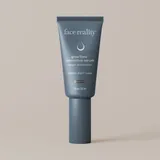
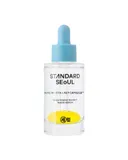
| PurlisseBlue Lotus Brightening SerumYOUR PRODUCT | Face Reality SkincareglowTone Corrective Serum | Standard SeoulBrightening Bouncy Boost Serum | numbuzinNo.5 Vitamin Concentrated Serum | |
|---|---|---|---|---|
| Match | — | 61% | 58% | 56% |
| Price | — | $64.00 | $16.76 | $14.63 |
| Shared key ingredients | — | 6 of 12 | 5 of 12 | 6 of 12 |
| Key difference | — | Niacinamide | Niacinamide | Niacinamide |
| Irritancy | High | Medium | Medium | Medium |
| Drying alcohol | — | Contains drying alcohol | — | — |
| View product | Shop | Shop | Shop |


More alternatives: Medicube Hyaluronic Multi Peptide SerumNooance cosmetiques Multi-Active Serum
Sources cited in this review
Every concentration estimate and effectiveness label is anchored to one of these 22 studies and safety reviews.
- 1
- 2Final Report on the Safety Assessment of Dimethicone Copolyoljournals.sagepub.com
- 3Hyaluronic acid: A key molecule in skin agingncbi.nlm.nih.gov
- 4
- 5Melia azedarachmdedge.com
- 6

Affiliate links · As an Amazon Associate, WIMJ earns from qualifying purchases.