Works for:
based on ingredients and %- Cleansing
Can it cause trouble?
- Irritation risk: high
- Comedogenic risk ingredients: 1
Key actives

Works for
Cleansing
What does the product description say?
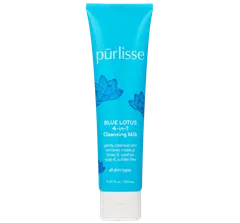
Blue Lotus 4~in~1 Cleansing Milk
Source: From product name
This product works by removing dirt and oil from the surface of the skin.
The following cleansing agents are typically mild, but still can cause an irritation or allergy for some people cocamidopropyl betaine.
Keep in mind that cleansing can disrupt the skin barrier, and most people do not need to cleanse their skin more than once per day.
Helps create a thicker or gel-like product texture. It is not a surfactant but can be used in gentle cleansing formulations
Helps water and oil mix together. Used as a cleansing ingredient. Could be an allergen
Helps oil and water mix together and works as a cleansing agent
Helps water and oil mix together
Helps oils and water mix together and works as a cleansing agent
Helps water and oil mix together
How honest is this product?
| Promise | Can it deliver? |
|---|---|
| Cleansing |
Total Promises Fulfilled score: 75/100.
We receive a small commission for purchases made through these links at no cost for you. Thank you for your support! Learn more
Potential irritants
Comedogenic ingredients
User reviews (0)
Averages from community submissions.
No reviews yet for this product.
Be the first to share your experience!
Tried this product?
Help capture what the ingredient list can't—texture, finish, pilling, scent, and more. Answer what you can, skip the rest.
Takes ~30 seconds.
Reviews are shown in aggregate. No personal details.
Key Actives
Can contain potent anti-oxidant compounds (abbreviated ECG, GCG, EGC, and EGCG) that might help protect the skin from free radicals. Can help calm down inflammation and has some anti-bacterial properties. Unfortunately, these antioxidants are unstable and lose their effectiveness very quickly in products. The concentration of the antioxidant compounds in the extract also tends to be low to be effective in topical formulation
An effective moisturizing and skin barrier repair ingredient. Helps calm down inflammation and has some anti-oxidant properties
A salt derived from licorice. Works as an emollient to soften the upper layer of the skin and can help calm down inflammation. Might be helpful for skin lightening
Helps oil and water mix together and works as a cleansing agent
Helps water and oil mix together. Used as a cleansing ingredient. Could be an allergen
Helps oils and water mix together and works as a cleansing agent
One of the best moisturizing ingredients. Naturally present in skin. It attracts water to the upper layer of the skin working as a humectant
Helps water and oil mix together
Helps create a thicker or gel-like product texture. It is not a surfactant but can be used in gentle cleansing formulations
Potential irritants
Helps water and oil mix together. Used as a cleansing ingredient. Could be an allergen
A common frangrance that can easily irritate skin, especially if exposed to air, light or heat
Used as a fragrance. It can be irritating and cause photosensitivity
A plant oil with a high content of volatile compounds that can irritate the skin and lead to allergic reactions. Can lead to photosensitivity
Aromatic plant oil used in cosmetics as a fragrance. A likely irritant
A plant essential oil. Used as a fragrance. Can be irritating
Helps oil and water mix together and works as a cleansing agent
Used to stabilize product formulation, help create an even product layer over skin (for example, in sunscreen) and create a thicker product consistency
Used to create a thicker product consistency and soften the upper layer of the skin
Helps oils and water mix together and works as a cleansing agent
Used to create a thicker product consistency and soften the upper layer of the skin
Helps preserve products and creates a nice product texture
Comedogenic ingredients
All ingredients
Helps oil and water mix together and works as a cleansing agent
Used to stabilize product formulation, help create an even product layer over skin (for example, in sunscreen) and create a thicker product consistency
Used to create a thicker product consistency and soften the upper layer of the skin
Helps water and oil mix together. Used as a cleansing ingredient. Could be an allergen
Enhances the product texture and makes it more spreadable. Helps reduce water loss from the outer layer of skin. Extands the shelf life by preventing bacteria growth
Helps attract water to the upper layer of the skin. Might have some anti-aging, anti-oxidant, and skin lightening properties, but solid evidence is missing
Works as a humectant helping to attract water to the upper layer of the skin and might be effective as an anti-oxidant.
Used to create a nice product texture and help delivery of other ingredients. Might be somewhat helpful in attracting water to the upper layer of the skin
An effective moisturizing and skin barrier repair ingredient. Helps calm down inflammation and has some anti-oxidant properties
Can contain potent anti-oxidant compounds (abbreviated ECG, GCG, EGC, and EGCG) that might help protect the skin from free radicals. Can help calm down inflammation and has some anti-bacterial properties. Unfortunately, these antioxidants are unstable and lose their effectiveness very quickly in products. The concentration of the antioxidant compounds in the extract also tends to be low to be effective in topical formulation
Helps attract water to the upper layer of the skin and soften it
Helps oils and water mix together and works as a cleansing agent
One of the best moisturizing ingredients. Naturally present in skin. It attracts water to the upper layer of the skin working as a humectant
A salt derived from licorice. Works as an emollient to soften the upper layer of the skin and can help calm down inflammation. Might be helpful for skin lightening
Used to create a thicker product consistency and soften the upper layer of the skin
Helps create a thicker or gel-like product texture. It is not a surfactant but can be used in gentle cleansing formulations
Helps preserve products and creates a nice product texture
A preservative. It helps prevent bacterial growth in cosmetic products
A common frangrance that can easily irritate skin, especially if exposed to air, light or heat
Used as a fragrance. It can be irritating and cause photosensitivity
A plant oil with a high content of volatile compounds that can irritate the skin and lead to allergic reactions. Can lead to photosensitivity
Aromatic plant oil used in cosmetics as a fragrance. A likely irritant
A plant essential oil. Used as a fragrance. Can be irritating
Ingredient list view
Water, Disodium cocoamphodiacetate, Acrylates copolymer, Neopentyl glycol dicaprylate/dicaprate, Tridecyl stearate, Cocamidopropyl betaine, Polysorbate 80, C12-15 alkyl benzoate, Hydrolyzed soy protein, Hydrolyzed lupine protein octenylsuccinate, Alaria esculenta extract, Butylene glycol, Avena sativa kernel extract, Camellia sinensis leaf extract, Nymphaea coerulea flower extract, Methyl gluceth-20, Peg-7 glyceryl cocoate, Glycerin, Dipotassium glycyrrhizate, Laureth-4, Tridecyl trimellitate, Carbomer, Aminomethyl propanol, Disodium edta, Caprylyl glycol, Phenoxyethanol, Chlorphenesin, Limonene, Citrus limon peel oil, Citrus aurantium dulcis oil, Citrus aurantium bergamia fruit oil, Cymbopogon martini oil, Citrus aurantifolia oil, Juniperus mexicana oil, Tagetes minuta flower oil, Michelia alba flower oil
- Final Report on the Safety Assessment of Acrylates Copolymer and 33 Related Cosmetic Ingredients
- Amended Safety Assessment of Acrylates Copolymers as Used in Cosmetics
- Amended Safety Assessment of Alkyl Esters as Used in Cosmetics
- Extracts from Glycine max (soybean) induce elastin synthesis and inhibit elastase activity
- Dermatological and cosmeceutical benefits of Glycine max (soybean) and its active components
- Safety Assessment of Soy Peptides as Used in Cosmetics
- Glycerol and the skin: holistic approach to its origin and functions
- Ameliorating effect of dipotassium glycyrrhizinate on an IL-4- and IL-13-induced atopic dermatitis-like skin-equivalent model
- Final report on the safety assessment of Glycyrrhetinic Acid, Potassium Glycyrrhetinate, Disodium Succinoyl Glycyrrhetinate, Glyceryl Glycyrrhetinate, Glycyrrhetinyl Stearate, Stearyl Glycyrrhetinate, Glycyrrhizic Acid, Ammonium Glycyrrhizate, Dipotassium Glycyrrhizate, Disodium Glycyrrhizate, Trisodium Glycyrrhizate, Methyl Glycyrrhizate, and Potassium Glycyrrhizinate.
- Final Report on the Safety Assessment of Laureths 4 and 23
- Safety Assessment of Citrus-Derived Peel Oils as Used in Cosmetics
- Oxidized citrus oil (R-limonene): A frequent skin sensitizer in Europe
- Air oxidation increases skin irritation from fragrance terpenes
- Oxidized citrus oil (R-limonene): A frequent skin sensitizer in Europe