Works for
1 of 1 advertised claim delivered
Moisturizing10 ingredients credited for this claimGood support
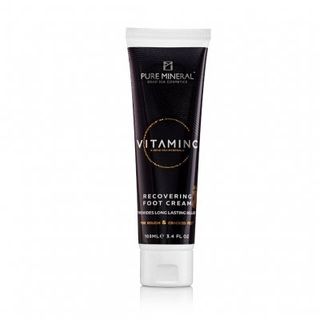
“Vitamin C Foot Cream”
This product can help improve hydration of the skin with the two types of ingredients.
The first type is called “humectants”:
these ingredients help attract water.
When humectants are on the surface of the skin, they “pull in” the moisture from the outside environment, or from
within deeper layers of the skin. The following ingredients in this product do the job:
glycerin, propylene glycol.
This product also contains ingredients called “occlusives”. They help reduce the speed with which our skin loses moisture to the outside environment. These ingredients also help soften the upper layer of the skin, so it feels less tight and nicer to the touch. The following ingredients in this product do the job: cera alba, elaeis guineensis butter.
Can it cause trouble?
Irritancy2 strong irritants: Rosmarinus officinalis leaf extract, Melaleuca alternifolia leaf oilMedium risk
Comedogenic1 ingredient rated 2 or more on the 0–5 pore-clogging scale1 flagged
User reviews
Be the first — your take helps the next person decide.
Ingredients
Filter by role to see what each ingredient is doing.
Water~40–60%
Glyceryl stearate citrate~4.5–6.7%
- Irritation risk
- Low
Helps oil and water mix together while softening the upper layer of the skin
More about Glyceryl stearate citrateStearyl alcohol~3.5–5.3%
- Irritation risk
- Low
An emollient that helps soften the skin
More about Stearyl alcoholStearic acid~2.6–3.9%
- Irritation risk
- Low
Helps oil and water mix together and works as an emollient
More about Stearic acidGlycerin~2.1–3.1%
- Irritation risk
- Low
One of the best moisturizing ingredients. Naturally present in skin. It attracts water to the upper layer of the skin working as a humectant
More about GlycerinRosmarinus officinalis leaf extract~1.4–2.1%
- Irritation risk
- High
Can be helpful in reducing inflammation in skin, including inflamed acne. It can be irritating
More about Rosmarinus officinalis leaf extractElaeis guineensis butter~1.4–2.1%
- Irritation risk
- Low
A type of palm oil. Helps soften the upper layer of the skin
More about Elaeis guineensis butterBenzoic acid~0.25–0.5%
Dehydroacetic acid~0.3–0.6%
Sodium lauroyl lactylate~0.6–1.35%
- Irritation risk
- Medium
Helps water and oil mix together
More about Sodium lauroyl lactylatePhenylpropanol~0.45–1.05%
- Irritation risk
- High
Helps mask the smell of other ingredients and helps preserve the product formulation
More about PhenylpropanolPropylene glycol~0.4–0.9%
- Irritation risk
- High
Helps oil and water mix together and can enhance the penetration of other ingredients into the skin. It can be irritating
More about Propylene glycolMaris sal~0.35–0.8%
- Irritation risk
- Medium
Used to thicken the product formulation and might help to add minerals to the surface of the skin. It is used in scrubs as a physical exfoliant. Can increase sensitivity to other ingredients if left on the skin or used in high concentration
More about Maris salSea water~0.3–0.75%
- Irritation risk
- Low
Dissolves other ingredients. It does not have additional skin benefits compared to plain water
More about Sea waterOlea europaea fruit oil~0.2–0.75%
- Irritation risk
- Medium
An emollient that helps soften the skin but is not effective for restoring its barrier function. Might be helpful to calm down inflammation
More about Olea europaea fruit oilLanolin~0.2–0.75%
- Irritation risk
- Low
Sebum of wool-bearing animals (most commonly sheep). Helps soften the upper layer of the skin and reduce the skin water loss. In rare cases could be an allergen. Not suitable for vegans
More about LanolinCera alba~0.2–0.75%
- Irritation risk
- Medium
Forms a protective barrier that holds water and keeps dry skin hydrated. Keeps an emulsion from separating into its oil and liquid components, and increases the thickness of a product. Can be an allergen
More about Cera albaButyrospermum parkii butter~0.15–0.6%
- Irritation risk
- Low
- Comedogenicity
- 3/5
A great moisturising ingredient that softens the skin and reduces water loss from its upper layer. It also can be helpful in protecting skin from free radicals
More about Butyrospermum parkii butterHydroxyethylcellulose~0.1–0.35%
- Irritation risk
- Low
Used to thicken product formulations and create gel-like textures
More about HydroxyethylcelluloseBenzalkonium chloride~0.05–0.1%
- Irritation risk
- High
Helps water and oil mix together and works as a cleansing agent (detergent). Also used as a preservative. Can be irritating
More about Benzalkonium chlorideSodium benzoate~0.05–0.2%
Ascorbyl tetraisopalmitate~0.05–0.25%
- Irritation risk
- Medium
A vitamin C derivative. Studies show that is might be effective in reducing hyperpigmentation, but there are no studies confirming that it is effectively converted into the bioavailable form of Vitamin C in skin. It is not clear how this derivative compares in effectiveness to the topical application of bioavailable form of vitamin C (L-ascorbic acid)
More about Ascorbyl tetraisopalmitateTocopheryl acetate~0.05–0.15%
- Irritation risk
- Medium
A more stable but less bio-available form of vitamin E compared to Tocopherol. Might help moisturize and protect the skin from free radicals, but mostly used in low concentrations to stabilize other ingredients.
More about Tocopheryl acetateMelaleuca alternifolia leaf oil~0.01–0.1%
- Irritation risk
- High
An essential oil that can be irritating. Has some anti-bacterial properties
More about Melaleuca alternifolia leaf oilIngredient list view
Water, Glyceryl stearate citrate, Stearyl alcohol, Stearic acid, Glycerin, Rosmarinus officinalis leaf extract, Elaeis guineensis butter, Benzoic acid, Dehydroacetic acid, Sodium lauroyl lactylate, Phenylpropanol, Propylene glycol, Maris sal, Unknown, Sea water, Olea europaea fruit oil, Lanolin, Cera alba, Butyrospermum parkii butter, Hydroxyethylcellulose, Benzalkonium chloride, Sodium benzoate, Ascorbyl tetraisopalmitate, Tocopheryl acetate, Melaleuca alternifolia leaf oil
Compare prices
Retailers ranked by price — lowest first.
Affiliate links · prices updated regularly · As an Amazon Associate, WIMJ earns from qualifying purchases.
Worth comparing, line by line.
Match % combines shared ingredients, the first five ingredients, shared actives and hero ingredients, irritancy (lower counts in the alternative's favour), texture and body area. Only products in the same routine step are compared.
| Pure MineralVitamin C Foot CreamYOUR PRODUCT | FlexitolIntense Overnight Foot Cream | |
|---|---|---|
| Match | — | 52% |
| Price | $7.60 | $11.89+$4.29 |
| Shared key ingredients | — | 3 of 6 |
| Key difference | — | Mineral Oil |
| Irritancy | Medium | Medium |
| Drying alcohol | — | — |
| View product | Shop |


Sources cited in this review
Every concentration estimate and effectiveness label is anchored to one of these 15 studies and safety reviews.
- 1
- 2Allergic contact dermatitis induced by rosemary leaf extract in a cleansing gelpubmed.ncbi.nlm.nih.gov
- 3
- 4
- 5
- 6Surfactants and experimental irritant contact dermatitisncbi.nlm.nih.gov

Affiliate links · As an Amazon Associate, WIMJ earns from qualifying purchases.