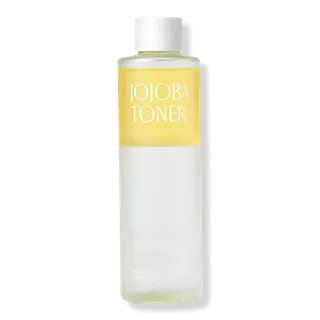
Works for
MoisturizingOlea europaea fruit oil, Carthamus tinctorius seed oil + 19 moreWorks
“Hydrates, nourishes, and strengthens the skin barrier for balanced, radiant, and soft skin.”
This product can help improve hydration of the skin with the two types of ingredients.
The first type is called “humectants”:
these ingredients help attract water.
When humectants are on the surface of the skin, they “pull in” the moisture from the outside environment, or from
within deeper layers of the skin. The following ingredients in this product do the job:
glycerin, hyaluronic acid.
This product also contains ingredients called “occlusives”. They help reduce the speed with which our skin loses moisture to the outside environment. These ingredients also help soften the upper layer of the skin, so it feels less tight and nicer to the touch. The following ingredients in this product do the job: helianthus annuus seed oil, simmondsia chinensis seed oil.
Can it cause trouble?
Irritancy4 strong irritants: Citrus aurantium bergamia fruit oil, Citral + 2 more — patch-test recommendedHigh risk
ComedogenicClean of flagged comedogenic ingredientsNone flagged
User reviews
Be the first — your take helps the next person decide.
Ingredients
Filter by role to see what each ingredient is doing.
Water~45–55%
Olea europaea fruit oil~4.4–5.4%
- Irritation risk
- Medium
An emollient that helps soften the skin but is not effective for restoring its barrier function. Might be helpful to calm down inflammation
More about Olea europaea fruit oilPropanediol~4–4.9%
- Irritation risk
- Low
Acts as a solvent for other ingredients. Speeds up the absorption of other ingredients into the skin
More about PropanediolGlycereth-26~3–3.7%
Carthamus tinctorius seed oil~2.4–2.9%
- Irritation risk
- Low
An emollient that helps soften the skin and might help calm down inflammation
More about Carthamus tinctorius seed oilLimnanthes alba seed oil~2–2.4%
- Irritation risk
- Low
This oil's cmposition is closest to rapeseed oil. It is a very stable oil and serves as an emoillient
More about Limnanthes alba seed oilSimmondsia chinensis seed oil~1.7–2.1%
- Irritation risk
- Medium
Softens the upper layer of skin and helps restore the healthy skin barrier. Has shown to help calm down inflammation in skin. It is a stable oil, meaning that it retains its properties even when exposed to air.
More about Simmondsia chinensis seed oilGlycerin~1.5–1.8%
- Irritation risk
- Low
One of the best moisturizing ingredients. Naturally present in skin. It attracts water to the upper layer of the skin working as a humectant
More about Glycerin1,2-hexanediol~0.75–1.1%
Methyl gluceth-20~0.95–1.2%
- Irritation risk
- Low
Helps attract water to the upper layer of the skin and soften it
More about Methyl gluceth-20Butylene glycol~0.7–1.05%
- Irritation risk
- Low
Used to create a nice product texture and help delivery of other ingredients. Might be somewhat helpful in attracting water to the upper layer of the skin
More about Butylene glycolSodium citrate~0.6–0.9%
- Irritation risk
- Medium
Helps to control the skin's pH level. Maintains the skin's natural film of amino-lactic acids and oils. Helps to preserve products
More about Sodium citrateCitric acid~0.55–0.85%
- Irritation risk
- Medium
Can work as an exfoliant but is typically used to adjust the product pH
More about Citric acidSodium hyaluronate~0.5–0.75%
- Irritation risk
- Low
One of the best moisturizing ingredients. Attracts water into the upper layer of the skin
More about Sodium hyaluronateArtemisia princeps leaf extract~0.5–0.7%
- Irritation risk
- Low
Hydroxypropyltrimonium hyaluronate~0.5–0.75%
- Irritation risk
- Low
Camellia sinensis seed oil~0.5–0.75%
- Irritation risk
- Low
A plant oil that helps to soften the upper layer of the skin and can help restore the skin barrier. Might have some anti-oxidant effect
More about Camellia sinensis seed oilSolanum lycopersicum seed oil~0.45–0.7%
- Irritation risk
- Low
A good emollient that helps soften the upper layer of the skin and, due to the high linoleic acid content, can support the skin's barrier function
More about Solanum lycopersicum seed oilVitis vinifera seed oil~0.45–0.65%
- Irritation risk
- Medium
A great emollient that can also have anti-oxidant properties
More about Vitis vinifera seed oilMoringa oleifera seed oil~0.4–0.6%
- Irritation risk
- Medium
A plant oil that helps soften the upper layer of the skin. Is unlikely to be helpful in restoring skin barrier function due to the low content of linoleic acid
More about Moringa oleifera seed oilDaucus carota sativa seed oil~0.35–0.65%
- Irritation risk
- Low
A plant oil that might help neutralize free radicals and have an anti-bacterial effect
More about Daucus carota sativa seed oilHelianthus annuus seed oil~0.35–0.65%
- Irritation risk
- Low
A great emollient due to its high linoleic acid content. One of the most effective plant oils in helping skin hydration and repairing skin barrier function
More about Helianthus annuus seed oilRibes nigrum seed oil~0.3–0.6%
- Irritation risk
- Medium
An emollient. Can be helpful for restoring skin barrier function.
More about Ribes nigrum seed oilBrassica oleracea italica seed oil~0.3–0.6%
- Irritation risk
- Medium
A plant seed oil that consists mainly of erucic acid and used to help soften the upper layer of the skin. This fatty acid can enhance penetration of other ingredients into the skin but it is not a good moisturizer on its own
More about Brassica oleracea italica seed oilPerilla ocymoides seed extract~0.3–0.55%
- Irritation risk
- High
A plant extract that might help neutralize free radicals in skin but solid research is lacking. Contains a number of volatile compounds and can be irritating
More about Perilla ocymoides seed extractFragaria chiloensis fruit extract~0.3–0.5%
- Irritation risk
- Medium
Sodium acetylated hyaluronate~0.3–0.55%
- Irritation risk
- Low
A type of hyaluronic acid that works as an excellent moisturizer by attracting water into the upper layer of the skin. Is typically feels less sticky on the skin compared to the usual hyaluronic acid
More about Sodium acetylated hyaluronateHydrolyzed hyaluronic acid~0.3–0.5%
- Irritation risk
- Low
One of the best moisturizing ingredients. Attracts water into the upper layer of the skin. A version of it is naturally present in skin
More about Hydrolyzed hyaluronic acidRubus idaeus fruit extract~0.25–0.5%
- Irritation risk
- Medium
A fruit extract that might have some anti-oxidant properties but evidence of effectiveness in skin is lacking
More about Rubus idaeus fruit extractHyaluronic acid~0.25–0.5%
- Irritation risk
- Low
One of the best moisturizing ingredients. Attracts water into the upper layer of the skin. Naturally present in skin. Typically has large molecule size unless advertised otherwise on the product label. Helps support skin's barrier function and may help to reduce inflammation
More about Hyaluronic acidTocopherol~0.25–0.5%
- Irritation risk
- Low
Pure form of vitamin E. Can help moisturise and protect the skin from free radicals. Often used to help stabilise other ingredients or the formula itself
More about TocopherolHydrolyzed sodium hyaluronate~0.25–0.45%
- Irritation risk
- Low
Attracts water into the upper layer of the skin
More about Hydrolyzed sodium hyaluronateSodium hyaluronate crosspolymer~0.25–0.45%
- Irritation risk
- Medium
Attracts water into the upper layer of the skin
More about Sodium hyaluronate crosspolymerFragaria vesca fruit extract~0.2–0.4%
- Irritation risk
- Medium
A plant extract that might help neutralize free radicals in skin, but research on its effectiveness is lacking
More about Fragaria vesca fruit extractPotassium hyaluronate~0.2–0.4%
- Irritation risk
- Low
Sodium chloride~0.2–0.4%
- Irritation risk
- Low
Used to stabilize mixtures of oil and water, and create thicker, gel-like product textures
More about Sodium chlorideCitrus aurantium bergamia fruit oil~0.15–0.25%
- Irritation risk
- High
A plant oil with a high content of volatile compounds that can irritate the skin and lead to allergic reactions. Can lead to photosensitivity
More about Citrus aurantium bergamia fruit oilEthylhexylglycerin~0.15–0.25%
Disodium edta~0.1–0.25%
Citral~0.1–0.2%
Linalool~0.1–0.15%
Limonene~0.1–0.15%
- Irritation risk
- High
A common frangrance that can easily irritate skin, especially if exposed to air, light or heat
More about LimoneneIngredient list view
Water, Olea europaea fruit oil, Propanediol, Glycereth-26, Carthamus tinctorius seed oil, Limnanthes alba seed oil, Simmondsia chinensis seed oil, Glycerin, 1,2-hexanediol, Methyl gluceth-20, Butylene glycol, Sodium citrate, Citric acid, Sodium hyaluronate, Artemisia princeps leaf extract, Hydroxypropyltrimonium hyaluronate, Camellia sinensis seed oil, Solanum lycopersicum seed oil, Vitis vinifera seed oil, Moringa oleifera seed oil, Daucus carota sativa seed oil, Helianthus annuus seed oil, Ribes nigrum seed oil, Brassica oleracea italica seed oil, Perilla ocymoides seed extract, Fragaria chiloensis fruit extract, Sodium acetylated hyaluronate, Hydrolyzed hyaluronic acid, Rubus idaeus fruit extract, Hyaluronic acid, Tocopherol, Hydrolyzed sodium hyaluronate, Sodium hyaluronate crosspolymer, Fragaria vesca fruit extract, Potassium hyaluronate, Sodium chloride, Citrus aurantium bergamia fruit oil, Ethylhexylglycerin, Disodium edta, Citral, Linalool, Limonene
Compare prices
Retailers ranked by price — lowest first.

Worth comparing, line by line.
Match % combines shared ingredients, the first five ingredients, shared actives and hero ingredients, irritancy (lower counts in the alternative's favour), texture and body area. Only products in the same routine step are compared.
| PINKWONDERJojoba TonerYOUR PRODUCT | EqqualberryHyaltoin Flooding Toner | GoodalHouttuynia Cordata Hyaluron Soothing Toner | GenabellePDRN Rejuvenating Toner | |
|---|---|---|---|---|
| Match | — | 35% | 34% | 34% |
| Price | $33.00 | $21.99−$11.01 | $19.30−$13.70 | $19.65−$13.35 |
| Shared key ingredients | — | 7 of 16 | 10 of 16 | 8 of 16 |
| Key difference | — | Niacinamide | Gluconolactone | Tripeptide-1 |
| Irritancy | High | Medium | Medium | Medium |
| Drying alcohol | — | — | — | — |
| View product | Shop | Shop | Shop |


More alternatives: Some By Mi Beta Panthenol Repair TonerTOSOWOONG Ceramide Toner
Sources cited in this review
Every concentration estimate and effectiveness label is anchored to one of these 26 studies and safety reviews.
- 1Use of “natural” oils for moisturization: Review of olive, coconut, and sunflower seed oilonlinelibrary.wiley.com
- 2
- 3
- 4
- 5Hyaluronic acid: A key molecule in skin agingncbi.nlm.nih.gov
- 6

Affiliate links · As an Amazon Associate, WIMJ earns from qualifying purchases.