Works for
1 of 1 advertised claim delivered
Anti-agingAsiaticoside, Limnanthes alba seed oil + 5 moreModerate evidence
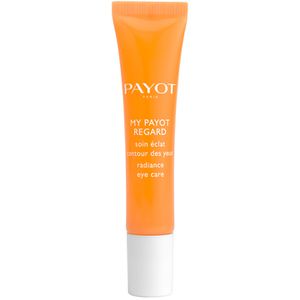
“Decongest and refresh the delicate eye area with My PAYOT Regard Radiance Eye Care from PAYOT . Infused with superfruits Goji and Açai Berries; the powerful treatment minimises signs of fatigue, diminishes dark circles and reduces puffiness, revealing a brighter, younger-looking eye contour.”
This product contains asiaticoside. This ingredient might be able to help reduce and prevent fine lines and wrinkles, improve skin elasticity and firmness, but there is not enough evidence that it actually works.
Anti-oxidationNot advertised by the brand · Asiaticoside, Euterpe oleracea fruit extract + 6 moreStrong evidence
This product contains antioxidants (asiaticoside) that can help neutralize free radicals in skin. By doing so, they can lessen the damage the skin gets from the UV light (sun).
MoisturizingNot advertised by the brand · Panthenol, Madecassic acid + 13 moreStrong evidence
This product can help improve hydration of the skin with the two types of ingredients.
The first type is called “humectants”:
these ingredients help attract water.
When humectants are on the surface of the skin, they “pull in” the moisture from the outside environment, or from
within deeper layers of the skin. The following ingredients in this product do the job:
glycerin, sodium hyaluronate.
This product also contains ingredients called “occlusives”. They help reduce the speed with which our skin loses moisture to the outside environment. These ingredients also help soften the upper layer of the skin, so it feels less tight and nicer to the touch. The following ingredients in this product do the job: caprylic/capric triglyceride, limnanthes alba seed oil.
The following ingredients in this product are especially good for supporting the skin barrier and helping with the hydration level: panthenol
Evens skin toneNot advertised by the brand · Stearyl glycyrrhetinate, Bifida ferment lysate + 2 moreModerate evidence
The following ingredient (ingredients) in this product might be helpful, but there is no evidence to confirm that it actually works: stearyl glycyrrhetinate.
Can it cause trouble?
Irritancy2 strong irritants: Retinyl palmitate, FarnesolMedium risk
ComedogenicClean of flagged comedogenic ingredientsNone flagged


User reviews
Be the first — your take helps the next person decide.
Ingredients
Filter by role to see what each ingredient is doing.
Water~40–60%
Glycerin~3.8–5.7%
- Irritation risk
- Low
One of the best moisturizing ingredients. Naturally present in skin. It attracts water to the upper layer of the skin working as a humectant
More about GlycerinCaprylic/capric triglyceride~3.6–5.3%
- Irritation risk
- Medium
A good mix of fatty acids that forms a protective layer on the skin. Improves the shelf life of products. Derived from coconut and glycerin
More about Caprylic/capric triglycerideLimnanthes alba seed oil~2.6–3.9%
- Irritation risk
- Low
This oil's cmposition is closest to rapeseed oil. It is a very stable oil and serves as an emoillient
More about Limnanthes alba seed oilAlpha-glucan oligosaccharide~2.1–3.1%
- Irritation risk
- Low
Helps attract water to the upper layer of the skin
More about Alpha-glucan oligosaccharideSesamum indicum oil unsaponifiables~1.7–2.5%
- Irritation risk
- Low
Bisabolol~1.3–1.9%
- Irritation risk
- Low
An active component of chamomile plant that historically has been used to calm down irritated skin. A recent study shows that bisabolol indeed can have some anti-inflammatory effect on skin, even though conclusive data is lacking. Bisabolol has a sweet floral scent and can be added to products for its aromatic properties
More about BisabololStearyl glycyrrhetinate~1.2–1.8%
- Irritation risk
- Medium
A fatty acid derived from licorice. Works as an emollient and can help calm down inflammation
More about Stearyl glycyrrhetinatePanthenol~0.95–1.45%
- Irritation risk
- Low
Helps attract water to the upper layer of the skin and can help improve skin barrier function
More about PanthenolSodium ascorbyl phosphate~0.55–1.25%
- Irritation risk
- Medium
A stable derivative of vitamin C. It is oil-soluble which means it is more likely to penetrate the skin compared to the pure form of vitamin C (which is water-soluble), but it is less bio-available and is way less effective in stimulating collagen and reducing wrinkles compared to the pure form of vitamin C (L-ascorbic acid) and its other derivatives (for example, magnesium ascorbyl phosphate). At the same time, this vitamin C derivative has been shown in studies to be effective in reducing acne, blemishes and clogged pores. It is less irritating then the pure form of vitamin C
More about Sodium ascorbyl phosphateNiacinamide~0.4–0.95%
- Irritation risk
- Low
Is proven to be effective in reducing blemishes, evening out skin tone and helping to improve lines and wrinkles. It helps the skin to repair sun damage, calm down inflammation and keep maintain good levels of moisture. The concentration of about 2% is effective for supporting the skin barrier and evening out the skin tone. Concentration of 4-6% is better for helping with acne and balancing the sebum production
More about NiacinamideAsiaticoside~0.2–0.7%
- Irritation risk
- Medium
An active compound of Centella Asiatica plant extract. In combination with other active compounds of Centella Asiatica extract (madecasosside, asiatic acid and madecassic acid), asiaticoside has been shown to be helpful in wound-healing, restoring skin barrier function and supporting collagen production in skin. It can, however, itself be irritating
More about AsiaticosideTocopheryl acetate~0.15–0.6%
- Irritation risk
- Medium
A more stable but less bio-available form of vitamin E compared to Tocopherol. Might help moisturize and protect the skin from free radicals, but mostly used in low concentrations to stabilize other ingredients.
More about Tocopheryl acetateSodium hyaluronate~0.1–0.45%
- Irritation risk
- Low
One of the best moisturizing ingredients. Attracts water into the upper layer of the skin
More about Sodium hyaluronateMadecassic acid~0.1–0.4%
- Irritation risk
- Medium
An active compound of Centella Asiatica plant extract. In combination with other active compounds of Centella Asiatica extract (asiaticoside, madecasosside and asiatic acid), madecassic acid has been shown to be helpful in wound-healing, restoring skin barrier function and supporting collagen production in skin. It can, however, itself be irritating
More about Madecassic acidAsiatic acid~0.1–0.4%
- Irritation risk
- Medium
An active compound of Centella Asiatica plant extract. In combination with other active compounds of Centella Asiatica extract (asiaticoside, madecasosside and madecassic acid) asiatic acid has been shown to be helpful in wound-healing, restoring skin barrier function and supporting collagen production in skin. It can, however, itself be irritating
More about Asiatic acidRetinyl palmitate~0.1–0.35%
- Irritation risk
- High
Three steps removed from the active form of vitamin A - retinoic acid. To have an effect in the skin, it first needs to be converted twice to become the retinoic acid. This means it is less potent than retinol, but could also be less irritating. Once converted to the retinoic acid in the skin, it helps against all signs of aging, improves skin cell turnover and helps fight blemishes and clogged pores. However, in many cosmetic formulations, it is used in a concentration that is too low to have the full effect
More about Retinyl palmitateLycium barbarum fruit extract~0.1–0.4%
- Irritation risk
- Medium
A plant extract that can help neutralize free radicals in skin and attract water to its upper layer
More about Lycium barbarum fruit extractEuterpe oleracea fruit extract~0.1–0.4%
- Irritation risk
- Medium
A plant extract that can have some anti-oxidant effect in skin
More about Euterpe oleracea fruit extractMalachite extract~0.1–0.35%
- Irritation risk
- Low
A mineral that is claimed to be able to support collagen product in skin, but evidence of effectiveness is missing
More about Malachite extractLactose~0.05–0.3%
- Irritation risk
- Low
Helps attract water to the upper layer of the skin
More about LactoseBifida ferment lysate~0.05–0.25%
- Irritation risk
- Low
Consists of remains of dead yeast bacteria cells. Helps to hydrate the skin and reduce irritation. Might has some anti-oxidant effect
More about Bifida ferment lysateRhodochrosite extract~0.05–0.2%
- Irritation risk
- Low
Glyceryl polyacrylate~0.05–0.25%
- Irritation risk
- Low
Helps to create a nice product texture and spread the product more easily on the skin
More about Glyceryl polyacrylateMica~0.05–0.3%
- Irritation risk
- Low
Creates an illusion of smoother and more radiant skin tone. Adds shimmer to the skin by reflecting light
More about MicaEthylhexylglycerin~0.05–0.25%
Carbomer~0.05–0.2%
- Irritation risk
- Low
Helps create a thicker or gel-like product texture. It is not a surfactant but can be used in gentle cleansing formulations
More about CarbomerTromethamine~0.05–0.2%
Propanediol~0.05–0.25%
- Irritation risk
- Low
Acts as a solvent for other ingredients. Speeds up the absorption of other ingredients into the skin
More about PropanediolDisodium edta~0.05–0.15%
Propylene glycol~0.05–0.25%
- Irritation risk
- High
Helps oil and water mix together and can enhance the penetration of other ingredients into the skin. It can be irritating
More about Propylene glycolTin oxide~0.15–0.55%
- Irritation risk
- Low
A colorant that can add a pearl-like appearance to the formulation
More about Tin oxideFarnesol~0.05–0.2%
Phenoxyethanol~0.05–0.2%
- Irritation risk
- Low
A preservative. It helps prevent bacterial growth in cosmetic products
More about PhenoxyethanolChlorphenesin~0.05–0.1%
Sodium benzoate~0.05–0.15%
Potassium sorbate~0.05–0.15%
Bht~0.01–0.05%
Ci 77891~0.01–0.05%
- Irritation risk
- Low
Ingredient list view
Water, Glycerin, Caprylic/capric triglyceride, Limnanthes alba seed oil, Alpha-glucan oligosaccharide, Sesamum indicum oil unsaponifiables, Bisabolol, Stearyl glycyrrhetinate, Panthenol, Sodium ascorbyl phosphate, Niacinamide, Asiaticoside, Tocopheryl acetate, Sodium hyaluronate, Madecassic acid, Asiatic acid, Retinyl palmitate, Lycium barbarum fruit extract, Euterpe oleracea fruit extract, Malachite extract, Lactose, Bifida ferment lysate, Rhodochrosite extract, Glyceryl polyacrylate, Mica, Ethylhexylglycerin, Carbomer, Tromethamine, Propanediol, Disodium edta, Propylene glycol, Tin oxide, Farnesol, Phenoxyethanol, Chlorphenesin, Sodium benzoate, Potassium sorbate, Bht, Ci 77891
Compare prices
Retailers ranked by price — lowest first.
Worth comparing, line by line.
Match % combines shared ingredients, the first five ingredients, shared actives and hero ingredients, irritancy (lower counts in the alternative's favour), texture and body area. Only products in the same routine step are compared.
| PayotMy Regard Radiance Eye CareYOUR PRODUCT | VT CosmeticsCica Collagen Eye Cream 15ml | AbibCollagen Eye Creme Jericho Rose Tube | Beyou CosmeticsCaffeine Eye Cream | |
|---|---|---|---|---|
| Match | — | 76% | 75% | 73% |
| Price | — | $14.01 | $16.12 | $18.99 |
| Shared key ingredients | — | 8 of 15 | 8 of 15 | 5 of 15 |
| Key difference | — | Madecassoside | Adenosine | Adenosine |
| Irritancy | Medium | Medium | Medium | Low |
| Drying alcohol | — | — | — | — |
| View product | Shop | Shop | Shop |

Product summary
Based on the ingredient list, "Payot - My Regard Radiance Eye Care" can work well for skin moisturization. The formulation is based on a combination of good humectants and emollients. Both are needed to increase the skin hydration level. Panthenol, glycerin, sodium hyaluronate and lactose in this product (humectants) attract water molecules to the upper layer of the skin (the water comes from the outside air or from the deeper layers of the skin if the air is dry). Emollients in this formulation (limnanthes alba seed oil and caprylic/capric triglyceride) help to reduce the moisture loss from the skin. They also soften the skin surface and relieve the feeling of dryness and tightness.
Ingredient callouts
- this moisturizer includes a form of retinoids (vitamin A) - retinyl palmitate 0.10% - 0.35%, but this type of vitamin A is not very effective. It could in theory help with fine lines and wrinkles, but the effect is most likely minimal.
- This moisturizer contains actives derived from an extract of the Centella Asiatica plant (also known as Gotu Kola) - madecassic acid 0.10% - 0.40%, asiatic acid 0.10% - 0.40% and asiaticoside 0.20% - 0.70% The Centella Asiatica actives, even in low concentration, can help reduce inflammation in skin, strengthen the skin barrier and reduce photodamage. They can also help to decrease scarring.
- This formulation also uses an effective concentration of panthenol (pro-vitamin B5) - about 0.95% - 1.45%. Panthenol helps strengthen the skin barrier, improve hydration and reduce inflammation in skin.
Irritation risk
There are some common irritants in this product, including ingredients that do not have benefits for the skin. We assess the overall irritancy of this moisturizer to be medium. For a detailed overview of all potential irritants: click here
You can see the detailed formula review with the breakdown of all actives in the product and the full ingredient list with estimated concentrations in the tables below.
Price
The product retails for 60.00A$ in Australia.
For a detailed price comparison: click here.
Sources cited in this review
Every concentration estimate and effectiveness label is anchored to one of these 33 studies and safety reviews.
- 1
- 2
- 3Skin moisturizing effects of panthenol-based formulationspdfs.semanticscholar.org
- 4
- 5
- 6Sodium ascorbyl phosphate in topical microemulsionssciencedirect.com

Affiliate links · As an Amazon Associate, WIMJ earns from qualifying purchases.