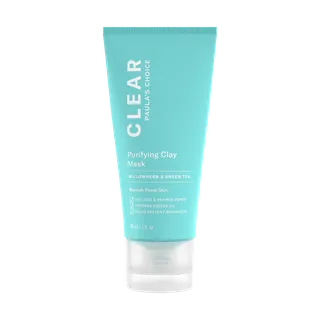
Works for
ExfoliationSalicylic acid, AllantoinWorks well
“Salicylic Acid: exfoliates deep within pores for fewer breakouts”
This product can help exfoliate the skin. In other words, it helps break down the bonds between dead cells on the surface of the skin and speed up the skin turnover. Skin often appears softer and brighter after exfoliation, but overdoing it can result in disrupted skin barrier. The following ingredient is doing the exfoliating job in this product: salicylic acid.
Anti-blemishSalicylic acid, Zinc pca + 4 moreWorks well
“Salicylic acid gently minimizes breakouts, joining forces with 8 natural soothing ingredients chosen to visibly diminish redness and post-acne marks.”
This product can help reduce breakouts and clogged pores because it contains the following ingredient: salicylic acid. This ingredient is used for treating acne and can have a noticeable effect.
The following ingredient (ingredients) in this product might be helpful, but there is no evidence to confirm that it actually works: zinc pca
MoisturizingC12-15 alkyl benzoate, Cetyl esters + 10 moreWorks
“Lightweight hydrators ensure skin feels comfortable after each use.”
This product contains good ingredients to attract water to the upper layer of the skin. These ingredients are called "humectants": copper pca, glycerin.
When humectants are on the surface of the skin, they “pull in” the moisture from the outside environment, or from within deeper layers of the skin. If the air is dry, humectants can speed up the moisture loss from the skin. This is why it is a good idea to use another product on top of this one to help "seal in" the moisture (look for ingredients like dimethicone, squalane, oils and butters).
Evens skin toneCamellia sinensis leaf extract, Salicylic acidNot delivered
“Salicylic acid gently minimizes breakouts, joining forces with 8 natural soothing ingredients chosen to visibly diminish redness and post-acne marks.”
This product might help improve the skin tone through exfoliation. In other words, it helps to speed up the shedding of cells from the upper layer of the skin, and this might help reduce hyperpigmentation.
Anti-oxidationSide benefit · Camellia sinensis leaf extract, Chlorella vulgaris extract + 4 moreMay help
This product contains antioxidants (camellia sinensis leaf extract) that can help neutralize free radicals in skin to lessen the damage it gets from the UV light (sun). There is some human evidence for this effect in skin, though it is smaller or less consistent than the evidence for the best antioxidants.
Can it cause trouble?
Irritancy1 strong irritant: Chrysanthellum indicum extractMedium risk
Comedogenic3 ingredients rated 2 or more on the 0–5 pore-clogging scale3 flagged

User reviews
Be the first — your take helps the next person decide.
Ingredients
Filter by role to see what each ingredient is doing.
Salicylic acid0.5%
- Irritation risk
- High
Used for skin exfoliation. It has an anti-inflammatory and anti-bacterial effect, helps to unclog pores, prevent blemishes and speed up healing of the existing ones. Sometimes referred to as a BHA (beta-hydroxy acid)
More about Salicylic acidWater~45–55%
Kaolin~9.2–11.2%
- Irritation risk
- Low
A type of clay that consists mainly of aluminum silicate. Helps absorb oil and creates a thicker product consistency. Can be used to add a white color
More about KaolinBentonite~5.8–7.1%
Titanium dioxide~4.1–5%
- Irritation risk
- Low
Works as a UV filter when used in high concentrations. It is photostable and is effective mostly against the UVB light, with some protection in the UVA range. In small concentrations, used for its ability to improve the color of cosmetic products. Is usually well tolerated by the skin
More about Titanium dioxideButylene glycol~2.7–3.3%
- Irritation risk
- Low
Used to create a nice product texture and help delivery of other ingredients. Might be somewhat helpful in attracting water to the upper layer of the skin
More about Butylene glycolC12-15 alkyl benzoate~2.3–2.8%
- Irritation risk
- Low
Enhances the product texture and makes it more spreadable. Helps reduce water loss from the outer layer of skin. Extands the shelf life by preventing bacteria growth
More about C12-15 alkyl benzoateCetyl esters~1.9–2.3%
- Irritation risk
- Low
Helps soften upper layer of the skin and can enhance penetration of other ingredients into the upper layer of the skin
More about Cetyl estersMagnesium aluminum silicate~1.7–2.1%
- Irritation risk
- Low
Might be helpful in restoring skin barrier function and, when combined with zinc carbonate and malonic acid, reducing fine lines and wrinkles by stimulating elastin production. Also helps stabilize the product formulation
More about Magnesium aluminum silicateGlycerin~1.5–1.8%
- Irritation risk
- Low
One of the best moisturizing ingredients. Naturally present in skin. It attracts water to the upper layer of the skin working as a humectant
More about GlycerinIllite~1.4–1.7%
- Irritation risk
- Low
Tapioca starch~0.95–1.15%
Zea mays starch~0.75–1.1%
- Irritation risk
- Medium
- Comedogenicity
- 3/5
Used to thicken the product's consistency
More about Zea mays starchCamellia sinensis leaf extract~0.7–1.05%
- Irritation risk
- Low
Can contain potent anti-oxidant compounds (abbreviated ECG, GCG, EGC, and EGCG) that might help protect the skin from free radicals. Can help calm down inflammation and has some anti-bacterial properties. Unfortunately, these antioxidants are unstable and lose their effectiveness very quickly in products. The concentration of the antioxidant compounds in the extract also tends to be low to be effective in topical formulation
More about Camellia sinensis leaf extractPyrus malus fruit extract~0.6–0.9%
- Irritation risk
- Medium
Can have some moisturizing properties due to its sugar content
More about Pyrus malus fruit extractChrysanthellum indicum extract~0.55–0.85%
Hydrolyzed rhodophyceae extract~0.55–0.85%
- Irritation risk
- Low
- Comedogenicity
- 3/5
Chlorella vulgaris extract~0.5–0.75%
- Irritation risk
- Medium
- Comedogenicity
- 3/5
A plant extract that can help to attract water to the upper layer of the skin and might have some anti-oxidant and anti-inflammatory properties
More about Chlorella vulgaris extractEpilobium fleischeri extract~0.5–0.75%
- Irritation risk
- Low
Vaccinium myrtillus fruit extract~0.5–0.7%
- Irritation risk
- Medium
A plant extract that might help neutralize free radicals in skin, but research on its efficacy in skin is lacking
More about Vaccinium myrtillus fruit extractBrassica campestris seed oil~0.45–0.65%
- Irritation risk
- Low
Helps soften the upper layer of the skin
More about Brassica campestris seed oilAllantoin~0.35–0.65%
- Irritation risk
- Low
Helps calm down inflammation in skin and can help reduce itching. Helps to repair the skin barrier and keep skin hydrated
More about AllantoinBisabolol~0.35–0.6%
- Irritation risk
- Low
An active component of chamomile plant that historically has been used to calm down irritated skin. A recent study shows that bisabolol indeed can have some anti-inflammatory effect on skin, even though conclusive data is lacking. Bisabolol has a sweet floral scent and can be added to products for its aromatic properties
More about BisabololZinc pca~0.3–0.6%
- Irritation risk
- Low
A compound that combines zinc with a hydrating ingredient PCA. Might to be helpful against acne and clogged pores. Can help calm down inflammation in skin. Could be helpful in reducing the formation of free radicals in skin. Might help to reduce fine lines in wrinkles, but solid evidence is missing
More about Zinc pcaCopper pca~0.3–0.6%
- Irritation risk
- Low
Helps attract water to the upper layer of the skin
More about Copper pcaLauroyl lysine~0.3–0.6%
- Irritation risk
- Low
Helps soften the upper layer of the skin and creates a nice product texture
More about Lauroyl lysineSodium lauroyl sarcosinate~1.1–1.3%
- Irritation risk
- Medium
Helps oil and water mix together and works as a cleansing agent
More about Sodium lauroyl sarcosinateXanthan gum~0.25–0.45%
- Irritation risk
- Low
Used to create a thicker product consistency
More about Xanthan gumCitric acid~0.2–0.4%
- Irritation risk
- Medium
Can work as an exfoliant but is typically used to adjust the product pH
More about Citric acidSodium citrate~0.2–0.35%
- Irritation risk
- Medium
Helps to control the skin's pH level. Maintains the skin's natural film of amino-lactic acids and oils. Helps to preserve products
More about Sodium citrateSodium chloride~0.15–0.3%
- Irritation risk
- Low
Used to stabilize mixtures of oil and water, and create thicker, gel-like product textures
More about Sodium chloridePhenoxyethanol~0.15–0.3%
- Irritation risk
- Low
A preservative. It helps prevent bacterial growth in cosmetic products
More about PhenoxyethanolEthylhexylglycerin~0.1–0.2%
Ingredient list view
Salicylic acid, Water, Kaolin, Bentonite, Titanium dioxide, Butylene glycol, C12-15 alkyl benzoate, Cetyl esters, Magnesium aluminum silicate, Glycerin, Illite, Tapioca starch, Zea mays starch, Camellia sinensis leaf extract, Pyrus malus fruit extract, Chrysanthellum indicum extract, Hydrolyzed rhodophyceae extract, Chlorella vulgaris extract, Epilobium fleischeri extract, Vaccinium myrtillus fruit extract, Brassica campestris seed oil, Allantoin, Bisabolol, Zinc pca, Copper pca, Lauroyl lysine, Sodium lauroyl sarcosinate, Xanthan gum, Citric acid, Sodium citrate, Sodium chloride, Phenoxyethanol, Ethylhexylglycerin
Compare prices
Retailers ranked by price — lowest first.


Worth comparing, line by line.
Match % combines shared ingredients, the first five ingredients, shared actives and hero ingredients, irritancy (lower counts in the alternative's favour), texture and body area. Only products in the same routine step are compared.
| Paula's choicePurifying Clay MaskYOUR PRODUCT | Perricone MDAcne Relief Calming & Soothing Clay Mask | CODAGEPurifying Mask | Lili MargoBioCell' Mask x3 | |
|---|---|---|---|---|
| Match | — | 90% | 88% | 86% |
| Price | $29.00 | $23.28−$5.72 | — | — |
| Shared key ingredients | — | 3 of 9 | 5 of 9 | 3 of 9 |
| Key difference | — | Lactobacillus Ferment | Panthenol | Sodium Hyaluronate |
| Irritancy | Medium | Low | Low | Low |
| Drying alcohol | — | — | — | — |
| View product | Shop | Shop | Shop |


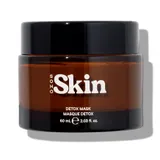
More alternatives: Soho Skin Detox MaskClinique Acne Oil Control Cleansing Mask
Product summary
"Paula's choice - Purifying Clay Mask" could be helpful for: Moisturizing, but its actives are not the most effective or are not well-studied.
Ingredient callouts
- Humectants (copper pca 0.15% - 0.30%, zinc pca 0.15% - 0.25% and glycerin 1.20% - 1.40%). These ingredients help attract water to the upper layer of the skin and improve the skin hydration.
Price
The product retails from 23.20£ up to 32.00£ in the United Kingdom, from 29.00$ up to 31.50$ in the United States and for 42.00A$ in Australia.
For a detailed price comparison: click here.
Sources cited in this review
Every concentration estimate and effectiveness label is anchored to one of these 18 studies and safety reviews.
- 1Salicylic acid as a peeling agent: a comprehensive reviewncbi.nlm.nih.gov
- 2Beta Hydroxy Acidsfda.gov
- 3A review of toxicity from topical salicylic acid preparationssciencedirect.com
- 4
- 5
- 6

Affiliate links · As an Amazon Associate, WIMJ earns from qualifying purchases.