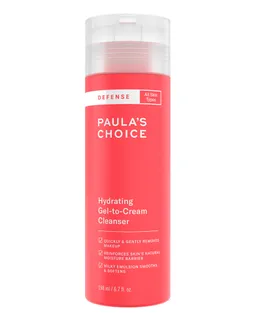
Paula's choice Defense Hydrating Gel-to-Cream Cleanser
Works for
CleansingSodium cocoyl glycinate, Cocamidopropyl hydroxysultaine + 10 moreCleanses gently
“This gentle gel-to-cream cleanser removes dirt, oil and makeup, and rinses away skin-damaging pollutants that can cause premature signs of aging.”
This product works by removing dirt and oil from the surface of the skin. It uses a combination of mild cleansing agents (cocamidopropyl betaine, cocamidopropyl hydroxysultaine, decyl glucoside, disodium cocoyl glutamate, lauric acid, linoleic acid, sodium cocoyl glutamate, sodium cocoyl glycinate, sodium lauroamphoacetate, sodium lauroyl oat amino acids, sorbeth-230 tetraoleate, sorbitan laurate) and should be able to cleanse the skin gently. Still keep in mind that any cleansing can disrupt the skin barrier, and most people do not need to cleanse their skin more than once per day.
Even though this formulation is mild, the following cleansing agents could trigger an irritation or allergy for some people: cocamidopropyl betaine, decyl glucoside
Can it cause trouble?
Irritancy17 flagged ingredientsMedium risk
Comedogenic1 ingredient rated 2 or more on the 0–5 pore-clogging scale1 flagged
User reviews
Be the first — your take helps the next person decide.
Ingredients
Filter by role to see what each ingredient is doing.
Water~45–55%
Sodium cocoyl glycinate~8.8–10.7%
- Irritation risk
- Medium
Helps oil and water mix together
More about Sodium cocoyl glycinateCocamidopropyl hydroxysultaine~5.6–6.8%
- Irritation risk
- Medium
Used as a cleansing agent. Helps water and oil mix together
More about Cocamidopropyl hydroxysultaineSodium lauroamphoacetate~3.9–4.8%
Cocamidopropyl betaine~3–3.7%
- Irritation risk
- High
Helps water and oil mix together. Used as a cleansing ingredient. Could be an allergen
More about Cocamidopropyl betaineGlycerin~2–2.4%
- Irritation risk
- Low
One of the best moisturizing ingredients. Naturally present in skin. It attracts water to the upper layer of the skin working as a humectant
More about GlycerinSorbeth-230 tetraoleate~1.6–1.9%
Decyl glucoside~1.4–1.8%
- Irritation risk
- High
Helps oil and water mix together. Can be irritating
More about Decyl glucosidePentylene glycol~1.2–1.4%
- Irritation risk
- Medium
Used to preserve products, dissolve other ingredients and create a nice product texture
More about Pentylene glycolSodium chloride~1–1.2%
- Irritation risk
- Low
Used to stabilize mixtures of oil and water, and create thicker, gel-like product textures
More about Sodium chlorideDisodium cocoyl glutamate~0.75–1.1%
- Irritation risk
- Medium
Helps water and oil mix together and works as a cleansing agent
More about Disodium cocoyl glutamateLauric acid~0.65–0.95%
- Irritation risk
- Medium
- Comedogenicity
- 3/5
Helps water and oil mix together. Has anti-bacterial properties that might be helpful in preventing blemishes
More about Lauric acidLactic acid~0.5–0.75%
- Irritation risk
- Medium
An exfoliating and moisturizing alpha-hydroxy acid (AHA). Typically causes less irritation than other AHAs, for example, glycolic acid. At high concentrations (about 15%), lactic acid can help reduce lines and wrinkles. Recent studies show that lactic acid can support the "good" bacteria living on skin's surface (healthy skin microbiome)
More about Lactic acidSodium lauroyl oat amino acids~0.55–0.8%
Sorbitan laurate~0.45–0.65%
Sodium cocoyl glutamate~0.5–0.8%
- Irritation risk
- Medium
Helps oil and water mix together
More about Sodium cocoyl glutamateDisodium edta~0.4–0.65%
Aloe barbadensis leaf juice~0.35–0.65%
- Irritation risk
- Medium
Traditionally used to treat sunburns, dermatitis and inflammation, but evidence for its effectiveness is lacking. The extract can contain humectants that help attract water into the skin
More about Aloe barbadensis leaf juiceCamellia sinensis leaf extract~0.35–0.65%
- Irritation risk
- Low
Can contain potent anti-oxidant compounds (abbreviated ECG, GCG, EGC, and EGCG) that might help protect the skin from free radicals. Can help calm down inflammation and has some anti-bacterial properties. Unfortunately, these antioxidants are unstable and lose their effectiveness very quickly in products. The concentration of the antioxidant compounds in the extract also tends to be low to be effective in topical formulation
More about Camellia sinensis leaf extractGlycyrrhiza glabra root extract~0.3–0.55%
- Irritation risk
- Medium
A plant extract that can help lighten the skin and calm down inflammation. Might be helpful in neutralizing free radicals
More about Glycyrrhiza glabra root extractLinoleic acid~0.45–0.65%
- Irritation risk
- Low
An excellent emollient. Helps soften the skin, restore its barrier function, and can help to calm down inflammation. It can be helpful to prevent blemishes and clogged pores
More about Linoleic acidPhospholipids~0.3–0.55%
- Irritation risk
- Low
Emollients that are naturaly present in skin. In addition, they help water and oil mix together in the product
More about PhospholipidsGlycine~0.25–0.5%
- Irritation risk
- Low
Helps to attract water to the upper layer of the skin and can help restore the skin barrier function
More about GlycineAlanine~0.25–0.5%
- Irritation risk
- Low
An amino-acid that helps to attract water to the upper layer of the skin and might help to lighten the skin, but solid evidence is lacking
More about AlanineSerine~0.25–0.5%
- Irritation risk
- Low
An amino-acid that helps to attract water to the upper layer of the skin. In combination with other amino-acids, might help to reduce fine lines and wrinkles
More about SerineValine~0.25–0.5%
- Irritation risk
- Low
Isoleucine~0.25–0.5%
- Irritation risk
- Low
An amino acid that can help attract water to the upper layer of the skin and support skin's barrier function
More about IsoleucineProline~0.3–0.5%
Threonine~0.25–0.5%
- Irritation risk
- Low
An amino-acid that helps to attract water to the upper layer of the skin. In combination with other amino-acids, might help to reduce fine lines and wrinkles
More about ThreonineCocoyl proline~0.25–0.5%
- Irritation risk
- Low
Sodium citrate~0.25–0.5%
- Irritation risk
- Medium
Helps to control the skin's pH level. Maintains the skin's natural film of amino-lactic acids and oils. Helps to preserve products
More about Sodium citrateSodium pca~0.25–0.45%
- Irritation risk
- Low
Naturally present in skin and helps to attract water to its upper layer
More about Sodium pcaSodium lactate~0.25–0.45%
- Irritation risk
- Medium
Helps attract water to the upper layer of the skin. Is often used to adjust the pH level of the product
More about Sodium lactateArginine~0.25–0.45%
- Irritation risk
- Low
An amino acid that is naturally present in skin and helps keep it hydrated. When used together with AHAs, it can reduce their irritating effect on the skin
More about ArginineGlycine soja sterols~0.3–0.5%
- Irritation risk
- Low
An emollient that helps soften the skin
More about Glycine soja sterolsCaprylic/capric triglyceride~0.3–0.55%
- Irritation risk
- Medium
A good mix of fatty acids that forms a protective layer on the skin. Improves the shelf life of products. Derived from coconut and glycerin
More about Caprylic/capric triglyceridePca~0.2–0.4%
- Irritation risk
- Low
Naturally present in skin and helps to attract water to its upper layer
More about PcaHistidine~0.2–0.35%
Phenylalanine~0.15–0.3%
- Irritation risk
- Low
Lactoperoxidase~0.1–0.25%
- Irritation risk
- Low
Helps attract water to the upper layer of the skin. In theory, could support healthy skin's microbiome, but evidence of effectiveness in skin is lacking
More about LactoperoxidaseGlucose oxidase~0.15–0.25%
- Irritation risk
- Low
Helps attract water to the upper layer of the skin
More about Glucose oxidaseAspartic acid~0.1–0.2%
- Irritation risk
- Low
An amino-acid that helps increase skin hydration and might help to slightly improve skin firmness, potentially reducing lines and wrinkles
More about Aspartic acidPhenoxyethanol~0.1–0.2%
- Irritation risk
- Low
A preservative. It helps prevent bacterial growth in cosmetic products
More about PhenoxyethanolEthylhexylglycerin~0.05–0.1%
Ingredient list view
Water, Sodium cocoyl glycinate, Cocamidopropyl hydroxysultaine, Sodium lauroamphoacetate, Cocamidopropyl betaine, Glycerin, Sorbeth-230 tetraoleate, Decyl glucoside, Pentylene glycol, Sodium chloride, Disodium cocoyl glutamate, Lauric acid, Lactic acid, Sodium lauroyl oat amino acids, Sorbitan laurate, Sodium cocoyl glutamate, Disodium edta, Aloe barbadensis leaf juice, Camellia sinensis leaf extract, Glycyrrhiza glabra root extract, Linoleic acid, Phospholipids, Glycine, Alanine, Serine, Valine, Isoleucine, Proline, Threonine, Cocoyl proline, Sodium citrate, Sodium pca, Sodium lactate, Arginine, Glycine soja sterols, Caprylic/capric triglyceride, Pca, Histidine, Phenylalanine, Lactoperoxidase, Glucose oxidase, Aspartic acid, Phenoxyethanol, Ethylhexylglycerin
Compare prices
Retailers ranked by price — lowest first.


Worth comparing, line by line.
Match % combines shared ingredients, the first five ingredients, shared actives and hero ingredients, irritancy (lower counts in the alternative's favour), texture and body area. Only products in the same routine step are compared.
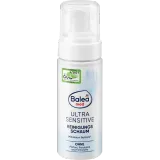
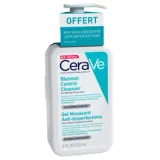
| Paula's choiceDefense Hydrating Gel-to-Cream CleanserYOUR PRODUCT | BaleaMed Ultra Sensitive Cleansing Foam | OlivalAmino Gel | CeraVeGel Moussant Anti-Imperfections | |
|---|---|---|---|---|
| Match | — | 50% | 50% | 48% |
| Price | $28.00 | $4.69−$23.31 | — | — |
| Shared key ingredients | — | 4 of 30 | 3 of 30 | 2 of 30 |
| Key difference | — | Panthenol | Betaine | Salicylic Acid |
| Irritancy | Medium | Low | Low | Low |
| Drying alcohol | — | — | — | — |
| View product | Shop | Shop | Shop |

More alternatives: Sanex Zero % Sensitive Skin Shower GelMesoestetic Facial Gel Cleanser
Sources cited in this review
Every concentration estimate and effectiveness label is anchored to one of these 17 studies and safety reviews.
- 1
- 2
- 3Epidermal and dermal effects of topical lactic acidncbi.nlm.nih.gov
- 4Dual Effects of Alpha-Hydroxy Acids on the Skinpdfs.semanticscholar.org
- 5
- 6

Affiliate links · As an Amazon Associate, WIMJ earns from qualifying purchases.