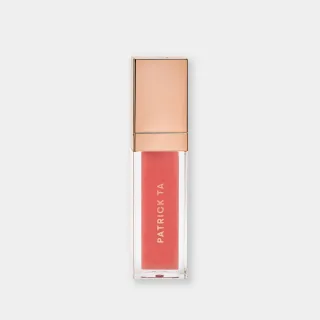
Works for
MoisturizingHelianthus annuus seed oil, Caprylic/capric triglyceride + 13 moreWorks
“A hydrating, high-shine plumping lip gloss that gives the appearance of fuller, poutier, more voluminous lips, available in a sheer and rich formula.”
This product can help improve hydration of the skin with the two types of ingredients.
The first type is called “humectants”:
these ingredients help attract water.
When humectants are on the surface of the skin, they “pull in” the moisture from the outside environment, or from
within deeper layers of the skin. The following ingredients in this product do the job:
glycerin, caprylyl glycol.
This product also contains ingredients called “occlusives”. They help reduce the speed with which our skin loses moisture to the outside environment. These ingredients also help soften the upper layer of the skin, so it feels less tight and nicer to the touch. The following ingredients in this product do the job: caprylic/capric triglyceride, helianthus annuus seed oil.
Anti-agingTocopherol, Ascorbyl palmitateNot delivered
“This active blend helps to visibly restore volume in lips, smooth the appearance of wrinkles, and improve elasticity.”
Effective ingredients missing or their concentration is too low.
Can it cause trouble?
Irritancy11 strong irritants: Alcohol, Hydroxymethoxyphenyl propylmethylmethoxybenzofuran + 9 more — patch-test recommendedHigh risk
Comedogenic10 ingredients rated 2 or more on the 0–5 pore-clogging scale10 flagged
User reviews
Be the first — your take helps the next person decide.
Ingredients
Filter by role to see what each ingredient is doing.
Polybutene~25–31%
Hydrogenated polydecene~5.9–7.2%
- Irritation risk
- Low
Helps to soften the upper layer of the skin and create a nice product texture
More about Hydrogenated polydeceneDiisostearyl malate~5.2–6.3%
- Irritation risk
- Medium
Helps to soften the upper layer of the skin
More about Diisostearyl malateCaprylic/capric triglyceride~4–4.9%
- Irritation risk
- Medium
A good mix of fatty acids that forms a protective layer on the skin. Improves the shelf life of products. Derived from coconut and glycerin
More about Caprylic/capric triglycerideHydrogenated polyisobutene~3–3.7%
- Irritation risk
- Low
Used to improve the product consistency and soften the upper layer of the skin
More about Hydrogenated polyisobuteneTocopheryl nicotinate~2–2.4%
- Irritation risk
- Low
Menthyl ethylamido oxalate~1.7–2%
- Irritation risk
- High
Creates a cooling sensation on the skin. Does not have a skin benefit
More about Menthyl ethylamido oxalateSimmondsia chinensis seed oil~1.6–2%
- Irritation risk
- Medium
Softens the upper layer of skin and helps restore the healthy skin barrier. Has shown to help calm down inflammation in skin. It is a stable oil, meaning that it retains its properties even when exposed to air.
More about Simmondsia chinensis seed oilHelianthus annuus seed oil~1.4–1.7%
- Irritation risk
- Low
A great emollient due to its high linoleic acid content. One of the most effective plant oils in helping skin hydration and repairing skin barrier function
More about Helianthus annuus seed oilHydrogenated styrene/isoprene copolymer~0.8–1.15%
- Irritation risk
- Medium
Helps to create a thicker product consistency
More about Hydrogenated styrene/isoprene copolymerOctyldodecanol~0.65–1%
- Irritation risk
- Low
An emollient that helps to soften the skin and create a pleasant product texture and stabilize the formulation
More about OctyldodecanolPersea gratissima oil~0.6–0.9%
- Irritation risk
- Medium
An emollient that helps soften the skin and could be helpful in repairing its barrier function
More about Persea gratissima oilIsostearic acid~0.55–0.8%
- Irritation risk
- Low
Used to create a nice product texture
More about Isostearic acidDibutyl lauroyl glutamide~0.6–0.85%
- Irritation risk
- Medium
Helps improve the product texture and soften the upper layer of the skin
More about Dibutyl lauroyl glutamideAlcohol~0.3–0.6%
- Irritation risk
- High
Can be drying and contribute to skin irritation. Used in formulars to dissolve other ingredients, create a thinner product consistency or for its antibacterial properties
More about AlcoholHydroxymethoxyphenyl propylmethylmethoxybenzofuran~0.3–0.6%
- Irritation risk
- High
It is a derivative of isoeugenol, an aromatic compound in clove essential oil. It is sold to cosmetic companies under the name Sym3D. The ingredient's manufacturer claims that it is able to plump lips and have an anti-aging effect. The evidence of effectiveness, however, is weak. The lab tests with skin models (not with real people) show that it, in theory, it can increase the number and size of fat cells underneath the skin and can work as an anti-oxidant. To impact the fat cells, the ingredient, however, needs to penetrate deep through the skin - and it is unlikely that it can do this. A clinical test with 44 female volunteers conducted by the manufacturer showed that twice daily application of this ingredient in 0.25% concentration on lips increased their volume by 6% in 28 days. It is unclear where the effect is coming from. It is possible that this visible effect appears because of the skin irritation
More about Hydroxymethoxyphenyl propylmethylmethoxybenzofuranCaprylyl glycol~0.4–0.6%
- Irritation risk
- Medium
Helps preserve products and creates a nice product texture
More about Caprylyl glycolVanillyl butyl ether~0.3–0.5%
- Irritation risk
- Low
1,2-hexanediol~0.25–0.45%
Tocopheryl acetate~0.25–0.45%
- Irritation risk
- Medium
A more stable but less bio-available form of vitamin E compared to Tocopherol. Might help moisturize and protect the skin from free radicals, but mostly used in low concentrations to stabilize other ingredients.
More about Tocopheryl acetateDibutyl ethylhexanoyl glutamide~0.2–0.4%
- Irritation risk
- Medium
Helps improve the product texture and soften the upper layer of the skin
More about Dibutyl ethylhexanoyl glutamideCinnamomum zeylanicum bark oil~0.15–0.3%
- Irritation risk
- Low
Zingiber officinale root oil~0.15–0.25%
- Irritation risk
- High
An essential oil that is likely to be irritating and can cause photosensitivity
More about Zingiber officinale root oilWater~0.2–0.35%
Hydrogenated styrene/butadiene copolymer~0.3–0.6%
- Irritation risk
- Low
Capsicum annuum fruit powder~0.2–0.35%
- Irritation risk
- Low
Punica granatum flower extract~0.2–0.35%
- Irritation risk
- Low
Polyglyceryl-3 diisostearate~0.2–0.4%
- Irritation risk
- Medium
- Comedogenicity
- 3/5
Helps oil and water mix together
More about Polyglyceryl-3 diisostearateGlycine soja oil~0.25–0.45%
- Irritation risk
- Medium
- Comedogenicity
- 2/5
A good emollient that helps soften the skin and helps repair its barrier function. It can clog pores if used in high concentrations.
More about Glycine soja oilMentha piperita oil~0.15–0.3%
Pentaerythrityl tetra-di-t-butyl hydroxyhydrocinnamate~0.2–0.4%
- Irritation risk
- Low
Used to increase stability of product formulations
More about Pentaerythrityl tetra-di-t-butyl hydroxyhydrocinnamateAscorbyl palmitate~0.2–0.35%
- Irritation risk
- Medium
Being a lipid soluble form of vitamin C, it is more stable and can penetrate the skin better than L-Ascorbic acid. It is effective in protecting the skin from free radicals, as well as evening the skin tone, but is less effective in stimulating collagen production compared to L-Ascorbic acid.
More about Ascorbyl palmitateTocopherol~0.2–0.35%
- Irritation risk
- Low
Pure form of vitamin E. Can help moisturise and protect the skin from free radicals. Often used to help stabilise other ingredients or the formula itself
More about TocopherolParfum~0.15–0.3%
- Irritation risk
- High
An aromatic blend of unspecified and possibly irritating ingredients
More about ParfumCinnamal~0.15–0.3%
- Irritation risk
- High
Cinnamyl alcohol~0.15–0.3%
- Irritation risk
- High
Eugenol~0.15–0.3%
Titanium dioxide~0.3–0.55%
- Irritation risk
- Low
Works as a UV filter when used in high concentrations. It is photostable and is effective mostly against the UVB light, with some protection in the UVA range. In small concentrations, used for its ability to improve the color of cosmetic products. Is usually well tolerated by the skin
More about Titanium dioxideIron oxides~0.2–0.35%
- Irritation risk
- Low
An umbrella term for the following three colorants: CI 77491, CI 77492, CI 77499. They might be able to offer some protection against visible light, but the degree of the protection is not clear
More about Iron oxidesCi 42090~0.2–0.35%
Ci 15850~0.2–0.35%
Ci 73360~0.2–0.35%
Ci 17200~0.2–0.35%
Polybutene~0.2–0.35%
Diisostearyl malate~0.25–0.45%
- Irritation risk
- Medium
Helps to soften the upper layer of the skin
More about Diisostearyl malateHydrogenated poly(c6-14 olefin)~0.25–0.45%
- Irritation risk
- Low
Helps soften the upper layer of the skin and create a nice product texture
More about Hydrogenated poly(c6-14 olefin)Caprylic/capric triglyceride~0.25–0.5%
- Irritation risk
- Medium
A good mix of fatty acids that forms a protective layer on the skin. Improves the shelf life of products. Derived from coconut and glycerin
More about Caprylic/capric triglycerideHydrogenated polyisobutene~0.25–0.45%
- Irritation risk
- Low
Used to improve the product consistency and soften the upper layer of the skin
More about Hydrogenated polyisobuteneSimmondsia chinensis seed oil~0.25–0.5%
- Irritation risk
- Medium
Softens the upper layer of skin and helps restore the healthy skin barrier. Has shown to help calm down inflammation in skin. It is a stable oil, meaning that it retains its properties even when exposed to air.
More about Simmondsia chinensis seed oilEthylene/propylene/styrene copolymer~0.2–0.35%
- Irritation risk
- Low
Used to create a thicker product consistency
More about Ethylene/propylene/styrene copolymerHelianthus annuus seed oil~0.25–0.45%
- Irritation risk
- Low
A great emollient due to its high linoleic acid content. One of the most effective plant oils in helping skin hydration and repairing skin barrier function
More about Helianthus annuus seed oilPersea gratissima oil~0.25–0.5%
- Irritation risk
- Medium
An emollient that helps soften the skin and could be helpful in repairing its barrier function
More about Persea gratissima oilPunica granatum flower extract~0.2–0.35%
- Irritation risk
- Low
Glycine soja oil~0.25–0.45%
- Irritation risk
- Medium
- Comedogenicity
- 2/5
A good emollient that helps soften the skin and helps repair its barrier function. It can clog pores if used in high concentrations.
More about Glycine soja oilMentha piperita oil~0.15–0.3%
Zingiber officinale root extract~0.15–0.25%
- Irritation risk
- High
A plant extract that can contain an irritating essential oil. Might have some anti-oxidant effect, but evidence is lacking
More about Zingiber officinale root extractCinnamomum zeylanicum bark oil~0.15–0.3%
- Irritation risk
- Low
Capsicum frutescens fruit extract~0.2–0.35%
- Irritation risk
- High
Chilli pepper extract that is very likely to be irritating. Might be added to lip product to create a temporary burst of color. Is likely to have a negative effect on the skin and dry it out
More about Capsicum frutescens fruit extractAscorbyl palmitate~0.2–0.35%
- Irritation risk
- Medium
Being a lipid soluble form of vitamin C, it is more stable and can penetrate the skin better than L-Ascorbic acid. It is effective in protecting the skin from free radicals, as well as evening the skin tone, but is less effective in stimulating collagen production compared to L-Ascorbic acid.
More about Ascorbyl palmitateTocopheryl acetate~0.2–0.35%
- Irritation risk
- Medium
A more stable but less bio-available form of vitamin E compared to Tocopherol. Might help moisturize and protect the skin from free radicals, but mostly used in low concentrations to stabilize other ingredients.
More about Tocopheryl acetateTocopheryl nicotinate~0.2–0.35%
- Irritation risk
- Low
Vanillyl butyl ether~0.2–0.35%
- Irritation risk
- Low
Glycerin~0.2–0.4%
- Irritation risk
- Low
One of the best moisturizing ingredients. Naturally present in skin. It attracts water to the upper layer of the skin working as a humectant
More about GlycerinOctyldodecanol~0.25–0.45%
- Irritation risk
- Low
An emollient that helps to soften the skin and create a pleasant product texture and stabilize the formulation
More about OctyldodecanolDibutyl lauroyl glutamide~0.3–0.55%
- Irritation risk
- Medium
Helps improve the product texture and soften the upper layer of the skin
More about Dibutyl lauroyl glutamideIsostearic acid~0.25–0.5%
- Irritation risk
- Low
Used to create a nice product texture
More about Isostearic acidMenthyl ethylamido oxalate~0.2–0.35%
- Irritation risk
- High
Creates a cooling sensation on the skin. Does not have a skin benefit
More about Menthyl ethylamido oxalateDibutyl ethylhexanoyl glutamide~0.2–0.35%
- Irritation risk
- Medium
Helps improve the product texture and soften the upper layer of the skin
More about Dibutyl ethylhexanoyl glutamideButylene/ethylene/styrene copolymer~0.2–0.35%
- Irritation risk
- Low
Used to create a gel-like product texture
More about Butylene/ethylene/styrene copolymerPentaerythrityl tetra-di-t-butyl hydroxyhydrocinnamate~0.2–0.4%
- Irritation risk
- Low
Used to increase stability of product formulations
More about Pentaerythrityl tetra-di-t-butyl hydroxyhydrocinnamatePolyglyceryl-3 diisostearate~0.2–0.4%
- Irritation risk
- Medium
- Comedogenicity
- 3/5
Helps oil and water mix together
More about Polyglyceryl-3 diisostearateHydroxymethoxyphenyl propylmethylmethoxybenzofuran~0.2–0.35%
- Irritation risk
- High
It is a derivative of isoeugenol, an aromatic compound in clove essential oil. It is sold to cosmetic companies under the name Sym3D. The ingredient's manufacturer claims that it is able to plump lips and have an anti-aging effect. The evidence of effectiveness, however, is weak. The lab tests with skin models (not with real people) show that it, in theory, it can increase the number and size of fat cells underneath the skin and can work as an anti-oxidant. To impact the fat cells, the ingredient, however, needs to penetrate deep through the skin - and it is unlikely that it can do this. A clinical test with 44 female volunteers conducted by the manufacturer showed that twice daily application of this ingredient in 0.25% concentration on lips increased their volume by 6% in 28 days. It is unclear where the effect is coming from. It is possible that this visible effect appears because of the skin irritation
More about Hydroxymethoxyphenyl propylmethylmethoxybenzofuranWater~0.2–0.35%
Caprylyl glycol~0.25–0.45%
- Irritation risk
- Medium
Helps preserve products and creates a nice product texture
More about Caprylyl glycol1,2-hexanediol~0.2–0.35%
Phenoxyethanol~0.2–0.35%
- Irritation risk
- Low
A preservative. It helps prevent bacterial growth in cosmetic products
More about PhenoxyethanolParfum~0.15–0.3%
- Irritation risk
- High
An aromatic blend of unspecified and possibly irritating ingredients
More about ParfumBenzyl benzoate~0.15–0.3%
- Irritation risk
- High
Fragrance with sweet balsamic smell. Help to preserve products and dissolve other ingredients. Could trigger allergic reactions and be irritating
More about Benzyl benzoateCinnamal~0.15–0.3%
- Irritation risk
- High
Cinnamyl alcohol~0.15–0.3%
- Irritation risk
- High
Eugenol~0.15–0.3%
Synthetic fluorphlogopite~0.2–0.4%
- Irritation risk
- Low
A mineral that is used as an optical filter (makes the skin looks nicer through light reflection) and to improve the texture of cosmetic products
More about Synthetic fluorphlogopiteCi 45410~0.2–0.4%
Ci 73360~0.2–0.4%
Ci 42090~0.2–0.4%
Iron oxides~0.2–0.4%
- Irritation risk
- Low
An umbrella term for the following three colorants: CI 77491, CI 77492, CI 77499. They might be able to offer some protection against visible light, but the degree of the protection is not clear
More about Iron oxidesCi 77891~0.2–0.4%
- Irritation risk
- Low
Polybutene~0.25–0.45%
Hydrogenated polydecene~0.25–0.5%
- Irritation risk
- Low
Helps to soften the upper layer of the skin and create a nice product texture
More about Hydrogenated polydeceneDiisostearyl malate~0.3–0.55%
- Irritation risk
- Medium
Helps to soften the upper layer of the skin
More about Diisostearyl malateCaprylic/capric triglyceride~0.3–0.55%
- Irritation risk
- Medium
A good mix of fatty acids that forms a protective layer on the skin. Improves the shelf life of products. Derived from coconut and glycerin
More about Caprylic/capric triglycerideHydrogenated polyisobutene~0.3–0.5%
- Irritation risk
- Low
Used to improve the product consistency and soften the upper layer of the skin
More about Hydrogenated polyisobuteneTocopheryl nicotinate~0.25–0.45%
- Irritation risk
- Low
Menthyl ethylamido oxalate~0.2–0.4%
- Irritation risk
- High
Creates a cooling sensation on the skin. Does not have a skin benefit
More about Menthyl ethylamido oxalateSimmondsia chinensis seed oil~0.3–0.55%
- Irritation risk
- Medium
Softens the upper layer of skin and helps restore the healthy skin barrier. Has shown to help calm down inflammation in skin. It is a stable oil, meaning that it retains its properties even when exposed to air.
More about Simmondsia chinensis seed oilHelianthus annuus seed oil~0.3–0.5%
- Irritation risk
- Low
A great emollient due to its high linoleic acid content. One of the most effective plant oils in helping skin hydration and repairing skin barrier function
More about Helianthus annuus seed oilPersea gratissima oil~0.3–0.55%
- Irritation risk
- Medium
An emollient that helps soften the skin and could be helpful in repairing its barrier function
More about Persea gratissima oilWater~0.2–0.4%
Capsicum annuum fruit powder~0.2–0.4%
- Irritation risk
- Low
Punica granatum flower extract~0.2–0.4%
- Irritation risk
- Low
Glycine soja oil~0.25–0.5%
- Irritation risk
- Medium
- Comedogenicity
- 2/5
A good emollient that helps soften the skin and helps repair its barrier function. It can clog pores if used in high concentrations.
More about Glycine soja oilMentha piperita oil~0.2–0.35%
Zingiber officinale root oil~0.15–0.3%
- Irritation risk
- High
An essential oil that is likely to be irritating and can cause photosensitivity
More about Zingiber officinale root oilCinnamomum zeylanicum bark oil~0.2–0.35%
- Irritation risk
- Low
Dibutyl lauroyl glutamide~0.35–0.65%
- Irritation risk
- Medium
Helps improve the product texture and soften the upper layer of the skin
More about Dibutyl lauroyl glutamideCaprylyl glycol~0.25–0.5%
- Irritation risk
- Medium
Helps preserve products and creates a nice product texture
More about Caprylyl glycolTocopheryl acetate~0.25–0.45%
- Irritation risk
- Medium
A more stable but less bio-available form of vitamin E compared to Tocopherol. Might help moisturize and protect the skin from free radicals, but mostly used in low concentrations to stabilize other ingredients.
More about Tocopheryl acetateDibutyl ethylhexanoyl glutamide~0.2–0.4%
- Irritation risk
- Medium
Helps improve the product texture and soften the upper layer of the skin
More about Dibutyl ethylhexanoyl glutamide1,2-hexanediol~0.2–0.4%
Vanillyl butyl ether~0.25–0.4%
- Irritation risk
- Low
Alcohol~0.2–0.4%
- Irritation risk
- High
Can be drying and contribute to skin irritation. Used in formulars to dissolve other ingredients, create a thinner product consistency or for its antibacterial properties
More about AlcoholHydrogenated styrene/butadiene copolymer~0.35–0.65%
- Irritation risk
- Low
Hydrogenated styrene/isoprene copolymer~0.2–0.4%
- Irritation risk
- Medium
Helps to create a thicker product consistency
More about Hydrogenated styrene/isoprene copolymerIsostearic acid~0.3–0.55%
- Irritation risk
- Low
Used to create a nice product texture
More about Isostearic acidPolyglyceryl-3 diisostearate~0.25–0.45%
- Irritation risk
- Medium
- Comedogenicity
- 3/5
Helps oil and water mix together
More about Polyglyceryl-3 diisostearatePentaerythrityl tetra-di-t-butyl hydroxyhydrocinnamate~0.25–0.45%
- Irritation risk
- Low
Used to increase stability of product formulations
More about Pentaerythrityl tetra-di-t-butyl hydroxyhydrocinnamateHydroxymethoxyphenyl propylmethylmethoxybenzofuran~0.2–0.4%
- Irritation risk
- High
It is a derivative of isoeugenol, an aromatic compound in clove essential oil. It is sold to cosmetic companies under the name Sym3D. The ingredient's manufacturer claims that it is able to plump lips and have an anti-aging effect. The evidence of effectiveness, however, is weak. The lab tests with skin models (not with real people) show that it, in theory, it can increase the number and size of fat cells underneath the skin and can work as an anti-oxidant. To impact the fat cells, the ingredient, however, needs to penetrate deep through the skin - and it is unlikely that it can do this. A clinical test with 44 female volunteers conducted by the manufacturer showed that twice daily application of this ingredient in 0.25% concentration on lips increased their volume by 6% in 28 days. It is unclear where the effect is coming from. It is possible that this visible effect appears because of the skin irritation
More about Hydroxymethoxyphenyl propylmethylmethoxybenzofuranOctyldodecanol~0.25–0.5%
- Irritation risk
- Low
An emollient that helps to soften the skin and create a pleasant product texture and stabilize the formulation
More about OctyldodecanolAscorbyl palmitate~0.2–0.35%
- Irritation risk
- Medium
Being a lipid soluble form of vitamin C, it is more stable and can penetrate the skin better than L-Ascorbic acid. It is effective in protecting the skin from free radicals, as well as evening the skin tone, but is less effective in stimulating collagen production compared to L-Ascorbic acid.
More about Ascorbyl palmitateTocopherol~0.2–0.4%
- Irritation risk
- Low
Pure form of vitamin E. Can help moisturise and protect the skin from free radicals. Often used to help stabilise other ingredients or the formula itself
More about TocopherolParfum~0.2–0.35%
- Irritation risk
- High
An aromatic blend of unspecified and possibly irritating ingredients
More about ParfumCinnamal~0.15–0.3%
- Irritation risk
- High
Cinnamyl alcohol~0.15–0.3%
- Irritation risk
- High
Eugenol~0.15–0.3%
Titanium dioxide~0.25–0.5%
- Irritation risk
- Low
Works as a UV filter when used in high concentrations. It is photostable and is effective mostly against the UVB light, with some protection in the UVA range. In small concentrations, used for its ability to improve the color of cosmetic products. Is usually well tolerated by the skin
More about Titanium dioxideCi 77491~0.15–0.25%
- Irritation risk
- Low
A red colorant made of iron oxide. Typically is not irritating
More about Ci 77491Ci 42090~0.15–0.25%
Ci 15850~0.1–0.2%
Ci 45410~0.05–0.1%
Ci 17200~0.05–0.1%
Ingredient list view
Polybutene, Hydrogenated polydecene, Diisostearyl malate, Caprylic/capric triglyceride, Hydrogenated polyisobutene, Tocopheryl nicotinate, Menthyl ethylamido oxalate, Simmondsia chinensis seed oil, Helianthus annuus seed oil, Hydrogenated styrene/isoprene copolymer, Octyldodecanol, Persea gratissima oil, Isostearic acid, Dibutyl lauroyl glutamide, Alcohol, Hydroxymethoxyphenyl propylmethylmethoxybenzofuran, Caprylyl glycol, Vanillyl butyl ether, 1,2-hexanediol, Tocopheryl acetate, Dibutyl ethylhexanoyl glutamide, Cinnamomum zeylanicum bark oil, Zingiber officinale root oil, Water, Hydrogenated styrene/butadiene copolymer, Capsicum annuum fruit powder, Punica granatum flower extract, Polyglyceryl-3 diisostearate, Glycine soja oil, Mentha piperita oil, Pentaerythrityl tetra-di-t-butyl hydroxyhydrocinnamate, Ascorbyl palmitate, Tocopherol, Parfum, Cinnamal, Cinnamyl alcohol, Eugenol, Titanium dioxide, Iron oxides, Ci 42090, Ci 15850, Ci 73360, Ci 17200, Polybutene, Diisostearyl malate, Hydrogenated poly(c6-14 olefin), Caprylic/capric triglyceride, Hydrogenated polyisobutene, Simmondsia chinensis seed oil, Ethylene/propylene/styrene copolymer, Helianthus annuus seed oil, Persea gratissima oil, Punica granatum flower extract, Glycine soja oil, Mentha piperita oil, Zingiber officinale root extract, Cinnamomum zeylanicum bark oil, Capsicum frutescens fruit extract, Ascorbyl palmitate, Tocopheryl acetate, Tocopheryl nicotinate, Vanillyl butyl ether, Glycerin, Octyldodecanol, Dibutyl lauroyl glutamide, Isostearic acid, Menthyl ethylamido oxalate, Dibutyl ethylhexanoyl glutamide, Butylene/ethylene/styrene copolymer, Pentaerythrityl tetra-di-t-butyl hydroxyhydrocinnamate, Polyglyceryl-3 diisostearate, Hydroxymethoxyphenyl propylmethylmethoxybenzofuran, Water, Caprylyl glycol, 1,2-hexanediol, Phenoxyethanol, Parfum, Benzyl benzoate, Cinnamal, Cinnamyl alcohol, Eugenol, Synthetic fluorphlogopite, Ci 45410, Ci 73360, Ci 42090, Iron oxides, Ci 77891, Polybutene, Hydrogenated polydecene, Diisostearyl malate, Caprylic/capric triglyceride, Hydrogenated polyisobutene, Tocopheryl nicotinate, Menthyl ethylamido oxalate, Simmondsia chinensis seed oil, Helianthus annuus seed oil, Persea gratissima oil, Water, Capsicum annuum fruit powder, Punica granatum flower extract, Glycine soja oil, Mentha piperita oil, Zingiber officinale root oil, Cinnamomum zeylanicum bark oil, Dibutyl lauroyl glutamide, Caprylyl glycol, Tocopheryl acetate, Dibutyl ethylhexanoyl glutamide, 1,2-hexanediol, Vanillyl butyl ether, Alcohol, Hydrogenated styrene/butadiene copolymer, Hydrogenated styrene/isoprene copolymer, Isostearic acid, Polyglyceryl-3 diisostearate, Pentaerythrityl tetra-di-t-butyl hydroxyhydrocinnamate, Hydroxymethoxyphenyl propylmethylmethoxybenzofuran, Octyldodecanol, Ascorbyl palmitate, Tocopherol, Parfum, Cinnamal, Cinnamyl alcohol, Eugenol, Titanium dioxide, Ci 77491, Ci 42090, Ci 15850, Ci 45410, Ci 17200
Compare prices
Retailers ranked by price — lowest first.

Worth comparing, line by line.
Match % combines shared ingredients, the first five ingredients, shared actives and hero ingredients, irritancy (lower counts in the alternative's favour), texture and body area. Only products in the same routine step are compared.
| PATRICK TAMajor Volume Plumping GlossYOUR PRODUCT | Sisley-ParisPhyto-Lip Delight | Farmacy BeautyHoney Vanilla Peptide Lip Smoothie | Burberry BeautyKisses Lip Lacquer | |
|---|---|---|---|---|
| Match | — | 38% | 35% | 35% |
| Price | $26.00 | — | $22.00−$4.00 | $39.51+$13.51 |
| Shared key ingredients | — | 4 of 8 | 3 of 8 | 3 of 8 |
| Key difference | — | Butyrospermum Parkii Butter | Tetrahexyldecyl Ascorbate | Palmitoyl Tripeptide-1 |
| Irritancy | High | Medium | Medium | Medium |
| Drying alcohol | Contains drying alcohol | — | — | — |
| View product | Shop | Shop | Shop |


More alternatives: NARS NARS Lip Infused Lip TintGlow Recipe Glass Balm Lip Treatment for Shine & Hydration
Sources cited in this review
Every concentration estimate and effectiveness label is anchored to one of these 16 studies and safety reviews.
- 1
- 2Safety Assessment of Polyene Group as Used in Cosmeticscir-safety.org
- 3
- 4
- 5
- 6Effect of topically applied lipids on surfactant-irritated skinonlinelibrary.wiley.com

Affiliate links · As an Amazon Associate, WIMJ earns from qualifying purchases.