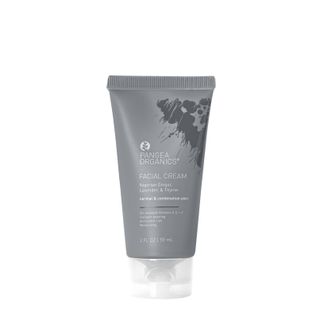
Pangea Organics Nigerian Ginger, Lavender, Thyme Facial Cream
Works for
1 of 1 advertised claim delivered
Moisturizing14 ingredients credited for this claimGood support
“Hydration for a healthy glowLightweight yet concentrated with powerful ingredients, this daily facial cream delivers everything you want and then some.”
This product can help improve hydration of the skin with the two types of ingredients.
The first type is called “humectants”:
these ingredients help attract water.
When humectants are on the surface of the skin, they “pull in” the moisture from the outside environment, or from
within deeper layers of the skin. The following ingredients in this product do the job:
glycerin, saccharide isomerate.
This product also contains ingredients called “occlusives”. They help reduce the speed with which our skin loses moisture to the outside environment. These ingredients also help soften the upper layer of the skin, so it feels less tight and nicer to the touch. The following ingredients in this product do the job: caprylic/capric triglyceride, helianthus annuus seed oil.
ExfoliationNot advertised by the brand · 1 ingredient credited for this claimStrong support
This product can help exfoliate the skin. In other words, it helps break down the bonds between dead cells on the surface of the skin and speed up the skin turnover. Skin often appears softer and brighter after exfoliation, but overdoing it can result in disrupted skin barrier. The following ingredient is doing the exfoliating job in this product: gluconolactone.
Anti-oxidationNot advertised by the brand · 10 ingredients credited for this claimStrong support
This product contains antioxidants (3-o-ethyl ascorbic acid) that can help neutralize free radicals in skin. By doing so, they can lessen the damage the skin gets from the UV light (sun).
The following ingredients - gluconolactone also can have an antioxidant effect, but there is less evidence to confirm their effectiveness in skin.
Evens skin toneNot advertised by the brand · 3 ingredients credited for this claimStrong support
This product can help reduce hypepigmentation and even out the skin tone because it contains the following effective ingredients: 3-o-ethyl ascorbic acid, gluconolactone
The following ingredient (ingredients) in this product might be helpful, but there is no evidence to confirm that it actually can help even out the skin tone: glycyrrhiza glabra root extract.
Keep in mind that you would need to apply any topical skincare targetted at hypigmentation consistently for a couple of months to get a result. No topical skincare product can help get rid of hyperpigmentation (including post-acne marks and age spots) instantly.
Anti-agingNot advertised by the brand · 5 ingredients credited for this claimStrong support
This product can help reduce and prevent fine lines and wrinkles, improve skin elasticity and firmness because it contains gluconolactone.
These ingredients in the product can also be helpful, even though there is less evidence for their effectiveness: 3-o-ethyl ascorbic acid.
Keep in mind that it typically takes at least 6 weeks to notice any results because the changes that are needed to improve fine lines and elasticity happen in the deeper layers of the skin. No topical anti-aging product can “erase” wrinkles or fully reverse signs of aging.
Can it cause trouble?
Irritancy8 strong irritants: Citrus aurantium dulcis peel extract, Lavandula angustifolia oil + 6 more — patch-test recommendedHigh risk
Comedogenic2 ingredients rated 2 or more on the 0–5 pore-clogging scale2 flagged
User reviews
Be the first — your take helps the next person decide.
Ingredients
Filter by role to see what each ingredient is doing.
Aloe barbadensis leaf juice~23–35%
- Irritation risk
- Medium
Traditionally used to treat sunburns, dermatitis and inflammation, but evidence for its effectiveness is lacking. The extract can contain humectants that help attract water into the skin
More about Aloe barbadensis leaf juiceWater~11–17%
Glyceryl stearate se~3.7–5.5%
- Irritation risk
- Low
- Comedogenicity
- 2/5
Used to stabilize the product formulations and works as an emollient
More about Glyceryl stearate sePrunus amygdalus dulcis oil~3.7–5.5%
- Irritation risk
- Low
An emollient that softens the skin
More about Prunus amygdalus dulcis oilVitis vinifera leaf extract~2.5–3.7%
- Irritation risk
- Medium
Caprylic/capric triglyceride~2–2.9%
- Irritation risk
- Medium
A good mix of fatty acids that forms a protective layer on the skin. Improves the shelf life of products. Derived from coconut and glycerin
More about Caprylic/capric triglycerideGlycerin~1.6–2.3%
- Irritation risk
- Low
One of the best moisturizing ingredients. Naturally present in skin. It attracts water to the upper layer of the skin working as a humectant
More about GlycerinAvena sativa bran extract~1.4–2.1%
- Irritation risk
- Medium
Citrus aurantium dulcis peel extract~1.2–1.8%
Gluconolactone~1–1.6%
- Irritation risk
- Medium
A polyhydroxy acid (PHA) that helps shed the dead cells from the skin surface revealing smoother skin. Is believed to be genter than AHAs. It helps attract water to the upper layer of the skin and can stimulate production of skin's own hyaluronic acid resulting in improved hydration levels. It has been shown to be helpful against acne and clogged pores if used consistently (e.g over a period of 12 weeks) in high enough concentration. It can help reduce fine lines and wrinkles and improve skin tone with long-term application. Can help neutralize free radicals
More about GluconolactoneSodium benzoate~0.25–0.5%
Butyrospermum parkii butter~0.8–1.2%
- Irritation risk
- Low
- Comedogenicity
- 3/5
A great moisturising ingredient that softens the skin and reduces water loss from its upper layer. It also can be helpful in protecting skin from free radicals
More about Butyrospermum parkii butterSaccharide isomerate~0.5–1.2%
- Irritation risk
- Low
Helps attract water to the upper layer of the skin
More about Saccharide isomerate3-o-ethyl ascorbic acid~0.5–1.15%
- Irritation risk
- High
A vitamin C derivative that is more stable but less potent than pure form of vitamin C. Can help neutralize free radicals and help reduce hyperpigmentation, but the required concentration is likely to be much higher than for the pure form of vitamin C, limiting the ingredient's effectiveness in products
More about 3-o-ethyl ascorbic acidHydroxyethylcellulose~0.5–1.2%
- Irritation risk
- Low
Used to thicken product formulations and create gel-like textures
More about HydroxyethylcelluloseOenothera biennis oil~0.5–1.2%
- Irritation risk
- Medium
Helps soften the upper layer of the skin and can support skin barrier function
More about Oenothera biennis oilCucurbita pepo seed oil~0.45–1.1%
- Irritation risk
- Low
Helps soften the upper layer of the skin
More about Cucurbita pepo seed oilHelianthus annuus seed oil~0.45–1%
- Irritation risk
- Low
A great emollient due to its high linoleic acid content. One of the most effective plant oils in helping skin hydration and repairing skin barrier function
More about Helianthus annuus seed oilTocopheryl acetate~0.4–0.9%
- Irritation risk
- Medium
A more stable but less bio-available form of vitamin E compared to Tocopherol. Might help moisturize and protect the skin from free radicals, but mostly used in low concentrations to stabilize other ingredients.
More about Tocopheryl acetateLecithin~0.4–0.9%
- Irritation risk
- Low
Used mostly for creating emulsions - helping oil and water mix together. Helps soften the upper layer of the skin
More about LecithinArgania spinosa kernel oil~0.35–0.85%
- Irritation risk
- Medium
An emollient that helps soften the upper layer of the skin. Might have some weak anti-oxidant properties
More about Argania spinosa kernel oilLavandula angustifolia oil~0.35–0.8%
- Irritation risk
- High
An essential oil. Potential allergen and can be irritating. It has some anti-bacterial properties
More about Lavandula angustifolia oilThymus vulgaris oil~0.2–0.8%
- Irritation risk
- High
Zingiber officinale root oil~0.2–0.75%
- Irritation risk
- High
An essential oil that is likely to be irritating and can cause photosensitivity
More about Zingiber officinale root oilPhytic acid~0.35–0.75%
- Irritation risk
- Medium
An alpha-hydroxy acid (AHA), but is mostly used to stabilize product formulations in cosmetics
More about Phytic acidSodium hyaluronate~0.3–0.75%
- Irritation risk
- Low
One of the best moisturizing ingredients. Attracts water into the upper layer of the skin
More about Sodium hyaluronateXanthan gum~0.3–0.7%
- Irritation risk
- Low
Used to create a thicker product consistency
More about Xanthan gumPotassium sorbate~0.3–0.6%
Viola odorata leaf extract~0.15–0.7%
- Irritation risk
- Low
Calendula officinalis flower extract~0.15–0.5%
- Irritation risk
- High
A plant extract that has some anti-oxidant and anti-bacterial properties. Can be irritating
More about Calendula officinalis flower extractSambucus nigra flower extract~0.15–0.55%
- Irritation risk
- High
A plant extract that might help neutralize free radicals in skin
More about Sambucus nigra flower extractLavandula angustifolia flower/leaf/stem extract~0.1–0.5%
Melissa officinalis leaf extract~0.1–0.4%
- Irritation risk
- High
A plant extract that is added for its fragrance. Can be irritating
More about Melissa officinalis leaf extractGlycyrrhiza glabra root extract~0.15–0.55%
- Irritation risk
- Medium
A plant extract that can help lighten the skin and calm down inflammation. Might be helpful in neutralizing free radicals
More about Glycyrrhiza glabra root extractTrifolium pratense flower extract~0.1–0.3%
- Irritation risk
- High
Red clover flower extract. Can contain anti-oxidants but also potential irritant compounds
More about Trifolium pratense flower extractIngredient list view
Aloe barbadensis leaf juice, Water, Glyceryl stearate se, Prunus amygdalus dulcis oil, Vitis vinifera leaf extract, Caprylic/capric triglyceride, Glycerin, Avena sativa bran extract, Citrus aurantium dulcis peel extract, Gluconolactone, Sodium benzoate, Butyrospermum parkii butter, Saccharide isomerate, 3-o-ethyl ascorbic acid, Hydroxyethylcellulose, Oenothera biennis oil, Cucurbita pepo seed oil, Helianthus annuus seed oil, Tocopheryl acetate, Lecithin, Argania spinosa kernel oil, Lavandula angustifolia oil, Thymus vulgaris oil, Zingiber officinale root oil, Phytic acid, Sodium hyaluronate, Xanthan gum, Potassium sorbate, Viola odorata leaf extract, Calendula officinalis flower extract, Sambucus nigra flower extract, Lavandula angustifolia flower/leaf/stem extract, Melissa officinalis leaf extract, Glycyrrhiza glabra root extract, Trifolium pratense flower extract
Compare prices
Retailers ranked by price — lowest first.

Affiliate links · prices updated regularly
Sources cited in this review
Every concentration estimate and effectiveness label is anchored to one of these 30 studies and safety reviews.
- 1
- 2
- 3
- 4
- 5
- 6

Affiliate links · As an Amazon Associate, WIMJ earns from qualifying purchases.