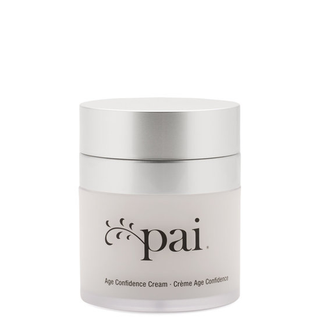
Works for
1 of 2 advertised claims delivered
Moisturizing15 ingredients credited for this claimGood support
“Deeply hydrates by replenishing the essential fatty acids that skin needs to maintain its own moisture levels”
This product can help improve hydration of the skin with the two types of ingredients.
The first type is called “humectants”:
these ingredients help attract water.
When humectants are on the surface of the skin, they “pull in” the moisture from the outside environment, or from
within deeper layers of the skin. The following ingredients in this product do the job:
glycerin, lactobacillus ferment.
This product also contains ingredients called “occlusives”. They help reduce the speed with which our skin loses moisture to the outside environment. These ingredients also help soften the upper layer of the skin, so it feels less tight and nicer to the touch. The following ingredients in this product do the job: butyrospermum parkii butter, borago officinalis seed oil.
Anti-aging3 ingredients credited for this claimLimited support
“Protect even the most sensitive, reactive skin from the signs of aging with this rich anti-aging cream.”
This product does not contain ingredients that are able to reduce fine lines and wrinkles or help with skin elasticity, but it can improve the look of the skin temporarily through moisturization. Well-moisturized skin might also be able to repair the sun damage better.This ingredient - butyrospermum parkii butter - could be helpful for preventing or repairing signs of aging in theory, but there is no evidence that it actually works.
Can it cause trouble?
Irritancy9 strong irritants: Rosa damascena flower oil, Sodium anisate + 7 more — patch-test recommendedHigh risk
Comedogenic2 ingredients rated 2 or more on the 0–5 pore-clogging scale2 flagged
User reviews
Be the first — your take helps the next person decide.
Ingredients
Filter by role to see what each ingredient is doing.
Water~40–60%
Macadamia ternifolia seed oil~4.4–6.6%
- Irritation risk
- Medium
Plant oil from nuts that helps soften the upper layer of the skin. Contains a high concentration of oleic acid that can weaken skin's barrier function and increase water-loss while enhancing penetration of other ingredients
More about Macadamia ternifolia seed oilPrunus armeniaca kernel oil~3.8–5.6%
- Irritation risk
- Medium
An emollient that helps soften the skin
More about Prunus armeniaca kernel oilCetearyl alcohol~2.2–3.3%
- Irritation risk
- Low
- Comedogenicity
- 2/5
A non-drying alcohol. Works as an emollient. Helps water and oil mix together and creates a nice product texture
More about Cetearyl alcoholGlycerin~2.1–3.2%
- Irritation risk
- Low
One of the best moisturizing ingredients. Naturally present in skin. It attracts water to the upper layer of the skin working as a humectant
More about GlycerinBorago officinalis seed oil~1.7–2.6%
- Irritation risk
- Low
A plant oil that is effective in reducing irritation in skin, restore the barrier function and support its hydration
More about Borago officinalis seed oilButyrospermum parkii butter~1.5–2.3%
- Irritation risk
- Low
- Comedogenicity
- 3/5
A great moisturising ingredient that softens the skin and reduces water loss from its upper layer. It also can be helpful in protecting skin from free radicals
More about Butyrospermum parkii butterCarthamus tinctorius seed oil~1.3–2%
- Irritation risk
- Low
An emollient that helps soften the skin and might help calm down inflammation
More about Carthamus tinctorius seed oilLactobacillus ferment~1–1.6%
- Irritation risk
- Low
A fermentation product created by bacteria Lactobacillus. The fermented product has anti-bacterial properties and might be helpful in calming down inflammation, but studies are lacking. Helps attract water to the upper layer of the skin. Can be used as a preservative
More about Lactobacillus fermentEctoin~0.85–1.3%
- Irritation risk
- Low
Softens the upper layer of the skin and can support skin barrier function
More about EctoinEchium plantagineum seed oil~0.55–1.25%
- Irritation risk
- Medium
A plant oil that because of its high content of alpha-linolenic acid help support skin barrier function and moisturize the skin
More about Echium plantagineum seed oilCetearyl glucoside~0.45–1.1%
- Irritation risk
- Medium
Helps water and oil in the product mix well together and improves product texture
More about Cetearyl glucosidePrunus domestica seed oil~0.4–1%
- Irritation risk
- Medium
Helps soften the upper layer of the skin
More about Prunus domestica seed oilSodium hyaluronate~0.4–0.9%
- Irritation risk
- Low
One of the best moisturizing ingredients. Attracts water into the upper layer of the skin
More about Sodium hyaluronateRosa damascena flower oil~0.35–0.85%
- Irritation risk
- High
Used as a fragrance. Can be irritating
More about Rosa damascena flower oilTocopherol~0.35–0.85%
- Irritation risk
- Low
Pure form of vitamin E. Can help moisturise and protect the skin from free radicals. Often used to help stabilise other ingredients or the formula itself
More about TocopherolSodium stearoyl glutamate~0.4–0.9%
- Irritation risk
- Medium
Helps oil and water mix together
More about Sodium stearoyl glutamateSodium anisate~0.2–0.8%
Pelargonium graveolens oil~0.15–0.6%
Sodium levulinate~0.15–0.55%
Citrus grandis peel oil~0.1–0.45%
- Irritation risk
- High
A plant oil with high content of volatile compounds that, especially when exposed to air, can cause allergic reactions and irritate the skin
More about Citrus grandis peel oilRosmarinus officinalis leaf extract~0.1–0.4%
- Irritation risk
- High
Can be helpful in reducing inflammation in skin, including inflamed acne. It can be irritating
More about Rosmarinus officinalis leaf extractLactic acid~0.1–0.35%
- Irritation risk
- Medium
An exfoliating and moisturizing alpha-hydroxy acid (AHA). Typically causes less irritation than other AHAs, for example, glycolic acid. At high concentrations (about 15%), lactic acid can help reduce lines and wrinkles. Recent studies show that lactic acid can support the "good" bacteria living on skin's surface (healthy skin microbiome)
More about Lactic acidLimonene~0.05–0.3%
- Irritation risk
- High
A common frangrance that can easily irritate skin, especially if exposed to air, light or heat
More about LimoneneLinalool~0.05–0.2%
Citronellol~0.05–0.15%
Geraniol~0.05–0.1%
Ingredient list view
Water, Macadamia ternifolia seed oil, Prunus armeniaca kernel oil, Cetearyl alcohol, Glycerin, Borago officinalis seed oil, Butyrospermum parkii butter, Carthamus tinctorius seed oil, Lactobacillus ferment, Ectoin, Echium plantagineum seed oil, Cetearyl glucoside, Prunus domestica seed oil, Sodium hyaluronate, Rosa damascena flower oil, Tocopherol, Sodium stearoyl glutamate, Sodium anisate, Pelargonium graveolens oil, Sodium levulinate, Citrus grandis peel oil, Rosmarinus officinalis leaf extract, Lactic acid, Limonene, Linalool, Citronellol, Geraniol
Compare prices
Retailers ranked by price — lowest first.

Affiliate links · prices updated regularly
Sources cited in this review
Every concentration estimate and effectiveness label is anchored to one of these 18 studies and safety reviews.
- 1
- 2
- 3
- 4
- 5
- 6

Affiliate links · As an Amazon Associate, WIMJ earns from qualifying purchases.