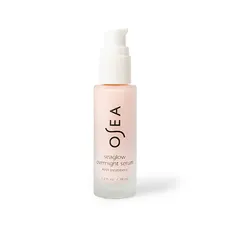
Works for:
based on ingredients and %- Evens skin tone
- Exfoliation
- Moisturizing
- Anti-aging
Can it cause trouble?
- Irritation risk: medium
- Comedogenic risk ingredients: 1
Key actives


Evens skin tone
What does the product description say?
Wake up glowingThis high-performance overnight treatment resurfaces and reinforces your skin’s moisture barrier in one easy step to reveal smooth, radiant skin.
Source: Follain
This product can help reduce hypepigmentation and even out the skin tone because it contains the following effective ingredients: lactic acid
The following ingredient (ingredients) in this product might be helpful, but there is no evidence to confirm that it actually can help even out the skin tone: glucosamine hcl.
Keep in mind that you would need to apply any topical skincare targetted at hypigmentation consistently for a couple of months to get a result. No topical skincare product can help get rid of hyperpigmentation (including post-acne marks and age spots) instantly.
An exfoliating and moisturizing alpha-hydroxy acid (AHA). Typically causes less irritation than other AHAs, for example, glycolic acid. At high concentrations (about 15%), lactic acid can help reduce lines and wrinkles. Recent studies show that lactic acid can support the "good" bacteria living on skin's surface (healthy skin microbiome)
Might be able to stimulate production of skin's natural moisturizing compounds such as hyaluronic acid. Could be helpful for evening the skin tone.
Might be helpful in protecting skin collagen and elastin from breaking down but solid research is lacking
Exfoliation
What does the product description say?
A potent blend of AHAs, phytic acid and tropical fruit extracts exfoliates to promote skin renewal, which helps even tone and texture overnight.
Source: Follain
This product can help exfoliate the skin. In other words, it helps break down the bonds between dead cells on the surface of the skin and speed up the skin turnover. Skin often appears softer and brighter after exfoliation, but overdoing it can result in disrupted skin barrier. The following ingredient is doing the exfoliating job in this product: lactic acid.
An exfoliating and moisturizing alpha-hydroxy acid (AHA). Typically causes less irritation than other AHAs, for example, glycolic acid. At high concentrations (about 15%), lactic acid can help reduce lines and wrinkles. Recent studies show that lactic acid can support the "good" bacteria living on skin's surface (healthy skin microbiome)
An AHA (alpha-hydroxy acid). It oxidizes quickly which makes it less effective in skincare formulations. It can support skin's barrier and moisture levels
Anti-aging
This product contains lactic acid. This ingredient might be able to help reduce and prevent fine lines and wrinkles, improve skin elasticity and firmness, but there is not enough evidence that it actually works.
An exfoliating and moisturizing alpha-hydroxy acid (AHA). Typically causes less irritation than other AHAs, for example, glycolic acid. At high concentrations (about 15%), lactic acid can help reduce lines and wrinkles. Recent studies show that lactic acid can support the "good" bacteria living on skin's surface (healthy skin microbiome)
Might be able to stimulate production of skin's natural moisturizing compounds such as hyaluronic acid. Could be helpful for evening the skin tone.
Anti-oxidation
This product contains antioxidants (tartaric acid) that might be able to help neutralize free radicals in skin to lessen the damage it gets from the UV light (sun). There is not enough evidence to confirm their effectiveness in skin though.
An AHA (alpha-hydroxy acid). It oxidizes quickly which makes it less effective in skincare formulations. It can support skin's barrier and moisture levels
An algae extract. Might help to attract water to the upper layer of the skin and have an anti-oxidant effect
A fermentation product created by bacteria Lactobacillus. The fermented product has anti-bacterial properties and might be helpful in calming down inflammation, but studies are lacking. Helps attract water to the upper layer of the skin. Can be used as a preservative
A red algae extract that can help attract water to the upper layer of the skin and might have some antioxidant properties
Might be able to stimulate production of skin's natural moisturizing compounds such as hyaluronic acid. Could be helpful for evening the skin tone.
Moisturizing
What does the product description say?
Wake up glowingThis high-performance overnight treatment resurfaces and reinforces your skin’s moisture barrier in one easy step to reveal smooth, radiant skin.
Source: Follain
This product contains good ingredients to attract water to the upper layer of the skin. These ingredients are called "humectants": glucosamine hcl, glycerin.
When humectants are on the surface of the skin, they “pull in” the moisture from the outside environment, or from within deeper layers of the skin. If the air is dry, humectants can speed up the moisture loss from the skin. This is why it is a good idea to use another product on top of this one to help "seal in" the moisture (look for ingredients like dimethicone, squalane, oils and butters).
An exfoliating and moisturizing alpha-hydroxy acid (AHA). Typically causes less irritation than other AHAs, for example, glycolic acid. At high concentrations (about 15%), lactic acid can help reduce lines and wrinkles. Recent studies show that lactic acid can support the "good" bacteria living on skin's surface (healthy skin microbiome)
A fermentation product created by bacteria Lactobacillus. The fermented product has anti-bacterial properties and might be helpful in calming down inflammation, but studies are lacking. Helps attract water to the upper layer of the skin. Can be used as a preservative
Might be able to stimulate production of skin's natural moisturizing compounds such as hyaluronic acid. Could be helpful for evening the skin tone.
One of the best moisturizing ingredients. Naturally present in skin. It attracts water to the upper layer of the skin working as a humectant
A red algae extract that can help attract water to the upper layer of the skin and might have some antioxidant properties
An algae extract. Might help to attract water to the upper layer of the skin and have an anti-oxidant effect
An AHA (alpha-hydroxy acid). It oxidizes quickly which makes it less effective in skincare formulations. It can support skin's barrier and moisture levels
Used mostly for creating emulsions - helping oil and water mix together. Helps soften the upper layer of the skin
How honest is this product?
| Promise | Can it deliver? |
|---|---|
| Exfoliation | |
| Evens skin tone | |
| Moisturizing |
Total Promises Fulfilled score: 91/100.
We receive a small commission for purchases made through these links at no cost for you. Thank you for your support! Learn more
Potential irritants
Comedogenic ingredients
User reviews (0)
Averages from community submissions.
No reviews yet for this product.
Be the first to share your experience!
Tried this product?
Help capture what the ingredient list can't—texture, finish, pilling, scent, and more. Answer what you can, skip the rest.
Takes ~30 seconds.
Reviews are shown in aggregate. No personal details.
| Product | Similarity | Price | Irritancy |
|---|---|---|---|
 OSEA® Malibu Seaglow Overnight Serum AHA Treatment | Current | $64.00 | |
 Osea Malibu Seaglow Overnight Serum AHA Treatment | 75% | $68.00 | |
Maelove Super Smooth Resurfacing Serum | 61% | $29.95 | |
 Me Lactic Acid AHA Booster | 59% | ≈ $7.93 | |
 Swissline Perfection Booster | 59% | ≈ $79.71 | |
The INKEY List CA Lactic Acid Face Serum | 59% | ≈ $12.91 |
Key Actives
Might be able to stimulate production of skin's natural moisturizing compounds such as hyaluronic acid. Could be helpful for evening the skin tone.
An exfoliating and moisturizing alpha-hydroxy acid (AHA). Typically causes less irritation than other AHAs, for example, glycolic acid. At high concentrations (about 15%), lactic acid can help reduce lines and wrinkles. Recent studies show that lactic acid can support the "good" bacteria living on skin's surface (healthy skin microbiome)
A fermentation product created by bacteria Lactobacillus. The fermented product has anti-bacterial properties and might be helpful in calming down inflammation, but studies are lacking. Helps attract water to the upper layer of the skin. Can be used as a preservative
An AHA (alpha-hydroxy acid). It oxidizes quickly which makes it less effective in skincare formulations. It can support skin's barrier and moisture levels
A red algae extract that can help attract water to the upper layer of the skin and might have some antioxidant properties
One of the best moisturizing ingredients. Naturally present in skin. It attracts water to the upper layer of the skin working as a humectant
Creates a thin drying film on the skin resulting in a short-term tightening effect
Potential irritants
Claimed to have anti-oxidant properties but it is unlikely that it can have an effect in the skin
Most likely used for its fragrance. Can be irritating and lead to photosensitivity
Creates a thin drying film on the skin resulting in a short-term tightening effect
An exfoliating and moisturizing alpha-hydroxy acid (AHA). Typically causes less irritation than other AHAs, for example, glycolic acid. At high concentrations (about 15%), lactic acid can help reduce lines and wrinkles. Recent studies show that lactic acid can support the "good" bacteria living on skin's surface (healthy skin microbiome)
An alpha-hydroxy acid (AHA), but is mostly used to stabilize product formulations in cosmetics
An AHA (alpha-hydroxy acid). It oxidizes quickly which makes it less effective in skincare formulations. It can support skin's barrier and moisture levels
Can work as an exfoliant but is typically used to adjust the product pH
The extract can contain up to 70% of silica. In cosmetics, silica helps absorb oil and creates a thicker product texture
Might be helpful in protecting skin collagen and elastin from breaking down but solid research is lacking
A preservative that comes from radishes fermented by a bacteria. New research suggests that the preservation properties in the ingredient come from an ammonium salt that is not present naturally in radish root but used in its cultivation. Is problematic because the exact amount of the preservative agents is difficult to determine
Comedogenic ingredients
An algae extract. Might help to attract water to the upper layer of the skin and have an anti-oxidant effect
All ingredients
One of the best moisturizing ingredients. Naturally present in skin. It attracts water to the upper layer of the skin working as a humectant
An exfoliating and moisturizing alpha-hydroxy acid (AHA). Typically causes less irritation than other AHAs, for example, glycolic acid. At high concentrations (about 15%), lactic acid can help reduce lines and wrinkles. Recent studies show that lactic acid can support the "good" bacteria living on skin's surface (healthy skin microbiome)
An alpha-hydroxy acid (AHA), but is mostly used to stabilize product formulations in cosmetics
An AHA (alpha-hydroxy acid). It oxidizes quickly which makes it less effective in skincare formulations. It can support skin's barrier and moisture levels
Can work as an exfoliant but is typically used to adjust the product pH
An algae extract. Might help to attract water to the upper layer of the skin and have an anti-oxidant effect
Claimed to have anti-oxidant properties but it is unlikely that it can have an effect in the skin
A red algae extract that can help attract water to the upper layer of the skin and might have some antioxidant properties
Dissolves other ingredients. It does not have additional skin benefits compared to plain water
Dissolves other ingredients. It does not have additional skin benefits compared to plain water
Most likely used for its fragrance. Can be irritating and lead to photosensitivity
The extract can contain up to 70% of silica. In cosmetics, silica helps absorb oil and creates a thicker product texture
Might be helpful in protecting skin collagen and elastin from breaking down but solid research is lacking
Creates a thin drying film on the skin resulting in a short-term tightening effect
Used mostly for creating emulsions - helping oil and water mix together. Helps soften the upper layer of the skin
Might be able to stimulate production of skin's natural moisturizing compounds such as hyaluronic acid. Could be helpful for evening the skin tone.
A preservative that comes from radishes fermented by a bacteria. New research suggests that the preservation properties in the ingredient come from an ammonium salt that is not present naturally in radish root but used in its cultivation. Is problematic because the exact amount of the preservative agents is difficult to determine
A fermentation product created by bacteria Lactobacillus. The fermented product has anti-bacterial properties and might be helpful in calming down inflammation, but studies are lacking. Helps attract water to the upper layer of the skin. Can be used as a preservative
Ingredient list view
Water, Pseudozyma epicola/soybean flour/apricot kernel oil/olive fruit oil/sunflower seed oil/sweet almond oil/angelica gigas root extract ferment extract filtrate, Glycerin, Lactic acid, Sodium hydroxide, Cetearyl olivate, Phytic acid, Malic acid, Tartaric acid, Citric acid, Sorbitan olivate, Methylheptylglycerin, Spirulina platensis extract, Actinidia chinensis fruit water, Kappaphycus alvarezii extract, Lactobacillus/pumpkin fruit ferment filtrate, Sea water, Maris aqua, Sea water, Spondias mombin pulp extract, Mangifera indica pulp extract, Musa sapientum pulp extract, Microcitrus australasica fruit extract, Bambusa vulgaris leaf/stem extract, Pisum sativum extract, Pullulan, Silica, Xanthan gum, Lecithin, Sclerotium gum, Glucosamine hcl, Caprylhydroxamic acid, Leuconostoc/radish root ferment filtrate, Lactobacillus ferment, Sodium benzoate, Potassium sorbate
- Glycerol and the skin: holistic approach to its origin and functions
- Epidermal and dermal effects of topical lactic acid
- Dual Effects of Alpha-Hydroxy Acids on the Skin
- Cosmetic and dermatologic use of alpha hydroxy acids
- Comparative Evaluation of Efficacy and Tolerability of Glycolic Acid, Salicylic Mandelic Acid, and Phytic Acid Combination Peels in Melasma
- Control of keratinization with á-hydroxy acids and related compounds: I. Topical treatment of ichthyotic disorders
- Dual Effects of Alpha-Hydroxy Acids on the Skin
- Method of treating wrinkles using tartaric acid
- Impact of the condition of storage of tartaric acid solutions on the production and stability of glyoxylic acid
- Spirulina for Skin Care: A Bright Blue Future
- Glucosamine: an ingredient with skin and other benefits
- The effect of probiotics on immune regulation, acne, and photoaging
- Comparison of clinical and histological effects between lactobacillus-fermented Chamaecyparis obtusa and tea tree oil for the treatment of acne: an eight-week double-blind randomized controlled split-face study
- Use of Probiotics for Dermal Applications