Works for:
based on ingredients and %- Moisturizing
- Anti-aging
Can it cause trouble?
- Irritation risk: high
- Comedogenic risk ingredients: 3
Key actives


Works for
Moisturizing
What does the product description say?
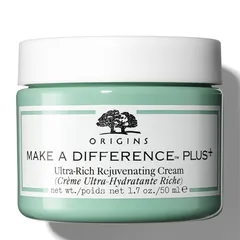
Make A Difference Plus + Ultra-Rich Rejuvenating Cream
Source: From product name
This product can help improve hydration of the skin with the two types of ingredients.
The first type is called “humectants”:
these ingredients help attract water.
When humectants are on the surface of the skin, they “pull in” the moisture from the outside environment, or from
within deeper layers of the skin. The following ingredients in this product do the job:
glycerin, sodium hyaluronate.
This product also contains ingredients called “occlusives”. They help reduce the speed with which our skin loses moisture to the outside environment. These ingredients also help soften the upper layer of the skin, so it feels less tight and nicer to the touch. The following ingredients in this product do the job: caprylic/capric triglyceride, dimethicone.
The following ingredients in this product are especially good for supporting the skin barrier and helping with the hydration level: acetyl hexapeptide-8
Helps soften the upper layer of the skin
An oil naturally present in skin. Works as an emollient to soften the skin and form a protective layer on its surface without a greasy feeling.
Naturally present in skin and helps to attract water to its upper layer
A sugar that attracts water to the upper layer of the skin
Consists of remains of dead bacteria cells. Is likely helpful in attracting water to the upper layer of the skin. Might be helpful in reducing inflammation and neutralizing free radicals in skin. It is claimed to be a "DNA repair enzyme"
Helps attract water to the upper layer of the skin. Is often used to adjust the pH level of the product
One of the best moisturizing ingredients. Attracts water into the upper layer of the skin
A silicone that helps to reduce water loss from the surface of the skin. Can temporarily "fill in" lines and wrinkles, absorb oil, and create a nice product finish
Helps soften the upper layer of the skin and reduce water loss from it
One of the best moisturizing ingredients. Naturally present in skin. It attracts water to the upper layer of the skin working as a humectant
Helps soften the upper layer of the skin. Could be comedogenic due to the myrisic acid content
An emollient that helps soften the skin
A good mix of fatty acids that forms a protective layer on the skin. Improves the shelf life of products. Derived from coconut and glycerin
A type of peptide. Peptides are excellent moisturizers and might be able support collagen production reducing fine lines and wrinkles
An emollient that softens the skin
A non-drying alcohol that works to soften the skin and stabilize product formulations helping oil and water mix together
Used to create a nice product texture and help delivery of other ingredients. Might be somewhat helpful in attracting water to the upper layer of the skin
Helps to soften the upper layer of the skin
Helps preserve products and creates a nice product texture
An emollient that helps soften the skin and creates a thicker product texture
A sugar that is used to stabilize the product formulation. Can help attract water to the upper layer of the skin
An emollient that softens the skin
Helps oil and water mix together and works as an emollient
Non-drying alcohol that helps water and oil mix together. Also serves as an emollient
Used to create a nice product texture
A great moisturising ingredient that softens the skin and reduces water loss from its upper layer. It also can be helpful in protecting skin from free radicals
An emollient. Is not recommended for acne-prone skin as it can be comedogenic
Can have some moisturizing properties due to its sugar content
A plant extract containing sugars that might help attract water to the upper layer of the skin. Is claimed by the manufacturer to help reduce pore size but evidence is lacking
Used mostly for creating emulsions - helping oil and water mix together. Helps soften the upper layer of the skin
Might help to soften the upper layer of the skin. Is claimed to have anti-oxidant properties, but evidence in missing
Anti-aging
This product contains acetyl hexapeptide-8. This ingredient might be able to help reduce and prevent fine lines and wrinkles, improve skin elasticity and firmness, but there is not enough evidence that it actually works.
A type of peptide. Peptides are excellent moisturizers and might be able support collagen production reducing fine lines and wrinkles
An emollient that softens the skin
A great moisturising ingredient that softens the skin and reduces water loss from its upper layer. It also can be helpful in protecting skin from free radicals
Is claimed to have anti-aging properties, but research about its effect in topical application is missing
How honest is this product?
| Promise | Can it deliver? |
|---|---|
| Moisturizing |
Total Promises Fulfilled score: 100/100.
We receive a small commission for purchases made through these links at no cost for you. Thank you for your support! Learn more
Potential irritants
Comedogenic ingredients
User reviews (0)
Averages from community submissions.
No reviews yet for this product.
Be the first to share your experience!
Tried this product?
Help capture what the ingredient list can't—texture, finish, pilling, scent, and more. Answer what you can, skip the rest.
Takes ~30 seconds.
Reviews are shown in aggregate. No personal details.
| Product | Similarity | Price | Irritancy |
|---|---|---|---|
 Origins Make A Difference Plus + Ultra-Rich Rejuvenating Cream | Current | - | |
 Lab Series Skincare for Men Anti-Age Max Cream | 60% | ≈ $88.27 | |
 Estée Lauder Revitalizing Supreme+ Youth Power Soft Creme Moisturizer | 59% | ≈ $122.32 | |
 Perricone MD Treatments Neuropeptide Night Cream | 58% | - | |
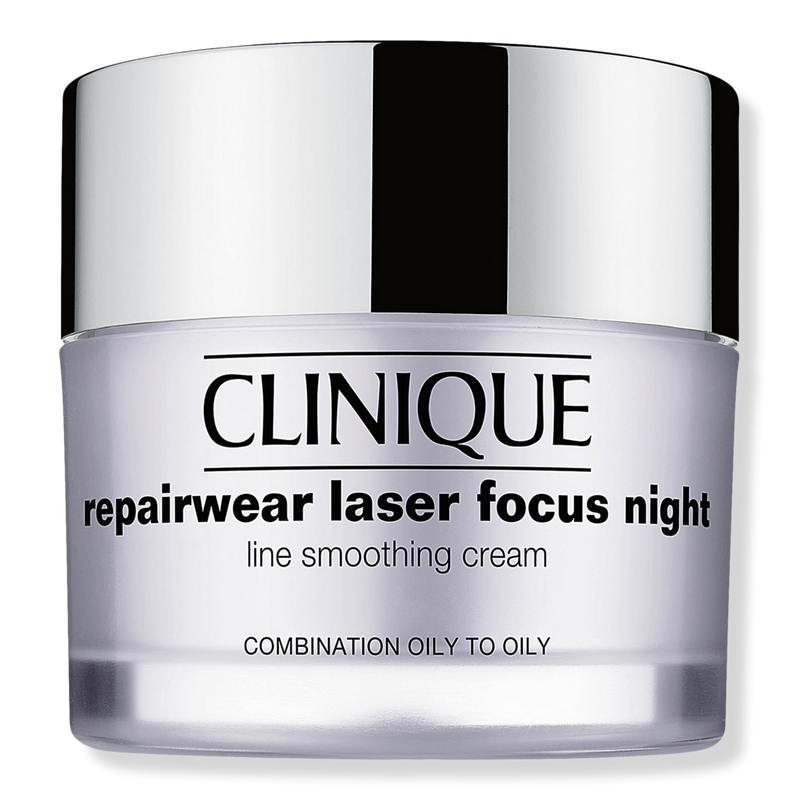
Clinique Repairwear Laser Focus Night Line Smoothing Cream | 58% | $52.70 | |
Dr. Althea Rapid Firm Sculpting Cream | 58% | ≈ $27.99 |
Key Actives
A great moisturising ingredient that softens the skin and reduces water loss from its upper layer. It also can be helpful in protecting skin from free radicals
Consists of remains of dead bacteria cells. Is likely helpful in attracting water to the upper layer of the skin. Might be helpful in reducing inflammation and neutralizing free radicals in skin. It is claimed to be a "DNA repair enzyme"
A silicone that helps to reduce water loss from the surface of the skin. Can temporarily "fill in" lines and wrinkles, absorb oil, and create a nice product finish
Might be helpful in neutralizing free radicals. Can have a dehydration effect that might somewhat decrease the look of puffy eyes
A type of peptide. Peptides are excellent moisturizers and might be able support collagen production reducing fine lines and wrinkles
A good mix of fatty acids that forms a protective layer on the skin. Improves the shelf life of products. Derived from coconut and glycerin
Helps soften the upper layer of the skin and reduce water loss from it
An oil naturally present in skin. Works as an emollient to soften the skin and form a protective layer on its surface without a greasy feeling.
One of the best moisturizing ingredients. Naturally present in skin. It attracts water to the upper layer of the skin working as a humectant
A sugar that attracts water to the upper layer of the skin
An emollient. Is not recommended for acne-prone skin as it can be comedogenic
Helps soften the upper layer of the skin
Helps soften the upper layer of the skin. Could be comedogenic due to the myrisic acid content
An emollient that helps soften the skin
One of the best moisturizing ingredients. Attracts water into the upper layer of the skin
Helps attract water to the upper layer of the skin. Is often used to adjust the pH level of the product
Naturally present in skin and helps to attract water to its upper layer
Potential irritants
A plant oil with a high content of volatile compounds that can irritate the skin and lead to allergic reactions. Can lead to photosensitivity
Used as a fragrance. It can be irritating and cause photosensitivity
Oil of a very fragrant pink rose used as fragrance in cosmetics. Extensive research has shown it has mixed benefits. In the pro column, inhaling this flower’s scent seems to have relaxing properties and the plant’s petals contain skin-soothing and antioxidant compounds that can benefit skin. On the flipside, the numerous chemicals that create this rose’s distinctive fragrance pose a risk of causing skin aggravation.
A common frangrance that can easily irritate skin, especially if exposed to air, light or heat
An essential oil with a lemon-like smell that is extracted from a fruit grown in Asia. Used as a fragrance
A good mix of fatty acids that forms a protective layer on the skin. Improves the shelf life of products. Derived from coconut and glycerin
An emollient that helps soften the skin and creates a thicker product texture
An emollient. Is not recommended for acne-prone skin as it can be comedogenic
A plant extract that can contain an antioxidant compound
Can have some moisturizing properties due to its sugar content
A plant extract containing sugars that might help attract water to the upper layer of the skin. Is claimed by the manufacturer to help reduce pore size but evidence is lacking
Helps soften the upper layer of the skin. Could be comedogenic due to the myrisic acid content
A more stable but less bio-available form of vitamin E compared to Tocopherol. Might help moisturize and protect the skin from free radicals, but mostly used in low concentrations to stabilize other ingredients.
Might be helpful in neutralizing free radicals. Can have a dehydration effect that might somewhat decrease the look of puffy eyes
Helps preserve products and creates a nice product texture
Helps attract water to the upper layer of the skin. Is often used to adjust the pH level of the product
Comedogenic ingredients
An emollient. Is not recommended for acne-prone skin as it can be comedogenic
A great moisturising ingredient that softens the skin and reduces water loss from its upper layer. It also can be helpful in protecting skin from free radicals
Might help to soften the upper layer of the skin. Is claimed to have anti-oxidant properties, but evidence in missing
All ingredients
Used to create a nice product texture and help delivery of other ingredients. Might be somewhat helpful in attracting water to the upper layer of the skin
A good mix of fatty acids that forms a protective layer on the skin. Improves the shelf life of products. Derived from coconut and glycerin
Helps soften the upper layer of the skin and reduce water loss from it
An oil naturally present in skin. Works as an emollient to soften the skin and form a protective layer on its surface without a greasy feeling.
One of the best moisturizing ingredients. Naturally present in skin. It attracts water to the upper layer of the skin working as a humectant
A silicone that helps to reduce water loss from the surface of the skin. Can temporarily "fill in" lines and wrinkles, absorb oil, and create a nice product finish
A non-drying alcohol that works to soften the skin and stabilize product formulations helping oil and water mix together
An emollient that helps soften the skin and creates a thicker product texture
An emollient. Is not recommended for acne-prone skin as it can be comedogenic
A plant oil with a high content of volatile compounds that can irritate the skin and lead to allergic reactions. Can lead to photosensitivity
Used as a fragrance. It can be irritating and cause photosensitivity
Oil of a very fragrant pink rose used as fragrance in cosmetics. Extensive research has shown it has mixed benefits. In the pro column, inhaling this flower’s scent seems to have relaxing properties and the plant’s petals contain skin-soothing and antioxidant compounds that can benefit skin. On the flipside, the numerous chemicals that create this rose’s distinctive fragrance pose a risk of causing skin aggravation.
A common frangrance that can easily irritate skin, especially if exposed to air, light or heat
A plant extract that can contain an antioxidant compound
A great moisturising ingredient that softens the skin and reduces water loss from its upper layer. It also can be helpful in protecting skin from free radicals
Might be helpful in neutralizing free radicals in skin
Can have some moisturizing properties due to its sugar content
A plant extract containing sugars that might help attract water to the upper layer of the skin. Is claimed by the manufacturer to help reduce pore size but evidence is lacking
Might help to soften the upper layer of the skin. Is claimed to have anti-oxidant properties, but evidence in missing
Helps soften the upper layer of the skin. Could be comedogenic due to the myrisic acid content
Helps to soften the upper layer of the skin
Used mostly for creating emulsions - helping oil and water mix together. Helps soften the upper layer of the skin
A more stable but less bio-available form of vitamin E compared to Tocopherol. Might help moisturize and protect the skin from free radicals, but mostly used in low concentrations to stabilize other ingredients.
Might be helpful in neutralizing free radicals. Can have a dehydration effect that might somewhat decrease the look of puffy eyes
A type of peptide. Peptides are excellent moisturizers and might be able support collagen production reducing fine lines and wrinkles
Consists of remains of dead bacteria cells. Is likely helpful in attracting water to the upper layer of the skin. Might be helpful in reducing inflammation and neutralizing free radicals in skin. It is claimed to be a "DNA repair enzyme"
Helps oil and water mix togehter and creates a nice product texture
Non-drying alcohol that helps water and oil mix together. Also serves as an emollient
Helps preserve products and creates a nice product texture
Helps to retain moisture by creating a protective barrier on the skin. Rich in fatty acids. Improves product texture and helps with the penetration of other ingredients.
Is claimed to have anti-aging properties, but research about its effect in topical application is missing
A sugar that is used to stabilize the product formulation. Can help attract water to the upper layer of the skin
One of the best moisturizing ingredients. Attracts water into the upper layer of the skin
Helps attract water to the upper layer of the skin. Is often used to adjust the pH level of the product
Naturally present in skin and helps to attract water to its upper layer
Helps create a thicker or gel-like product texture. It is not a surfactant but can be used in gentle cleansing formulations
A preservative. It helps prevent bacterial growth in cosmetic products
An essential oil with a lemon-like smell that is extracted from a fruit grown in Asia. Used as a fragrance
Ingredient list view
Water, Butylene glycol, Glyceryl polymethacrylate, Stearic acid, Caprylic/capric triglyceride, Ethylhexyl hydroxystearate, Prunus amygdalus dulcis oil, Squalane, Glycerin, Dimethicone, Cetyl alcohol, Trehalose, Lauryl lactate, Hydrogenated palm glycerides, Cetyl ethylhexanoate, Myristyl myristate, Citrus aurantium bergamia fruit oil, Citrus limon peel oil, Citrus aurantium dulcis oil, Mentha viridis leaf oil, Vetiveria zizanoides root oil, Cinnamomum camphora bark oil, Plumeria alba flower extract, Magnolia acuminata flower extract, Rosa damascena extract, Iris pallida root extract, Linalool, Citral, Limonene, Litchi chinensis seed extract, Citrullus lanatus fruit extract, Rhodochrosite extract, Anastatica hierochuntica extract, Butyrospermum parkii butter, Coffea arabica seed extract, Salvia sclarea extract, Pyrus malus fruit extract, Lens esculenta fruit extract, Padina pavonica thallus extract, Mauritia flexuosa fruit oil, Astrocaryum murumuru seed butter, Caprylic/capric/myristic/stearic triglyceride, Lecithin, Tocopheryl acetate, Caffeine, Acetyl hexapeptide-8, Micrococcus lysate, Peg-100 stearate, Behenyl alcohol, Caprylyl glycol, Hydrogenated lecithin, Glycine soja sterols, Sodium rna, Dextrin, Sodium hyaluronate, Sodium lactate, Sodium pca, Carbomer, Tromethamine, Potassium sorbate, Phenoxyethanol, Unknown, Litsea cubeba fruit oil, Unknown, Datem
- Amended Safety Assessment of Alkyl Esters as Used in Cosmetics
- Anti-Inflammatory and Skin Barrier Repair Effects of Topical Application of Some Plant Oils
- Glycerol and the skin: holistic approach to its origin and functions
- Dimethicone as a protective ingredient in topical medications
- Final Report on the Safety Assessment of Dimethicone Copolyol
- Safety Assessment of Citrus-Derived Peel Oils as Used in Cosmetics
- Oxidized citrus oil (R-limonene): A frequent skin sensitizer in Europe
- Air oxidation increases skin irritation from fragrance terpenes
- Oxidized citrus oil (R-limonene): A frequent skin sensitizer in Europe
- Analyzing Lycopene Content in Fruits
- Effect of green Coffea arabica L. seed oil on extracellular matrix components and water-channel expression in in vitro and ex vivo human skin models
- AMAZON RAINFOREST COSMETICS: CHEMICAL APPROACH FOR QUALITY CONTROL
- Amended Safety Assessment of Triglycerides as Used in Cosmeti
- Hyaluronic acid: A key molecule in skin aging
- Hyaluronan (Hyaluronic Acid): a natural moisturizer for skin care
- Safety Assessment of Tromethamine as Used in Cosmetics
- Ethnopharmacological Properties and Medicinal Uses of Litsea cubeba