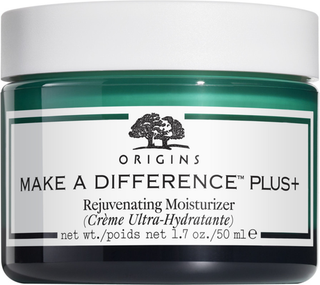
Origins Make A Difference Plus + Rejuvenating Moisturizer
Works for
1 of 1 advertised claim delivered
Moisturizing33 ingredients credited for this claimStrong support
“Make A Difference Plus + Rejuvenating Moisturizer”
This product can help improve hydration of the skin with the two types of ingredients.
The first type is called “humectants”:
these ingredients help attract water.
When humectants are on the surface of the skin, they “pull in” the moisture from the outside environment, or from
within deeper layers of the skin. The following ingredients in this product do the job:
glycerin, sodium hyaluronate.
This product also contains ingredients called “occlusives”. They help reduce the speed with which our skin loses moisture to the outside environment. These ingredients also help soften the upper layer of the skin, so it feels less tight and nicer to the touch. The following ingredients in this product do the job: caprylic/capric triglyceride, dimethicone.
The following ingredients in this product are especially good for supporting the skin barrier and helping with the hydration level: acetyl hexapeptide-8
Anti-agingNot advertised by the brand · 4 ingredients credited for this claimModerate support
This product contains acetyl hexapeptide-8. This ingredient might be able to help reduce and prevent fine lines and wrinkles, improve skin elasticity and firmness, but there is not enough evidence that it actually works.
Can it cause trouble?
Irritancy10 strong irritants: Citrus aurantium bergamia fruit oil, Citrus limon peel oil + 8 more — patch-test recommendedHigh risk
Comedogenic3 ingredients rated 2 or more on the 0–5 pore-clogging scale3 flagged


User reviews
Be the first — your take helps the next person decide.
Ingredients
Filter by role to see what each ingredient is doing.
Water~45–55%
Butylene glycol~5.4–6.5%
- Irritation risk
- Low
Used to create a nice product texture and help delivery of other ingredients. Might be somewhat helpful in attracting water to the upper layer of the skin
More about Butylene glycolPrunus amygdalus dulcis oil~4–4.9%
- Irritation risk
- Low
An emollient that softens the skin
More about Prunus amygdalus dulcis oilGlyceryl polymethacrylate~3–3.6%
- Irritation risk
- Low
Used to create a nice product texture
More about Glyceryl polymethacrylateCaprylic/capric triglyceride~2.3–2.8%
- Irritation risk
- Medium
A good mix of fatty acids that forms a protective layer on the skin. Improves the shelf life of products. Derived from coconut and glycerin
More about Caprylic/capric triglycerideEthylhexyl hydroxystearate~1.9–2.3%
- Irritation risk
- Low
Helps soften the upper layer of the skin and reduce water loss from it
More about Ethylhexyl hydroxystearateGlycerin~1.5–1.9%
- Irritation risk
- Low
One of the best moisturizing ingredients. Naturally present in skin. It attracts water to the upper layer of the skin working as a humectant
More about GlycerinSqualane~1.3–1.6%
- Irritation risk
- Low
An oil naturally present in skin. Works as an emollient to soften the skin and form a protective layer on its surface without a greasy feeling.
More about SqualaneTrehalose~0.95–1.15%
- Irritation risk
- Low
A sugar that attracts water to the upper layer of the skin
More about TrehaloseDimethicone~0.75–1.1%
- Irritation risk
- Low
A silicone that helps to reduce water loss from the surface of the skin. Can temporarily "fill in" lines and wrinkles, absorb oil, and create a nice product finish
More about DimethiconeStearic acid~0.6–0.9%
- Irritation risk
- Low
Helps oil and water mix together and works as an emollient
More about Stearic acidLauryl lactate~0.45–0.7%
- Irritation risk
- Low
Hydrogenated palm glycerides~0.4–0.65%
- Irritation risk
- Low
An emollient that softens the skin
More about Hydrogenated palm glyceridesCetyl ethylhexanoate~0.3–0.6%
- Irritation risk
- Medium
An emollient that helps soften the skin and creates a thicker product texture
More about Cetyl ethylhexanoateMyristyl myristate~0.3–0.5%
- Irritation risk
- Medium
- Comedogenicity
- 3/5
An emollient. Is not recommended for acne-prone skin as it can be comedogenic
More about Myristyl myristateCitrus aurantium bergamia fruit oil~0.25–0.45%
- Irritation risk
- High
A plant oil with a high content of volatile compounds that can irritate the skin and lead to allergic reactions. Can lead to photosensitivity
More about Citrus aurantium bergamia fruit oilCitrus limon peel oil~0.25–0.45%
Citrus aurantium dulcis oil~0.25–0.45%
- Irritation risk
- High
Used as a fragrance. It can be irritating and cause photosensitivity
More about Citrus aurantium dulcis oilMentha viridis leaf oil~0.2–0.4%
Vetiveria zizanoides root oil~0.15–0.3%
- Irritation risk
- Low
Cinnamomum camphora bark oil~0.15–0.25%
- Irritation risk
- High
Plumeria alba flower extract~0.15–0.3%
- Irritation risk
- Low
Magnolia acuminata flower extract~0.1–0.25%
- Irritation risk
- Low
Rosa damascena extract~0.15–0.25%
- Irritation risk
- High
Oil of a very fragrant pink rose used as fragrance in cosmetics. Extensive research has shown it has mixed benefits. In the pro column, inhaling this flower’s scent seems to have relaxing properties and the plant’s petals contain skin-soothing and antioxidant compounds that can benefit skin. On the flipside, the numerous chemicals that create this rose’s distinctive fragrance pose a risk of causing skin aggravation.
More about Rosa damascena extractIris pallida root extract~0.1–0.2%
- Irritation risk
- Low
Linalool~0.15–0.25%
Citral~0.1–0.25%
Limonene~0.1–0.25%
- Irritation risk
- High
A common frangrance that can easily irritate skin, especially if exposed to air, light or heat
More about LimoneneLitchi chinensis seed extract~0.15–0.25%
- Irritation risk
- Low
Citrullus lanatus fruit extract~0.15–0.25%
- Irritation risk
- Medium
A plant extract that can contain an antioxidant compound
More about Citrullus lanatus fruit extractRhodochrosite extract~0.15–0.25%
- Irritation risk
- Low
Anastatica hierochuntica extract~0.15–0.25%
- Irritation risk
- Low
Coffea arabica seed extract~0.15–0.25%
- Irritation risk
- Low
Might be helpful in neutralizing free radicals in skin
More about Coffea arabica seed extractSalvia sclarea extract~0.15–0.25%
- Irritation risk
- High
Used as a fragrance. Can be irritating
More about Salvia sclarea extractPyrus malus fruit extract~0.15–0.3%
- Irritation risk
- Medium
Can have some moisturizing properties due to its sugar content
More about Pyrus malus fruit extractLens esculenta fruit extract~0.15–0.3%
- Irritation risk
- Medium
A plant extract containing sugars that might help attract water to the upper layer of the skin. Is claimed by the manufacturer to help reduce pore size but evidence is lacking
More about Lens esculenta fruit extractPadina pavonica thallus extract~0.15–0.3%
- Irritation risk
- Low
- Comedogenicity
- 3/5
Might help to soften the upper layer of the skin. Is claimed to have anti-oxidant properties, but evidence in missing
More about Padina pavonica thallus extractGarcinia indica seed butter~0.15–0.3%
- Irritation risk
- Low
Helps soften the upper layer of the skin. It mostly contains oleic acid which is not the most effective emollient to prevent water loss, but might have an anti-inflammatory effect
More about Garcinia indica seed butterMangifera indica seed butter~0.2–0.35%
- Irritation risk
- Low
Helps to soften the upper layer of the skin and might have some anti-oxidant effect
More about Mangifera indica seed butterTheobroma grandiflorum seed butter~0.2–0.35%
- Irritation risk
- Medium
Helps soften the upper layer of the skin and might as well help to attract moisture to its upper layer
More about Theobroma grandiflorum seed butterButyrospermum parkii butter~0.25–0.45%
- Irritation risk
- Low
- Comedogenicity
- 3/5
A great moisturising ingredient that softens the skin and reduces water loss from its upper layer. It also can be helpful in protecting skin from free radicals
More about Butyrospermum parkii butterMauritia flexuosa fruit oil~0.2–0.35%
- Irritation risk
- Medium
Helps soften the upper layer of the skin
More about Mauritia flexuosa fruit oilAstrocaryum murumuru seed butter~0.2–0.4%
- Irritation risk
- Medium
Helps soften the upper layer of the skin. Could be comedogenic due to the myrisic acid content
More about Astrocaryum murumuru seed butterAcetyl hexapeptide-8~0.2–0.35%
- Irritation risk
- Low
A type of peptide. Peptides are excellent moisturizers and might be able support collagen production reducing fine lines and wrinkles
More about Acetyl hexapeptide-8Micrococcus lysate~0.2–0.35%
- Irritation risk
- Low
Consists of remains of dead bacteria cells. Is likely helpful in attracting water to the upper layer of the skin. Might be helpful in reducing inflammation and neutralizing free radicals in skin. It is claimed to be a "DNA repair enzyme"
More about Micrococcus lysateLecithin~0.25–0.45%
- Irritation risk
- Low
Used mostly for creating emulsions - helping oil and water mix together. Helps soften the upper layer of the skin
More about LecithinCaffeine~0.2–0.35%
- Irritation risk
- Medium
Might be helpful in neutralizing free radicals. Can have a dehydration effect that might somewhat decrease the look of puffy eyes
More about CaffeinePeg-100 stearate~0.3–0.5%
- Irritation risk
- Low
Helps oil and water mix togehter and creates a nice product texture
More about Peg-100 stearateSodium lactate~0.2–0.35%
- Irritation risk
- Medium
Helps attract water to the upper layer of the skin. Is often used to adjust the pH level of the product
More about Sodium lactateSodium hyaluronate~0.2–0.35%
- Irritation risk
- Low
One of the best moisturizing ingredients. Attracts water into the upper layer of the skin
More about Sodium hyaluronateCaprylic/capric/myristic/stearic triglyceride~0.2–0.4%
- Irritation risk
- Low
Helps to soften the upper layer of the skin
More about Caprylic/capric/myristic/stearic triglycerideCaprylyl glycol~0.2–0.4%
- Irritation risk
- Medium
Helps preserve products and creates a nice product texture
More about Caprylyl glycolHydrogenated lecithin~0.2–0.4%
- Irritation risk
- Low
Helps to retain moisture by creating a protective barrier on the skin. Rich in fatty acids. Improves product texture and helps with the penetration of other ingredients.
More about Hydrogenated lecithinTocopheryl acetate~0.2–0.4%
- Irritation risk
- Medium
A more stable but less bio-available form of vitamin E compared to Tocopherol. Might help moisturize and protect the skin from free radicals, but mostly used in low concentrations to stabilize other ingredients.
More about Tocopheryl acetateGlycine soja sterols~0.25–0.45%
- Irritation risk
- Low
An emollient that helps soften the skin
More about Glycine soja sterolsSodium rna~0.2–0.35%
- Irritation risk
- Low
Is claimed to have anti-aging properties, but research about its effect in topical application is missing
More about Sodium rnaPotassium sorbate~0.2–0.4%
Dextrin~0.2–0.4%
- Irritation risk
- Low
A sugar that is used to stabilize the product formulation. Can help attract water to the upper layer of the skin
More about DextrinCetyl alcohol~0.25–0.45%
- Irritation risk
- Low
A non-drying alcohol that works to soften the skin and stabilize product formulations helping oil and water mix together
More about Cetyl alcoholTromethamine~0.2–0.35%
Sodium pca~0.15–0.3%
- Irritation risk
- Low
Naturally present in skin and helps to attract water to its upper layer
More about Sodium pcaCarbomer~0.15–0.3%
- Irritation risk
- Low
Helps create a thicker or gel-like product texture. It is not a surfactant but can be used in gentle cleansing formulations
More about CarbomerDisodium edta~0.15–0.25%
Phenoxyethanol~0.15–0.3%
- Irritation risk
- Low
A preservative. It helps prevent bacterial growth in cosmetic products
More about PhenoxyethanolDatem~0.15–0.25%
Ingredient list view
Water, Butylene glycol, Prunus amygdalus dulcis oil, Glyceryl polymethacrylate, Caprylic/capric triglyceride, Ethylhexyl hydroxystearate, Glycerin, Squalane, Trehalose, Dimethicone, Stearic acid, Lauryl lactate, Hydrogenated palm glycerides, Cetyl ethylhexanoate, Myristyl myristate, Citrus aurantium bergamia fruit oil, Citrus limon peel oil, Citrus aurantium dulcis oil, Mentha viridis leaf oil, Vetiveria zizanoides root oil, Cinnamomum camphora bark oil, Plumeria alba flower extract, Magnolia acuminata flower extract, Rosa damascena extract, Iris pallida root extract, Linalool, Citral, Limonene, Litchi chinensis seed extract, Citrullus lanatus fruit extract, Rhodochrosite extract, Anastatica hierochuntica extract, Coffea arabica seed extract, Salvia sclarea extract, Pyrus malus fruit extract, Lens esculenta fruit extract, Padina pavonica thallus extract, Garcinia indica seed butter, Mangifera indica seed butter, Theobroma grandiflorum seed butter, Butyrospermum parkii butter, Mauritia flexuosa fruit oil, Astrocaryum murumuru seed butter, Acetyl hexapeptide-8, Micrococcus lysate, Lecithin, Caffeine, Peg-100 stearate, Sodium lactate, Sodium hyaluronate, Caprylic/capric/myristic/stearic triglyceride, Caprylyl glycol, Hydrogenated lecithin, Tocopheryl acetate, Glycine soja sterols, Sodium rna, Potassium sorbate, Dextrin, Cetyl alcohol, Tromethamine, Sodium pca, Carbomer, Disodium edta, Phenoxyethanol, Datem
Compare prices
Retailers ranked by price — lowest first.
Affiliate links · prices updated regularly · As an Amazon Associate, WIMJ earns from qualifying purchases.
Worth comparing, line by line.
Match % combines shared ingredients, the first five ingredients, shared actives and hero ingredients, irritancy (lower counts in the alternative's favour), texture and body area. Only products in the same routine step are compared.
| OriginsMake A Difference Plus + Rejuvenating MoisturizerYOUR PRODUCT | Lab Series Skincare for MenAnti-Age Max Cream | NEOGEN X SUR.MEDICProbiotics Youth Relief Cream | Estée LauderRevitalizing Supreme+ Youth Power Soft Creme Moisturizer | |
|---|---|---|---|---|
| Match | — | 54% | 53% | 53% |
| Price | $47.50 | $99.00+$51.50 | $35.10−$12.40 | $232.68+$185.18 |
| Shared key ingredients | — | 9 of 19 | 10 of 19 | 8 of 19 |
| Key difference | — | Niacinamide | Tripeptide-1 | Acetyl Glucosamine |
| Irritancy | High | Medium | High | Medium |
| Drying alcohol | — | — | — | — |
| View product | Shop | Shop | Shop |


Product summary
"Origins - Make A Difference Plus + Rejuvenating Moisturizer" has a good moisturizing formula. To work well, any moisturizer needs to include a combination of water-binding and emollient ingredients. Origins - Make A Difference Plus + Rejuvenating Moisturizer ticks this box. Humectants in this product (acetyl hexapeptide-8, glycerin, sodium hyaluronate, sodium lactate and sodium pca) help to increase the water content in the upper layer of the skin. (These ingredients do so by "capturing" water molecules from the outside air or from within the deeper layers of the skin). Emollients in this formulation (astrocaryum murumuru seed butter, glycine soja sterols, caprylic/capric triglyceride, dimethicone and ethylhexyl hydroxystearate) help to reduce the moisture loss from the skin. They also soften the skin surface and relieve the feeling of dryness and tightness.
Ingredient callouts
- This moistruizer also contains peptides (acetyl hexapeptide-8 0.20% - 0.35%). Peptides is a very big group of ingredients. They all consist of a different combination of amino-acids. Our skin produces peptides naturally. Some of them work as natural anti-biotics, promote wound-healing and production of collagen. The scientists are still studying how effective the topical application of peptides is, but it is very likely that peptides in skincare are helpful. They might be able to support skin barrier restoration and even have an anti-aging benefit. At the very least, they certainly help attract water to the skin and support the hydration in this way.
Irritation risk
There are quite a few common irritants in this product, including ingredients without particular skin benefits. We would not recommend it for sensitive skin. We assess the overall irritancy of this moisturizer to be high. For a detailed overview of all potential irritants: click here
You can see the detailed formula review with the breakdown of all actives in the product and the full ingredient list with estimated concentrations in the tables below.
Price
The product retails for 168.76CA$ in Canada and for 36.95£ in the United Kingdom.
For a detailed price comparison: click here.
Sources cited in this review
Every concentration estimate and effectiveness label is anchored to one of these 21 studies and safety reviews.
- 1
- 2
- 3
- 4
- 5Final Report on the Safety Assessment of Dimethicone Copolyoljournals.sagepub.com
- 6

Affiliate links · As an Amazon Associate, WIMJ earns from qualifying purchases.