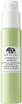
Origins A Perfect World Age-Defense Skin Guardian with White Tea
Works for
1 of 2 advertised claims delivered
MoisturizingSqualane, Glycerin + 7 moreGood evidence
“Origins A Perfect World Age-Defense Skin Guardian with White Tea helps banish youth offenders before they cause visible signs of oxidation, deterioration and dehydration.”
This product can help improve hydration of the skin with the two types of ingredients.
The first type is called “humectants”:
these ingredients help attract water.
When humectants are on the surface of the skin, they “pull in” the moisture from the outside environment, or from
within deeper layers of the skin. The following ingredients in this product do the job:
glycerin, butylene glycol.
This product also contains ingredients called “occlusives”. They help reduce the speed with which our skin loses moisture to the outside environment. These ingredients also help soften the upper layer of the skin, so it feels less tight and nicer to the touch. The following ingredients in this product do the job: dimethicone, squalane.
Anti-agingCamellia sinensis leaf extract, Magnesium ascorbyl phosphateLimited evidence
“Origins A Perfect World Age-Defense Skin Guardian with White Tea helps banish youth offenders before they cause visible signs of oxidation, deterioration and dehydration.”
This product does not contain ingredients that are able to reduce fine lines and wrinkles or help with skin elasticity, but it can improve the look of the skin temporarily through moisturization. Well-moisturized skin might also be able to repair the sun damage better.This ingredient - camellia sinensis leaf extract - could be helpful for preventing or repairing signs of aging in theory, but there is no evidence that it actually works.
This ingredient camellia sinensis leaf extract might be able to help neutralize free radicals in skin and help it fight off some of the sun damage.
Anti-oxidationNot advertised by the brand · Camellia sinensis leaf extract, Rosa damascena flower water + 2 moreModerate evidence
This product contains antioxidants (camellia sinensis leaf extract) that might be able to help neutralize free radicals in skin to lessen the damage it gets from the UV light (sun). There is not enough evidence to confirm their effectiveness in skin though.
Can it cause trouble?
Irritancy11 strong irritants: Rosa damascena flower water, Citrus aurantium amara flower water + 9 more — patch-test recommendedHigh risk
ComedogenicClean of flagged comedogenic ingredientsNone flagged
User reviews
Be the first — your take helps the next person decide.
Ingredients
Filter by role to see what each ingredient is doing.
Cyclopentasiloxane~23–34%
- Irritation risk
- Low
A silicone that helps improve the product texture and spreadability. Can absorb oil creating a short-term mattifying effect on the skin
More about CyclopentasiloxaneWater~11–17%
Rosa damascena flower water~4.6–6.9%
- Irritation risk
- High
Used to add a nice rose smell to the product. Might help attract water to the upper layer of the skin and have some anti-oxidant effect. Can be irritating
More about Rosa damascena flower waterCitrus aurantium amara flower water~3.6–5.4%
- Irritation risk
- High
A citrus plant essential oil (in a less concentrated format). Used as a fragrance and can be irritating
More about Citrus aurantium amara flower waterGlycerin~2.6–4%
- Irritation risk
- Low
One of the best moisturizing ingredients. Naturally present in skin. It attracts water to the upper layer of the skin working as a humectant
More about GlycerinButylene glycol~1.9–2.9%
- Irritation risk
- Low
Used to create a nice product texture and help delivery of other ingredients. Might be somewhat helpful in attracting water to the upper layer of the skin
More about Butylene glycolDimethicone/vinyl dimethicone crosspolymer~1.5–2.3%
- Irritation risk
- Low
Used to stabilize product formulations and create a nice product texture
More about Dimethicone/vinyl dimethicone crosspolymerCetyl peg/ppg-10/1 dimethicone~1.3–2%
- Irritation risk
- Low
A type of silicone that helps water and oil mix together. Can help to soften upper layer of the skin
More about Cetyl peg/ppg-10/1 dimethiconeBoswellia serrata extract~1.1–1.7%
- Irritation risk
- Low
Camellia sinensis leaf extract~1–1.6%
- Irritation risk
- Low
Can contain potent anti-oxidant compounds (abbreviated ECG, GCG, EGC, and EGCG) that might help protect the skin from free radicals. Can help calm down inflammation and has some anti-bacterial properties. Unfortunately, these antioxidants are unstable and lose their effectiveness very quickly in products. The concentration of the antioxidant compounds in the extract also tends to be low to be effective in topical formulation
More about Camellia sinensis leaf extractCitrus aurantium bergamia fruit oil~0.55–1.3%
- Irritation risk
- High
A plant oil with a high content of volatile compounds that can irritate the skin and lead to allergic reactions. Can lead to photosensitivity
More about Citrus aurantium bergamia fruit oilCitrus limon peel oil~0.5–1.1%
Citrus aurantium dulcis oil~0.45–1.1%
- Irritation risk
- High
Used as a fragrance. It can be irritating and cause photosensitivity
More about Citrus aurantium dulcis oilCinnamomum camphora bark oil~0.4–1%
- Irritation risk
- High
Mentha viridis leaf oil~0.4–0.95%
Vetiveria zizanoides root oil~0.35–0.85%
- Irritation risk
- Low
Plumeria alba flower extract~0.4–0.9%
- Irritation risk
- Low
Magnolia acuminata flower extract~0.35–0.85%
- Irritation risk
- Low
Iris pallida root extract~0.3–0.7%
- Irritation risk
- Low
Rosa damascena extract~0.3–0.75%
- Irritation risk
- High
Oil of a very fragrant pink rose used as fragrance in cosmetics. Extensive research has shown it has mixed benefits. In the pro column, inhaling this flower’s scent seems to have relaxing properties and the plant’s petals contain skin-soothing and antioxidant compounds that can benefit skin. On the flipside, the numerous chemicals that create this rose’s distinctive fragrance pose a risk of causing skin aggravation.
More about Rosa damascena extractCitral~0.2–0.7%
Linalool~0.15–0.7%
Limonene~0.15–0.65%
- Irritation risk
- High
A common frangrance that can easily irritate skin, especially if exposed to air, light or heat
More about LimoneneMagnesium ascorbyl phosphate~0.15–0.7%
- Irritation risk
- Medium
A derivative of vitamin C that is more stable, but less bioavailable than the pure form of vitamin C. It does not penetrate the skin well, but has been shown to convert to pure vitamin C once in skin. It can be helpful in stimulating collagen production and lightening the skin tone, but the required concentration is likely to be very high
More about Magnesium ascorbyl phosphateDimethicone~0.3–0.7%
- Irritation risk
- Low
A silicone that helps to reduce water loss from the surface of the skin. Can temporarily "fill in" lines and wrinkles, absorb oil, and create a nice product finish
More about DimethiconeHydroxyethyl acrylate/sodium acryloyldimethyl taurate copolymer~0.15–0.6%
- Irritation risk
- Medium
A gelling agent that thickens the product consistency and leaves the skin with a velvety finish
More about Hydroxyethyl acrylate/sodium acryloyldimethyl taurate copolymerSqualane~0.15–0.6%
- Irritation risk
- Low
An oil naturally present in skin. Works as an emollient to soften the skin and form a protective layer on its surface without a greasy feeling.
More about SqualaneCaprylyl glycol~0.1–0.5%
- Irritation risk
- Medium
Helps preserve products and creates a nice product texture
More about Caprylyl glycolTocopheryl acetate~0.1–0.35%
- Irritation risk
- Medium
A more stable but less bio-available form of vitamin E compared to Tocopherol. Might help moisturize and protect the skin from free radicals, but mostly used in low concentrations to stabilize other ingredients.
More about Tocopheryl acetatePolysorbate 60~0.1–0.3%
Hexylene glycol~0.05–0.2%
- Irritation risk
- Medium
Helps create a more spreadable product texture
More about Hexylene glycolPhenoxyethanol~0.05–0.25%
- Irritation risk
- Low
A preservative. It helps prevent bacterial growth in cosmetic products
More about PhenoxyethanolIngredient list view
Cyclopentasiloxane, Water, Rosa damascena flower water, Citrus aurantium amara flower water, Glycerin, Butylene glycol, Dimethicone/vinyl dimethicone crosspolymer, Cetyl peg/ppg-10/1 dimethicone, Boswellia serrata extract, Camellia sinensis leaf extract, Citrus aurantium bergamia fruit oil, Citrus limon peel oil, Citrus aurantium dulcis oil, Cinnamomum camphora bark oil, Mentha viridis leaf oil, Vetiveria zizanoides root oil, Plumeria alba flower extract, Magnolia acuminata flower extract, Iris pallida root extract, Rosa damascena extract, Citral, Linalool, Limonene, Magnesium ascorbyl phosphate, Dimethicone, Hydroxyethyl acrylate/sodium acryloyldimethyl taurate copolymer, Unknown, Squalane, Caprylyl glycol, Tocopheryl acetate, Polysorbate 60, Hexylene glycol, Phenoxyethanol
Compare prices
Retailers ranked by price — lowest first.
Affiliate links · prices updated regularly · As an Amazon Associate, WIMJ earns from qualifying purchases.
Sources cited in this review
Every concentration estimate and effectiveness label is anchored to one of these 10 studies and safety reviews.
- 1
- 2
- 3
- 4
- 5Air oxidation increases skin irritation from fragrance terpenesonlinelibrary.wiley.com
- 6

Affiliate links · As an Amazon Associate, WIMJ earns from qualifying purchases.