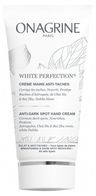
Onagrine White Perfection Anti-Spot Hand Cream
Works for
0 of 1 advertised claim delivered
Evens skin toneNiacinamide, Lactic acidWeak evidence
“It combines 3 roots from traditional Chinese medicine to fade brown spots and prevent their appearance.”
Effective ingredients missing or their concentration is too low
MoisturizingNot advertised by the brand · Urea, Sodium lactate + 20 moreStrong evidence
This product can help improve hydration of the skin with the two types of ingredients.
The first type is called “humectants”:
these ingredients help attract water.
When humectants are on the surface of the skin, they “pull in” the moisture from the outside environment, or from
within deeper layers of the skin. The following ingredients in this product do the job:
fructose, glycerin.
This product also contains ingredients called “occlusives”. They help reduce the speed with which our skin loses moisture to the outside environment. These ingredients also help soften the upper layer of the skin, so it feels less tight and nicer to the touch. The following ingredients in this product do the job: butyrospermum parkii butter, caprylic/capric triglyceride.
The following ingredients in this product are especially good for supporting the skin barrier and helping with the hydration level: urea
Can it cause trouble?
Irritancy2 strong irritants: Parfum, Mitracarpus scaber extractMedium risk
Comedogenic4 ingredients rated 2 or more on the 0–5 pore-clogging scale4 flagged

User reviews
Be the first — your take helps the next person decide.
Ingredients
Filter by role to see what each ingredient is doing.
Water~45–55%
Caprylic/capric triglyceride~6.9–8.4%
- Irritation risk
- Medium
A good mix of fatty acids that forms a protective layer on the skin. Improves the shelf life of products. Derived from coconut and glycerin
More about Caprylic/capric triglycerideGlyceryl stearate se~3.9–4.8%
- Irritation risk
- Low
- Comedogenicity
- 2/5
Used to stabilize the product formulations and works as an emollient
More about Glyceryl stearate seButyrospermum parkii butter~3.3–4.1%
- Irritation risk
- Low
- Comedogenicity
- 3/5
A great moisturising ingredient that softens the skin and reduces water loss from its upper layer. It also can be helpful in protecting skin from free radicals
More about Butyrospermum parkii butterGlycerin~2.5–3.1%
- Irritation risk
- Low
One of the best moisturizing ingredients. Naturally present in skin. It attracts water to the upper layer of the skin working as a humectant
More about GlycerinIsopropyl palmitate~2–2.4%
- Irritation risk
- Medium
- Comedogenicity
- 3/5
Helps soften the upper layer of the skin and create a thicker product consistency
More about Isopropyl palmitateBehenyl alcohol~1.8–2.2%
- Irritation risk
- Low
Non-drying alcohol that helps water and oil mix together. Also serves as an emollient
More about Behenyl alcoholStearyl alcohol~1.5–1.9%
- Irritation risk
- Low
An emollient that helps soften the skin
More about Stearyl alcoholParfum~1.2–1.4%
- Irritation risk
- High
An aromatic blend of unspecified and possibly irritating ingredients
More about ParfumPentylene glycol~1–1.3%
- Irritation risk
- Medium
Used to preserve products, dissolve other ingredients and create a nice product texture
More about Pentylene glycolMacadamia integrifolia seed oil~0.75–1.1%
- Irritation risk
- Low
A plant oil that helps soften the upper layer of the skin
More about Macadamia integrifolia seed oilAstragalus membranaceus root extract~0.6–0.95%
- Irritation risk
- Low
Atractylodes macrocephala root extract~0.5–0.8%
- Irritation risk
- Low
Bupleurum falcatum root extract~0.5–0.7%
- Irritation risk
- High
A plant extract that might help to attract water to the upper layer of the skin, but it is not well studied. It can be irritating
More about Bupleurum falcatum root extractOenothera biennis oil~0.5–0.75%
- Irritation risk
- Medium
Helps soften the upper layer of the skin and can support skin barrier function
More about Oenothera biennis oilArctostaphylos uva ursi leaf extract~0.45–0.65%
- Irritation risk
- Low
Mitracarpus scaber extract~0.4–0.65%
- Irritation risk
- High
Used for its fragrance. Has some anti-bacterial properties. Can be irritating
More about Mitracarpus scaber extractMannan~0.4–0.65%
- Irritation risk
- Low
Glycine~0.3–0.6%
- Irritation risk
- Low
Helps to attract water to the upper layer of the skin and can help restore the skin barrier function
More about GlycineFructose~0.3–0.55%
- Irritation risk
- Low
Helps attract water to the upper layer of the skin
More about FructoseUrea~0.3–0.55%
- Irritation risk
- Low
Naturally present in skin (urea makes up about 7% of natural moisturizing factors in skin). Attracts water to the upper layer of the skin. Also has a positive effect on the skin barrier beyond the humectant action. Can enhance penetration of other ingredients. Is an exfoliating ingredient when used in high concentrations
More about UreaNiacinamide~0.3–0.5%
- Irritation risk
- Low
Is proven to be effective in reducing blemishes, evening out skin tone and helping to improve lines and wrinkles. It helps the skin to repair sun damage, calm down inflammation and keep maintain good levels of moisture. The concentration of about 2% is effective for supporting the skin barrier and evening out the skin tone. Concentration of 4-6% is better for helping with acne and balancing the sebum production
More about NiacinamideInositol~0.25–0.5%
Sodium lactate~0.25–0.5%
- Irritation risk
- Medium
Helps attract water to the upper layer of the skin. Is often used to adjust the pH level of the product
More about Sodium lactateSodium pca~0.25–0.45%
- Irritation risk
- Low
Naturally present in skin and helps to attract water to its upper layer
More about Sodium pcaXanthan gum~0.25–0.5%
- Irritation risk
- Low
Used to create a thicker product consistency
More about Xanthan gumSodium benzoate~0.25–0.45%
Hydroxyethyl acrylate/sodium acryloyldimethyl taurate copolymer~0.25–0.45%
- Irritation risk
- Medium
A gelling agent that thickens the product consistency and leaves the skin with a velvety finish
More about Hydroxyethyl acrylate/sodium acryloyldimethyl taurate copolymerIsohexadecane~0.35–0.6%
- Irritation risk
- Low
Improves the texture of the product and helps soften the skin. Helps oil and water mix together and can be used as a cleansing agent
More about IsohexadecanePotassium sorbate~0.25–0.45%
Citric acid~0.2–0.4%
- Irritation risk
- Medium
Can work as an exfoliant but is typically used to adjust the product pH
More about Citric acidTocopherol~0.25–0.4%
- Irritation risk
- Low
Pure form of vitamin E. Can help moisturise and protect the skin from free radicals. Often used to help stabilise other ingredients or the formula itself
More about TocopherolSodium benzoate~0.2–0.35%
Butylene glycol~0.2–0.35%
- Irritation risk
- Low
Used to create a nice product texture and help delivery of other ingredients. Might be somewhat helpful in attracting water to the upper layer of the skin
More about Butylene glycolGlycine soja oil~0.2–0.35%
- Irritation risk
- Medium
- Comedogenicity
- 2/5
A good emollient that helps soften the skin and helps repair its barrier function. It can clog pores if used in high concentrations.
More about Glycine soja oilPolysorbate 60~0.15–0.3%
Sorbitan isostearate~0.15–0.25%
- Irritation risk
- Low
Helps oil and water mix together
More about Sorbitan isostearateLactic acid~0.1–0.15%
- Irritation risk
- Medium
An exfoliating and moisturizing alpha-hydroxy acid (AHA). Typically causes less irritation than other AHAs, for example, glycolic acid. At high concentrations (about 15%), lactic acid can help reduce lines and wrinkles. Recent studies show that lactic acid can support the "good" bacteria living on skin's surface (healthy skin microbiome)
More about Lactic acidSodium metabisulfite~0.1–0.2%
Ingredient list view
Water, Caprylic/capric triglyceride, Glyceryl stearate se, Butyrospermum parkii butter, Glycerin, Isopropyl palmitate, Behenyl alcohol, Stearyl alcohol, Parfum, Pentylene glycol, Macadamia integrifolia seed oil, Astragalus membranaceus root extract, Atractylodes macrocephala root extract, Bupleurum falcatum root extract, Oenothera biennis oil, Arctostaphylos uva ursi leaf extract, Mitracarpus scaber extract, Unknown, Mannan, Glycine, Fructose, Urea, Niacinamide, Inositol, Sodium lactate, Sodium pca, Xanthan gum, Sodium benzoate, Hydroxyethyl acrylate/sodium acryloyldimethyl taurate copolymer, Isohexadecane, Potassium sorbate, Citric acid, Tocopherol, Sodium benzoate, Butylene glycol, Glycine soja oil, Polysorbate 60, Sorbitan isostearate, Lactic acid, Sodium metabisulfite
Compare prices
Retailers ranked by price — lowest first.

Worth comparing, line by line.
Match % combines shared ingredients, the first five ingredients, shared actives and hero ingredients, irritancy (lower counts in the alternative's favour), texture and body area. Only products in the same routine step are compared.
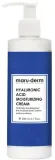
| OnagrineWhite Perfection Anti-Spot Hand CreamYOUR PRODUCT | MarudermHyaluronic Acid Moisturizer Face & Body Cream | grüumpür Gentle Moisturiser | The Grey MenCOMFORT+ FACE CREAM | |
|---|---|---|---|---|
| Match | — | 86% | 80% | 79% |
| Price | $11.92 | $21.99+$10.07 | $10.69−$1.23 | $94.02+$82.10 |
| Shared key ingredients | — | 10 of 13 | 9 of 13 | 5 of 13 |
| Key difference | — | Panthenol | Camellia Sinensis Leaf Extract | Saccharomyces/Copper Ferment |
| Irritancy | Medium | Low | Medium | Low |
| Drying alcohol | — | — | — | — |
| View product | Shop | Shop | Shop |


Product summary
"Onagrine - White Perfection Anti-Spot Hand Cream" is a well-rounded moisturizing product. As we expect from a proper moisturizer, the formula includes a combo of effective humectants and emollients. These are the two different types of ingredients that are essential for improving the skin hydration and supporting a healthy skin barrier. Urea, fructose, glycerin, glycine and inositol in this product (humectants) attract water molecules to the upper layer of the skin (the water comes from the outside air or from the deeper layers of the skin if the air is dry). Glycine soja oil, oenothera biennis oil, butyrospermum parkii butter, caprylic/capric triglyceride and isohexadecane in this product help decrease the water evoporation from the skin, so that it stays hydrated for longer. These ingredients also soften the skin and take away the feeling of tightness and dryness.
This product contains ingredients that could be beneficial, but their concentrations are too low in this formulation: lactic acid, vitamin e and niacinamideIrritation risk
This formulation includes some common irritants, including ingredients that do not provide a benefit for the skin. We assess the overall irritancy of this moisturizer to be medium. For a detailed overview of all potential irritants: click here
You can see the detailed formula review with the breakdown of all actives in the product and the full ingredient list with estimated concentrations in the tables below.
Price
The product retails for 10.40£ in the United Kingdom.
For a detailed price comparison: click here.
Sources cited in this review
Every concentration estimate and effectiveness label is anchored to one of these 13 studies and safety reviews.
- 1
- 2Final Report on the Safety Assessment of Isopropyl Isostearatejournals.sagepub.com
- 3
- 4
- 5Functional glycine receptor in cultured human keratinocytesonlinelibrary.wiley.com
- 6Topical urea in skincare: A reviewpubmed.ncbi.nlm.nih.gov

Affiliate links · As an Amazon Associate, WIMJ earns from qualifying purchases.