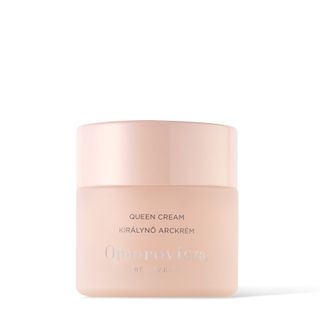
Works for
1 of 2 advertised claims delivered
Moisturizing18 ingredients credited for this claimGood support
“Daily priming moisture balm designed to hydrate, plump and blur the appearance of fine lines and wrinkles, providing an ideal base for makeup.”
This product can help improve hydration of the skin with the two types of ingredients.
The first type is called “humectants”:
these ingredients help attract water.
When humectants are on the surface of the skin, they “pull in” the moisture from the outside environment, or from
within deeper layers of the skin. The following ingredients in this product do the job:
algae extract.
This product also contains ingredients called “occlusives”. They help reduce the speed with which our skin loses moisture to the outside environment. These ingredients also help soften the upper layer of the skin, so it feels less tight and nicer to the touch. The following ingredients in this product do the job: butyrospermum parkii butter, caprylic/capric triglyceride.
Anti-aging3 ingredients credited for this claimLimited support
“Daily priming moisture balm designed to hydrate, plump and blur the appearance of fine lines and wrinkles, providing an ideal base for makeup.”
This product does not contain ingredients that are able to reduce fine lines and wrinkles or help with skin elasticity, but it can improve the look of the skin temporarily through moisturization. Well-moisturized skin might also be able to repair the sun damage better.This ingredient - butyrospermum parkii butter - could be helpful for preventing or repairing signs of aging in theory, but there is no evidence that it actually works.
Can it cause trouble?
Irritancy5 strong irritants: Parfum, Citronellol + 3 more — patch-test recommendedHigh risk
Comedogenic4 ingredients rated 2 or more on the 0–5 pore-clogging scale4 flagged
User reviews
Be the first — your take helps the next person decide.
Ingredients
Filter by role to see what each ingredient is doing.
Coco-caprylate/caprate~22–33%
- Irritation risk
- Low
Helps to soften the upper layer of the skin without creating a greasy texture
More about Coco-caprylate/caprateButyrospermum parkii butter~6–9.1%
- Irritation risk
- Low
- Comedogenicity
- 3/5
A great moisturising ingredient that softens the skin and reduces water loss from its upper layer. It also can be helpful in protecting skin from free radicals
More about Butyrospermum parkii butterPrunus amygdalus dulcis seed~5.4–8.1%
- Irritation risk
- Low
Helps soften the upper layer of the skin
More about Prunus amygdalus dulcis seedTriheptanoin~4.2–6.2%
- Irritation risk
- Low
A synthetic triglyceride. Helps soften the upper layer of the skin
More about TriheptanoinTheobroma cacao seed butter~3.2–4.9%
- Irritation risk
- Low
- Comedogenicity
- 3/5
Helps soften the upper layer of the skin and can be helpful in restoring the skin barrier function. Might have some anti-oxidant effect
More about Theobroma cacao seed butterTrihydroxystearin~2.4–3.5%
- Irritation risk
- Low
Helps soften the upper layer of the skin and improve the product texture
More about TrihydroxystearinC9-12 alkane~1.8–2.7%
Dilinoleic acid/butanediol copolymer~1.6–2.3%
- Irritation risk
- Low
Saccharomyces ferment~1.2–1.8%
- Irritation risk
- Low
A product of yeast fermentation. Helps attract water to the upper layer of the skin
More about Saccharomyces fermentBorago officinalis seed oil~1.1–1.6%
- Irritation risk
- Low
A plant oil that is effective in reducing irritation in skin, restore the barrier function and support its hydration
More about Borago officinalis seed oilLinum usitatissimum seed oil~0.55–1.35%
Oenothera biennis oil~0.55–1.35%
- Irritation risk
- Medium
Helps soften the upper layer of the skin and can support skin barrier function
More about Oenothera biennis oilHelianthus annuus seed oil~0.5–1.2%
- Irritation risk
- Low
A great emollient due to its high linoleic acid content. One of the most effective plant oils in helping skin hydration and repairing skin barrier function
More about Helianthus annuus seed oilCaprylic/capric triglyceride~0.5–1.15%
- Irritation risk
- Medium
A good mix of fatty acids that forms a protective layer on the skin. Improves the shelf life of products. Derived from coconut and glycerin
More about Caprylic/capric triglycerideLauroyl lysine~0.4–0.95%
- Irritation risk
- Low
Helps soften the upper layer of the skin and creates a nice product texture
More about Lauroyl lysineParfum~0.4–0.9%
- Irritation risk
- High
An aromatic blend of unspecified and possibly irritating ingredients
More about ParfumCastor oil/ipdi copolymer~0.5–1.15%
Eclipta prostrata extract~0.4–0.9%
- Irritation risk
- High
A plant extract that might help neutralize free radicals in skin. It can be irritating
More about Eclipta prostrata extractTocopherol~0.35–0.85%
- Irritation risk
- Low
Pure form of vitamin E. Can help moisturise and protect the skin from free radicals. Often used to help stabilise other ingredients or the formula itself
More about TocopherolAlgae extract~0.45–1%
- Irritation risk
- Low
- Comedogenicity
- 3/5
Plant extract that helps the skin to attract water and make it more smooth for touch. Also shows promise of anti-aging properties, but research is not extensive yet
More about Algae extractPlankton extract~0.35–0.85%
- Irritation risk
- Medium
- Comedogenicity
- 3/5
Can help attract water to the upper layer of the skin
More about Plankton extractMelia azadirachta leaf extract~0.35–0.8%
- Irritation risk
- High
A plant extract that has anti-bacterial properties. Can be used to preserve the product. Can be irritating
More about Melia azadirachta leaf extractMoringa oleifera seed oil~0.4–0.95%
- Irritation risk
- Medium
A plant oil that helps soften the upper layer of the skin. Is unlikely to be helpful in restoring skin barrier function due to the low content of linoleic acid
More about Moringa oleifera seed oilPhospholipids~0.3–0.7%
- Irritation risk
- Low
Emollients that are naturaly present in skin. In addition, they help water and oil mix together in the product
More about PhospholipidsLeuconostoc/radish root ferment filtrate~0.2–0.7%
- Irritation risk
- Medium
A preservative that comes from radishes fermented by a bacteria. New research suggests that the preservation properties in the ingredient come from an ammonium salt that is not present naturally in radish root but used in its cultivation. Is problematic because the exact amount of the preservative agents is difficult to determine
More about Leuconostoc/radish root ferment filtrateCitronellol~0.15–0.6%
Linalool~0.15–0.55%
Limonene~0.1–0.5%
- Irritation risk
- High
A common frangrance that can easily irritate skin, especially if exposed to air, light or heat
More about LimoneneGeraniol~0.1–0.45%
Ingredient list view
Coco-caprylate/caprate, Butyrospermum parkii butter, Prunus amygdalus dulcis seed, Triheptanoin, Theobroma cacao seed butter, Trihydroxystearin, C9-12 alkane, Dilinoleic acid/butanediol copolymer, Saccharomyces ferment, Borago officinalis seed oil, Linum usitatissimum seed oil, Oenothera biennis oil, Helianthus annuus seed oil, Caprylic/capric triglyceride, Lauroyl lysine, Parfum, Castor oil/ipdi copolymer, Eclipta prostrata extract, Tocopherol, Algae extract, Plankton extract, Melia azadirachta leaf extract, Unknown, Moringa oleifera seed oil, Phospholipids, Leuconostoc/radish root ferment filtrate, Citronellol, Linalool, Limonene, Geraniol
Compare prices
Retailers ranked by price — lowest first.

Sources cited in this review
Every concentration estimate and effectiveness label is anchored to one of these 16 studies and safety reviews.
- 1Safety Assessment of Alkyl Esters as Used in Cosmeticscir-safety.org
- 2
- 3
- 4
- 5
- 6

Affiliate links · As an Amazon Associate, WIMJ earns from qualifying purchases.