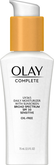
Olay Complete UV365 Daily Moisturizer SPF 30
Works for
1 of 1 advertised claim delivered
Sun protectionSPF 30 · 4 UV filtersBroad spectrum
This product offers a good level of protection against both UVB and UVA rays.
This sunscreen uses organic (so-called "chemical") sunscreen filters. Organic, or "chemical" filters usually provide reliable sun protection and rarely leave a white cast. Sunscreens with organic filters can sting eyes.
This product can be considered "reef safe" because it does not contain the UV filters (oxybenzone and octinoxate) that can be harmful to coral reefs when present in the water in high concentrations.
Evens skin toneNot advertised by the brand · 2 ingredients credited for this claimStrong support
This product offers broad spectrum sun protection. It means that it can prevent hyperpigmentation and help keep the skin tone even (sun damage is the main factor causing age spots, darkening of post-acne marks and other discolorations).
MoisturizingNot advertised by the brand · 11 ingredients credited for this claimStrong support
This product contains good ingredients to attract water to the upper layer of the skin. These ingredients are called "humectants": glycerin, aloe barbadensis leaf extract.
When humectants are on the surface of the skin, they “pull in” the moisture from the outside environment, or from within deeper layers of the skin. If the air is dry, humectants can speed up the moisture loss from the skin. This is why it is a good idea to use another product on top of this one to help "seal in" the moisture (look for ingredients like dimethicone, squalane, oils and butters).
The following ingredients in this product are especially good for supporting the skin barrier and helping with the hydration level: niacinamide, panthenol
Anti-oxidationNot advertised by the brand · 2 ingredients credited for this claimModerate support
This product contains antioxidants (camellia sinensis leaf extract) that might be able to help neutralize free radicals in skin to lessen the damage it gets from the UV light (sun). There is not enough evidence to confirm their effectiveness in skin though.
Can it cause trouble?
Irritancy2 strong irritants: Dmdm hydantoin, Iodopropynyl butylcarbamateMedium risk
Comedogenic1 ingredient rated 2 or more on the 0–5 pore-clogging scale1 flagged

User reviews
Be the first — your take helps the next person decide.
Ingredients
Filter by role to see what each ingredient is doing.
Homosalate8%
- Irritation risk
- Medium
A weak sunscreen that offers some protection against the sun rays that cause sunburn (UVB), but does not offer meaningful protection against protect against the most aging sun rays (UVA). It loses its effectiveness quickly when exposed to sunlight. It is an organic, or so called "chemical" sunscreen. When used in low concentrations, helps to stabilize the product formulation
More about HomosalateButyl methoxydibenzoylmethane3%
- Irritation risk
- Medium
Avobenzone. An organic, or so-called "chemical" UV filter. Protects against both UVA and UVB rays. Needs to be combined with other filters in a formulation to be stable.
More about Butyl methoxydibenzoylmethaneOctocrylene2.25%
- Irritation risk
- Medium
A weak sunscreen that protects against the sun rays that cause sunburn (UVB) and is somewhat effective against the UVA rays. It is quite stable and can help stabilize other, more vulnerable, sunscreen ingredients like Avobenzone. It is an organic, or so called "chemical" sunscreen
More about OctocrylenePhenylbenzimidazole sulfonic acid2%
- Irritation risk
- Medium
Ensulizole. A UV filter that is effective against UVB rays. Does not protect against UVA light. It is photostable and can be used to help stabilize other sunscreen ingredients. It is water-soluble meaning that it can help create lighter sunscreen formulations
More about Phenylbenzimidazole sulfonic acidWater~45–55%
Isohexadecane~8.3–10.2%
- Irritation risk
- Low
Improves the texture of the product and helps soften the skin. Helps oil and water mix together and can be used as a cleansing agent
More about IsohexadecaneGlycerin~5.7–7%
- Irritation risk
- Low
One of the best moisturizing ingredients. Naturally present in skin. It attracts water to the upper layer of the skin working as a humectant
More about GlycerinNiacinamide~4.5–5.5%
- Irritation risk
- Low
Is proven to be effective in reducing blemishes, evening out skin tone and helping to improve lines and wrinkles. It helps the skin to repair sun damage, calm down inflammation and keep maintain good levels of moisture. The concentration of about 2% is effective for supporting the skin barrier and evening out the skin tone. Concentration of 4-6% is better for helping with acne and balancing the sebum production
More about NiacinamidePanthenol~3.2–4%
- Irritation risk
- Low
Helps attract water to the upper layer of the skin and can help improve skin barrier function
More about PanthenolCamellia sinensis leaf extract~2.3–2.8%
- Irritation risk
- Low
Can contain potent anti-oxidant compounds (abbreviated ECG, GCG, EGC, and EGCG) that might help protect the skin from free radicals. Can help calm down inflammation and has some anti-bacterial properties. Unfortunately, these antioxidants are unstable and lose their effectiveness very quickly in products. The concentration of the antioxidant compounds in the extract also tends to be low to be effective in topical formulation
More about Camellia sinensis leaf extractTocopheryl acetate~1.8–2.2%
- Irritation risk
- Medium
A more stable but less bio-available form of vitamin E compared to Tocopherol. Might help moisturize and protect the skin from free radicals, but mostly used in low concentrations to stabilize other ingredients.
More about Tocopheryl acetateAloe barbadensis leaf extract~1.7–2.1%
- Irritation risk
- Medium
Traditionally used to treat sunburns, dermatitis and inflammation, but evidence for its effectiveness is lacking. The extract can contain humectants that help attract water into the skin
More about Aloe barbadensis leaf extractSteareth-21~1.3–1.6%
Cyclopentasiloxane~1.1–1.3%
- Irritation risk
- Low
A silicone that helps improve the product texture and spreadability. Can absorb oil creating a short-term mattifying effect on the skin
More about CyclopentasiloxanePolyacrylamide~0.8–1.15%
- Irritation risk
- Medium
Used to improve product texture and help oil and water mix together
More about PolyacrylamideStearyl alcohol~0.75–1.15%
- Irritation risk
- Low
An emollient that helps soften the skin
More about Stearyl alcoholPolymethylsilsesquioxane~0.65–0.95%
- Irritation risk
- Low
A silicone that improves product texture and helps dissolve other ingredients. Can form a non-greasy film on the skin to prevent moisture loss
More about PolymethylsilsesquioxanePolyethylene~0.75–1.15%
C13-14 isoparaffin~0.55–0.85%
- Irritation risk
- Low
Helps soften the upper layer of the skin, dissolve other ingredients and create a thicker product consistency
More about C13-14 isoparaffinBehenyl alcohol~0.55–0.85%
- Irritation risk
- Low
Non-drying alcohol that helps water and oil mix together. Also serves as an emollient
More about Behenyl alcoholDmdm hydantoin~0.3–0.55%
- Irritation risk
- High
A preservative that releases formaldehyde and can be irritating
More about Dmdm hydantoinCetyl alcohol~0.5–0.75%
- Irritation risk
- Low
A non-drying alcohol that works to soften the skin and stabilize product formulations helping oil and water mix together
More about Cetyl alcoholTriethoxycaprylylsilane~0.3–0.55%
- Irritation risk
- Low
A type of silicone that helps oil and water mix well together. Helps to disperse other ingredients, e.g. pigments, evenly in a formulation
More about TriethoxycaprylylsilanePeg/ppg-20/20 dimethicone~0.3–0.5%
Laureth-7~0.25–0.45%
Steareth-2~0.25–0.45%
Oleth-3 phosphate~0.2–0.35%
- Irritation risk
- Medium
- Comedogenicity
- 3/5
Helps water and oil mix together
More about Oleth-3 phosphateDisodium edta~0.15–0.25%
Iodopropynyl butylcarbamate~0.01–0.02%
Ingredient list view
Homosalate, Butyl methoxydibenzoylmethane, Octocrylene, Phenylbenzimidazole sulfonic acid, Water, Isohexadecane, Glycerin, Niacinamide, Panthenol, Camellia sinensis leaf extract, Tocopheryl acetate, Aloe barbadensis leaf extract, Steareth-21, Cyclopentasiloxane, Polyacrylamide, Stearyl alcohol, Polymethylsilsesquioxane, Polyethylene, C13-14 isoparaffin, Behenyl alcohol, Dmdm hydantoin, Cetyl alcohol, Triethoxycaprylylsilane, Peg/ppg-20/20 dimethicone, Laureth-7, Steareth-2, Oleth-3 phosphate, Disodium edta, Iodopropynyl butylcarbamate
Compare prices
Retailers ranked by price — lowest first.

Worth comparing, line by line.
Match % combines shared ingredients, the first five ingredients, shared actives and hero ingredients, irritancy (lower counts in the alternative's favour), texture and body area. Only products in the same routine step are compared.
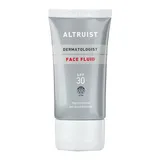
| OlayComplete UV365 Daily Moisturizer SPF 30YOUR PRODUCT | La Roche-PosayAnthelios UV Correct SPF 70 Daily Anti-Aging Face Sunscreen | SkinCodeBrightening protective shield spf 50/PA +++ | AltruistFace Fluid Sunscreen SPF30 | |
|---|---|---|---|---|
| Match | — | 93% | 89% | 87% |
| Price | $16.99 | $32.99+$16.00 | $36.60+$19.61 | $10.18−$6.81 |
| Shared key ingredients | — | 7 of 10 | 6 of 10 | 6 of 10 |
| Key difference | — | Dimethicone | Galactoarabinan | Titanium Dioxide |
| Irritancy | Medium | Low | Low | Low |
| SPF | SPF 30 | SPF 70 | SPF 50 | SPF 30 |
| Drying alcohol | — | — | — | — |
| View product | Shop | Shop | Shop |


Product summary
We believe that "Olay - Complete UV365 Daily Moisturizer SPF 30" can provide reliable sun protection based on the ingredients listed. We love that it can protect from both UVA and UVB rays (not all sunscreens with SPF ratings give UVA protection. UVA rays do not cause sunburn, but still damage our skin and lead to early aging).
Its formula is also hydrating, so you might not need an additional moistruizer during the day.
Sunscreen filters
This is a so-called "chemical" sunscreen. It means that it uses organic UV filters. They typically offer good sun protection and rarely leave a white cast, but they can be irritating for some people with sensitive skin. The UV filters in this sunscreen are: avobenzone 3.00% (declared), homosalate 8.00% (declared), octocrylene 2.25% (declared) and ensulizole 2.00% (declared).
Irritation risk
This formulation includes some common irritants, including ingredients that do not provide a benefit for the skin. We assess the overall irritancy of this moisturizer to be medium. For a detailed overview of all potential irritants: click here
You can see the detailed formula review with the breakdown of all actives in the product and the full ingredient list with estimated concentrations in the tables below.
Price
The product retails for 16.99$ in the United States.
For a detailed price comparison: click here.
Sources cited in this review
Every concentration estimate and effectiveness label is anchored to one of these 10 studies and safety reviews.
- 1
- 2
- 3
- 4
- 5Skin moisturizing effects of panthenol-based formulationspdfs.semanticscholar.org
- 6

Affiliate links · As an Amazon Associate, WIMJ earns from qualifying purchases.