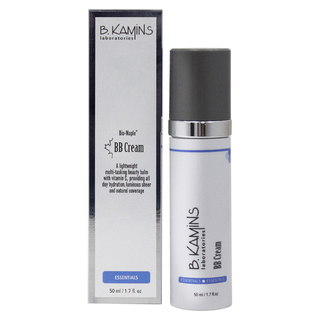
Works for
2 of 3 advertised claims delivered
Moisturizing16 ingredients credited for this claimStrong support
“Helps to firm the skin while smoothing out wrinkles.”
This product contains good ingredients to attract water to the upper layer of the skin. These ingredients are called "humectants": glycerin, butylene glycol.
When humectants are on the surface of the skin, they “pull in” the moisture from the outside environment, or from within deeper layers of the skin. If the air is dry, humectants can speed up the moisture loss from the skin. This is why it is a good idea to use another product on top of this one to help "seal in" the moisture (look for ingredients like dimethicone, squalane, oils and butters).
The following ingredients in this product are especially good for supporting the skin barrier and helping with the hydration level: palmitoyl hexapeptide-14
Anti-aging8 ingredients credited for this claimModerate support
“Helps to firm the skin while smoothing out wrinkles.”
This product contains palmitoyl hexapeptide-14. This ingredient might be able to help reduce and prevent fine lines and wrinkles, improve skin elasticity and firmness, but there is not enough evidence that it actually works.
Evens skin tone2 ingredients credited for this claimWeak support
“Provides luminous coverage that evens out skin tone.”
Effective ingredients missing or their concentration is too low
Anti-oxidationNot advertised by the brand · 5 ingredients credited for this claimModerate support
This product contains antioxidants (lycium barbarum fruit extract) that might be able to help neutralize free radicals in skin to lessen the damage it gets from the UV light (sun). There is not enough evidence to confirm their effectiveness in skin though.
Can it cause trouble?
Irritancy12 flagged ingredientsMedium risk
Comedogenic2 ingredients rated 2 or more on the 0–5 pore-clogging scale2 flagged

User reviews
Be the first — your take helps the next person decide.
Ingredients
Filter by role to see what each ingredient is doing.
Ethylhexyl methoxycinnamate7.5%
- Irritation risk
- High
Octinoxate. When used in higher concentrations, works as a sunscreen protecting the skin from UVB rays. When used in lower concentration, helps to preserve the product formulation. Is shown to be harmful to coral reefs - consider avoiding bathing in coral reef areas when wearing a product with this ingredient. It can be irritating
More about Ethylhexyl methoxycinnamateEthylhexyl salicylate4.5%
- Irritation risk
- Low
Octisalate. A UV filter. It offers some protection against the sun rays that cause sunburn (UVB), but does not protect against the most aging sun rays (UVA). It loses its effectiveness quickly when exposed to sunlight. It is an organic, or so called "chemical" sunscreen
More about Ethylhexyl salicylateOctocrylene6%
- Irritation risk
- Medium
A weak sunscreen that protects against the sun rays that cause sunburn (UVB) and is somewhat effective against the UVA rays. It is quite stable and can help stabilize other, more vulnerable, sunscreen ingredients like Avobenzone. It is an organic, or so called "chemical" sunscreen
More about OctocryleneWater~40–60%
Butylene glycol~4.2–6.4%
- Irritation risk
- Low
Used to create a nice product texture and help delivery of other ingredients. Might be somewhat helpful in attracting water to the upper layer of the skin
More about Butylene glycolEthoxydiglycol~3.8–5.6%
Dimethylacrylamide/acrylic acid/polystyrene ethyl methacrylate copolymer~3.3–5%
Palmitoyl hexapeptide-14~2.2–3.4%
Lycium barbarum fruit extract~1.6–2.4%
- Irritation risk
- Medium
A plant extract that can help neutralize free radicals in skin and attract water to its upper layer
More about Lycium barbarum fruit extractPeg-100 stearate~1.2–1.8%
- Irritation risk
- Low
Helps oil and water mix togehter and creates a nice product texture
More about Peg-100 stearateGlyceryl stearate~1.1–1.6%
- Irritation risk
- Low
An emollient that softens the skin and forms a protective layer on its surface. Helps water and oil mix together
More about Glyceryl stearateGlycerin~0.8–1.2%
- Irritation risk
- Low
One of the best moisturizing ingredients. Naturally present in skin. It attracts water to the upper layer of the skin working as a humectant
More about GlycerinBeta-glucan~0.4–0.95%
- Irritation risk
- Low
Helps attract water to the upper layer of the skin, calm down inflammation and irritation, restore the barrier function and support wound healing. It can be helpful in reducing fine lines and wrinkles
More about Beta-glucanEthylhexyl palmitate~0.4–0.95%
- Irritation risk
- Low
- Comedogenicity
- 3/5
An emollient that helps soften the skin and create a nice product texture
More about Ethylhexyl palmitateIsopropyl palmitate~0.2–0.75%
- Irritation risk
- Medium
- Comedogenicity
- 3/5
Helps soften the upper layer of the skin and create a thicker product consistency
More about Isopropyl palmitateCyclopentasiloxane~0.2–0.7%
- Irritation risk
- Low
A silicone that helps improve the product texture and spreadability. Can absorb oil creating a short-term mattifying effect on the skin
More about CyclopentasiloxanePeg/ppg-20/15 dimethicone~0.15–0.5%
- Irritation risk
- Medium
Helps oil and water mix together
More about Peg/ppg-20/15 dimethiconeTriethoxycaprylylsilane~0.1–0.35%
- Irritation risk
- Low
A type of silicone that helps oil and water mix well together. Helps to disperse other ingredients, e.g. pigments, evenly in a formulation
More about TriethoxycaprylylsilaneSodium polyacrylate~0.15–0.65%
- Irritation risk
- Low
Used to create a gel-like product texture, as well as to stabilize emulsions
More about Sodium polyacrylateHydrogenated polydecene~0.1–0.5%
- Irritation risk
- Low
Helps to soften the upper layer of the skin and create a nice product texture
More about Hydrogenated polydeceneTrideceth-6~0.1–0.35%
Polymethylsilsesquioxane~0.1–0.35%
- Irritation risk
- Low
A silicone that improves product texture and helps dissolve other ingredients. Can form a non-greasy film on the skin to prevent moisture loss
More about PolymethylsilsesquioxaneDiamond powder~0.1–0.5%
- Irritation risk
- Low
Does not have known skin benefits. Might help create an optical illusion of smoother skin
More about Diamond powderAcer saccharum extract~0.05–0.15%
- Irritation risk
- Medium
A plant extract that contains small percentage of AHAs. Is unlikely to have any skin benefit due the small concentration of the active compounds
More about Acer saccharum extractHyaluronic acid~0.05–0.15%
- Irritation risk
- Low
One of the best moisturizing ingredients. Attracts water into the upper layer of the skin. Naturally present in skin. Typically has large molecule size unless advertised otherwise on the product label. Helps support skin's barrier function and may help to reduce inflammation
More about Hyaluronic acidSerum albumin~0.05–0.25%
- Irritation risk
- Medium
Found in egg white, and can leave a film over skin. It can constrict skin temporarily, which can make it look smoother temporarily, but it can also cause sensitivity and is not helpful for skin.
More about Serum albuminDextran sulfate~0.01–0.1%
- Irritation risk
- Low
Dipalmitoyl hydroxyproline~0.01–0.1%
- Irritation risk
- Low
Is claimed to stimulate collagen and elastin production, as well as work as an anti-oxidant. There is however not enough evidence for its effectiveness
More about Dipalmitoyl hydroxyprolineMagnesium ascorbyl phosphate~0.05–0.15%
- Irritation risk
- Medium
A derivative of vitamin C that is more stable, but less bioavailable than the pure form of vitamin C. It does not penetrate the skin well, but has been shown to convert to pure vitamin C once in skin. It can be helpful in stimulating collagen production and lightening the skin tone, but the required concentration is likely to be very high
More about Magnesium ascorbyl phosphateCamellia sinensis leaf extract~0.05–0.15%
- Irritation risk
- Low
Can contain potent anti-oxidant compounds (abbreviated ECG, GCG, EGC, and EGCG) that might help protect the skin from free radicals. Can help calm down inflammation and has some anti-bacterial properties. Unfortunately, these antioxidants are unstable and lose their effectiveness very quickly in products. The concentration of the antioxidant compounds in the extract also tends to be low to be effective in topical formulation
More about Camellia sinensis leaf extractIsononyl isononanoate~0.05–0.2%
- Irritation risk
- Low
Forms a protective film on the surface of the skin to prevent moisture loss. Gives a velvety feel to products while reducing tackiness
More about Isononyl isononanoateIsopropyl titanium triisostearate~0.1–0.35%
- Irritation risk
- Medium
Helps water and oil mix together
More about Isopropyl titanium triisostearateSodium benzoate~0.05–0.25%
Phenoxyethanol~0.1–0.3%
- Irritation risk
- Low
A preservative. It helps prevent bacterial growth in cosmetic products
More about PhenoxyethanolCaprylyl glycol~0.1–0.45%
- Irritation risk
- Medium
Helps preserve products and creates a nice product texture
More about Caprylyl glycolSorbic acid~0.05–0.3%
Titanium dioxide~0.15–0.6%
- Irritation risk
- Low
Works as a UV filter when used in high concentrations. It is photostable and is effective mostly against the UVB light, with some protection in the UVA range. In small concentrations, used for its ability to improve the color of cosmetic products. Is usually well tolerated by the skin
More about Titanium dioxideCi 77891~0.05–0.25%
- Irritation risk
- Low
Mica~0.1–0.35%
- Irritation risk
- Low
Creates an illusion of smoother and more radiant skin tone. Adds shimmer to the skin by reflecting light
More about MicaIron oxides~0.05–0.1%
- Irritation risk
- Low
An umbrella term for the following three colorants: CI 77491, CI 77492, CI 77499. They might be able to offer some protection against visible light, but the degree of the protection is not clear
More about Iron oxidesCi 77491~0.05–0.1%
- Irritation risk
- Low
A red colorant made of iron oxide. Typically is not irritating
More about Ci 77491Ci 77492~0.01–0.1%
Ingredient list view
Ethylhexyl methoxycinnamate, Ethylhexyl salicylate, Octocrylene, Water, Butylene glycol, Ethoxydiglycol, Dimethylacrylamide/acrylic acid/polystyrene ethyl methacrylate copolymer, Palmitoyl hexapeptide-14, Lycium barbarum fruit extract, Peg-100 stearate, Glyceryl stearate, Glycerin, Beta-glucan, Ethylhexyl palmitate, Isopropyl palmitate, Cyclopentasiloxane, Peg/ppg-20/15 dimethicone, Triethoxycaprylylsilane, Sodium polyacrylate, Hydrogenated polydecene, Trideceth-6, Polymethylsilsesquioxane, Diamond powder, Acer saccharum extract, Hyaluronic acid, Serum albumin, Dextran sulfate, Dipalmitoyl hydroxyproline, Magnesium ascorbyl phosphate, Camellia sinensis leaf extract, Isononyl isononanoate, Isopropyl titanium triisostearate, Sodium benzoate, Phenoxyethanol, Caprylyl glycol, Sorbic acid, Titanium dioxide, Ci 77891, Mica, Iron oxides, Ci 77491, Ci 77492
Compare prices
Retailers ranked by price — lowest first.

Affiliate links · prices updated regularly
Worth comparing, line by line.
Match % combines shared ingredients, the first five ingredients, shared actives and hero ingredients, irritancy (lower counts in the alternative's favour), texture and body area. Only products in the same routine step are compared.
| B. KaminsBB CreamYOUR PRODUCT | ChocovinRevitalizing Day Cream - Anti-Aging Face Cream with SPF - Collagen Cream - Made with Hyaluronic Acid, Resveratrol, Epigallocatechin Gallate, and Fruit Extracts | |
|---|---|---|
| Match | — | 53% |
| Price | $33.00 | $29.99−$3.01 |
| Shared key ingredients | — | 5 of 11 |
| Key difference | — | Acetyl Dipeptide-1 Cetyl Ester |
| Irritancy | Medium | Medium |
| Drying alcohol | — | — |
| View product | Shop |
Product summary
"B. Kamins - BB Cream" is effective for: Anti-inflammatory and Moisturizing
This moisturizer could be helpful for: Anti-aging, but its actives are not the most effective or are not well-studied.
Ingredient callouts
- This moisturizer also contains Peptides (palmitoyl hexapeptide-14 2.20% - 3.40%). Peptides are a very big group of ingredients. They all consist of a different combination of aminoacids. Our skin produces Peptides naturally. Some of them work as natural antibiotics, promote wound-healing and production of collagen. The scientists are still studying how effective the topical application of Peptides is, but it is very likely that they are helpful. Peptides might be able to support skin barrier restoration and even have an anti-aging benefit. At the very least, they certainly help attract water to the skin and support the hydration in this way.
Price
The product retails for 33.00$ in the United States.
For a detailed price comparison: click here.
Sources cited in this review
Every concentration estimate and effectiveness label is anchored to one of these 18 studies and safety reviews.
- 1
- 2
- 3Lycium Barbarum and Human Healthlink.springer.com
- 4
- 5β-Glucans: Multi-Functional Modulator of Wound Healingncbi.nlm.nih.gov
- 6

Affiliate links · As an Amazon Associate, WIMJ earns from qualifying purchases.