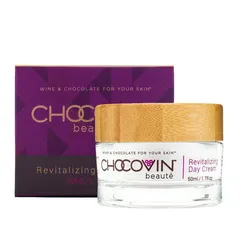
Chocovin Revitalizing Day Cream - Anti-Aging Face Cream with SPF - Collagen Cream - Made with Hyaluronic Acid, Resveratrol, Epigallocatechin Gallate, and Fruit Extracts
Works for:
based on ingredients and %- Moisturizing
- Anti-aging
- Anti-oxidation
- Evens skin tone
Can it cause trouble?
- Irritation risk: medium
- Comedogenic risk ingredients: 3
Key actives
Product Summary
Based on the ingredients included, "Chocovin - Revitalizing Day Cream - Anti-Aging Face Cream with SPF - Collagen Cream - Made with Hyaluronic Acid, Resveratrol, Epigallocatechin Gallate, and Fruit Extracts" works well for moisturizing the skin. This moisturizer uses a good combo of humectants and emollients. These both types of ingredients are essentials for improving the skin hydration and keeping the skin barrier healthy. Humectants in this product (glycerin, hydrolyzed collagen, sodium hyaluronate and butylene glycol) help to increase the water content in the upper layer of the skin. (These ingredients do so by "capturing" water molecules from the outside air or from within the deeper layers of the skin). Emollients in this formulation (hydrolyzed collagen, passiflora edulis seed oil, theobroma cacao seed butter, caprylic/capric triglyceride and squalane) help to reduce the moisture loss from the skin. They also soften the skin surface and relieve the feeling of dryness and tightness.
Ingredient callouts
- This moisturizer also contains Peptides (acetyl dipeptide-1 cetyl ester 0.50% - 0.75% and palmitoyl hexapeptide-14 0.70% - 1.05%). Peptides are a very big group of ingredients. They all consist of a different combination of aminoacids. Our skin produces Peptides naturally. Some of them work as natural antibiotics, promote wound-healing and production of collagen. The scientists are still studying how effective the topical application of Peptides is, but it is very likely that they are helpful. Peptides might be able to support skin barrier restoration and even have an anti-aging benefit. At the very least, they certainly help attract water to the skin and support the hydration in this way.
Irritation risk
This moisturizer contains actives that can be irritating. We assess the overall irritancy of this moisturizer to be medium. For a detailed overview of all potential irritants: click here
You can see the detailed formula review with the breakdown of all actives in the product and the full ingredient list with estimated concentrations in the tables below.
Anti-oxidation
This product contains antioxidants (resveratrol) that can help neutralize free radicals in skin. By doing so, they can lessen the damage the skin gets from the UV light (sun).
The following ingredients - epigallocatechin gallate, lycium barbarum fruit extract also can have an antioxidant effect, but there is less evidence to confirm their effectiveness in skin.
Helps neutralize free radicals in skin and might help reduce fine lines and wrinkles, as well as even out the skin tone
A polyphenol found in tea. This particular compound abbreviated EGCG is the most powerful antioxidant among those extracted from tea (usually green tea). Unfortunately, EGCG is unstable, requires a low pH (below 4) to prevent quick degradation, and does not penetrate the skin very well. This is why the full anti-oxidant effect of EGCG is typically not realized when it is added to topical skincare
A plant extract that can help neutralize free radicals in skin and attract water to its upper layer
Helps soften the upper layer of the skin and can be helpful in restoring the skin barrier function. Might have some anti-oxidant effect
Can contain potent anti-oxidant compounds (abbreviated ECG, GCG, EGC, and EGCG) that might help protect the skin from free radicals. Can help calm down inflammation and has some anti-bacterial properties. Unfortunately, these antioxidants are unstable and lose their effectiveness very quickly in products. The concentration of the antioxidant compounds in the extract also tends to be low to be effective in topical formulation
Can have some moisturizing properties due to its sugar content
An emollient that helps soften the upper layer of the skin. Might have some weak anti-oxidant properties
Moisturizing
What does the product description say?
Revitalizing Day Cream , Anti-Aging Face Cream with SPF , Collagen Cream , Made with Hyaluronic Acid, Resveratrol, Epigallocatechin Gallate, and Fruit Extracts
Source: From product name
This product can help improve hydration of the skin with the two types of ingredients.
The first type is called “humectants”:
these ingredients help attract water.
When humectants are on the surface of the skin, they “pull in” the moisture from the outside environment, or from
within deeper layers of the skin. The following ingredients in this product do the job:
glycerin, hydrolyzed collagen.
This product also contains ingredients called “occlusives”. They help reduce the speed with which our skin loses moisture to the outside environment. These ingredients also help soften the upper layer of the skin, so it feels less tight and nicer to the touch. The following ingredients in this product do the job: caprylic/capric triglyceride, squalane.
The following ingredients in this product are especially good for supporting the skin barrier and helping with the hydration level: acetyl dipeptide-1 cetyl ester, palmitoyl hexapeptide-14
A typically plant-derived compound that is supposed mimic human collagen. Cannot penetrate the skin barrier so is not particularly useful in skincare products beyond attracting water to the upper layer of the skin
Helps soften the upper layer of the skin
One of the best moisturizing ingredients. Attracts water into the upper layer of the skin
An oil naturally present in skin. Works as an emollient to soften the skin and form a protective layer on its surface without a greasy feeling.
A type of peptide. Peptides are excellent moisturizers and might be able support collagen production reducing fine lines and wrinkles
A good emollient helping to soften the skin. Might have some anti-oxidant properties. Adds a fragrance to the product
A silicone that improves product texture and helps dissolve other ingredients. Can form a non-greasy film on the skin to prevent moisture loss
A good mix of fatty acids that forms a protective layer on the skin. Improves the shelf life of products. Derived from coconut and glycerin
Helps soften the upper layer of the skin and can be helpful in restoring the skin barrier function. Might have some anti-oxidant effect
One of the best moisturizing ingredients. Naturally present in skin. It attracts water to the upper layer of the skin working as a humectant
A non-drying alcohol. Works as an emollient. Helps water and oil mix together and creates a nice product texture
A plant extract that can help neutralize free radicals in skin and attract water to its upper layer
A polyphenol found in tea. This particular compound abbreviated EGCG is the most powerful antioxidant among those extracted from tea (usually green tea). Unfortunately, EGCG is unstable, requires a low pH (below 4) to prevent quick degradation, and does not penetrate the skin very well. This is why the full anti-oxidant effect of EGCG is typically not realized when it is added to topical skincare
Used to create a nice product texture and help delivery of other ingredients. Might be somewhat helpful in attracting water to the upper layer of the skin
A plant oil that helps soften the upper layer of the skin. Is unlikely to be helpful in restoring skin barrier function due to the low content of linoleic acid
Helps soften the upper layer of the skin and create a nice product finish
An emollient that helps soften the upper layer of the skin. Might have some weak anti-oxidant properties
Can have some moisturizing properties due to its sugar content
Can contain potent anti-oxidant compounds (abbreviated ECG, GCG, EGC, and EGCG) that might help protect the skin from free radicals. Can help calm down inflammation and has some anti-bacterial properties. Unfortunately, these antioxidants are unstable and lose their effectiveness very quickly in products. The concentration of the antioxidant compounds in the extract also tends to be low to be effective in topical formulation
Anti-aging
What does the product description say?
Revitalizing Day Cream , Anti-Aging Face Cream with SPF , Collagen Cream , Made with Hyaluronic Acid, Resveratrol, Epigallocatechin Gallate, and Fruit Extracts
Source: From product name
This product contains acetyl dipeptide-1 cetyl ester, epigallocatechin gallate, palmitoyl hexapeptide-14, resveratrol. These ingredients might be able to help reduce and prevent fine lines and wrinkles, improve skin elasticity and firmness, but there is not enough evidence that it actually works.
A type of peptide. Peptides are excellent moisturizers and might be able support collagen production reducing fine lines and wrinkles
A polyphenol found in tea. This particular compound abbreviated EGCG is the most powerful antioxidant among those extracted from tea (usually green tea). Unfortunately, EGCG is unstable, requires a low pH (below 4) to prevent quick degradation, and does not penetrate the skin very well. This is why the full anti-oxidant effect of EGCG is typically not realized when it is added to topical skincare
Helps neutralize free radicals in skin and might help reduce fine lines and wrinkles, as well as even out the skin tone
A plant extract that can help neutralize free radicals in skin and attract water to its upper layer
Can contain potent anti-oxidant compounds (abbreviated ECG, GCG, EGC, and EGCG) that might help protect the skin from free radicals. Can help calm down inflammation and has some anti-bacterial properties. Unfortunately, these antioxidants are unstable and lose their effectiveness very quickly in products. The concentration of the antioxidant compounds in the extract also tends to be low to be effective in topical formulation
Evens skin tone
The following ingredient (ingredients) in this product might be helpful, but there is no evidence to confirm that it actually works: epigallocatechin gallate, resveratrol.
A polyphenol found in tea. This particular compound abbreviated EGCG is the most powerful antioxidant among those extracted from tea (usually green tea). Unfortunately, EGCG is unstable, requires a low pH (below 4) to prevent quick degradation, and does not penetrate the skin very well. This is why the full anti-oxidant effect of EGCG is typically not realized when it is added to topical skincare
Helps neutralize free radicals in skin and might help reduce fine lines and wrinkles, as well as even out the skin tone
Can contain potent anti-oxidant compounds (abbreviated ECG, GCG, EGC, and EGCG) that might help protect the skin from free radicals. Can help calm down inflammation and has some anti-bacterial properties. Unfortunately, these antioxidants are unstable and lose their effectiveness very quickly in products. The concentration of the antioxidant compounds in the extract also tends to be low to be effective in topical formulation
How honest is this product?
| Promise | Can it deliver? |
|---|---|
| Moisturizing | |
| Anti-aging |
Total Promises Fulfilled score: 87/100.
Potential irritants
Comedogenic ingredients
User reviews (0)
Averages from community submissions.
No reviews yet for this product.
Be the first to share your experience!
Tried this product?
Help capture what the ingredient list can't—texture, finish, pilling, scent, and more. Answer what you can, skip the rest.
Takes ~30 seconds.
Reviews are shown in aggregate. No personal details.
Key Actives
Can contain potent anti-oxidant compounds (abbreviated ECG, GCG, EGC, and EGCG) that might help protect the skin from free radicals. Can help calm down inflammation and has some anti-bacterial properties. Unfortunately, these antioxidants are unstable and lose their effectiveness very quickly in products. The concentration of the antioxidant compounds in the extract also tends to be low to be effective in topical formulation
A polyphenol found in tea. This particular compound abbreviated EGCG is the most powerful antioxidant among those extracted from tea (usually green tea). Unfortunately, EGCG is unstable, requires a low pH (below 4) to prevent quick degradation, and does not penetrate the skin very well. This is why the full anti-oxidant effect of EGCG is typically not realized when it is added to topical skincare
A plant extract that can help neutralize free radicals in skin and attract water to its upper layer
A type of peptide. Peptides are excellent moisturizers and might be able support collagen production reducing fine lines and wrinkles
Helps neutralize free radicals in skin and might help reduce fine lines and wrinkles, as well as even out the skin tone
Helps soften the upper layer of the skin and can be helpful in restoring the skin barrier function. Might have some anti-oxidant effect
An emollient that helps soften the upper layer of the skin. Might have some weak anti-oxidant properties
A good mix of fatty acids that forms a protective layer on the skin. Improves the shelf life of products. Derived from coconut and glycerin
An oil naturally present in skin. Works as an emollient to soften the skin and form a protective layer on its surface without a greasy feeling.
One of the best moisturizing ingredients. Naturally present in skin. It attracts water to the upper layer of the skin working as a humectant
Octinoxate. When used in higher concentrations, works as a sunscreen protecting the skin from UVB rays. When used in lower concentration, helps to preserve the product formulation. Is shown to be harmful to coral reefs - consider avoiding bathing in coral reef areas when wearing a product with this ingredient. It can be irritating
A typically plant-derived compound that is supposed mimic human collagen. Cannot penetrate the skin barrier so is not particularly useful in skincare products beyond attracting water to the upper layer of the skin
Helps soften the upper layer of the skin
A good emollient helping to soften the skin. Might have some anti-oxidant properties. Adds a fragrance to the product
One of the best moisturizing ingredients. Attracts water into the upper layer of the skin
A silicone that improves product texture and helps dissolve other ingredients. Can form a non-greasy film on the skin to prevent moisture loss
Potential irritants
Octinoxate. When used in higher concentrations, works as a sunscreen protecting the skin from UVB rays. When used in lower concentration, helps to preserve the product formulation. Is shown to be harmful to coral reefs - consider avoiding bathing in coral reef areas when wearing a product with this ingredient. It can be irritating
A good emollient helping to soften the skin. Might have some anti-oxidant properties. Adds a fragrance to the product
A good mix of fatty acids that forms a protective layer on the skin. Improves the shelf life of products. Derived from coconut and glycerin
Helps oil and water mix together. Has some emollient properties
A plant extract that can help neutralize free radicals in skin and attract water to its upper layer
An emollient that helps soften the upper layer of the skin. Might have some weak anti-oxidant properties
A plant oil that helps soften the upper layer of the skin. Is unlikely to be helpful in restoring skin barrier function due to the low content of linoleic acid
Can have some moisturizing properties due to its sugar content
Helps neutralize free radicals in skin and might help reduce fine lines and wrinkles, as well as even out the skin tone
Comedogenic ingredients
A non-drying alcohol. Works as an emollient. Helps water and oil mix together and creates a nice product texture
Helps oil and water mix together. Has some emollient properties
Helps soften the upper layer of the skin and can be helpful in restoring the skin barrier function. Might have some anti-oxidant effect
All ingredients
A good mix of fatty acids that forms a protective layer on the skin. Improves the shelf life of products. Derived from coconut and glycerin
An oil naturally present in skin. Works as an emollient to soften the skin and form a protective layer on its surface without a greasy feeling.
One of the best moisturizing ingredients. Naturally present in skin. It attracts water to the upper layer of the skin working as a humectant
Octinoxate. When used in higher concentrations, works as a sunscreen protecting the skin from UVB rays. When used in lower concentration, helps to preserve the product formulation. Is shown to be harmful to coral reefs - consider avoiding bathing in coral reef areas when wearing a product with this ingredient. It can be irritating
A non-drying alcohol. Works as an emollient. Helps water and oil mix together and creates a nice product texture
Helps oil and water mix together. Has some emollient properties
Used to create a nice product texture and help delivery of other ingredients. Might be somewhat helpful in attracting water to the upper layer of the skin
A typically plant-derived compound that is supposed mimic human collagen. Cannot penetrate the skin barrier so is not particularly useful in skincare products beyond attracting water to the upper layer of the skin
A plant extract that can help neutralize free radicals in skin and attract water to its upper layer
A type of peptide. Peptides are excellent moisturizers and might be able support collagen production reducing fine lines and wrinkles
An emollient that helps soften the upper layer of the skin. Might have some weak anti-oxidant properties
A plant oil that helps soften the upper layer of the skin. Is unlikely to be helpful in restoring skin barrier function due to the low content of linoleic acid
A good emollient helping to soften the skin. Might have some anti-oxidant properties. Adds a fragrance to the product
One of the best moisturizing ingredients. Attracts water into the upper layer of the skin
Used to thicken product formulations and create gel-like textures
Can have some moisturizing properties due to its sugar content
Used to stabilize product formulations and thicken product consistency
Used to create a uniform product consistency
Helps neutralize free radicals in skin and might help reduce fine lines and wrinkles, as well as even out the skin tone
Helps soften the upper layer of the skin and create a nice product finish
Can contain potent anti-oxidant compounds (abbreviated ECG, GCG, EGC, and EGCG) that might help protect the skin from free radicals. Can help calm down inflammation and has some anti-bacterial properties. Unfortunately, these antioxidants are unstable and lose their effectiveness very quickly in products. The concentration of the antioxidant compounds in the extract also tends to be low to be effective in topical formulation
A polyphenol found in tea. This particular compound abbreviated EGCG is the most powerful antioxidant among those extracted from tea (usually green tea). Unfortunately, EGCG is unstable, requires a low pH (below 4) to prevent quick degradation, and does not penetrate the skin very well. This is why the full anti-oxidant effect of EGCG is typically not realized when it is added to topical skincare
Helps soften the upper layer of the skin and can be helpful in restoring the skin barrier function. Might have some anti-oxidant effect
A silicone that improves product texture and helps dissolve other ingredients. Can form a non-greasy film on the skin to prevent moisture loss
A preservative. It helps prevent bacterial growth in cosmetic products
Ingredient list view
Water, Caprylic/capric triglyceride, Squalane, Glycerin, Ethylhexyl methoxycinnamate, Cetearyl alcohol, Ceteareth-20, Potassium cetyl phosphate, Butylene glycol, Hydrolyzed collagen, Palmitoyl hexapeptide-14, Lycium barbarum fruit extract, Ethoxydiglycol, Acetyl dipeptide-1 cetyl ester, Argania spinosa kernel oil, Moringa oleifera seed oil, Mauritia flexuosa fruit oil, Passiflora edulis seed oil, Sodium hyaluronate, Hydroxyethylcellulose, Pyrus malus fruit extract, Silica, Synthetic wax, C20-40 pareth-10, Hydroxyethyl behenamidopropyl dimonium chloride, Hydrolyzed corn starch octenylsuccinate, Resveratrol, Polyquaternium-67, Camellia sinensis leaf extract, Epigallocatechin gallate, Theobroma cacao seed butter, Polymethylsilsesquioxane, Disodium edta, Phenoxyethanol, Ethylhexylglycerin
- Glycerol and the skin: holistic approach to its origin and functions
- Water-soluble polysaccharide from dried Lycium barbarum fruits: Isolation, structural features and antioxidant activity
- Lycium barbarum polysaccharide protects human keratinocytes against UVB-induced photo-damage
- Lycium Barbarum and Human Health
- Natural vegetable fats in the prevention of irritant contact dermatitis
- Moringa oleifera seed oil: Composition, nutritional aspects and health attributes
- Moringa oleifera Seeds and Oil: Characteristics and Uses for Human Health
- Hyaluronic acid: A key molecule in skin aging
- Hyaluronan (Hyaluronic Acid): a natural moisturizer for skin care
- Skin permeation and antioxidant efficacy of topically applied resveratrol
- Chemoprevention of skin cancer by grape constituent resveratrol: relevance to human disease?
- Evaluation of efficacy and tolerance of a nighttime topical antioxidant containing resveratrol, baicalin, and vitamin e for treatment of mild to moderately photodamaged skin
- Resveratrol as a Multifunctional Topical Hypopigmenting Agent
- Anti-aging properties of resveratrol: review and report of a potent new antioxidant skin care formulation
- Resveratrol: A Unique Antioxidant Offering a Multi-Mechanistic Approach for Treating Aging Skin
- Great green tea ingredient? A narrative literature review on epigallocatechin gallate and its biophysical properties for topical use in dermatology
- Comparative Evaluation of Different Co-Antioxidants on the Photochemical- and Functional-Stability of Epigallocatechin-3-gallate in Topical Creams Exposed to Simulated Sunlight
- Photodegradation of (−)-epigallocatechin-3-gallate in topical cream formulations and its photostabilization
- Cocoa polyphenols and their influence on parameters involved in ex vivo skin restructuring