Works for
0 of 1 advertised claim delivered
Anti-aging2 ingredients credited for this claimWeak support
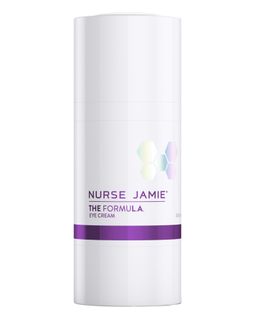
“Adored for giving the “ultimate eye lift” over time, The Formula Eye Cream reforms and repairs your contour to diminish the look of dark circles, smooth fine lines and wrinkles and minimise puffiness.”
Effective ingredients missing or their concentration is too low.
MoisturizingNot advertised by the brand · 17 ingredients credited for this claimGood support
This product can help improve hydration of the skin with the two types of ingredients.
The first type is called “humectants”:
these ingredients help attract water.
When humectants are on the surface of the skin, they “pull in” the moisture from the outside environment, or from
within deeper layers of the skin. The following ingredients in this product do the job:
glycerin, isomalt.
This product also contains ingredients called “occlusives”. They help reduce the speed with which our skin loses moisture to the outside environment. These ingredients also help soften the upper layer of the skin, so it feels less tight and nicer to the touch. The following ingredients in this product do the job: squalane, opuntia ficus-indica seed oil.
Can it cause trouble?
Irritancy11 flagged ingredientsLow risk
Comedogenic2 ingredients rated 2 or more on the 0–5 pore-clogging scale2 flagged
User reviews
Be the first — your take helps the next person decide.
Ingredients
Filter by role to see what each ingredient is doing.
Water~45–55%
Canola oil~5.4–6.6%
- Irritation risk
- Medium
A plant oil that can help soften the upper layer of the skin
More about Canola oilPrunus amygdalus dulcis oil~4.5–5.5%
- Irritation risk
- Low
An emollient that softens the skin
More about Prunus amygdalus dulcis oilCetearyl alcohol~2.6–3.2%
- Irritation risk
- Low
- Comedogenicity
- 2/5
A non-drying alcohol. Works as an emollient. Helps water and oil mix together and creates a nice product texture
More about Cetearyl alcoholIsopropyl palmitate~2.3–2.9%
- Irritation risk
- Medium
- Comedogenicity
- 3/5
Helps soften the upper layer of the skin and create a thicker product consistency
More about Isopropyl palmitateCetearyl glucoside~2–2.4%
- Irritation risk
- Medium
Helps water and oil in the product mix well together and improves product texture
More about Cetearyl glucosideCetyl alcohol~1.7–2.1%
- Irritation risk
- Low
A non-drying alcohol that works to soften the skin and stabilize product formulations helping oil and water mix together
More about Cetyl alcoholSqualane~1.6–1.9%
- Irritation risk
- Low
An oil naturally present in skin. Works as an emollient to soften the skin and form a protective layer on its surface without a greasy feeling.
More about SqualaneGlycerin~1.3–1.6%
- Irritation risk
- Low
One of the best moisturizing ingredients. Naturally present in skin. It attracts water to the upper layer of the skin working as a humectant
More about GlycerinPhenoxyethanol~0.5–1%
- Irritation risk
- Low
A preservative. It helps prevent bacterial growth in cosmetic products
More about PhenoxyethanolPolyacrylamide~0.75–1.15%
- Irritation risk
- Medium
Used to improve product texture and help oil and water mix together
More about PolyacrylamideButylene glycol~0.6–0.9%
- Irritation risk
- Low
Used to create a nice product texture and help delivery of other ingredients. Might be somewhat helpful in attracting water to the upper layer of the skin
More about Butylene glycolC13-14 isoparaffin~0.6–0.85%
- Irritation risk
- Low
Helps soften the upper layer of the skin, dissolve other ingredients and create a thicker product consistency
More about C13-14 isoparaffinHydrogenated starch hydrolysate~0.5–0.75%
- Irritation risk
- Low
Helps to attract water to the upper layer of the skin. Can add sweet taste to lip products
More about Hydrogenated starch hydrolysatePotassium sorbate~0.3–0.6%
Ethylhexylglycerin~0.45–0.7%
Tetrahexyldecyl ascorbate~0.45–0.7%
- Irritation risk
- Medium
Being a lipid soluble form of vitamin C, it is more stable than ascorbic acid, but still degrades quickly and needs to be stabilized in a formulation with another ingredient. It is claimed to penetrate skin better than pure vitamin C and have the the similar benefits, but solid studies of its effectiveness are lacking. Is likely to require a higher concentration in a product than pure vitamin C to be effective. It might be able to help reduce pore clogging.
More about Tetrahexyldecyl ascorbateLaureth-7~0.45–0.65%
Disodium edta~0.35–0.6%
Asparagopsis armata extract~0.3–0.55%
- Irritation risk
- Low
Red seaweed extract. Can help attract water to the upper layer of the skin and might have some antioxidant effect
More about Asparagopsis armata extractAscophyllum nodosum extract~0.3–0.5%
- Irritation risk
- Low
Brown seaweed extract. Can help attract water to the upper layer of the skin and might have some antioxidant effect
More about Ascophyllum nodosum extractPanthenol~0.25–0.5%
- Irritation risk
- Low
Helps attract water to the upper layer of the skin and can help improve skin barrier function
More about PanthenolAllantoin~0.2–0.4%
- Irritation risk
- Low
Helps calm down inflammation in skin and can help reduce itching. Helps to repair the skin barrier and keep skin hydrated
More about AllantoinOpuntia ficus-indica seed oil~0.25–0.5%
- Irritation risk
- Medium
A plant oil that helps soften the upper layer of the skin and can support skin's barrier function due to its high content of linoleic acid. It also has anti-microbial properties
More about Opuntia ficus-indica seed oilIsomalt~0.2–0.4%
- Irritation risk
- Low
Helps attract water to the upper layer of the skin
More about IsomaltMalus domestica fruit cell culture extract~0.2–0.4%
- Irritation risk
- Low
Citric acid~0.15–0.3%
- Irritation risk
- Medium
Can work as an exfoliant but is typically used to adjust the product pH
More about Citric acidXanthan gum~0.15–0.3%
- Irritation risk
- Low
Used to create a thicker product consistency
More about Xanthan gumLecithin~0.2–0.35%
- Irritation risk
- Low
Used mostly for creating emulsions - helping oil and water mix together. Helps soften the upper layer of the skin
More about LecithinVitis vinifera fruit cell extract~0.1–0.25%
- Irritation risk
- Low
Sodium hydroxide~0.1–0.2%
Sodium benzoate~0.1–0.2%
Ingredient list view
Water, Unknown, Unknown, Canola oil, Prunus amygdalus dulcis oil, Cetearyl alcohol, Isopropyl palmitate, Cetearyl glucoside, Cetyl alcohol, Squalane, Glycerin, Phenoxyethanol, Polyacrylamide, Butylene glycol, C13-14 isoparaffin, Hydrogenated starch hydrolysate, Potassium sorbate, Ethylhexylglycerin, Tetrahexyldecyl ascorbate, Laureth-7, Disodium edta, Asparagopsis armata extract, Ascophyllum nodosum extract, Panthenol, Allantoin, Opuntia ficus-indica seed oil, Isomalt, Malus domestica fruit cell culture extract, Citric acid, Xanthan gum, Lecithin, Vitis vinifera fruit cell extract, Sodium hydroxide, Sodium benzoate
Compare prices
Retailers ranked by price — lowest first.
Affiliate links · prices updated regularly · As an Amazon Associate, WIMJ earns from qualifying purchases.
Sources cited in this review
Every concentration estimate and effectiveness label is anchored to one of these 13 studies and safety reviews.
- 1Canola Oilsciencedirect.com
- 2
- 3Final Report on the Safety Assessment of Isopropyl Isostearatejournals.sagepub.com
- 4
- 5Safety Assessment of Isoparaffins as Used in Cosmeticsjournals.sagepub.com
- 6Safety assessment of hydrogenated starch hydrolysatesncbi.nlm.nih.gov

Affiliate links · As an Amazon Associate, WIMJ earns from qualifying purchases.