Works for
1 of 1 advertised claim delivered
MoisturizingPanthenol, Anhydroxylitol + 10 moreStrong evidence
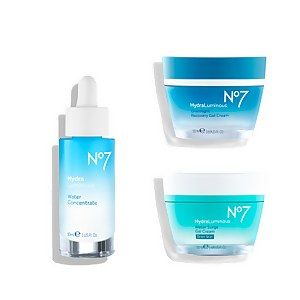
“HydraLuminous Hydrating Regimen”
This product can help improve hydration of the skin with the two types of ingredients.
The first type is called “humectants”:
these ingredients help attract water.
When humectants are on the surface of the skin, they “pull in” the moisture from the outside environment, or from
within deeper layers of the skin. The following ingredients in this product do the job:
anhydroxylitol, glycerin.
This product also contains ingredients called “occlusives”. They help reduce the speed with which our skin loses moisture to the outside environment. These ingredients also help soften the upper layer of the skin, so it feels less tight and nicer to the touch. The following ingredients in this product do the job: dimethicone, c12-15 alkyl benzoate.
The following ingredients in this product are especially good for supporting the skin barrier and helping with the hydration level: panthenol
Can it cause trouble?
Irritancy2 strong irritants: Parfum, Alcohol denat. — patch-test recommendedHigh risk
ComedogenicClean of flagged comedogenic ingredientsNone flagged


User reviews
Be the first — your take helps the next person decide.
Ingredients
Filter by role to see what each ingredient is doing.
Water~45–55%
Glycerin~4.6–5.6%
- Irritation risk
- Low
One of the best moisturizing ingredients. Naturally present in skin. It attracts water to the upper layer of the skin working as a humectant
More about GlycerinPeg-40 hydrogenated castor oil~3.5–4.3%
- Irritation risk
- Medium
Helps oil and water mix together
More about Peg-40 hydrogenated castor oilXylitylglucoside~2.6–3.1%
- Irritation risk
- Low
Helps attract water to the upper layer of the skin and repair the skin barrier function
More about XylitylglucosidePhenoxyethanol~0.5–1%
- Irritation risk
- Low
A preservative. It helps prevent bacterial growth in cosmetic products
More about PhenoxyethanolSodium hyaluronate~1.4–1.8%
- Irritation risk
- Low
One of the best moisturizing ingredients. Attracts water into the upper layer of the skin
More about Sodium hyaluronatePanthenol~1.1–1.4%
- Irritation risk
- Low
Helps attract water to the upper layer of the skin and can help improve skin barrier function
More about PanthenolAcrylates/c10-30 alkyl acrylate crosspolymer~1.1–1.4%
- Irritation risk
- Medium
Maintains the texture of skincare products. Allows the product to spread evenly. Helps oil and water mix together
More about Acrylates/c10-30 alkyl acrylate crosspolymerAnhydroxylitol~0.75–1.1%
- Irritation risk
- Low
Helps attract water to the upper layer of the skin and repair the skin barrir function
More about AnhydroxylitolTocopheryl acetate~0.55–0.85%
- Irritation risk
- Medium
A more stable but less bio-available form of vitamin E compared to Tocopherol. Might help moisturize and protect the skin from free radicals, but mostly used in low concentrations to stabilize other ingredients.
More about Tocopheryl acetateCaprylyl glycol~0.55–0.8%
- Irritation risk
- Medium
Helps preserve products and creates a nice product texture
More about Caprylyl glycolSodium benzoate~0.25–0.5%
Xylitol~0.3–0.55%
- Irritation risk
- Low
Helps attract water to the upper layer of the skin and repair the skin barrier function
More about XylitolAscorbyl glucoside~0.25–0.5%
- Irritation risk
- Medium
A vitamin C derivative that is more stable but less potent than pure form of vitamin C. Has a potential to boost collagen production, nutralise free radicals and reduce hyperpigmentation, but the required concentration is likely to be much higher than for the pure form of vitamin C, limiting the ingredient's effectiveness in products
More about Ascorbyl glucosidePropylene glycol~0.25–0.45%
- Irritation risk
- High
Helps oil and water mix together and can enhance the penetration of other ingredients into the skin. It can be irritating
More about Propylene glycolPotassium hydroxide~0.25–0.45%
Tetrasodium edta~0.25–0.4%
Ethylhexylglycerin~0.2–0.4%
Parfum~0.15–0.3%
- Irritation risk
- High
An aromatic blend of unspecified and possibly irritating ingredients
More about ParfumGlucose~0.15–0.3%
- Irritation risk
- Low
Helps attract water to the upper layer of the skin. Could be helpful in restoring the skin barrier function
More about GlucoseButylene glycol~0.15–0.3%
- Irritation risk
- Low
Used to create a nice product texture and help delivery of other ingredients. Might be somewhat helpful in attracting water to the upper layer of the skin
More about Butylene glycolPanax ginseng root extract~0.2–0.35%
- Irritation risk
- High
A plant extract that might have some anti-inflammatory properties, but solid evidence is lacking. It can be irritating
More about Panax ginseng root extractBiosaccharide gum-4~0.1–0.25%
Dipropylene glycol~0.15–0.25%
- Irritation risk
- Low
Helps to dissolve other ingredients in a formulation. Slows down the rate of product drying
More about Dipropylene glycolMorus alba leaf extract~0.1–0.25%
- Irritation risk
- Low
Water~0.15–0.25%
Glycerin~0.15–0.3%
- Irritation risk
- Low
One of the best moisturizing ingredients. Naturally present in skin. It attracts water to the upper layer of the skin working as a humectant
More about GlycerinCaprylic/capric triglyceride~0.2–0.35%
- Irritation risk
- Medium
A good mix of fatty acids that forms a protective layer on the skin. Improves the shelf life of products. Derived from coconut and glycerin
More about Caprylic/capric triglycerideButylene glycol~0.15–0.3%
- Irritation risk
- Low
Used to create a nice product texture and help delivery of other ingredients. Might be somewhat helpful in attracting water to the upper layer of the skin
More about Butylene glycolDimethicone~0.2–0.35%
- Irritation risk
- Low
A silicone that helps to reduce water loss from the surface of the skin. Can temporarily "fill in" lines and wrinkles, absorb oil, and create a nice product finish
More about DimethiconeEthylhexyl stearate~0.15–0.3%
- Irritation risk
- Low
Helps soften the upper layer of the skin
More about Ethylhexyl stearateSodium polyacrylate~0.15–0.3%
- Irritation risk
- Low
Used to create a gel-like product texture, as well as to stabilize emulsions
More about Sodium polyacrylateAlcohol denat.~0.15–0.3%
- Irritation risk
- High
Produces temporary toning effect. Can help dissolve other ingredients or preserve products
More about Alcohol denat.Xylitylglucoside~0.15–0.25%
- Irritation risk
- Low
Helps attract water to the upper layer of the skin and repair the skin barrier function
More about XylitylglucosidePhenoxyethanol~0.15–0.25%
- Irritation risk
- Low
A preservative. It helps prevent bacterial growth in cosmetic products
More about PhenoxyethanolAcrylates/c10-30 alkyl acrylate crosspolymer~0.15–0.3%
- Irritation risk
- Medium
Maintains the texture of skincare products. Allows the product to spread evenly. Helps oil and water mix together
More about Acrylates/c10-30 alkyl acrylate crosspolymerPanthenol~0.15–0.25%
- Irritation risk
- Low
Helps attract water to the upper layer of the skin and can help improve skin barrier function
More about PanthenolAnhydroxylitol~0.15–0.25%
- Irritation risk
- Low
Helps attract water to the upper layer of the skin and repair the skin barrir function
More about AnhydroxylitolTocopheryl acetate~0.15–0.3%
- Irritation risk
- Medium
A more stable but less bio-available form of vitamin E compared to Tocopherol. Might help moisturize and protect the skin from free radicals, but mostly used in low concentrations to stabilize other ingredients.
More about Tocopheryl acetatePolysorbate 20~0.15–0.3%
Xanthan gum~0.15–0.25%
- Irritation risk
- Low
Used to create a thicker product consistency
More about Xanthan gumCaprylyl glycol~0.15–0.3%
- Irritation risk
- Medium
Helps preserve products and creates a nice product texture
More about Caprylyl glycolSodium benzoate~0.15–0.25%
Xylitol~0.1–0.2%
- Irritation risk
- Low
Helps attract water to the upper layer of the skin and repair the skin barrier function
More about XylitolAscorbyl glucoside~0.15–0.25%
- Irritation risk
- Medium
A vitamin C derivative that is more stable but less potent than pure form of vitamin C. Has a potential to boost collagen production, nutralise free radicals and reduce hyperpigmentation, but the required concentration is likely to be much higher than for the pure form of vitamin C, limiting the ingredient's effectiveness in products
More about Ascorbyl glucosidePropylene glycol~0.15–0.25%
- Irritation risk
- High
Helps oil and water mix together and can enhance the penetration of other ingredients into the skin. It can be irritating
More about Propylene glycolParfum~0.1–0.2%
- Irritation risk
- High
An aromatic blend of unspecified and possibly irritating ingredients
More about ParfumEthylhexylglycerin~0.15–0.25%
Potassium hydroxide~0.15–0.25%
Tetrasodium edta~0.15–0.25%
Glucose~0.15–0.25%
- Irritation risk
- Low
Helps attract water to the upper layer of the skin. Could be helpful in restoring the skin barrier function
More about GlucosePanax ginseng root extract~0.15–0.3%
- Irritation risk
- High
A plant extract that might have some anti-inflammatory properties, but solid evidence is lacking. It can be irritating
More about Panax ginseng root extractBiosaccharide gum-4~0.1–0.25%
Dipropylene glycol~0.15–0.25%
- Irritation risk
- Low
Helps to dissolve other ingredients in a formulation. Slows down the rate of product drying
More about Dipropylene glycolMorus alba leaf extract~0.1–0.25%
- Irritation risk
- Low
Water~0.15–0.25%
Glycerin~0.15–0.3%
- Irritation risk
- Low
One of the best moisturizing ingredients. Naturally present in skin. It attracts water to the upper layer of the skin working as a humectant
More about GlycerinCaprylic/capric triglyceride~0.2–0.35%
- Irritation risk
- Medium
A good mix of fatty acids that forms a protective layer on the skin. Improves the shelf life of products. Derived from coconut and glycerin
More about Caprylic/capric triglycerideButylene glycol~0.15–0.3%
- Irritation risk
- Low
Used to create a nice product texture and help delivery of other ingredients. Might be somewhat helpful in attracting water to the upper layer of the skin
More about Butylene glycolDimethicone~0.2–0.35%
- Irritation risk
- Low
A silicone that helps to reduce water loss from the surface of the skin. Can temporarily "fill in" lines and wrinkles, absorb oil, and create a nice product finish
More about DimethiconeEthylhexyl stearate~0.15–0.3%
- Irritation risk
- Low
Helps soften the upper layer of the skin
More about Ethylhexyl stearateC12-15 alkyl benzoate~0.15–0.3%
- Irritation risk
- Low
Enhances the product texture and makes it more spreadable. Helps reduce water loss from the outer layer of skin. Extands the shelf life by preventing bacteria growth
More about C12-15 alkyl benzoateSodium polyacrylate~0.15–0.3%
- Irritation risk
- Low
Used to create a gel-like product texture, as well as to stabilize emulsions
More about Sodium polyacrylateXylitylglucoside~0.15–0.25%
- Irritation risk
- Low
Helps attract water to the upper layer of the skin and repair the skin barrier function
More about XylitylglucosidePhenoxyethanol~0.15–0.25%
- Irritation risk
- Low
A preservative. It helps prevent bacterial growth in cosmetic products
More about PhenoxyethanolAcrylates/c10-30 alkyl acrylate crosspolymer~0.15–0.3%
- Irritation risk
- Medium
Maintains the texture of skincare products. Allows the product to spread evenly. Helps oil and water mix together
More about Acrylates/c10-30 alkyl acrylate crosspolymerPanthenol~0.15–0.25%
- Irritation risk
- Low
Helps attract water to the upper layer of the skin and can help improve skin barrier function
More about PanthenolAnhydroxylitol~0.15–0.25%
- Irritation risk
- Low
Helps attract water to the upper layer of the skin and repair the skin barrir function
More about AnhydroxylitolTocopheryl acetate~0.15–0.25%
- Irritation risk
- Medium
A more stable but less bio-available form of vitamin E compared to Tocopherol. Might help moisturize and protect the skin from free radicals, but mostly used in low concentrations to stabilize other ingredients.
More about Tocopheryl acetatePolysorbate 20~0.15–0.3%
Xanthan gum~0.15–0.25%
- Irritation risk
- Low
Used to create a thicker product consistency
More about Xanthan gumCaprylyl glycol~0.15–0.3%
- Irritation risk
- Medium
Helps preserve products and creates a nice product texture
More about Caprylyl glycolSodium benzoate~0.1–0.2%
Bisabolol~0.1–0.15%
- Irritation risk
- Low
An active component of chamomile plant that historically has been used to calm down irritated skin. A recent study shows that bisabolol indeed can have some anti-inflammatory effect on skin, even though conclusive data is lacking. Bisabolol has a sweet floral scent and can be added to products for its aromatic properties
More about BisabololXylitol~0.1–0.2%
- Irritation risk
- Low
Helps attract water to the upper layer of the skin and repair the skin barrier function
More about XylitolAscorbyl glucoside~0.15–0.25%
- Irritation risk
- Medium
A vitamin C derivative that is more stable but less potent than pure form of vitamin C. Has a potential to boost collagen production, nutralise free radicals and reduce hyperpigmentation, but the required concentration is likely to be much higher than for the pure form of vitamin C, limiting the ingredient's effectiveness in products
More about Ascorbyl glucosidePropylene glycol~0.15–0.25%
- Irritation risk
- High
Helps oil and water mix together and can enhance the penetration of other ingredients into the skin. It can be irritating
More about Propylene glycolParfum~0.1–0.2%
- Irritation risk
- High
An aromatic blend of unspecified and possibly irritating ingredients
More about ParfumEthylhexylglycerin~0.1–0.25%
Potassium hydroxide~0.15–0.25%
Tetrasodium edta~0.1–0.15%
Glucose~0.05–0.1%
- Irritation risk
- Low
Helps attract water to the upper layer of the skin. Could be helpful in restoring the skin barrier function
More about GlucosePanax ginseng root extract~0.1–0.2%
- Irritation risk
- High
A plant extract that might have some anti-inflammatory properties, but solid evidence is lacking. It can be irritating
More about Panax ginseng root extractBiosaccharide gum-4~0.05–0.1%
Dipropylene glycol~0.01–0.05%
- Irritation risk
- Low
Helps to dissolve other ingredients in a formulation. Slows down the rate of product drying
More about Dipropylene glycolMorus alba leaf extract~0.01–0.05%
- Irritation risk
- Low
Ingredient list view
Water, Glycerin, Peg-40 hydrogenated castor oil, Xylitylglucoside, Phenoxyethanol, Sodium hyaluronate, Panthenol, Acrylates/c10-30 alkyl acrylate crosspolymer, Anhydroxylitol, Tocopheryl acetate, Caprylyl glycol, Sodium benzoate, Xylitol, Ascorbyl glucoside, Propylene glycol, Potassium hydroxide, Tetrasodium edta, Ethylhexylglycerin, Parfum, Glucose, Butylene glycol, Panax ginseng root extract, Biosaccharide gum-4, Dipropylene glycol, Morus alba leaf extract, Water, Glycerin, Caprylic/capric triglyceride, Butylene glycol, Dimethicone, Ethylhexyl stearate, Sodium polyacrylate, Alcohol denat., Xylitylglucoside, Phenoxyethanol, Acrylates/c10-30 alkyl acrylate crosspolymer, Panthenol, Anhydroxylitol, Tocopheryl acetate, Polysorbate 20, Xanthan gum, Caprylyl glycol, Sodium benzoate, Xylitol, Ascorbyl glucoside, Propylene glycol, Parfum, Ethylhexylglycerin, Potassium hydroxide, Tetrasodium edta, Glucose, Panax ginseng root extract, Biosaccharide gum-4, Dipropylene glycol, Morus alba leaf extract, Water, Glycerin, Caprylic/capric triglyceride, Butylene glycol, Dimethicone, Ethylhexyl stearate, C12-15 alkyl benzoate, Sodium polyacrylate, Xylitylglucoside, Phenoxyethanol, Acrylates/c10-30 alkyl acrylate crosspolymer, Panthenol, Anhydroxylitol, Tocopheryl acetate, Polysorbate 20, Xanthan gum, Caprylyl glycol, Sodium benzoate, Bisabolol, Xylitol, Ascorbyl glucoside, Propylene glycol, Parfum, Ethylhexylglycerin, Potassium hydroxide, Tetrasodium edta, Glucose, Panax ginseng root extract, Biosaccharide gum-4, Dipropylene glycol, Morus alba leaf extract
Compare prices
Retailers ranked by price — lowest first.

Affiliate links · prices updated regularly
Worth comparing, line by line.
Match % combines shared ingredients, the first five ingredients, shared actives and hero ingredients, irritancy (lower counts in the alternative's favour), texture and body area. Only products in the same routine step are compared.
| No7HydraLuminous Hydrating RegimenYOUR PRODUCT | BootsNo7 HydraLuminous+ Night Gel | MEDI-PEELDerma Maison Time Wrinkle Derma Emulsion | MD Complete by Dr. Brian ZelicksonDeep Moisturizer | |
|---|---|---|---|---|
| Match | — | 66% | 62% | 60% |
| Price | $37.78 | — | $98.01+$60.23 | $39.99+$2.21 |
| Shared key ingredients | — | 8 of 9 | 7 of 9 | 7 of 9 |
| Key difference | — | Niacinamide | Adenosine | Urea |
| Irritancy | High | Low | Medium | Medium |
| Drying alcohol | Contains drying alcohol | — | — | — |
| View product | Shop | Shop | Shop |


Sources cited in this review
Every concentration estimate and effectiveness label is anchored to one of these 17 studies and safety reviews.
- 1
- 2
- 3Hyaluronic acid: A key molecule in skin agingncbi.nlm.nih.gov
- 4
- 5Skin moisturizing effects of panthenol-based formulationspdfs.semanticscholar.org
- 6

Affiliate links · As an Amazon Associate, WIMJ earns from qualifying purchases.