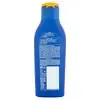
Nivea SUN Baby Suncream Lotion SPF50 Protect&Moisture
Works for
2 of 2 advertised claims delivered
Sun protectionSPF 50 · 4 UV filtersBroad spectrum
This product offers a good level of protection against both UVB and UVA rays.
This sunscreen uses organic (so-called "chemical") sunscreen filters. Organic, or "chemical" filters usually provide reliable sun protection and rarely leave a white cast. Sunscreens with organic filters can sting eyes.
This product can be considered "reef safe" because it does not contain the UV filters (oxybenzone and octinoxate) that can be harmful to coral reefs when present in the water in high concentrations.
Moisturizing9 ingredients credited for this claimStrong support
“SUN Baby Suncream Lotion SPF50 Protect&Moisture”
This product contains good ingredients to attract water to the upper layer of the skin. These ingredients are called "humectants": glycerin, glycine.
When humectants are on the surface of the skin, they “pull in” the moisture from the outside environment, or from within deeper layers of the skin. If the air is dry, humectants can speed up the moisture loss from the skin. This is why it is a good idea to use another product on top of this one to help "seal in" the moisture (look for ingredients like dimethicone, squalane, oils and butters).
The following ingredients in this product are especially good for supporting the skin barrier and helping with the hydration level: panthenol
Anti-agingNot advertised by the brand · No ingredient credited for this claimStrong support
This product can help prevent early signs of skin aging because it offers a good level of broad spectrum sun protection. Sun damage is the main cause of premature skin aging, and protecting your skin from the sun is the best anti-aging strategy.
Evens skin toneNot advertised by the brand · No ingredient credited for this claimStrong support
This product offers broad spectrum sun protection. It means that it can prevent hyperpigmentation and help keep the skin tone even (sun damage is the main factor causing age spots, darkening of post-acne marks and other discolorations).
Can it cause trouble?
Irritancy2 strong irritants: Parfum, AlcoholMedium risk
Comedogenic1 ingredient rated 2 or more on the 0–5 pore-clogging scale1 flagged

User reviews
Be the first — your take helps the next person decide.
Ingredients
Filter by role to see what each ingredient is doing.
Parfum~22–33%
- Irritation risk
- High
An aromatic blend of unspecified and possibly irritating ingredients
More about ParfumAlcohol~6.2–9.3%
- Irritation risk
- High
Can be drying and contribute to skin irritation. Used in formulars to dissolve other ingredients, create a thinner product consistency or for its antibacterial properties
More about AlcoholWater~4.5–6.7%
Octocrylene~3.9–5.8%
- Irritation risk
- Medium
A weak sunscreen that protects against the sun rays that cause sunburn (UVB) and is somewhat effective against the UVA rays. It is quite stable and can help stabilize other, more vulnerable, sunscreen ingredients like Avobenzone. It is an organic, or so called "chemical" sunscreen
More about OctocryleneButylene glycol~2.7–4.1%
- Irritation risk
- Low
Used to create a nice product texture and help delivery of other ingredients. Might be somewhat helpful in attracting water to the upper layer of the skin
More about Butylene glycolTitanium dioxide~2.4–3.6%
- Irritation risk
- Low
Works as a UV filter when used in high concentrations. It is photostable and is effective mostly against the UVB light, with some protection in the UVA range. In small concentrations, used for its ability to improve the color of cosmetic products. Is usually well tolerated by the skin
More about Titanium dioxideButylene glycol dicaprylate/dicaprate~1.5–2.3%
- Irritation risk
- Low
Helps soften the upper layer of the skin
More about Butylene glycol dicaprylate/dicaprateC12-15 alkyl benzoate~1.2–1.8%
- Irritation risk
- Low
Enhances the product texture and makes it more spreadable. Helps reduce water loss from the outer layer of skin. Extands the shelf life by preventing bacteria growth
More about C12-15 alkyl benzoateButyl methoxydibenzoylmethane~1.3–2%
- Irritation risk
- Medium
Avobenzone. An organic, or so-called "chemical" UV filter. Protects against both UVA and UVB rays. Needs to be combined with other filters in a formulation to be stable.
More about Butyl methoxydibenzoylmethaneBis-ethylhexyloxyphenol methoxyphenyl triazine~1.3–1.9%
- Irritation risk
- Medium
Tinosorb S. One of the most effective broad spectrum sunscreen ingredients. Protects from both UVA and UVB rays. It is photostable. Unfortunately, not approved by FDA (US) yet.
More about Bis-ethylhexyloxyphenol methoxyphenyl triazineGlycerin~0.55–1.25%
- Irritation risk
- Low
One of the best moisturizing ingredients. Naturally present in skin. It attracts water to the upper layer of the skin working as a humectant
More about GlycerinDicaprylyl carbonate~0.5–1.15%
- Irritation risk
- Low
Helps products spread more easily and works as an emollient to soften skin
More about Dicaprylyl carbonateGlyceryl stearate citrate~0.45–1.1%
- Irritation risk
- Low
Helps oil and water mix together while softening the upper layer of the skin
More about Glyceryl stearate citrateGlycine~0.35–0.85%
- Irritation risk
- Low
Helps to attract water to the upper layer of the skin and can help restore the skin barrier function
More about GlycinePanthenol~0.35–0.8%
- Irritation risk
- Low
Helps attract water to the upper layer of the skin and can help improve skin barrier function
More about PanthenolHydrogenated coco-glycerides~0.4–0.9%
- Irritation risk
- Medium
Helps oil and water mix together while creating a nice finish on the skin
More about Hydrogenated coco-glyceridesMyristyl myristate~0.3–0.75%
- Irritation risk
- Medium
- Comedogenicity
- 3/5
An emollient. Is not recommended for acne-prone skin as it can be comedogenic
More about Myristyl myristateTocopheryl acetate~0.15–0.65%
- Irritation risk
- Medium
A more stable but less bio-available form of vitamin E compared to Tocopherol. Might help moisturize and protect the skin from free radicals, but mostly used in low concentrations to stabilize other ingredients.
More about Tocopheryl acetateStearyl alcohol~0.2–0.75%
- Irritation risk
- Low
An emollient that helps soften the skin
More about Stearyl alcoholXanthan gum~0.15–0.5%
- Irritation risk
- Low
Used to create a thicker product consistency
More about Xanthan gumVp/hexadecene copolymer~0.2–0.75%
- Irritation risk
- Low
Creates a nice product texture and can support water-resistance of sunscreens
More about Vp/hexadecene copolymerSodium acrylates/c10-30 alkyl acrylate crosspolymer~0.2–0.7%
- Irritation risk
- Medium
Helps create a nice product texture. It can be an allergen. It can cause skin irritation when acrylate monomer residue has not been removed during the ingredient manufacturing process. Most reputable cosmetic manufacturers used the purified version of this ingredient that is not irritating
More about Sodium acrylates/c10-30 alkyl acrylate crosspolymerTrimethoxycaprylylsilane~0.1–0.35%
- Irritation risk
- Low
Citric acid~0.1–0.3%
- Irritation risk
- Medium
Can work as an exfoliant but is typically used to adjust the product pH
More about Citric acidSodium citrate~0.1–0.35%
- Irritation risk
- Medium
Helps to control the skin's pH level. Maintains the skin's natural film of amino-lactic acids and oils. Helps to preserve products
More about Sodium citrateMagnesium sulfate~0.1–0.35%
Zinc sulfate~0.05–0.15%
Ethylhexylglycerin~0.05–0.2%
Trisodium edta~0.05–0.2%
Phenoxyethanol~0.05–0.15%
- Irritation risk
- Low
A preservative. It helps prevent bacterial growth in cosmetic products
More about PhenoxyethanolMethylparaben~0.01–0.1%
Propylparaben~0.01–0.05%
Ingredient list view
Parfum, Alcohol, Water, Octocrylene, Butylene glycol, Titanium dioxide, Butylene glycol dicaprylate/dicaprate, C12-15 alkyl benzoate, Butyl methoxydibenzoylmethane, Bis-ethylhexyloxyphenol methoxyphenyl triazine, Glycerin, Dicaprylyl carbonate, Glyceryl stearate citrate, Glycine, Panthenol, Hydrogenated coco-glycerides, Myristyl myristate, Tocopheryl acetate, Stearyl alcohol, Xanthan gum, Vp/hexadecene copolymer, Sodium acrylates/c10-30 alkyl acrylate crosspolymer, Trimethoxycaprylylsilane, Citric acid, Sodium citrate, Magnesium sulfate, Zinc sulfate, Ethylhexylglycerin, Trisodium edta, Phenoxyethanol, Methylparaben, Propylparaben
Compare prices
Retailers ranked by price — lowest first.
.png)
Worth comparing, line by line.
Match % combines shared ingredients, the first five ingredients, shared actives and hero ingredients, irritancy (lower counts in the alternative's favour), texture and body area. Only products in the same routine step are compared.
| NiveaSUN Baby Suncream Lotion SPF50 Protect&MoistureYOUR PRODUCT | Childs FarmChildren's SPF 50+ Sun Lotion, Water Resistant | By Sainsbury'sSun Protect Baby Sensitive Sun Lotion SPF50+ | TESCOSoleil Baby Sun Lotion Spf50+ | |
|---|---|---|---|---|
| Match | — | 61% | 59% | 59% |
| Price | $7.92 | $13.22+$5.30 | $6.61−$1.31 | $3.17−$4.75 |
| Shared key ingredients | — | 5 of 8 | 6 of 8 | 6 of 8 |
| Key difference | — | Uvinul A Plus | Uvinul A Plus | Uvinul A Plus |
| Irritancy | Medium | Low | Medium | Medium |
| SPF | SPF 50 | SPF 50 | SPF 50 | SPF 50 |
| Drying alcohol | Contains drying alcohol | Contains drying alcohol | Contains drying alcohol | Contains drying alcohol |
| View product | Shop | Shop | Shop |

Product summary
The ingredient list suggests that "Nivea - SUN Baby Suncream Lotion SPF50 Protect&Moisture" can provide reliable sun protection. It can protect from both UVA and UVB rays. This is great news because not all sunscreens with SPF ratings give UVA protection. (UVA rays do not cause sunburn, but still damage our skin and lead to early aging).
This moisturizer should also be hydrating enough to use without an additional moisturizer during the day. This product prevents early signs of aging by protecting against sun damage (all broad spectrum sunscreens do that).
Sunscreen filters
This is a "mixed" sunscreen in the sense that it uses both mineral and organic (so-called "chemical") sun filters. Here are the organic filters this product uses: tinosorb s, avobenzone and octocrylene. As for the mineral filters, this sunscreen uses titanium dioxide.
Irritation risk
There are some common irritants in this product, including ingredients that do not have benefits for the skin. We assess the overall irritancy of this moisturizer to be medium. For a detailed overview of all potential irritants: click here
You can see the detailed formula review with the breakdown of all actives in the product and the full ingredient list with estimated concentrations in the tables below.
Price
The product retails for 5.99£ in the United Kingdom.
For a detailed price comparison: click here.
Sources cited in this review
Every concentration estimate and effectiveness label is anchored to one of these 8 studies and safety reviews.
- 1
- 2
- 3Functional glycine receptor in cultured human keratinocytesonlinelibrary.wiley.com
- 4Skin moisturizing effects of panthenol-based formulationspdfs.semanticscholar.org
- 5
- 6Safety Assessment of Magnesium Sulfate as Used in Cosmeticsncbi.nlm.nih.gov

Affiliate links · As an Amazon Associate, WIMJ earns from qualifying purchases.