
Works for:
based on ingredients and %- Moisturizing
Doesn't work for:
based on ingredients and %- Sun protection
Can it cause trouble?
- Irritation risk: medium
- Comedogenic risk ingredients: 2
Key actives


Product Summary
"Nivea Men - Sensitive Face Lotion with SPF 15" offers broad spectrum protection. It means that it protects from both UVA and UVB rays (you can remember UVB as "burning" sunlight - they cause sunburn. You can remember UVA rays as "aging" - they do not lead to sunburn, but they cause photodamage and contribute to early signs of skin aging and hyperpigmentation). On the negative side, the SPF of this sunscreen is not high enough. We recommend to use a sunscreen with at least SPF 30 daily.
It should also be hydrating enough to use without an additional moisturizer during the day.
Sunscreen filters
This is a so-called "chemical" sunscreen. It means that it uses organic UV filters. They typically offer good sun protection and rarely leave a white cast, but they can be irritating for some people with sensitive skin. The UV filters in this sunscreen are: avobenzone 30.00% (declared), octisalate 47.00% (declared) and octocrylene 84.00% (declared).
Irritation risk
We assess the overall irritancy of this product to be high. For a detailed overview of all potential irritants: click here
You can see the detailed formula review with the breakdown of all actives in the product and the full ingredient list with estimated concentrations in the tables below.
Price
The product retails for 9.19CA$ in Canada and from 6.29$ up to 18.87$ in the United States.
For a detailed price comparison: click here.
Moisturizing
What does the product description say?
This men’s face lotion moisturizes intensively and soothes the skin.
Source: Walgreens
This product contains good ingredients to attract water to the upper layer of the skin. These ingredients are called "humectants": glycerin.
When humectants are on the surface of the skin, they “pull in” the moisture from the outside environment, or from within deeper layers of the skin. If the air is dry, humectants can speed up the moisture loss from the skin. This is why it is a good idea to use another product on top of this one to help "seal in" the moisture (look for ingredients like dimethicone, squalane, oils and butters).
The following ingredients in this product are especially good for supporting the skin barrier and helping with the hydration level: panthenol
One of the best moisturizing ingredients. Naturally present in skin. It attracts water to the upper layer of the skin working as a humectant
Helps attract water to the upper layer of the skin and can help improve skin barrier function
A non-drying alcohol. Works as an emollient. Helps water and oil mix together and creates a nice product texture
Helps oil and water mix together while softening the upper layer of the skin
Helps soften the upper layer of the skin and create a thicker product consistency
A good mix of fatty acids that forms a protective layer on the skin. Improves the shelf life of products. Derived from coconut and glycerin
Sun protection
What does the product description say?
Broad Spectrum SPF 15 helps protect skin against harmful UVA & UVB sun damage helping to prevent sunburn and decreases the risk of skin cancer and early skin aging.
Source: Walgreens
This product offers broad spectrum sun protection, but it is weak. We recommend to use a broad spectrum sunscreen with at least SPF 30.
This product can be considered "reef safe" because it does not contain the UV filters (oxybenzone and octinoxate) that can be harmful to coral reefs when present in the water in high concentrations.
Avobenzone. An organic, or so-called "chemical" UV filter. Protects against both UVA and UVB rays. Needs to be combined with other filters in a formulation to be stable.
A weak sunscreen that protects against the sun rays that cause sunburn (UVB) and is somewhat effective against the UVA rays. It is quite stable and can help stabilize other, more vulnerable, sunscreen ingredients like Avobenzone. It is an organic, or so called "chemical" sunscreen
Octisalate. A UV filter. It offers some protection against the sun rays that cause sunburn (UVB), but does not protect against the most aging sun rays (UVA). It loses its effectiveness quickly when exposed to sunlight. It is an organic, or so called "chemical" sunscreen
How honest is this product?
| Promise | Can it deliver? |
|---|---|
| Sun protection | |
| Moisturizing |
Total Promises Fulfilled score: 75/100.
We receive a small commission for purchases made through these links at no cost for you. Thank you for your support! Learn more
Potential irritants
Comedogenic ingredients
User reviews (0)
Averages from community submissions.
No reviews yet for this product.
Be the first to share your experience!
Tried this product?
Help capture what the ingredient list can't—texture, finish, pilling, scent, and more. Answer what you can, skip the rest.
Takes ~30 seconds.
Reviews are shown in aggregate. No personal details.
| Product | Similarity | Price | Irritancy |
|---|---|---|---|
 Nivea Sensitive Face Lotion with SPF 15 | Current | $6.29 | |
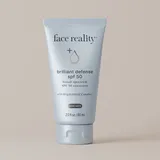 Face Reality Skincare Brilliant Defense SPF 50 | 70% | $42.00 | |
 Olay Complete+ Moisturizer with SPF 40 Sensitive | 70% | $13.96 | |
 La Roche-Posay Anthelios Melt-In Milk Sunscreen for Face & Body SPF 100 | 69% | $21.99 | |
 grüum skyda Daily Defence Face Lotion SPF50 | 68% | ≈ $11.09 | |
 Altruist Sunscreen Fluid SPF50 | 67% | ≈ $14.43 |
Key Actives
Helps attract water to the upper layer of the skin and can help improve skin barrier function
Avobenzone. An organic, or so-called "chemical" UV filter. Protects against both UVA and UVB rays. Needs to be combined with other filters in a formulation to be stable.
A weak sunscreen that protects against the sun rays that cause sunburn (UVB) and is somewhat effective against the UVA rays. It is quite stable and can help stabilize other, more vulnerable, sunscreen ingredients like Avobenzone. It is an organic, or so called "chemical" sunscreen
One of the best moisturizing ingredients. Naturally present in skin. It attracts water to the upper layer of the skin working as a humectant
A good mix of fatty acids that forms a protective layer on the skin. Improves the shelf life of products. Derived from coconut and glycerin
Potential irritants
Plant extract that can have healing and anti-inflammatory properties. It is a potential allergen and can be irritating
An aromatic blend of unspecified and possibly irritating ingredients
Avobenzone. An organic, or so-called "chemical" UV filter. Protects against both UVA and UVB rays. Needs to be combined with other filters in a formulation to be stable.
A weak sunscreen that protects against the sun rays that cause sunburn (UVB) and is somewhat effective against the UVA rays. It is quite stable and can help stabilize other, more vulnerable, sunscreen ingredients like Avobenzone. It is an organic, or so called "chemical" sunscreen
Helps soften the upper layer of the skin and create a thicker product consistency
A more stable but less bio-available form of vitamin E compared to Tocopherol. Might help moisturize and protect the skin from free radicals, but mostly used in low concentrations to stabilize other ingredients.
A good mix of fatty acids that forms a protective layer on the skin. Improves the shelf life of products. Derived from coconut and glycerin
Maintains the texture of skincare products. Allows the product to spread evenly. Helps oil and water mix together
Comedogenic ingredients
Helps soften the upper layer of the skin and create a thicker product consistency
A non-drying alcohol. Works as an emollient. Helps water and oil mix together and creates a nice product texture
All ingredients
Avobenzone. An organic, or so-called "chemical" UV filter. Protects against both UVA and UVB rays. Needs to be combined with other filters in a formulation to be stable.
Octisalate. A UV filter. It offers some protection against the sun rays that cause sunburn (UVB), but does not protect against the most aging sun rays (UVA). It loses its effectiveness quickly when exposed to sunlight. It is an organic, or so called "chemical" sunscreen
A weak sunscreen that protects against the sun rays that cause sunburn (UVB) and is somewhat effective against the UVA rays. It is quite stable and can help stabilize other, more vulnerable, sunscreen ingredients like Avobenzone. It is an organic, or so called "chemical" sunscreen
Helps soften the upper layer of the skin and create a thicker product consistency
One of the best moisturizing ingredients. Naturally present in skin. It attracts water to the upper layer of the skin working as a humectant
A non-drying alcohol. Works as an emollient. Helps water and oil mix together and creates a nice product texture
Helps oil and water mix together while softening the upper layer of the skin
A more stable but less bio-available form of vitamin E compared to Tocopherol. Might help moisturize and protect the skin from free radicals, but mostly used in low concentrations to stabilize other ingredients.
Helps attract water to the upper layer of the skin and can help improve skin barrier function
Plant extract that can have healing and anti-inflammatory properties. It is a potential allergen and can be irritating
Helps create a thicker or gel-like product texture. It is not a surfactant but can be used in gentle cleansing formulations
Used to stabilize the product formulation and can help absorb oil
A good mix of fatty acids that forms a protective layer on the skin. Improves the shelf life of products. Derived from coconut and glycerin
Maintains the texture of skincare products. Allows the product to spread evenly. Helps oil and water mix together
A preservative. It helps prevent bacterial growth in cosmetic products
An aromatic blend of unspecified and possibly irritating ingredients
Ingredient list view
Butyl methoxydibenzoylmethane, Ethylhexyl salicylate, Octocrylene, Water, Isopropyl palmitate, Glycerin, Tapioca starch, Cetearyl alcohol, Glyceryl stearate citrate, Tocopheryl acetate, Panthenol, Chamomilla recutita flower extract, Hamamelis virginiana bark/leaf extract, 1,2-hexanediol, Carbomer, Ethylhexylglycerin, Maltodextrin, Caprylic/capric triglyceride, Acrylates/c10-30 alkyl acrylate crosspolymer, Sodium hydroxide, Trisodium edta, Phenoxyethanol, Piroctone olamine, Parfum
- Final Report on the Safety Assessment of Isopropyl Isostearate
- Glycerol and the skin: holistic approach to its origin and functions
- Skin moisturizing effects of panthenol-based formulations
- Safety Assessment of Panthenol, Pantothenic Acid, and Derivatives as Used in Cosmetics
- The influence of alkane chain length on the skin irritation potential of 1,2-alkanediols
- Final report on the safety assessment of EDTA, calcium disodium EDTA, diammonium EDTA, dipotassium EDTA, disodium EDTA, TEA-EDTA, tetrasodium EDTA, tripotassium EDTA, trisodium EDTA, HEDTA, and trisodium HEDTA