Works for
CleansingDecyl glucoside, Xanthan gumCleanses gently
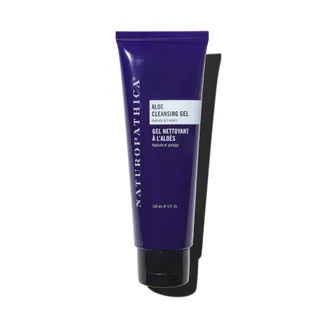
“Aloe Cleansing Gel”
This product works by removing dirt and oil from the surface of the skin. It uses a combination of mild cleansing agents (decyl glucoside, xanthan gum) and should be able to cleanse the skin gently. Still keep in mind that any cleansing can disrupt the skin barrier, and most people do not need to cleanse their skin more than once per day.
Even though this formulation is mild, the following cleansing agents could trigger an irritation or allergy for some people: decyl glucoside
ExfoliationNot advertised by the brand · GluconolactoneWorks well
This product can help exfoliate the skin. In other words, it helps break down the bonds between dead cells on the surface of the skin and speed up the skin turnover. Skin often appears softer and brighter after exfoliation, but overdoing it can result in disrupted skin barrier. The following ingredient is doing the exfoliating job in this product: gluconolactone.
Can it cause trouble?
Irritancy5 strong irritants: Lavandula angustifolia oil, Lavandula hybrida oil + 3 more — patch-test recommendedHigh risk
Comedogenic1 ingredient rated 2 or more on the 0–5 pore-clogging scale1 flagged


User reviews
Be the first — your take helps the next person decide.
Ingredients
Filter by role to see what each ingredient is doing.
Aloe barbadensis leaf juice~23–34%
- Irritation risk
- Medium
Traditionally used to treat sunburns, dermatitis and inflammation, but evidence for its effectiveness is lacking. The extract can contain humectants that help attract water into the skin
More about Aloe barbadensis leaf juiceWater~12–18%
Glycerin~4.7–7%
- Irritation risk
- Low
One of the best moisturizing ingredients. Naturally present in skin. It attracts water to the upper layer of the skin working as a humectant
More about GlycerinDecyl glucoside~4–6%
- Irritation risk
- High
Helps oil and water mix together. Can be irritating
More about Decyl glucosidePropanediol~2.5–3.7%
- Irritation risk
- Low
Acts as a solvent for other ingredients. Speeds up the absorption of other ingredients into the skin
More about PropanediolLavandula angustifolia oil~1.7–2.6%
- Irritation risk
- High
An essential oil. Potential allergen and can be irritating. It has some anti-bacterial properties
More about Lavandula angustifolia oilLavandula hybrida oil~1.4–2.1%
- Irritation risk
- High
Plant extract that can be irritating and is a known allergen
More about Lavandula hybrida oilGluconolactone~1.2–1.8%
- Irritation risk
- Medium
A polyhydroxy acid (PHA) that helps shed the dead cells from the skin surface revealing smoother skin. Is believed to be genter than AHAs. It helps attract water to the upper layer of the skin and can stimulate production of skin's own hyaluronic acid resulting in improved hydration levels. It has been shown to be helpful against acne and clogged pores if used consistently (e.g over a period of 12 weeks) in high enough concentration. It can help reduce fine lines and wrinkles and improve skin tone with long-term application. Can help neutralize free radicals
More about GluconolactoneXanthan gum~1–1.5%
- Irritation risk
- Low
Used to create a thicker product consistency
More about Xanthan gumAlgin~0.8–1.2%
- Irritation risk
- Low
- Comedogenicity
- 3/5
Used to thicken product formulation. Can help attract water to the upper layer of the skin
More about AlginSodium benzoate~0.25–0.5%
Caprylic/capric triglyceride~0.45–1.1%
- Irritation risk
- Medium
A good mix of fatty acids that forms a protective layer on the skin. Improves the shelf life of products. Derived from coconut and glycerin
More about Caprylic/capric triglyceridePanthenol~0.15–0.65%
- Irritation risk
- Low
Helps attract water to the upper layer of the skin and can help improve skin barrier function
More about PanthenolEthylhexylglycerin~0.15–0.55%
Cananga odorata flower oil~0.05–0.25%
Rosa damascena flower oil~0.05–0.3%
- Irritation risk
- High
Used as a fragrance. Can be irritating
More about Rosa damascena flower oilRosa centifolia flower extract~0.05–0.25%
- Irritation risk
- High
Contains essential oil. Can be irritating
More about Rosa centifolia flower extractIngredient list view
Aloe barbadensis leaf juice, Water, Glycerin, Decyl glucoside, Propanediol, Lavandula angustifolia oil, Lavandula hybrida oil, Gluconolactone, Xanthan gum, Algin, Sodium benzoate, Caprylic/capric triglyceride, Panthenol, Ethylhexylglycerin, Cananga odorata flower oil, Rosa damascena flower oil, Rosa centifolia flower extract
Compare prices
Retailers ranked by price — lowest first.

Worth comparing, line by line.
Match % combines shared ingredients, the first five ingredients, shared actives and hero ingredients, irritancy (lower counts in the alternative's favour), texture and body area. Only products in the same routine step are compared.
| NaturopathicaAloe Cleansing GelYOUR PRODUCT | CoolaGlowing Greens Detoxifying Facial Cleansing Gel | FacetheoryHydraCleanse Rebalancing Gel Cleanser | Gentle Daily Face Wash - facetheory.com | Estelle and ThildEstelle Thild BioCleanse Multi Action Cleansing Gel | |
|---|---|---|---|---|
| Match | — | 63% | 62% | 60% |
| Price | $48.00 | $28.00−$20.00 | $16.00−$32.00 | — |
| Shared key ingredients | — | 3 of 6 | 3 of 6 | 3 of 6 |
| Key difference | — | Anhydroxylitol | Lactic Acid | Sambucus Nigra Flower Extract |
| Irritancy | High | Medium | Medium | Medium |
| Drying alcohol | — | — | — | — |
| View product | Shop | Shop | Shop |


More alternatives: Spotles SKN Jelly CleanserLuzern Laboratories Luzern Pure Cleansing Gelee
Sources cited in this review
Every concentration estimate and effectiveness label is anchored to one of these 16 studies and safety reviews.
- 1
- 2
- 3
- 4
- 5
- 6

Affiliate links · As an Amazon Associate, WIMJ earns from qualifying purchases.