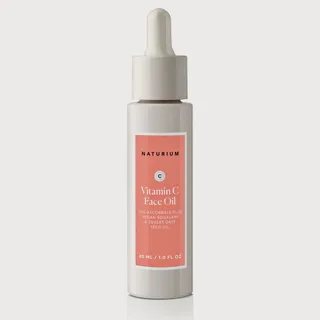
Naturium Vitamin C Face Oil

Naturium Vitamin C Face Oil

Efficacy0/100IrritancyMedium

Works for

Evens skin tone
Tetrahexyldecyl ascorbate ~2.6–3.9%, below the ~4% it needs
Under-dosed
What the product description says
“0 Fl OZ Our luxurious face oil is formulated with THD ascorbate, a highly stable, oil soluble form of vitamin C that helps brighten and even skin tone, resulting in a glowing complexion.”
Source: Naturium

Effective ingredients missing or their concentration is too low

Tetrahexyldecyl ascorbateUnder-dosedBeing a lipid soluble form of vitamin C, it is more stable than ascorbic acid, but still degrades quickly and needs to be stabilized in a formulation with another ingredient. It is claimed to penetrate skin better than pure vitamin C and have the the similar benefits, but solid studies of its effectiveness are lacking. Is likely to require a higher concentration in a product than pure vitamin C to be effective. It might be able to help reduce pore clogging.~2.6–3.9%
Anti-oxidation
Tetrahexyldecyl ascorbate ~2.6–3.9%, below the ~4% it needs + 1 more
Under-dosed

Effective ingredients missing or their concentration is too low.

Limnanthes alba seed oilEffect: LowThis oil's cmposition is closest to rapeseed oil. It is a very stable oil and serves as an emoillient~1.9–2.8%
Tocopheryl acetateEffect: Low, below effective doseA more stable but less bio-available form of vitamin E compared to Tocopherol. Might help moisturize and protect the skin from free radicals, but mostly used in low concentrations to stabilize other ingredients.~0.5–1.2%
Rosmarinus officinalis leaf extractEffect: Low, below effective doseCan be helpful in reducing inflammation in skin, including inflamed acne. It can be irritating~0.15–0.55%
Tetrahexyldecyl ascorbateUnder-dosedBeing a lipid soluble form of vitamin C, it is more stable than ascorbic acid, but still degrades quickly and needs to be stabilized in a formulation with another ingredient. It is claimed to penetrate skin better than pure vitamin C and have the the similar benefits, but solid studies of its effectiveness are lacking. Is likely to require a higher concentration in a product than pure vitamin C to be effective. It might be able to help reduce pore clogging.~2.6–3.9%
TocopherolUnder-dosedPure form of vitamin E. Can help moisturise and protect the skin from free radicals. Often used to help stabilise other ingredients or the formula itself~0.1–0.45%
Moisturizing
Side benefit · Caprylic/capric triglyceride, Helianthus annuus seed oil + 7 more
Works

This product can help soften the skin and reduce its moisture loss with emollients and occlusives: caprylic/capric triglyceride, helianthus annuus seed oil.

Keep in mind that this product does not contain effective ingredients to attract water to the upper layer of the skin. This is why an additional product with humectants like glycerin or hyaluronic acid can be helpful (apply it before this product for the best results).

Caprylic/capric triglycerideKey active· Emollient, OcclusiveEffect: HighA good mix of fatty acids that forms a protective layer on the skin. Improves the shelf life of products. Derived from coconut and glycerin~23–35%
Helianthus annuus seed oilKey active· Emollient, OcclusiveEffect: HighA great emollient due to its high linoleic acid content. One of the most effective plant oils in helping skin hydration and repairing skin barrier function~9–13.5%
Heptyl undecylenateKey active· Emollient, OcclusiveEffect: MediumHelps soften the upper layer of the skin, reduce water loss from the skin surface over time and create a nice product finish~5.6–8.4%
SqualaneKey active· Emollient, OcclusiveEffect: HighAn oil naturally present in skin. Works as an emollient to soften the skin and form a protective layer on its surface without a greasy feeling.~4.2–6.3%
Limnanthes alba seed oilKey active· EmollientEffect: HighThis oil's cmposition is closest to rapeseed oil. It is a very stable oil and serves as an emoillient~1.9–2.8%
Persea gratissima oilKey active· EmollientEffect: HighAn emollient that helps soften the skin and could be helpful in repairing its barrier function~1.5–2.3%
Helianthus annuus extractKey active· EmollientEffect: HighHelps soften the upper layer of the skin~0.45–1.1%
Balanites roxburghii seed oilEffect: LowAn emollient. Could be irritating~2–3%
TocopherolEffect: Low, below effective dosePure form of vitamin E. Can help moisturise and protect the skin from free radicals. Often used to help stabilise other ingredients or the formula itself~0.1–0.45%

Can it cause trouble?

Irritancy
2 strong irritants: Balanites roxburghii seed oil, Rosmarinus officinalis leaf extract
Medium risk
We flagged 7 ingredients with irritancy potential. Severity depends on your sensitivity threshold; the table lists the worst offenders first.
IngredientFunctionIrritationEst. amount
Balanites roxburghii seed oilAn emollient. Could be irritatingHigh~2–3%est.
Rosmarinus officinalis leaf extractCan be helpful in reducing inflammation in skin, including inflamed acne. It can be irritatingHigh~0.15–0.55%est.
Caprylic/capric triglycerideA good mix of fatty acids that forms a protective layer on the skin. Improves the shelf life of products. Derived from coconut and glycerinMedium~23–35%est.
Heptyl undecylenateHelps soften the upper layer of the skin, reduce water loss from the skin surface over time and create a nice product finishMedium~5.6–8.4%est.
Tetrahexyldecyl ascorbateBeing a lipid soluble form of vitamin C, it is more stable than ascorbic acid, but still degrades quickly and needs to be stabilized in a formulation with another ingredient. It is claimed to penetrate skin better than pure vitamin C and have the the similar benefits, but solid studies of its effectiveness are lacking. Is likely to require a higher concentration in a product than pure vitamin C to be effective. It might be able to help reduce pore clogging.Medium~2.6–3.9%est.
Persea gratissima oilAn emollient that helps soften the skin and could be helpful in repairing its barrier functionMedium~1.5–2.3%est.
Tocopheryl acetateA more stable but less bio-available form of vitamin E compared to Tocopherol. Might help moisturize and protect the skin from free radicals, but mostly used in low concentrations to stabilize other ingredients.Medium~0.5–1.2%est.
Comedogenic
Clean of flagged comedogenic ingredients
None flagged

User reviews

Would you recommend?
No community reviews yet.

Be the first — your take helps the next person decide.

Ingredients

Filter by role to see what each ingredient is doing.

Caprylic/capric triglyceride~23–35%
Key activeIrritant · medium
Irritation risk
Medium
Works for
Moisturizing

A good mix of fatty acids that forms a protective layer on the skin. Improves the shelf life of products. Derived from coconut and glycerin

More about Caprylic/capric triglyceride
Helianthus annuus seed oil~9–13.5%
Key active
Irritation risk
Low
Works for
Moisturizing

A great emollient due to its high linoleic acid content. One of the most effective plant oils in helping skin hydration and repairing skin barrier function

More about Helianthus annuus seed oil
Heptyl undecylenate~5.6–8.4%
Key activeIrritant · medium
Irritation risk
Medium
Works for
Moisturizing

Helps soften the upper layer of the skin, reduce water loss from the skin surface over time and create a nice product finish

More about Heptyl undecylenate
Squalane~4.2–6.3%
Key active
Irritation risk
Low
Works for
Moisturizing

An oil naturally present in skin. Works as an emollient to soften the skin and form a protective layer on its surface without a greasy feeling.

More about Squalane
Tetrahexyldecyl ascorbate~2.6–3.9%
Under-dosedIrritant · medium
Irritation risk
Medium
Works for
Evens skin toneAnti-oxidationAnti-aging

Being a lipid soluble form of vitamin C, it is more stable than ascorbic acid, but still degrades quickly and needs to be stabilized in a formulation with another ingredient. It is claimed to penetrate skin better than pure vitamin C and have the the similar benefits, but solid studies of its effectiveness are lacking. Is likely to require a higher concentration in a product than pure vitamin C to be effective. It might be able to help reduce pore clogging.

More about Tetrahexyldecyl ascorbate
Balanites roxburghii seed oil~2–3%
Irritant · high
Irritation risk
High
Works for
AntibacterialMoisturizing

An emollient. Could be irritating

More about Balanites roxburghii seed oil
Limnanthes alba seed oil~1.9–2.8%
Key active
Irritation risk
Low
Works for
MoisturizingAnti-agingAnti-oxidation

This oil's cmposition is closest to rapeseed oil. It is a very stable oil and serves as an emoillient

More about Limnanthes alba seed oil
Persea gratissima oil~1.5–2.3%
Key activeIrritant · medium
Irritation risk
Medium
Works for
Moisturizing

An emollient that helps soften the skin and could be helpful in repairing its barrier function

More about Persea gratissima oil
Tocopheryl acetate~0.5–1.2%
Irritant · medium
Irritation risk
Medium
Works for
Anti-oxidation

A more stable but less bio-available form of vitamin E compared to Tocopherol. Might help moisturize and protect the skin from free radicals, but mostly used in low concentrations to stabilize other ingredients.

More about Tocopheryl acetate
Oryza sativa bran extract~0.45–1.1%
Formula
Irritation risk
Low

Used to thicken the product consistency

More about Oryza sativa bran extract
Helianthus annuus extract~0.45–1.1%
Key active
Irritation risk
Low
Works for
Moisturizing

Helps soften the upper layer of the skin

More about Helianthus annuus extract
Rosmarinus officinalis leaf extract~0.15–0.55%
Irritant · high
Irritation risk
High
Works for
Anti-blemishAnti-oxidationAntibacterial

Can be helpful in reducing inflammation in skin, including inflamed acne. It can be irritating

More about Rosmarinus officinalis leaf extract
Tocopherol~0.1–0.45%
Under-dosed
Irritation risk
Low
Works for
Anti-oxidationAnti-inflammatoryAnti-agingMoisturizing

Pure form of vitamin E. Can help moisturise and protect the skin from free radicals. Often used to help stabilise other ingredients or the formula itself

More about Tocopherol
Ingredient list view

Caprylic/capric triglyceride, Helianthus annuus seed oil, Heptyl undecylenate, Squalane, Tetrahexyldecyl ascorbate, Balanites roxburghii seed oil, Limnanthes alba seed oil, Persea gratissima oil, Tocopheryl acetate, Oryza sativa bran extract, Helianthus annuus extract, Rosmarinus officinalis leaf extract, Tocopherol

Compare prices

Retailers ranked by price — lowest first.

Amazon USPrice as of 11/9 03:16 GMT
$19.88
Buy

Affiliate links · As an Amazon Associate, WIMJ earns from qualifying purchases.

Worth comparing, line by line.

Match % combines shared ingredients, the first five ingredients, shared actives and hero ingredients, irritancy (lower counts in the alternative's favour), texture and body area. Only products in the same routine step are compared.

Side-by-side comparison of this product against its closest alternatives
NaturiumVitamin C Face OilYOUR PRODUCTSKKN by KimOil DropsBloomeffectsRoyal Tulip Vitamin C Facial OilCirem SkincareMending Moon Moonglow Face Oil
Match—60%58%55%
Price$19.88—$85.00+$65.12—
Shared key ingredients—3 of 84 of 84 of 8
Key difference—Glycine Soja OilNiacinamidePrickly Pear Seed Oil
Irritancy Medium Low Medium Medium
Drying alcohol————
View product Shop Shop Shop

More alternatives: Dermadoctor Kakadu C High Potency Evening OilM-61 Vitablast C Face Oil

Cheaper alternatives? See how this stacks up against similar formulas.
We compare ingredient profiles across our catalog — pick the closest match for your budget.
Open dupe finder

Affiliate links · As an Amazon Associate, WIMJ earns from qualifying purchases.

As an Amazon Associate, WIMJ earns from qualifying purchases.