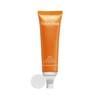
Natura Bissé C+C Vitamin Dry Oil Antioxidant Sun Protection
Works for
1 of 2 advertised claims delivered
Moisturizing5 ingredients credited for this claimGood support
“C+C Vitamin Dry Oil Antioxidant Sun Protection”
This product can help soften the skin and reduce its moisture loss with emollients and occlusives: helianthus annuus seed oil, cholesterol.
Keep in mind that this product does not contain effective ingredients to attract water to the upper layer of the skin. This is why an additional product with humectants like glycerin or hyaluronic acid can be helpful (apply it before this product for the best results).
Anti-aging1 ingredient credited for this claimWeak support
“Helping to fight against ultraviolet radiation, the C+C Vitamin Dry Oil Antioxidant Sun Protection prevents wrinkles whilst hydrating your skin.”
Effective ingredients missing or their concentration is too low.
Can it cause trouble?
Irritancy10 strong irritants: Alcohol denat., Benzophenone-3 + 8 more — patch-test recommendedHigh risk
ComedogenicClean of flagged comedogenic ingredientsNone flagged
User reviews
Be the first — your take helps the next person decide.
Ingredients
Filter by role to see what each ingredient is doing.
Alcohol denat.~24–35%
- Irritation risk
- High
Produces temporary toning effect. Can help dissolve other ingredients or preserve products
More about Alcohol denat.Diisopropyl sebacate~5.6–8.3%
- Irritation risk
- Low
Helps soften the upper layer of the skin without creatng a greasy finish
More about Diisopropyl sebacateHomosalate~4.6–6.9%
- Irritation risk
- Medium
A weak sunscreen that offers some protection against the sun rays that cause sunburn (UVB), but does not offer meaningful protection against protect against the most aging sun rays (UVA). It loses its effectiveness quickly when exposed to sunlight. It is an organic, or so called "chemical" sunscreen. When used in low concentrations, helps to stabilize the product formulation
More about HomosalateOctocrylene~3.9–5.9%
- Irritation risk
- Medium
A weak sunscreen that protects against the sun rays that cause sunburn (UVB) and is somewhat effective against the UVA rays. It is quite stable and can help stabilize other, more vulnerable, sunscreen ingredients like Avobenzone. It is an organic, or so called "chemical" sunscreen
More about OctocryleneBenzophenone-3~3.4–5%
- Irritation risk
- High
Same as oxybenzone. Protects in the UVB and short UVA range. In small concentrations, used to stabilize product formulation. Can be irritating. Is shown to be harmful to coral reefs - consider avoiding bathing in coral reef areas when wearing a product with this ingredient. It can penetrate the skin and get absorbed into bloodstream faster than other popular filters available in the US. The study that produced this finding did not address any potential health effects of the absorption
More about Benzophenone-3Ethylhexyl methoxycinnamate~2.5–3.8%
- Irritation risk
- High
Octinoxate. When used in higher concentrations, works as a sunscreen protecting the skin from UVB rays. When used in lower concentration, helps to preserve the product formulation. Is shown to be harmful to coral reefs - consider avoiding bathing in coral reef areas when wearing a product with this ingredient. It can be irritating
More about Ethylhexyl methoxycinnamateButyl methoxydibenzoylmethane~2–2.9%
- Irritation risk
- Medium
Avobenzone. An organic, or so-called "chemical" UV filter. Protects against both UVA and UVB rays. Needs to be combined with other filters in a formulation to be stable.
More about Butyl methoxydibenzoylmethaneBenzotriazolyl dodecyl p-cresol~1.2–1.8%
- Irritation risk
- Medium
Used to stabilize the product formulation protecting it from sun light
More about Benzotriazolyl dodecyl p-cresolTocopheryl acetate~1–1.5%
- Irritation risk
- Medium
A more stable but less bio-available form of vitamin E compared to Tocopherol. Might help moisturize and protect the skin from free radicals, but mostly used in low concentrations to stabilize other ingredients.
More about Tocopheryl acetateGlyceryl linoleate~0.9–1.35%
- Irritation risk
- Medium
Helps oil and water mix together
More about Glyceryl linoleateVitis vinifera seed oil~0.55–1.3%
- Irritation risk
- Medium
A great emollient that can also have anti-oxidant properties
More about Vitis vinifera seed oilBisabolol~0.4–0.9%
- Irritation risk
- Low
An active component of chamomile plant that historically has been used to calm down irritated skin. A recent study shows that bisabolol indeed can have some anti-inflammatory effect on skin, even though conclusive data is lacking. Bisabolol has a sweet floral scent and can be added to products for its aromatic properties
More about BisabololHelianthus annuus seed oil~0.4–0.95%
- Irritation risk
- Low
A great emollient due to its high linoleic acid content. One of the most effective plant oils in helping skin hydration and repairing skin barrier function
More about Helianthus annuus seed oilCitrus nobilis oil~0.3–0.75%
- Irritation risk
- High
Citrus aurantium dulcis oil~0.3–0.7%
- Irritation risk
- High
Used as a fragrance. It can be irritating and cause photosensitivity
More about Citrus aurantium dulcis oilGlyceryl linolenate~0.35–0.8%
- Irritation risk
- Low
Helps soften the upper layer of the skin
More about Glyceryl linolenateDaucus carota sativa seed oil~0.35–0.8%
- Irritation risk
- Low
A plant oil that might help neutralize free radicals and have an anti-bacterial effect
More about Daucus carota sativa seed oilBeta-carotene~0.15–0.65%
Cholesterol~0.2–0.75%
- Irritation risk
- Low
An emollient that is naturally found in skin
More about CholesterolAscorbyl palmitate~0.1–0.45%
- Irritation risk
- Medium
Being a lipid soluble form of vitamin C, it is more stable and can penetrate the skin better than L-Ascorbic acid. It is effective in protecting the skin from free radicals, as well as evening the skin tone, but is less effective in stimulating collagen production compared to L-Ascorbic acid.
More about Ascorbyl palmitateAcrylates/octylacrylamide copolymer~0.15–0.65%
- Irritation risk
- Low
Parfum~0.1–0.35%
- Irritation risk
- High
An aromatic blend of unspecified and possibly irritating ingredients
More about ParfumLimonene~0.1–0.35%
- Irritation risk
- High
A common frangrance that can easily irritate skin, especially if exposed to air, light or heat
More about LimoneneLinalool~0.1–0.3%
Amyl cinnamal~0.05–0.25%
- Irritation risk
- High
Geraniol~0.05–0.2%
Citral~0.05–0.2%
Ingredient list view
Alcohol denat., Diisopropyl sebacate, Homosalate, Octocrylene, Benzophenone-3, Ethylhexyl methoxycinnamate, Butyl methoxydibenzoylmethane, Benzotriazolyl dodecyl p-cresol, Tocopheryl acetate, Glyceryl linoleate, Vitis vinifera seed oil, Bisabolol, Helianthus annuus seed oil, Citrus nobilis oil, Citrus aurantium dulcis oil, Glyceryl linolenate, Daucus carota sativa seed oil, Beta-carotene, Unknown, Cholesterol, Ascorbyl palmitate, Acrylates/octylacrylamide copolymer, Parfum, Limonene, Linalool, Amyl cinnamal, Geraniol, Citral
Compare prices
Retailers ranked by price — lowest first.

Affiliate links · prices updated regularly
Sources cited in this review
Every concentration estimate and effectiveness label is anchored to one of these 14 studies and safety reviews.
- 1
- 2
- 3
- 4On Photostability of Oxybenzonecore.ac.uk
- 5
- 6

Affiliate links · As an Amazon Associate, WIMJ earns from qualifying purchases.