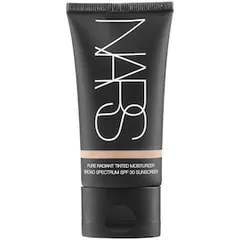
We do not recommend "NARS - Pure Radiant Tinted Moisturizer Broad Spectrum SPF 30" because it does not provide good UVA protection. UVA sun rays don't burn the skin, but they still lead to photoaging and hyperpigmentation.
Its formula is also hydrating, so you might not need an additional moistruizer during the day.
This sunscreen uses a mixture of both mineral and organic (so-called "chemical") UV filters. The organic filters in the product are: octinoxate. As for the mineral filters, this sunscreen uses titanium dioxide.
This moisturizer contains a bunch of common irritants, including ingredients that do not provide any known benefit for the skin. It might not be the best choice if your skin is sensitive. We assess the overall irritancy of this moisturizer to be high. For a detailed overview of all potential irritants: click here
You can see the detailed formula review with the breakdown of all actives in the product and the full ingredient list with estimated concentrations in the tables below.
The product retails from 40.79$ up to 70.94$ in the United States, for 93.94CA$ in Canada and from 32.51£ up to 47.00£ in the United Kingdom.
For a detailed price comparison: click here.
Pure Radiant Tinted Moisturizer Broad Spectrum SPF 30
Source: From product name
This product can help improve hydration of the skin with the two types of ingredients.
The first type is called “humectants”:
these ingredients help attract water.
When humectants are on the surface of the skin, they “pull in” the moisture from the outside environment, or from
within deeper layers of the skin. The following ingredients in this product do the job:
algae extract, cyclomethicone.
This product also contains ingredients called “occlusives”. They help reduce the speed with which our skin loses moisture to the outside environment. These ingredients also help soften the upper layer of the skin, so it feels less tight and nicer to the touch. The following ingredients in this product do the job: dimethicone, peg-10 dimethicone.
One of the best moisturizing ingredients. Naturally present in skin. It attracts water to the upper layer of the skin working as a humectant
A silicone that works to soften the upper layer of the skin and reduce its water loss
A silicone that improves product texture and helps dissolve other ingredients. Can form a non-greasy film on the skin to prevent moisture loss
A type of silicone that leaves a nice silky finish on the skin and can help soften its upper layer
Plant extract that helps the skin to attract water and make it more smooth for touch. Also shows promise of anti-aging properties, but research is not extensive yet
A silicone that helps to reduce water loss from the surface of the skin. Can temporarily "fill in" lines and wrinkles, absorb oil, and create a nice product finish
Helps soften the upper layer of the skin and create a nice product texture
Used to create a nice product texture and help delivery of other ingredients. Might be somewhat helpful in attracting water to the upper layer of the skin
Help improve the product's texture
Helps oil and water mix together and works as an emollient
Pure form of vitamin E. Can help moisturise and protect the skin from free radicals. Often used to help stabilise other ingredients or the formula itself
A lightweight tinted moisturizer that hydrates and smooths skin while brightening with vitamin C and protecting with SPF 30.
Source: Sephora
This product does not contain ingredients that are able to reduce fine lines and wrinkles or help with skin elasticity, but it can improve the look of the skin temporarily through moisturization. Well-moisturized skin might also be able to repair the sun damage better.
The biggest anti-aging effect in this product comes from sun protection. Sun damage is the main factor causing early signs of skin aging. We, however, do not recommend using this product as a sunscreen because the protection it offers is not strong enough).
Plant extract that helps the skin to attract water and make it more smooth for touch. Also shows promise of anti-aging properties, but research is not extensive yet
A vitamin C derivative that is more stable but less potent than pure form of vitamin C. Has a potential to boost collagen production, nutralise free radicals and reduce hyperpigmentation, but the required concentration is likely to be much higher than for the pure form of vitamin C, limiting the ingredient's effectiveness in products
Pure form of vitamin E. Can help moisturise and protect the skin from free radicals. Often used to help stabilise other ingredients or the formula itself
It helping to reduce theappearance of hyperpigmentation and dark spots in just four weeks and re-mineralize the skin for a softer, smoother, and brighter natural glow.
Source: Walmart
This product contains ingredients () that could help reduce hyperpigmentation (for example, post-acne marks or age spots) in theory, but there is not enough evidence that they actually work.
The biggest effect for evening out skin tone in this product comes from sun protection. Sun damage is the main factor causing age spots, darkening of post-acne marks and other discolorations. This is why sun protection is the best strategy for maintaining an even skin tone. We, however, do not recommend using this product as a sunscreen because the protection it offers is not strong enough).
A vitamin C derivative that is more stable but less potent than pure form of vitamin C. Has a potential to boost collagen production, nutralise free radicals and reduce hyperpigmentation, but the required concentration is likely to be much higher than for the pure form of vitamin C, limiting the ingredient's effectiveness in products
This product does not offer good protection against UVA rays.
Works as a UV filter when used in high concentrations. It is photostable and is effective mostly against the UVB light, with some protection in the UVA range. In small concentrations, used for its ability to improve the color of cosmetic products. Is usually well tolerated by the skin
Octinoxate. When used in higher concentrations, works as a sunscreen protecting the skin from UVB rays. When used in lower concentration, helps to preserve the product formulation. Is shown to be harmful to coral reefs - consider avoiding bathing in coral reef areas when wearing a product with this ingredient. It can be irritating
| Promise | Can it deliver? |
|---|---|
| Sun protection | |
| Anti-aging | |
| Evens skin tone |
Total Promises Fulfilled score: 60/100.
We receive a small commission for purchases made through these links at no cost for you. Thank you for your support! Learn more
Averages from community submissions.
How would you describe the finish?
How would you describe the texture?
How much white cast does it leave?
How much does it sting eyes?
How much does it pill under makeup?
How much does this product clog pores?
How would you describe the smell?
Help capture what the ingredient list can't—texture, finish, pilling, scent, and more. Answer what you can, skip the rest.
Takes ~30 seconds.
Reviews are shown in aggregate. No personal details.
| Product | Similarity | Price | Irritancy |
|---|---|---|---|
![]() NARS Pure Radiant Tinted Moisturizer Broad Spectrum SPF 30 | Current | $33.00 | |
![]() NARS Cosmetics NARS Pure Radiant Tinted Moisturiser SPF30/PA+++ | 50% | $34.00 |
A vitamin C derivative that is more stable but less potent than pure form of vitamin C. Has a potential to boost collagen production, nutralise free radicals and reduce hyperpigmentation, but the required concentration is likely to be much higher than for the pure form of vitamin C, limiting the ingredient's effectiveness in products
A silicone that helps to reduce water loss from the surface of the skin. Can temporarily "fill in" lines and wrinkles, absorb oil, and create a nice product finish
Plant extract that helps the skin to attract water and make it more smooth for touch. Also shows promise of anti-aging properties, but research is not extensive yet
A silicone that helps to reduce water loss from the surface of the skin. Can temporarily "fill in" lines and wrinkles, absorb oil, and create a nice product finish
Plant extract that helps the skin to attract water and make it more smooth for touch. Also shows promise of anti-aging properties, but research is not extensive yet
A silicone that helps to reduce water loss from the surface of the skin. Can temporarily "fill in" lines and wrinkles, absorb oil, and create a nice product finish
Plant extract that helps the skin to attract water and make it more smooth for touch. Also shows promise of anti-aging properties, but research is not extensive yet
A silicone that helps to reduce water loss from the surface of the skin. Can temporarily "fill in" lines and wrinkles, absorb oil, and create a nice product finish
Plant extract that helps the skin to attract water and make it more smooth for touch. Also shows promise of anti-aging properties, but research is not extensive yet
A silicone that helps to reduce water loss from the surface of the skin. Can temporarily "fill in" lines and wrinkles, absorb oil, and create a nice product finish
Plant extract that helps the skin to attract water and make it more smooth for touch. Also shows promise of anti-aging properties, but research is not extensive yet
A silicone that helps to reduce water loss from the surface of the skin. Can temporarily "fill in" lines and wrinkles, absorb oil, and create a nice product finish
Plant extract that helps the skin to attract water and make it more smooth for touch. Also shows promise of anti-aging properties, but research is not extensive yet
A silicone that helps to reduce water loss from the surface of the skin. Can temporarily "fill in" lines and wrinkles, absorb oil, and create a nice product finish
Plant extract that helps the skin to attract water and make it more smooth for touch. Also shows promise of anti-aging properties, but research is not extensive yet
A silicone that helps to reduce water loss from the surface of the skin. Can temporarily "fill in" lines and wrinkles, absorb oil, and create a nice product finish
Plant extract that helps the skin to attract water and make it more smooth for touch. Also shows promise of anti-aging properties, but research is not extensive yet
A silicone that helps to reduce water loss from the surface of the skin. Can temporarily "fill in" lines and wrinkles, absorb oil, and create a nice product finish
Plant extract that helps the skin to attract water and make it more smooth for touch. Also shows promise of anti-aging properties, but research is not extensive yet
A silicone that helps to reduce water loss from the surface of the skin. Can temporarily "fill in" lines and wrinkles, absorb oil, and create a nice product finish
Plant extract that helps the skin to attract water and make it more smooth for touch. Also shows promise of anti-aging properties, but research is not extensive yet
A silicone that helps to reduce water loss from the surface of the skin. Can temporarily "fill in" lines and wrinkles, absorb oil, and create a nice product finish
Plant extract that helps the skin to attract water and make it more smooth for touch. Also shows promise of anti-aging properties, but research is not extensive yet
A silicone that helps to reduce water loss from the surface of the skin. Can temporarily "fill in" lines and wrinkles, absorb oil, and create a nice product finish
Plant extract that helps the skin to attract water and make it more smooth for touch. Also shows promise of anti-aging properties, but research is not extensive yet
A silicone that helps to reduce water loss from the surface of the skin. Can temporarily "fill in" lines and wrinkles, absorb oil, and create a nice product finish
Plant extract that helps the skin to attract water and make it more smooth for touch. Also shows promise of anti-aging properties, but research is not extensive yet
A silicone that helps to reduce water loss from the surface of the skin. Can temporarily "fill in" lines and wrinkles, absorb oil, and create a nice product finish
Plant extract that helps the skin to attract water and make it more smooth for touch. Also shows promise of anti-aging properties, but research is not extensive yet
A silicone that helps to reduce water loss from the surface of the skin. Can temporarily "fill in" lines and wrinkles, absorb oil, and create a nice product finish
Plant extract that helps the skin to attract water and make it more smooth for touch. Also shows promise of anti-aging properties, but research is not extensive yet
A silicone that helps to reduce water loss from the surface of the skin. Can temporarily "fill in" lines and wrinkles, absorb oil, and create a nice product finish
Plant extract that helps the skin to attract water and make it more smooth for touch. Also shows promise of anti-aging properties, but research is not extensive yet
A silicone that helps to reduce water loss from the surface of the skin. Can temporarily "fill in" lines and wrinkles, absorb oil, and create a nice product finish
Plant extract that helps the skin to attract water and make it more smooth for touch. Also shows promise of anti-aging properties, but research is not extensive yet
A silicone that helps to reduce water loss from the surface of the skin. Can temporarily "fill in" lines and wrinkles, absorb oil, and create a nice product finish
Plant extract that helps the skin to attract water and make it more smooth for touch. Also shows promise of anti-aging properties, but research is not extensive yet
A silicone that helps to reduce water loss from the surface of the skin. Can temporarily "fill in" lines and wrinkles, absorb oil, and create a nice product finish
Plant extract that helps the skin to attract water and make it more smooth for touch. Also shows promise of anti-aging properties, but research is not extensive yet
A silicone that helps to reduce water loss from the surface of the skin. Can temporarily "fill in" lines and wrinkles, absorb oil, and create a nice product finish
Plant extract that helps the skin to attract water and make it more smooth for touch. Also shows promise of anti-aging properties, but research is not extensive yet
A silicone that helps to reduce water loss from the surface of the skin. Can temporarily "fill in" lines and wrinkles, absorb oil, and create a nice product finish
Plant extract that helps the skin to attract water and make it more smooth for touch. Also shows promise of anti-aging properties, but research is not extensive yet
A silicone that helps to reduce water loss from the surface of the skin. Can temporarily "fill in" lines and wrinkles, absorb oil, and create a nice product finish
Plant extract that helps the skin to attract water and make it more smooth for touch. Also shows promise of anti-aging properties, but research is not extensive yet
One of the best moisturizing ingredients. Naturally present in skin. It attracts water to the upper layer of the skin working as a humectant
A type of silicone that leaves a nice silky finish on the skin and can help soften its upper layer
A silicone that works to soften the upper layer of the skin and reduce its water loss
A silicone that improves product texture and helps dissolve other ingredients. Can form a non-greasy film on the skin to prevent moisture loss
One of the best moisturizing ingredients. Naturally present in skin. It attracts water to the upper layer of the skin working as a humectant
A type of silicone that leaves a nice silky finish on the skin and can help soften its upper layer
A silicone that works to soften the upper layer of the skin and reduce its water loss
A silicone that improves product texture and helps dissolve other ingredients. Can form a non-greasy film on the skin to prevent moisture loss
One of the best moisturizing ingredients. Naturally present in skin. It attracts water to the upper layer of the skin working as a humectant
A type of silicone that leaves a nice silky finish on the skin and can help soften its upper layer
A silicone that works to soften the upper layer of the skin and reduce its water loss
A silicone that improves product texture and helps dissolve other ingredients. Can form a non-greasy film on the skin to prevent moisture loss
One of the best moisturizing ingredients. Naturally present in skin. It attracts water to the upper layer of the skin working as a humectant
A type of silicone that leaves a nice silky finish on the skin and can help soften its upper layer
A silicone that works to soften the upper layer of the skin and reduce its water loss
A silicone that improves product texture and helps dissolve other ingredients. Can form a non-greasy film on the skin to prevent moisture loss
One of the best moisturizing ingredients. Naturally present in skin. It attracts water to the upper layer of the skin working as a humectant
A type of silicone that leaves a nice silky finish on the skin and can help soften its upper layer
A silicone that works to soften the upper layer of the skin and reduce its water loss
A silicone that improves product texture and helps dissolve other ingredients. Can form a non-greasy film on the skin to prevent moisture loss
One of the best moisturizing ingredients. Naturally present in skin. It attracts water to the upper layer of the skin working as a humectant
A type of silicone that leaves a nice silky finish on the skin and can help soften its upper layer
A silicone that works to soften the upper layer of the skin and reduce its water loss
A silicone that improves product texture and helps dissolve other ingredients. Can form a non-greasy film on the skin to prevent moisture loss
One of the best moisturizing ingredients. Naturally present in skin. It attracts water to the upper layer of the skin working as a humectant
A type of silicone that leaves a nice silky finish on the skin and can help soften its upper layer
A silicone that works to soften the upper layer of the skin and reduce its water loss
A silicone that improves product texture and helps dissolve other ingredients. Can form a non-greasy film on the skin to prevent moisture loss
One of the best moisturizing ingredients. Naturally present in skin. It attracts water to the upper layer of the skin working as a humectant
A type of silicone that leaves a nice silky finish on the skin and can help soften its upper layer
A silicone that works to soften the upper layer of the skin and reduce its water loss
A silicone that improves product texture and helps dissolve other ingredients. Can form a non-greasy film on the skin to prevent moisture loss
One of the best moisturizing ingredients. Naturally present in skin. It attracts water to the upper layer of the skin working as a humectant
A type of silicone that leaves a nice silky finish on the skin and can help soften its upper layer
A silicone that works to soften the upper layer of the skin and reduce its water loss
A silicone that improves product texture and helps dissolve other ingredients. Can form a non-greasy film on the skin to prevent moisture loss
One of the best moisturizing ingredients. Naturally present in skin. It attracts water to the upper layer of the skin working as a humectant
A type of silicone that leaves a nice silky finish on the skin and can help soften its upper layer
A silicone that works to soften the upper layer of the skin and reduce its water loss
A silicone that improves product texture and helps dissolve other ingredients. Can form a non-greasy film on the skin to prevent moisture loss
One of the best moisturizing ingredients. Naturally present in skin. It attracts water to the upper layer of the skin working as a humectant
A type of silicone that leaves a nice silky finish on the skin and can help soften its upper layer
A silicone that works to soften the upper layer of the skin and reduce its water loss
A silicone that improves product texture and helps dissolve other ingredients. Can form a non-greasy film on the skin to prevent moisture loss
One of the best moisturizing ingredients. Naturally present in skin. It attracts water to the upper layer of the skin working as a humectant
A type of silicone that leaves a nice silky finish on the skin and can help soften its upper layer
A silicone that works to soften the upper layer of the skin and reduce its water loss
A silicone that improves product texture and helps dissolve other ingredients. Can form a non-greasy film on the skin to prevent moisture loss
One of the best moisturizing ingredients. Naturally present in skin. It attracts water to the upper layer of the skin working as a humectant
A type of silicone that leaves a nice silky finish on the skin and can help soften its upper layer
A silicone that works to soften the upper layer of the skin and reduce its water loss
A silicone that improves product texture and helps dissolve other ingredients. Can form a non-greasy film on the skin to prevent moisture loss
One of the best moisturizing ingredients. Naturally present in skin. It attracts water to the upper layer of the skin working as a humectant
A type of silicone that leaves a nice silky finish on the skin and can help soften its upper layer
A silicone that works to soften the upper layer of the skin and reduce its water loss
A silicone that improves product texture and helps dissolve other ingredients. Can form a non-greasy film on the skin to prevent moisture loss
One of the best moisturizing ingredients. Naturally present in skin. It attracts water to the upper layer of the skin working as a humectant
A type of silicone that leaves a nice silky finish on the skin and can help soften its upper layer
A silicone that works to soften the upper layer of the skin and reduce its water loss
A silicone that improves product texture and helps dissolve other ingredients. Can form a non-greasy film on the skin to prevent moisture loss
One of the best moisturizing ingredients. Naturally present in skin. It attracts water to the upper layer of the skin working as a humectant
A type of silicone that leaves a nice silky finish on the skin and can help soften its upper layer
A silicone that works to soften the upper layer of the skin and reduce its water loss
A silicone that improves product texture and helps dissolve other ingredients. Can form a non-greasy film on the skin to prevent moisture loss
One of the best moisturizing ingredients. Naturally present in skin. It attracts water to the upper layer of the skin working as a humectant
A type of silicone that leaves a nice silky finish on the skin and can help soften its upper layer
A silicone that works to soften the upper layer of the skin and reduce its water loss
A silicone that improves product texture and helps dissolve other ingredients. Can form a non-greasy film on the skin to prevent moisture loss
One of the best moisturizing ingredients. Naturally present in skin. It attracts water to the upper layer of the skin working as a humectant
A type of silicone that leaves a nice silky finish on the skin and can help soften its upper layer
A silicone that works to soften the upper layer of the skin and reduce its water loss
A silicone that improves product texture and helps dissolve other ingredients. Can form a non-greasy film on the skin to prevent moisture loss
One of the best moisturizing ingredients. Naturally present in skin. It attracts water to the upper layer of the skin working as a humectant
A type of silicone that leaves a nice silky finish on the skin and can help soften its upper layer
A silicone that works to soften the upper layer of the skin and reduce its water loss
A silicone that improves product texture and helps dissolve other ingredients. Can form a non-greasy film on the skin to prevent moisture loss
One of the best moisturizing ingredients. Naturally present in skin. It attracts water to the upper layer of the skin working as a humectant
A type of silicone that leaves a nice silky finish on the skin and can help soften its upper layer
A silicone that works to soften the upper layer of the skin and reduce its water loss
A silicone that improves product texture and helps dissolve other ingredients. Can form a non-greasy film on the skin to prevent moisture loss
One of the best moisturizing ingredients. Naturally present in skin. It attracts water to the upper layer of the skin working as a humectant
A type of silicone that leaves a nice silky finish on the skin and can help soften its upper layer
A silicone that works to soften the upper layer of the skin and reduce its water loss
A silicone that improves product texture and helps dissolve other ingredients. Can form a non-greasy film on the skin to prevent moisture loss
Octinoxate. When used in higher concentrations, works as a sunscreen protecting the skin from UVB rays. When used in lower concentration, helps to preserve the product formulation. Is shown to be harmful to coral reefs - consider avoiding bathing in coral reef areas when wearing a product with this ingredient. It can be irritating
One of the best moisturizing ingredients. Naturally present in skin. It attracts water to the upper layer of the skin working as a humectant
A type of silicone that leaves a nice silky finish on the skin and can help soften its upper layer
A silicone that works to soften the upper layer of the skin and reduce its water loss
A silicone that improves product texture and helps dissolve other ingredients. Can form a non-greasy film on the skin to prevent moisture loss
Works as a UV filter when used in high concentrations. It is photostable and is effective mostly against the UVB light, with some protection in the UVA range. In small concentrations, used for its ability to improve the color of cosmetic products. Is usually well tolerated by the skin
An aromatic blend of unspecified and possibly irritating ingredients
A plant extract that can contain an active compound curcumin, that may have some anti-inflammatory properties when applied to the skin, but solid research is lacking and the typical concentration used in skincare products is too low. Can be an irritant
An aromatic blend of unspecified and possibly irritating ingredients
A plant extract that can contain an active compound curcumin, that may have some anti-inflammatory properties when applied to the skin, but solid research is lacking and the typical concentration used in skincare products is too low. Can be an irritant
An aromatic blend of unspecified and possibly irritating ingredients
A plant extract that can contain an active compound curcumin, that may have some anti-inflammatory properties when applied to the skin, but solid research is lacking and the typical concentration used in skincare products is too low. Can be an irritant
An aromatic blend of unspecified and possibly irritating ingredients
A plant extract that can contain an active compound curcumin, that may have some anti-inflammatory properties when applied to the skin, but solid research is lacking and the typical concentration used in skincare products is too low. Can be an irritant
An aromatic blend of unspecified and possibly irritating ingredients
A plant extract that can contain an active compound curcumin, that may have some anti-inflammatory properties when applied to the skin, but solid research is lacking and the typical concentration used in skincare products is too low. Can be an irritant
An aromatic blend of unspecified and possibly irritating ingredients
A plant extract that can contain an active compound curcumin, that may have some anti-inflammatory properties when applied to the skin, but solid research is lacking and the typical concentration used in skincare products is too low. Can be an irritant
An aromatic blend of unspecified and possibly irritating ingredients
A plant extract that can contain an active compound curcumin, that may have some anti-inflammatory properties when applied to the skin, but solid research is lacking and the typical concentration used in skincare products is too low. Can be an irritant
An aromatic blend of unspecified and possibly irritating ingredients
A plant extract that can contain an active compound curcumin, that may have some anti-inflammatory properties when applied to the skin, but solid research is lacking and the typical concentration used in skincare products is too low. Can be an irritant
An aromatic blend of unspecified and possibly irritating ingredients
A plant extract that can contain an active compound curcumin, that may have some anti-inflammatory properties when applied to the skin, but solid research is lacking and the typical concentration used in skincare products is too low. Can be an irritant
An aromatic blend of unspecified and possibly irritating ingredients
A plant extract that can contain an active compound curcumin, that may have some anti-inflammatory properties when applied to the skin, but solid research is lacking and the typical concentration used in skincare products is too low. Can be an irritant
An aromatic blend of unspecified and possibly irritating ingredients
A plant extract that can contain an active compound curcumin, that may have some anti-inflammatory properties when applied to the skin, but solid research is lacking and the typical concentration used in skincare products is too low. Can be an irritant
A common frangrance that can easily irritate skin, especially if exposed to air, light or heat
An aromatic blend of unspecified and possibly irritating ingredients
A plant extract that can contain an active compound curcumin, that may have some anti-inflammatory properties when applied to the skin, but solid research is lacking and the typical concentration used in skincare products is too low. Can be an irritant
A common frangrance that can easily irritate skin, especially if exposed to air, light or heat
An aromatic blend of unspecified and possibly irritating ingredients
A plant extract that can contain an active compound curcumin, that may have some anti-inflammatory properties when applied to the skin, but solid research is lacking and the typical concentration used in skincare products is too low. Can be an irritant
A common frangrance that can easily irritate skin, especially if exposed to air, light or heat
An aromatic blend of unspecified and possibly irritating ingredients
A plant extract that can contain an active compound curcumin, that may have some anti-inflammatory properties when applied to the skin, but solid research is lacking and the typical concentration used in skincare products is too low. Can be an irritant
A common frangrance that can easily irritate skin, especially if exposed to air, light or heat
An aromatic blend of unspecified and possibly irritating ingredients
A plant extract that can contain an active compound curcumin, that may have some anti-inflammatory properties when applied to the skin, but solid research is lacking and the typical concentration used in skincare products is too low. Can be an irritant
A common frangrance that can easily irritate skin, especially if exposed to air, light or heat
An aromatic blend of unspecified and possibly irritating ingredients
A plant extract that can contain an active compound curcumin, that may have some anti-inflammatory properties when applied to the skin, but solid research is lacking and the typical concentration used in skincare products is too low. Can be an irritant
A common frangrance that can easily irritate skin, especially if exposed to air, light or heat
An aromatic blend of unspecified and possibly irritating ingredients
A plant extract that can contain an active compound curcumin, that may have some anti-inflammatory properties when applied to the skin, but solid research is lacking and the typical concentration used in skincare products is too low. Can be an irritant
A common frangrance that can easily irritate skin, especially if exposed to air, light or heat
Aromatic plant oil used in cosmetics as a fragrance. A likely irritant
An aromatic blend of unspecified and possibly irritating ingredients
A plant extract that can contain an active compound curcumin, that may have some anti-inflammatory properties when applied to the skin, but solid research is lacking and the typical concentration used in skincare products is too low. Can be an irritant
A common frangrance that can easily irritate skin, especially if exposed to air, light or heat
An aromatic blend of unspecified and possibly irritating ingredients
A plant extract that can contain an active compound curcumin, that may have some anti-inflammatory properties when applied to the skin, but solid research is lacking and the typical concentration used in skincare products is too low. Can be an irritant
A common frangrance that can easily irritate skin, especially if exposed to air, light or heat
An aromatic blend of unspecified and possibly irritating ingredients
A plant extract that can contain an active compound curcumin, that may have some anti-inflammatory properties when applied to the skin, but solid research is lacking and the typical concentration used in skincare products is too low. Can be an irritant
A common frangrance that can easily irritate skin, especially if exposed to air, light or heat
An aromatic blend of unspecified and possibly irritating ingredients
A plant extract that can contain an active compound curcumin, that may have some anti-inflammatory properties when applied to the skin, but solid research is lacking and the typical concentration used in skincare products is too low. Can be an irritant
A common frangrance that can easily irritate skin, especially if exposed to air, light or heat
Octinoxate. When used in higher concentrations, works as a sunscreen protecting the skin from UVB rays. When used in lower concentration, helps to preserve the product formulation. Is shown to be harmful to coral reefs - consider avoiding bathing in coral reef areas when wearing a product with this ingredient. It can be irritating
An aromatic blend of unspecified and possibly irritating ingredients
A plant extract that can contain an active compound curcumin, that may have some anti-inflammatory properties when applied to the skin, but solid research is lacking and the typical concentration used in skincare products is too low. Can be an irritant
A common frangrance that can easily irritate skin, especially if exposed to air, light or heat
A type of silicone that helps water and oil mix together
A vitamin C derivative that is more stable but less potent than pure form of vitamin C. Has a potential to boost collagen production, nutralise free radicals and reduce hyperpigmentation, but the required concentration is likely to be much higher than for the pure form of vitamin C, limiting the ingredient's effectiveness in products
Used to thicken the product formulation and might help to add minerals to the surface of the skin. It is used in scrubs as a physical exfoliant. Can increase sensitivity to other ingredients if left on the skin or used in high concentration
A type of silicone that helps water and oil mix together
A vitamin C derivative that is more stable but less potent than pure form of vitamin C. Has a potential to boost collagen production, nutralise free radicals and reduce hyperpigmentation, but the required concentration is likely to be much higher than for the pure form of vitamin C, limiting the ingredient's effectiveness in products
Used to thicken the product formulation and might help to add minerals to the surface of the skin. It is used in scrubs as a physical exfoliant. Can increase sensitivity to other ingredients if left on the skin or used in high concentration
A type of silicone that helps water and oil mix together
A vitamin C derivative that is more stable but less potent than pure form of vitamin C. Has a potential to boost collagen production, nutralise free radicals and reduce hyperpigmentation, but the required concentration is likely to be much higher than for the pure form of vitamin C, limiting the ingredient's effectiveness in products
Used to thicken the product formulation and might help to add minerals to the surface of the skin. It is used in scrubs as a physical exfoliant. Can increase sensitivity to other ingredients if left on the skin or used in high concentration
A type of silicone that helps water and oil mix together
A vitamin C derivative that is more stable but less potent than pure form of vitamin C. Has a potential to boost collagen production, nutralise free radicals and reduce hyperpigmentation, but the required concentration is likely to be much higher than for the pure form of vitamin C, limiting the ingredient's effectiveness in products
Used to thicken the product formulation and might help to add minerals to the surface of the skin. It is used in scrubs as a physical exfoliant. Can increase sensitivity to other ingredients if left on the skin or used in high concentration
A type of silicone that helps water and oil mix together
A vitamin C derivative that is more stable but less potent than pure form of vitamin C. Has a potential to boost collagen production, nutralise free radicals and reduce hyperpigmentation, but the required concentration is likely to be much higher than for the pure form of vitamin C, limiting the ingredient's effectiveness in products
Used to thicken the product formulation and might help to add minerals to the surface of the skin. It is used in scrubs as a physical exfoliant. Can increase sensitivity to other ingredients if left on the skin or used in high concentration
A type of silicone that helps water and oil mix together
A vitamin C derivative that is more stable but less potent than pure form of vitamin C. Has a potential to boost collagen production, nutralise free radicals and reduce hyperpigmentation, but the required concentration is likely to be much higher than for the pure form of vitamin C, limiting the ingredient's effectiveness in products
Used to thicken the product formulation and might help to add minerals to the surface of the skin. It is used in scrubs as a physical exfoliant. Can increase sensitivity to other ingredients if left on the skin or used in high concentration
A type of silicone that helps water and oil mix together
A vitamin C derivative that is more stable but less potent than pure form of vitamin C. Has a potential to boost collagen production, nutralise free radicals and reduce hyperpigmentation, but the required concentration is likely to be much higher than for the pure form of vitamin C, limiting the ingredient's effectiveness in products
Used to thicken the product formulation and might help to add minerals to the surface of the skin. It is used in scrubs as a physical exfoliant. Can increase sensitivity to other ingredients if left on the skin or used in high concentration
A type of silicone that helps water and oil mix together
A vitamin C derivative that is more stable but less potent than pure form of vitamin C. Has a potential to boost collagen production, nutralise free radicals and reduce hyperpigmentation, but the required concentration is likely to be much higher than for the pure form of vitamin C, limiting the ingredient's effectiveness in products
Used to thicken the product formulation and might help to add minerals to the surface of the skin. It is used in scrubs as a physical exfoliant. Can increase sensitivity to other ingredients if left on the skin or used in high concentration
A type of silicone that helps water and oil mix together
A vitamin C derivative that is more stable but less potent than pure form of vitamin C. Has a potential to boost collagen production, nutralise free radicals and reduce hyperpigmentation, but the required concentration is likely to be much higher than for the pure form of vitamin C, limiting the ingredient's effectiveness in products
Used to thicken the product formulation and might help to add minerals to the surface of the skin. It is used in scrubs as a physical exfoliant. Can increase sensitivity to other ingredients if left on the skin or used in high concentration
A type of silicone that helps water and oil mix together
A vitamin C derivative that is more stable but less potent than pure form of vitamin C. Has a potential to boost collagen production, nutralise free radicals and reduce hyperpigmentation, but the required concentration is likely to be much higher than for the pure form of vitamin C, limiting the ingredient's effectiveness in products
Used to thicken the product formulation and might help to add minerals to the surface of the skin. It is used in scrubs as a physical exfoliant. Can increase sensitivity to other ingredients if left on the skin or used in high concentration
A type of silicone that helps water and oil mix together
A vitamin C derivative that is more stable but less potent than pure form of vitamin C. Has a potential to boost collagen production, nutralise free radicals and reduce hyperpigmentation, but the required concentration is likely to be much higher than for the pure form of vitamin C, limiting the ingredient's effectiveness in products
Used to thicken the product formulation and might help to add minerals to the surface of the skin. It is used in scrubs as a physical exfoliant. Can increase sensitivity to other ingredients if left on the skin or used in high concentration
A type of silicone that helps water and oil mix together
A vitamin C derivative that is more stable but less potent than pure form of vitamin C. Has a potential to boost collagen production, nutralise free radicals and reduce hyperpigmentation, but the required concentration is likely to be much higher than for the pure form of vitamin C, limiting the ingredient's effectiveness in products
Used to thicken the product formulation and might help to add minerals to the surface of the skin. It is used in scrubs as a physical exfoliant. Can increase sensitivity to other ingredients if left on the skin or used in high concentration
A type of silicone that helps water and oil mix together
A vitamin C derivative that is more stable but less potent than pure form of vitamin C. Has a potential to boost collagen production, nutralise free radicals and reduce hyperpigmentation, but the required concentration is likely to be much higher than for the pure form of vitamin C, limiting the ingredient's effectiveness in products
Used to thicken the product formulation and might help to add minerals to the surface of the skin. It is used in scrubs as a physical exfoliant. Can increase sensitivity to other ingredients if left on the skin or used in high concentration
A type of silicone that helps water and oil mix together
A vitamin C derivative that is more stable but less potent than pure form of vitamin C. Has a potential to boost collagen production, nutralise free radicals and reduce hyperpigmentation, but the required concentration is likely to be much higher than for the pure form of vitamin C, limiting the ingredient's effectiveness in products
Used to thicken the product formulation and might help to add minerals to the surface of the skin. It is used in scrubs as a physical exfoliant. Can increase sensitivity to other ingredients if left on the skin or used in high concentration
A type of silicone that helps water and oil mix together
A vitamin C derivative that is more stable but less potent than pure form of vitamin C. Has a potential to boost collagen production, nutralise free radicals and reduce hyperpigmentation, but the required concentration is likely to be much higher than for the pure form of vitamin C, limiting the ingredient's effectiveness in products
Used to thicken the product formulation and might help to add minerals to the surface of the skin. It is used in scrubs as a physical exfoliant. Can increase sensitivity to other ingredients if left on the skin or used in high concentration
A type of silicone that helps water and oil mix together
A vitamin C derivative that is more stable but less potent than pure form of vitamin C. Has a potential to boost collagen production, nutralise free radicals and reduce hyperpigmentation, but the required concentration is likely to be much higher than for the pure form of vitamin C, limiting the ingredient's effectiveness in products
Used to thicken the product formulation and might help to add minerals to the surface of the skin. It is used in scrubs as a physical exfoliant. Can increase sensitivity to other ingredients if left on the skin or used in high concentration
A type of silicone that helps water and oil mix together
A vitamin C derivative that is more stable but less potent than pure form of vitamin C. Has a potential to boost collagen production, nutralise free radicals and reduce hyperpigmentation, but the required concentration is likely to be much higher than for the pure form of vitamin C, limiting the ingredient's effectiveness in products
Used to thicken the product formulation and might help to add minerals to the surface of the skin. It is used in scrubs as a physical exfoliant. Can increase sensitivity to other ingredients if left on the skin or used in high concentration
A type of silicone that helps water and oil mix together
A vitamin C derivative that is more stable but less potent than pure form of vitamin C. Has a potential to boost collagen production, nutralise free radicals and reduce hyperpigmentation, but the required concentration is likely to be much higher than for the pure form of vitamin C, limiting the ingredient's effectiveness in products
Used to thicken the product formulation and might help to add minerals to the surface of the skin. It is used in scrubs as a physical exfoliant. Can increase sensitivity to other ingredients if left on the skin or used in high concentration
A type of silicone that helps water and oil mix together
A vitamin C derivative that is more stable but less potent than pure form of vitamin C. Has a potential to boost collagen production, nutralise free radicals and reduce hyperpigmentation, but the required concentration is likely to be much higher than for the pure form of vitamin C, limiting the ingredient's effectiveness in products
Used to thicken the product formulation and might help to add minerals to the surface of the skin. It is used in scrubs as a physical exfoliant. Can increase sensitivity to other ingredients if left on the skin or used in high concentration
A type of silicone that helps water and oil mix together
A vitamin C derivative that is more stable but less potent than pure form of vitamin C. Has a potential to boost collagen production, nutralise free radicals and reduce hyperpigmentation, but the required concentration is likely to be much higher than for the pure form of vitamin C, limiting the ingredient's effectiveness in products
Used to thicken the product formulation and might help to add minerals to the surface of the skin. It is used in scrubs as a physical exfoliant. Can increase sensitivity to other ingredients if left on the skin or used in high concentration
A type of silicone that helps water and oil mix together
A vitamin C derivative that is more stable but less potent than pure form of vitamin C. Has a potential to boost collagen production, nutralise free radicals and reduce hyperpigmentation, but the required concentration is likely to be much higher than for the pure form of vitamin C, limiting the ingredient's effectiveness in products
Used to thicken the product formulation and might help to add minerals to the surface of the skin. It is used in scrubs as a physical exfoliant. Can increase sensitivity to other ingredients if left on the skin or used in high concentration
A type of silicone that helps water and oil mix together
A vitamin C derivative that is more stable but less potent than pure form of vitamin C. Has a potential to boost collagen production, nutralise free radicals and reduce hyperpigmentation, but the required concentration is likely to be much higher than for the pure form of vitamin C, limiting the ingredient's effectiveness in products
Used to thicken the product formulation and might help to add minerals to the surface of the skin. It is used in scrubs as a physical exfoliant. Can increase sensitivity to other ingredients if left on the skin or used in high concentration
Plant extract that helps the skin to attract water and make it more smooth for touch. Also shows promise of anti-aging properties, but research is not extensive yet
A silicone that helps to reduce water loss from the surface of the skin. Can temporarily "fill in" lines and wrinkles, absorb oil, and create a nice product finish
Used to create a nice product texture and help delivery of other ingredients. Might be somewhat helpful in attracting water to the upper layer of the skin
Acts as a solvent for other ingredients. Speeds up the absorption of other ingredients into the skin
Helps soften the upper layer of the skin and create a nice product texture
One of the best moisturizing ingredients. Naturally present in skin. It attracts water to the upper layer of the skin working as a humectant
A type of silicone that leaves a nice silky finish on the skin and can help soften its upper layer
A type of silicone that helps water and oil mix together
A silicone that works to soften the upper layer of the skin and reduce its water loss
Is used to add opaque (non-transparent) appearance to formulations. Can be used to coat other ingredients for even dispersion. This is a different ingredient compared to the ones used in antipersperants (aluminium chloride and aluminium chlorohydrate)
A type of clay that is used to thicken the product consistency
A preservative. It helps prevent bacterial growth in cosmetic products
A silicone that improves product texture and helps dissolve other ingredients. Can form a non-greasy film on the skin to prevent moisture loss
An aromatic blend of unspecified and possibly irritating ingredients
Used to stabilize product formulations and create a nice product texture
A vitamin C derivative that is more stable but less potent than pure form of vitamin C. Has a potential to boost collagen production, nutralise free radicals and reduce hyperpigmentation, but the required concentration is likely to be much higher than for the pure form of vitamin C, limiting the ingredient's effectiveness in products
Pure form of vitamin E. Can help moisturise and protect the skin from free radicals. Often used to help stabilise other ingredients or the formula itself
Used to thicken the product formulation and might help to add minerals to the surface of the skin. It is used in scrubs as a physical exfoliant. Can increase sensitivity to other ingredients if left on the skin or used in high concentration
Plant extract that helps the skin to attract water and make it more smooth for touch. Also shows promise of anti-aging properties, but research is not extensive yet
Helps the function of sunscreen and pigment ingredients in the formulation
A plant extract that can contain an active compound curcumin, that may have some anti-inflammatory properties when applied to the skin, but solid research is lacking and the typical concentration used in skincare products is too low. Can be an irritant
An umbrella term for the following three colorants: CI 77491, CI 77492, CI 77499. They might be able to offer some protection against visible light, but the degree of the protection is not clear
A silicone that helps to reduce water loss from the surface of the skin. Can temporarily "fill in" lines and wrinkles, absorb oil, and create a nice product finish
Used to create a nice product texture and help delivery of other ingredients. Might be somewhat helpful in attracting water to the upper layer of the skin
Acts as a solvent for other ingredients. Speeds up the absorption of other ingredients into the skin
Helps soften the upper layer of the skin and create a nice product texture
One of the best moisturizing ingredients. Naturally present in skin. It attracts water to the upper layer of the skin working as a humectant
A type of silicone that leaves a nice silky finish on the skin and can help soften its upper layer
A type of silicone that helps water and oil mix together
A silicone that works to soften the upper layer of the skin and reduce its water loss
Is used to add opaque (non-transparent) appearance to formulations. Can be used to coat other ingredients for even dispersion. This is a different ingredient compared to the ones used in antipersperants (aluminium chloride and aluminium chlorohydrate)
A type of clay that is used to thicken the product consistency
A preservative. It helps prevent bacterial growth in cosmetic products
A silicone that improves product texture and helps dissolve other ingredients. Can form a non-greasy film on the skin to prevent moisture loss
An aromatic blend of unspecified and possibly irritating ingredients
Used to stabilize product formulations and create a nice product texture
A vitamin C derivative that is more stable but less potent than pure form of vitamin C. Has a potential to boost collagen production, nutralise free radicals and reduce hyperpigmentation, but the required concentration is likely to be much higher than for the pure form of vitamin C, limiting the ingredient's effectiveness in products
Pure form of vitamin E. Can help moisturise and protect the skin from free radicals. Often used to help stabilise other ingredients or the formula itself
Used to thicken the product formulation and might help to add minerals to the surface of the skin. It is used in scrubs as a physical exfoliant. Can increase sensitivity to other ingredients if left on the skin or used in high concentration
Plant extract that helps the skin to attract water and make it more smooth for touch. Also shows promise of anti-aging properties, but research is not extensive yet
Helps the function of sunscreen and pigment ingredients in the formulation
A plant extract that can contain an active compound curcumin, that may have some anti-inflammatory properties when applied to the skin, but solid research is lacking and the typical concentration used in skincare products is too low. Can be an irritant
An umbrella term for the following three colorants: CI 77491, CI 77492, CI 77499. They might be able to offer some protection against visible light, but the degree of the protection is not clear
A silicone that helps to reduce water loss from the surface of the skin. Can temporarily "fill in" lines and wrinkles, absorb oil, and create a nice product finish
Used to create a nice product texture and help delivery of other ingredients. Might be somewhat helpful in attracting water to the upper layer of the skin
Acts as a solvent for other ingredients. Speeds up the absorption of other ingredients into the skin
Helps soften the upper layer of the skin and create a nice product texture
One of the best moisturizing ingredients. Naturally present in skin. It attracts water to the upper layer of the skin working as a humectant
A type of silicone that leaves a nice silky finish on the skin and can help soften its upper layer
A type of silicone that helps water and oil mix together
A silicone that works to soften the upper layer of the skin and reduce its water loss
Is used to add opaque (non-transparent) appearance to formulations. Can be used to coat other ingredients for even dispersion. This is a different ingredient compared to the ones used in antipersperants (aluminium chloride and aluminium chlorohydrate)
A type of clay that is used to thicken the product consistency
A preservative. It helps prevent bacterial growth in cosmetic products
A silicone that improves product texture and helps dissolve other ingredients. Can form a non-greasy film on the skin to prevent moisture loss
An aromatic blend of unspecified and possibly irritating ingredients
Used to stabilize product formulations and create a nice product texture
A vitamin C derivative that is more stable but less potent than pure form of vitamin C. Has a potential to boost collagen production, nutralise free radicals and reduce hyperpigmentation, but the required concentration is likely to be much higher than for the pure form of vitamin C, limiting the ingredient's effectiveness in products
Pure form of vitamin E. Can help moisturise and protect the skin from free radicals. Often used to help stabilise other ingredients or the formula itself
Used to thicken the product formulation and might help to add minerals to the surface of the skin. It is used in scrubs as a physical exfoliant. Can increase sensitivity to other ingredients if left on the skin or used in high concentration
Plant extract that helps the skin to attract water and make it more smooth for touch. Also shows promise of anti-aging properties, but research is not extensive yet
Helps the function of sunscreen and pigment ingredients in the formulation
A plant extract that can contain an active compound curcumin, that may have some anti-inflammatory properties when applied to the skin, but solid research is lacking and the typical concentration used in skincare products is too low. Can be an irritant
An umbrella term for the following three colorants: CI 77491, CI 77492, CI 77499. They might be able to offer some protection against visible light, but the degree of the protection is not clear
A silicone that helps to reduce water loss from the surface of the skin. Can temporarily "fill in" lines and wrinkles, absorb oil, and create a nice product finish
Used to create a nice product texture and help delivery of other ingredients. Might be somewhat helpful in attracting water to the upper layer of the skin
Acts as a solvent for other ingredients. Speeds up the absorption of other ingredients into the skin
Helps soften the upper layer of the skin and create a nice product texture
One of the best moisturizing ingredients. Naturally present in skin. It attracts water to the upper layer of the skin working as a humectant
A type of silicone that leaves a nice silky finish on the skin and can help soften its upper layer
A type of silicone that helps water and oil mix together
A silicone that works to soften the upper layer of the skin and reduce its water loss
Is used to add opaque (non-transparent) appearance to formulations. Can be used to coat other ingredients for even dispersion. This is a different ingredient compared to the ones used in antipersperants (aluminium chloride and aluminium chlorohydrate)
A type of clay that is used to thicken the product consistency
A preservative. It helps prevent bacterial growth in cosmetic products
A silicone that improves product texture and helps dissolve other ingredients. Can form a non-greasy film on the skin to prevent moisture loss
An aromatic blend of unspecified and possibly irritating ingredients
Used to stabilize product formulations and create a nice product texture
A vitamin C derivative that is more stable but less potent than pure form of vitamin C. Has a potential to boost collagen production, nutralise free radicals and reduce hyperpigmentation, but the required concentration is likely to be much higher than for the pure form of vitamin C, limiting the ingredient's effectiveness in products
Pure form of vitamin E. Can help moisturise and protect the skin from free radicals. Often used to help stabilise other ingredients or the formula itself
Used to thicken the product formulation and might help to add minerals to the surface of the skin. It is used in scrubs as a physical exfoliant. Can increase sensitivity to other ingredients if left on the skin or used in high concentration
Plant extract that helps the skin to attract water and make it more smooth for touch. Also shows promise of anti-aging properties, but research is not extensive yet
Helps the function of sunscreen and pigment ingredients in the formulation
A plant extract that can contain an active compound curcumin, that may have some anti-inflammatory properties when applied to the skin, but solid research is lacking and the typical concentration used in skincare products is too low. Can be an irritant
An umbrella term for the following three colorants: CI 77491, CI 77492, CI 77499. They might be able to offer some protection against visible light, but the degree of the protection is not clear
A silicone that helps to reduce water loss from the surface of the skin. Can temporarily "fill in" lines and wrinkles, absorb oil, and create a nice product finish
Used to create a nice product texture and help delivery of other ingredients. Might be somewhat helpful in attracting water to the upper layer of the skin
Acts as a solvent for other ingredients. Speeds up the absorption of other ingredients into the skin
Helps soften the upper layer of the skin and create a nice product texture
One of the best moisturizing ingredients. Naturally present in skin. It attracts water to the upper layer of the skin working as a humectant
A type of silicone that leaves a nice silky finish on the skin and can help soften its upper layer
A type of silicone that helps water and oil mix together
A silicone that works to soften the upper layer of the skin and reduce its water loss
Is used to add opaque (non-transparent) appearance to formulations. Can be used to coat other ingredients for even dispersion. This is a different ingredient compared to the ones used in antipersperants (aluminium chloride and aluminium chlorohydrate)
A type of clay that is used to thicken the product consistency
A preservative. It helps prevent bacterial growth in cosmetic products
A silicone that improves product texture and helps dissolve other ingredients. Can form a non-greasy film on the skin to prevent moisture loss
An aromatic blend of unspecified and possibly irritating ingredients
Used to stabilize product formulations and create a nice product texture
A vitamin C derivative that is more stable but less potent than pure form of vitamin C. Has a potential to boost collagen production, nutralise free radicals and reduce hyperpigmentation, but the required concentration is likely to be much higher than for the pure form of vitamin C, limiting the ingredient's effectiveness in products
Pure form of vitamin E. Can help moisturise and protect the skin from free radicals. Often used to help stabilise other ingredients or the formula itself
Used to thicken the product formulation and might help to add minerals to the surface of the skin. It is used in scrubs as a physical exfoliant. Can increase sensitivity to other ingredients if left on the skin or used in high concentration
Plant extract that helps the skin to attract water and make it more smooth for touch. Also shows promise of anti-aging properties, but research is not extensive yet
Helps the function of sunscreen and pigment ingredients in the formulation
A plant extract that can contain an active compound curcumin, that may have some anti-inflammatory properties when applied to the skin, but solid research is lacking and the typical concentration used in skincare products is too low. Can be an irritant
An umbrella term for the following three colorants: CI 77491, CI 77492, CI 77499. They might be able to offer some protection against visible light, but the degree of the protection is not clear
A silicone that helps to reduce water loss from the surface of the skin. Can temporarily "fill in" lines and wrinkles, absorb oil, and create a nice product finish
Used to create a nice product texture and help delivery of other ingredients. Might be somewhat helpful in attracting water to the upper layer of the skin
Acts as a solvent for other ingredients. Speeds up the absorption of other ingredients into the skin
Helps soften the upper layer of the skin and create a nice product texture
One of the best moisturizing ingredients. Naturally present in skin. It attracts water to the upper layer of the skin working as a humectant
A type of silicone that leaves a nice silky finish on the skin and can help soften its upper layer
A type of silicone that helps water and oil mix together
A silicone that works to soften the upper layer of the skin and reduce its water loss
Is used to add opaque (non-transparent) appearance to formulations. Can be used to coat other ingredients for even dispersion. This is a different ingredient compared to the ones used in antipersperants (aluminium chloride and aluminium chlorohydrate)
A type of clay that is used to thicken the product consistency
A preservative. It helps prevent bacterial growth in cosmetic products
A silicone that improves product texture and helps dissolve other ingredients. Can form a non-greasy film on the skin to prevent moisture loss
An aromatic blend of unspecified and possibly irritating ingredients
Used to stabilize product formulations and create a nice product texture
A vitamin C derivative that is more stable but less potent than pure form of vitamin C. Has a potential to boost collagen production, nutralise free radicals and reduce hyperpigmentation, but the required concentration is likely to be much higher than for the pure form of vitamin C, limiting the ingredient's effectiveness in products
Pure form of vitamin E. Can help moisturise and protect the skin from free radicals. Often used to help stabilise other ingredients or the formula itself
Used to thicken the product formulation and might help to add minerals to the surface of the skin. It is used in scrubs as a physical exfoliant. Can increase sensitivity to other ingredients if left on the skin or used in high concentration
Plant extract that helps the skin to attract water and make it more smooth for touch. Also shows promise of anti-aging properties, but research is not extensive yet
Helps the function of sunscreen and pigment ingredients in the formulation
A plant extract that can contain an active compound curcumin, that may have some anti-inflammatory properties when applied to the skin, but solid research is lacking and the typical concentration used in skincare products is too low. Can be an irritant
An umbrella term for the following three colorants: CI 77491, CI 77492, CI 77499. They might be able to offer some protection against visible light, but the degree of the protection is not clear
A silicone that helps to reduce water loss from the surface of the skin. Can temporarily "fill in" lines and wrinkles, absorb oil, and create a nice product finish
Used to create a nice product texture and help delivery of other ingredients. Might be somewhat helpful in attracting water to the upper layer of the skin
Acts as a solvent for other ingredients. Speeds up the absorption of other ingredients into the skin
Helps soften the upper layer of the skin and create a nice product texture
One of the best moisturizing ingredients. Naturally present in skin. It attracts water to the upper layer of the skin working as a humectant
A type of silicone that leaves a nice silky finish on the skin and can help soften its upper layer
A type of silicone that helps water and oil mix together
A silicone that works to soften the upper layer of the skin and reduce its water loss
Is used to add opaque (non-transparent) appearance to formulations. Can be used to coat other ingredients for even dispersion. This is a different ingredient compared to the ones used in antipersperants (aluminium chloride and aluminium chlorohydrate)
A type of clay that is used to thicken the product consistency
A preservative. It helps prevent bacterial growth in cosmetic products
A silicone that improves product texture and helps dissolve other ingredients. Can form a non-greasy film on the skin to prevent moisture loss
An aromatic blend of unspecified and possibly irritating ingredients
Used to stabilize product formulations and create a nice product texture
A vitamin C derivative that is more stable but less potent than pure form of vitamin C. Has a potential to boost collagen production, nutralise free radicals and reduce hyperpigmentation, but the required concentration is likely to be much higher than for the pure form of vitamin C, limiting the ingredient's effectiveness in products
Pure form of vitamin E. Can help moisturise and protect the skin from free radicals. Often used to help stabilise other ingredients or the formula itself
Used to thicken the product formulation and might help to add minerals to the surface of the skin. It is used in scrubs as a physical exfoliant. Can increase sensitivity to other ingredients if left on the skin or used in high concentration
Plant extract that helps the skin to attract water and make it more smooth for touch. Also shows promise of anti-aging properties, but research is not extensive yet
Helps the function of sunscreen and pigment ingredients in the formulation
A plant extract that can contain an active compound curcumin, that may have some anti-inflammatory properties when applied to the skin, but solid research is lacking and the typical concentration used in skincare products is too low. Can be an irritant
An umbrella term for the following three colorants: CI 77491, CI 77492, CI 77499. They might be able to offer some protection against visible light, but the degree of the protection is not clear
A silicone that helps to reduce water loss from the surface of the skin. Can temporarily "fill in" lines and wrinkles, absorb oil, and create a nice product finish
Used to create a nice product texture and help delivery of other ingredients. Might be somewhat helpful in attracting water to the upper layer of the skin
Acts as a solvent for other ingredients. Speeds up the absorption of other ingredients into the skin
Helps soften the upper layer of the skin and create a nice product texture
One of the best moisturizing ingredients. Naturally present in skin. It attracts water to the upper layer of the skin working as a humectant
A type of silicone that leaves a nice silky finish on the skin and can help soften its upper layer
A type of silicone that helps water and oil mix together
A silicone that works to soften the upper layer of the skin and reduce its water loss
Is used to add opaque (non-transparent) appearance to formulations. Can be used to coat other ingredients for even dispersion. This is a different ingredient compared to the ones used in antipersperants (aluminium chloride and aluminium chlorohydrate)
A type of clay that is used to thicken the product consistency
A preservative. It helps prevent bacterial growth in cosmetic products
A silicone that improves product texture and helps dissolve other ingredients. Can form a non-greasy film on the skin to prevent moisture loss
An aromatic blend of unspecified and possibly irritating ingredients
Used to stabilize product formulations and create a nice product texture
A vitamin C derivative that is more stable but less potent than pure form of vitamin C. Has a potential to boost collagen production, nutralise free radicals and reduce hyperpigmentation, but the required concentration is likely to be much higher than for the pure form of vitamin C, limiting the ingredient's effectiveness in products
Pure form of vitamin E. Can help moisturise and protect the skin from free radicals. Often used to help stabilise other ingredients or the formula itself
Used to thicken the product formulation and might help to add minerals to the surface of the skin. It is used in scrubs as a physical exfoliant. Can increase sensitivity to other ingredients if left on the skin or used in high concentration
Plant extract that helps the skin to attract water and make it more smooth for touch. Also shows promise of anti-aging properties, but research is not extensive yet
Helps the function of sunscreen and pigment ingredients in the formulation
A plant extract that can contain an active compound curcumin, that may have some anti-inflammatory properties when applied to the skin, but solid research is lacking and the typical concentration used in skincare products is too low. Can be an irritant
An umbrella term for the following three colorants: CI 77491, CI 77492, CI 77499. They might be able to offer some protection against visible light, but the degree of the protection is not clear
A silicone that helps to reduce water loss from the surface of the skin. Can temporarily "fill in" lines and wrinkles, absorb oil, and create a nice product finish
Used to create a nice product texture and help delivery of other ingredients. Might be somewhat helpful in attracting water to the upper layer of the skin
Acts as a solvent for other ingredients. Speeds up the absorption of other ingredients into the skin
Helps soften the upper layer of the skin and create a nice product texture
One of the best moisturizing ingredients. Naturally present in skin. It attracts water to the upper layer of the skin working as a humectant
A type of silicone that leaves a nice silky finish on the skin and can help soften its upper layer
A type of silicone that helps water and oil mix together
A silicone that works to soften the upper layer of the skin and reduce its water loss
Is used to add opaque (non-transparent) appearance to formulations. Can be used to coat other ingredients for even dispersion. This is a different ingredient compared to the ones used in antipersperants (aluminium chloride and aluminium chlorohydrate)
A type of clay that is used to thicken the product consistency
A preservative. It helps prevent bacterial growth in cosmetic products
A silicone that improves product texture and helps dissolve other ingredients. Can form a non-greasy film on the skin to prevent moisture loss
An aromatic blend of unspecified and possibly irritating ingredients
Used to stabilize product formulations and create a nice product texture
A vitamin C derivative that is more stable but less potent than pure form of vitamin C. Has a potential to boost collagen production, nutralise free radicals and reduce hyperpigmentation, but the required concentration is likely to be much higher than for the pure form of vitamin C, limiting the ingredient's effectiveness in products
Pure form of vitamin E. Can help moisturise and protect the skin from free radicals. Often used to help stabilise other ingredients or the formula itself
Used to thicken the product formulation and might help to add minerals to the surface of the skin. It is used in scrubs as a physical exfoliant. Can increase sensitivity to other ingredients if left on the skin or used in high concentration
Plant extract that helps the skin to attract water and make it more smooth for touch. Also shows promise of anti-aging properties, but research is not extensive yet
Helps the function of sunscreen and pigment ingredients in the formulation
A plant extract that can contain an active compound curcumin, that may have some anti-inflammatory properties when applied to the skin, but solid research is lacking and the typical concentration used in skincare products is too low. Can be an irritant
An umbrella term for the following three colorants: CI 77491, CI 77492, CI 77499. They might be able to offer some protection against visible light, but the degree of the protection is not clear
A silicone that helps to reduce water loss from the surface of the skin. Can temporarily "fill in" lines and wrinkles, absorb oil, and create a nice product finish
Used to create a nice product texture and help delivery of other ingredients. Might be somewhat helpful in attracting water to the upper layer of the skin
Acts as a solvent for other ingredients. Speeds up the absorption of other ingredients into the skin
Helps soften the upper layer of the skin and create a nice product texture
One of the best moisturizing ingredients. Naturally present in skin. It attracts water to the upper layer of the skin working as a humectant
A type of silicone that leaves a nice silky finish on the skin and can help soften its upper layer
A type of silicone that helps water and oil mix together
A silicone that works to soften the upper layer of the skin and reduce its water loss
Is used to add opaque (non-transparent) appearance to formulations. Can be used to coat other ingredients for even dispersion. This is a different ingredient compared to the ones used in antipersperants (aluminium chloride and aluminium chlorohydrate)
A type of clay that is used to thicken the product consistency
A preservative. It helps prevent bacterial growth in cosmetic products
A silicone that improves product texture and helps dissolve other ingredients. Can form a non-greasy film on the skin to prevent moisture loss
An aromatic blend of unspecified and possibly irritating ingredients
Used to stabilize product formulations and create a nice product texture
A vitamin C derivative that is more stable but less potent than pure form of vitamin C. Has a potential to boost collagen production, nutralise free radicals and reduce hyperpigmentation, but the required concentration is likely to be much higher than for the pure form of vitamin C, limiting the ingredient's effectiveness in products
Pure form of vitamin E. Can help moisturise and protect the skin from free radicals. Often used to help stabilise other ingredients or the formula itself
Used to thicken the product formulation and might help to add minerals to the surface of the skin. It is used in scrubs as a physical exfoliant. Can increase sensitivity to other ingredients if left on the skin or used in high concentration
Plant extract that helps the skin to attract water and make it more smooth for touch. Also shows promise of anti-aging properties, but research is not extensive yet
Helps the function of sunscreen and pigment ingredients in the formulation
A plant extract that can contain an active compound curcumin, that may have some anti-inflammatory properties when applied to the skin, but solid research is lacking and the typical concentration used in skincare products is too low. Can be an irritant
An umbrella term for the following three colorants: CI 77491, CI 77492, CI 77499. They might be able to offer some protection against visible light, but the degree of the protection is not clear
A silicone that helps to reduce water loss from the surface of the skin. Can temporarily "fill in" lines and wrinkles, absorb oil, and create a nice product finish
Used to create a nice product texture and help delivery of other ingredients. Might be somewhat helpful in attracting water to the upper layer of the skin
Acts as a solvent for other ingredients. Speeds up the absorption of other ingredients into the skin
Helps soften the upper layer of the skin and create a nice product texture
One of the best moisturizing ingredients. Naturally present in skin. It attracts water to the upper layer of the skin working as a humectant
A type of silicone that leaves a nice silky finish on the skin and can help soften its upper layer
A type of silicone that helps water and oil mix together
A silicone that works to soften the upper layer of the skin and reduce its water loss
Is used to add opaque (non-transparent) appearance to formulations. Can be used to coat other ingredients for even dispersion. This is a different ingredient compared to the ones used in antipersperants (aluminium chloride and aluminium chlorohydrate)
A type of clay that is used to thicken the product consistency
A preservative. It helps prevent bacterial growth in cosmetic products
A silicone that improves product texture and helps dissolve other ingredients. Can form a non-greasy film on the skin to prevent moisture loss
An aromatic blend of unspecified and possibly irritating ingredients
Used to stabilize product formulations and create a nice product texture
A vitamin C derivative that is more stable but less potent than pure form of vitamin C. Has a potential to boost collagen production, nutralise free radicals and reduce hyperpigmentation, but the required concentration is likely to be much higher than for the pure form of vitamin C, limiting the ingredient's effectiveness in products
Pure form of vitamin E. Can help moisturise and protect the skin from free radicals. Often used to help stabilise other ingredients or the formula itself
Used to thicken the product formulation and might help to add minerals to the surface of the skin. It is used in scrubs as a physical exfoliant. Can increase sensitivity to other ingredients if left on the skin or used in high concentration
Plant extract that helps the skin to attract water and make it more smooth for touch. Also shows promise of anti-aging properties, but research is not extensive yet
Helps the function of sunscreen and pigment ingredients in the formulation
A plant extract that can contain an active compound curcumin, that may have some anti-inflammatory properties when applied to the skin, but solid research is lacking and the typical concentration used in skincare products is too low. Can be an irritant
A common frangrance that can easily irritate skin, especially if exposed to air, light or heat
An umbrella term for the following three colorants: CI 77491, CI 77492, CI 77499. They might be able to offer some protection against visible light, but the degree of the protection is not clear
A silicone that helps to reduce water loss from the surface of the skin. Can temporarily "fill in" lines and wrinkles, absorb oil, and create a nice product finish
Used to create a nice product texture and help delivery of other ingredients. Might be somewhat helpful in attracting water to the upper layer of the skin
Acts as a solvent for other ingredients. Speeds up the absorption of other ingredients into the skin
Helps soften the upper layer of the skin and create a nice product texture
One of the best moisturizing ingredients. Naturally present in skin. It attracts water to the upper layer of the skin working as a humectant
A type of silicone that leaves a nice silky finish on the skin and can help soften its upper layer
A type of silicone that helps water and oil mix together
A silicone that works to soften the upper layer of the skin and reduce its water loss
Is used to add opaque (non-transparent) appearance to formulations. Can be used to coat other ingredients for even dispersion. This is a different ingredient compared to the ones used in antipersperants (aluminium chloride and aluminium chlorohydrate)
A type of clay that is used to thicken the product consistency
A preservative. It helps prevent bacterial growth in cosmetic products
A silicone that improves product texture and helps dissolve other ingredients. Can form a non-greasy film on the skin to prevent moisture loss
An aromatic blend of unspecified and possibly irritating ingredients
Used to stabilize product formulations and create a nice product texture
A vitamin C derivative that is more stable but less potent than pure form of vitamin C. Has a potential to boost collagen production, nutralise free radicals and reduce hyperpigmentation, but the required concentration is likely to be much higher than for the pure form of vitamin C, limiting the ingredient's effectiveness in products
Pure form of vitamin E. Can help moisturise and protect the skin from free radicals. Often used to help stabilise other ingredients or the formula itself
Used to thicken the product formulation and might help to add minerals to the surface of the skin. It is used in scrubs as a physical exfoliant. Can increase sensitivity to other ingredients if left on the skin or used in high concentration
Helps the function of sunscreen and pigment ingredients in the formulation
Plant extract that helps the skin to attract water and make it more smooth for touch. Also shows promise of anti-aging properties, but research is not extensive yet
A plant extract that can contain an active compound curcumin, that may have some anti-inflammatory properties when applied to the skin, but solid research is lacking and the typical concentration used in skincare products is too low. Can be an irritant
A common frangrance that can easily irritate skin, especially if exposed to air, light or heat
An umbrella term for the following three colorants: CI 77491, CI 77492, CI 77499. They might be able to offer some protection against visible light, but the degree of the protection is not clear
A silicone that helps to reduce water loss from the surface of the skin. Can temporarily "fill in" lines and wrinkles, absorb oil, and create a nice product finish
Used to create a nice product texture and help delivery of other ingredients. Might be somewhat helpful in attracting water to the upper layer of the skin
Acts as a solvent for other ingredients. Speeds up the absorption of other ingredients into the skin
Helps soften the upper layer of the skin and create a nice product texture
One of the best moisturizing ingredients. Naturally present in skin. It attracts water to the upper layer of the skin working as a humectant
A type of silicone that leaves a nice silky finish on the skin and can help soften its upper layer
A type of silicone that helps water and oil mix together
A silicone that works to soften the upper layer of the skin and reduce its water loss
Is used to add opaque (non-transparent) appearance to formulations. Can be used to coat other ingredients for even dispersion. This is a different ingredient compared to the ones used in antipersperants (aluminium chloride and aluminium chlorohydrate)
A type of clay that is used to thicken the product consistency
A preservative. It helps prevent bacterial growth in cosmetic products
A silicone that improves product texture and helps dissolve other ingredients. Can form a non-greasy film on the skin to prevent moisture loss
An aromatic blend of unspecified and possibly irritating ingredients
Used to stabilize product formulations and create a nice product texture
A vitamin C derivative that is more stable but less potent than pure form of vitamin C. Has a potential to boost collagen production, nutralise free radicals and reduce hyperpigmentation, but the required concentration is likely to be much higher than for the pure form of vitamin C, limiting the ingredient's effectiveness in products
Pure form of vitamin E. Can help moisturise and protect the skin from free radicals. Often used to help stabilise other ingredients or the formula itself
Used to thicken the product formulation and might help to add minerals to the surface of the skin. It is used in scrubs as a physical exfoliant. Can increase sensitivity to other ingredients if left on the skin or used in high concentration
Helps the function of sunscreen and pigment ingredients in the formulation
Plant extract that helps the skin to attract water and make it more smooth for touch. Also shows promise of anti-aging properties, but research is not extensive yet
A plant extract that can contain an active compound curcumin, that may have some anti-inflammatory properties when applied to the skin, but solid research is lacking and the typical concentration used in skincare products is too low. Can be an irritant
A common frangrance that can easily irritate skin, especially if exposed to air, light or heat
An umbrella term for the following three colorants: CI 77491, CI 77492, CI 77499. They might be able to offer some protection against visible light, but the degree of the protection is not clear
A silicone that helps to reduce water loss from the surface of the skin. Can temporarily "fill in" lines and wrinkles, absorb oil, and create a nice product finish
Used to create a nice product texture and help delivery of other ingredients. Might be somewhat helpful in attracting water to the upper layer of the skin
Acts as a solvent for other ingredients. Speeds up the absorption of other ingredients into the skin
Helps soften the upper layer of the skin and create a nice product texture
One of the best moisturizing ingredients. Naturally present in skin. It attracts water to the upper layer of the skin working as a humectant
A type of silicone that leaves a nice silky finish on the skin and can help soften its upper layer
A type of silicone that helps water and oil mix together
A silicone that works to soften the upper layer of the skin and reduce its water loss
Is used to add opaque (non-transparent) appearance to formulations. Can be used to coat other ingredients for even dispersion. This is a different ingredient compared to the ones used in antipersperants (aluminium chloride and aluminium chlorohydrate)
A type of clay that is used to thicken the product consistency
A preservative. It helps prevent bacterial growth in cosmetic products
A silicone that improves product texture and helps dissolve other ingredients. Can form a non-greasy film on the skin to prevent moisture loss
An aromatic blend of unspecified and possibly irritating ingredients
Used to stabilize product formulations and create a nice product texture
A vitamin C derivative that is more stable but less potent than pure form of vitamin C. Has a potential to boost collagen production, nutralise free radicals and reduce hyperpigmentation, but the required concentration is likely to be much higher than for the pure form of vitamin C, limiting the ingredient's effectiveness in products
Pure form of vitamin E. Can help moisturise and protect the skin from free radicals. Often used to help stabilise other ingredients or the formula itself
Used to thicken the product formulation and might help to add minerals to the surface of the skin. It is used in scrubs as a physical exfoliant. Can increase sensitivity to other ingredients if left on the skin or used in high concentration
Helps the function of sunscreen and pigment ingredients in the formulation
A plant extract that can contain an active compound curcumin, that may have some anti-inflammatory properties when applied to the skin, but solid research is lacking and the typical concentration used in skincare products is too low. Can be an irritant
Plant extract that helps the skin to attract water and make it more smooth for touch. Also shows promise of anti-aging properties, but research is not extensive yet
A common frangrance that can easily irritate skin, especially if exposed to air, light or heat
An umbrella term for the following three colorants: CI 77491, CI 77492, CI 77499. They might be able to offer some protection against visible light, but the degree of the protection is not clear
A silicone that helps to reduce water loss from the surface of the skin. Can temporarily "fill in" lines and wrinkles, absorb oil, and create a nice product finish
Used to create a nice product texture and help delivery of other ingredients. Might be somewhat helpful in attracting water to the upper layer of the skin
Acts as a solvent for other ingredients. Speeds up the absorption of other ingredients into the skin
Helps soften the upper layer of the skin and create a nice product texture
One of the best moisturizing ingredients. Naturally present in skin. It attracts water to the upper layer of the skin working as a humectant
A type of silicone that leaves a nice silky finish on the skin and can help soften its upper layer
A type of silicone that helps water and oil mix together
A silicone that works to soften the upper layer of the skin and reduce its water loss
Is used to add opaque (non-transparent) appearance to formulations. Can be used to coat other ingredients for even dispersion. This is a different ingredient compared to the ones used in antipersperants (aluminium chloride and aluminium chlorohydrate)
A type of clay that is used to thicken the product consistency
A preservative. It helps prevent bacterial growth in cosmetic products
A silicone that improves product texture and helps dissolve other ingredients. Can form a non-greasy film on the skin to prevent moisture loss
An aromatic blend of unspecified and possibly irritating ingredients
Used to stabilize product formulations and create a nice product texture
A vitamin C derivative that is more stable but less potent than pure form of vitamin C. Has a potential to boost collagen production, nutralise free radicals and reduce hyperpigmentation, but the required concentration is likely to be much higher than for the pure form of vitamin C, limiting the ingredient's effectiveness in products
Pure form of vitamin E. Can help moisturise and protect the skin from free radicals. Often used to help stabilise other ingredients or the formula itself
Used to thicken the product formulation and might help to add minerals to the surface of the skin. It is used in scrubs as a physical exfoliant. Can increase sensitivity to other ingredients if left on the skin or used in high concentration
Plant extract that helps the skin to attract water and make it more smooth for touch. Also shows promise of anti-aging properties, but research is not extensive yet
Helps the function of sunscreen and pigment ingredients in the formulation
A plant extract that can contain an active compound curcumin, that may have some anti-inflammatory properties when applied to the skin, but solid research is lacking and the typical concentration used in skincare products is too low. Can be an irritant
A common frangrance that can easily irritate skin, especially if exposed to air, light or heat
An umbrella term for the following three colorants: CI 77491, CI 77492, CI 77499. They might be able to offer some protection against visible light, but the degree of the protection is not clear
A silicone that helps to reduce water loss from the surface of the skin. Can temporarily "fill in" lines and wrinkles, absorb oil, and create a nice product finish
Used to create a nice product texture and help delivery of other ingredients. Might be somewhat helpful in attracting water to the upper layer of the skin
Acts as a solvent for other ingredients. Speeds up the absorption of other ingredients into the skin
Helps soften the upper layer of the skin and create a nice product texture
One of the best moisturizing ingredients. Naturally present in skin. It attracts water to the upper layer of the skin working as a humectant
A type of silicone that leaves a nice silky finish on the skin and can help soften its upper layer
A type of silicone that helps water and oil mix together
A silicone that works to soften the upper layer of the skin and reduce its water loss
Is used to add opaque (non-transparent) appearance to formulations. Can be used to coat other ingredients for even dispersion. This is a different ingredient compared to the ones used in antipersperants (aluminium chloride and aluminium chlorohydrate)
A type of clay that is used to thicken the product consistency
A preservative. It helps prevent bacterial growth in cosmetic products
A silicone that improves product texture and helps dissolve other ingredients. Can form a non-greasy film on the skin to prevent moisture loss
An aromatic blend of unspecified and possibly irritating ingredients
Used to stabilize product formulations and create a nice product texture
A vitamin C derivative that is more stable but less potent than pure form of vitamin C. Has a potential to boost collagen production, nutralise free radicals and reduce hyperpigmentation, but the required concentration is likely to be much higher than for the pure form of vitamin C, limiting the ingredient's effectiveness in products
Pure form of vitamin E. Can help moisturise and protect the skin from free radicals. Often used to help stabilise other ingredients or the formula itself
Used to thicken the product formulation and might help to add minerals to the surface of the skin. It is used in scrubs as a physical exfoliant. Can increase sensitivity to other ingredients if left on the skin or used in high concentration
Plant extract that helps the skin to attract water and make it more smooth for touch. Also shows promise of anti-aging properties, but research is not extensive yet
Helps the function of sunscreen and pigment ingredients in the formulation
A plant extract that can contain an active compound curcumin, that may have some anti-inflammatory properties when applied to the skin, but solid research is lacking and the typical concentration used in skincare products is too low. Can be an irritant
A common frangrance that can easily irritate skin, especially if exposed to air, light or heat
An umbrella term for the following three colorants: CI 77491, CI 77492, CI 77499. They might be able to offer some protection against visible light, but the degree of the protection is not clear
A silicone that helps to reduce water loss from the surface of the skin. Can temporarily "fill in" lines and wrinkles, absorb oil, and create a nice product finish
Used to create a nice product texture and help delivery of other ingredients. Might be somewhat helpful in attracting water to the upper layer of the skin
Acts as a solvent for other ingredients. Speeds up the absorption of other ingredients into the skin
Helps soften the upper layer of the skin and create a nice product texture
One of the best moisturizing ingredients. Naturally present in skin. It attracts water to the upper layer of the skin working as a humectant
A type of silicone that leaves a nice silky finish on the skin and can help soften its upper layer
A type of silicone that helps water and oil mix together
A silicone that works to soften the upper layer of the skin and reduce its water loss
Is used to add opaque (non-transparent) appearance to formulations. Can be used to coat other ingredients for even dispersion. This is a different ingredient compared to the ones used in antipersperants (aluminium chloride and aluminium chlorohydrate)
A type of clay that is used to thicken the product consistency
A preservative. It helps prevent bacterial growth in cosmetic products
A silicone that improves product texture and helps dissolve other ingredients. Can form a non-greasy film on the skin to prevent moisture loss
An aromatic blend of unspecified and possibly irritating ingredients
Used to stabilize product formulations and create a nice product texture
A vitamin C derivative that is more stable but less potent than pure form of vitamin C. Has a potential to boost collagen production, nutralise free radicals and reduce hyperpigmentation, but the required concentration is likely to be much higher than for the pure form of vitamin C, limiting the ingredient's effectiveness in products
Pure form of vitamin E. Can help moisturise and protect the skin from free radicals. Often used to help stabilise other ingredients or the formula itself
Used to thicken the product formulation and might help to add minerals to the surface of the skin. It is used in scrubs as a physical exfoliant. Can increase sensitivity to other ingredients if left on the skin or used in high concentration
Helps the function of sunscreen and pigment ingredients in the formulation
Plant extract that helps the skin to attract water and make it more smooth for touch. Also shows promise of anti-aging properties, but research is not extensive yet
A plant extract that can contain an active compound curcumin, that may have some anti-inflammatory properties when applied to the skin, but solid research is lacking and the typical concentration used in skincare products is too low. Can be an irritant
A common frangrance that can easily irritate skin, especially if exposed to air, light or heat
An umbrella term for the following three colorants: CI 77491, CI 77492, CI 77499. They might be able to offer some protection against visible light, but the degree of the protection is not clear
Aromatic plant oil used in cosmetics as a fragrance. A likely irritant
A silicone that helps to reduce water loss from the surface of the skin. Can temporarily "fill in" lines and wrinkles, absorb oil, and create a nice product finish
Used to create a nice product texture and help delivery of other ingredients. Might be somewhat helpful in attracting water to the upper layer of the skin
Acts as a solvent for other ingredients. Speeds up the absorption of other ingredients into the skin
Helps soften the upper layer of the skin and create a nice product texture
One of the best moisturizing ingredients. Naturally present in skin. It attracts water to the upper layer of the skin working as a humectant
A type of silicone that leaves a nice silky finish on the skin and can help soften its upper layer
A type of silicone that helps water and oil mix together
A silicone that works to soften the upper layer of the skin and reduce its water loss
Is used to add opaque (non-transparent) appearance to formulations. Can be used to coat other ingredients for even dispersion. This is a different ingredient compared to the ones used in antipersperants (aluminium chloride and aluminium chlorohydrate)
A type of clay that is used to thicken the product consistency
A preservative. It helps prevent bacterial growth in cosmetic products
A silicone that improves product texture and helps dissolve other ingredients. Can form a non-greasy film on the skin to prevent moisture loss
An aromatic blend of unspecified and possibly irritating ingredients
Used to stabilize product formulations and create a nice product texture
A vitamin C derivative that is more stable but less potent than pure form of vitamin C. Has a potential to boost collagen production, nutralise free radicals and reduce hyperpigmentation, but the required concentration is likely to be much higher than for the pure form of vitamin C, limiting the ingredient's effectiveness in products
Pure form of vitamin E. Can help moisturise and protect the skin from free radicals. Often used to help stabilise other ingredients or the formula itself
Helps the function of sunscreen and pigment ingredients in the formulation
Used to thicken the product formulation and might help to add minerals to the surface of the skin. It is used in scrubs as a physical exfoliant. Can increase sensitivity to other ingredients if left on the skin or used in high concentration
Plant extract that helps the skin to attract water and make it more smooth for touch. Also shows promise of anti-aging properties, but research is not extensive yet
A plant extract that can contain an active compound curcumin, that may have some anti-inflammatory properties when applied to the skin, but solid research is lacking and the typical concentration used in skincare products is too low. Can be an irritant
A common frangrance that can easily irritate skin, especially if exposed to air, light or heat
An umbrella term for the following three colorants: CI 77491, CI 77492, CI 77499. They might be able to offer some protection against visible light, but the degree of the protection is not clear
A silicone that helps to reduce water loss from the surface of the skin. Can temporarily "fill in" lines and wrinkles, absorb oil, and create a nice product finish
Used to create a nice product texture and help delivery of other ingredients. Might be somewhat helpful in attracting water to the upper layer of the skin
Acts as a solvent for other ingredients. Speeds up the absorption of other ingredients into the skin
Helps soften the upper layer of the skin and create a nice product texture
One of the best moisturizing ingredients. Naturally present in skin. It attracts water to the upper layer of the skin working as a humectant
A type of silicone that leaves a nice silky finish on the skin and can help soften its upper layer
A type of silicone that helps water and oil mix together
A silicone that works to soften the upper layer of the skin and reduce its water loss
Is used to add opaque (non-transparent) appearance to formulations. Can be used to coat other ingredients for even dispersion. This is a different ingredient compared to the ones used in antipersperants (aluminium chloride and aluminium chlorohydrate)
A type of clay that is used to thicken the product consistency
A preservative. It helps prevent bacterial growth in cosmetic products
A silicone that improves product texture and helps dissolve other ingredients. Can form a non-greasy film on the skin to prevent moisture loss
An aromatic blend of unspecified and possibly irritating ingredients
Used to stabilize product formulations and create a nice product texture
A vitamin C derivative that is more stable but less potent than pure form of vitamin C. Has a potential to boost collagen production, nutralise free radicals and reduce hyperpigmentation, but the required concentration is likely to be much higher than for the pure form of vitamin C, limiting the ingredient's effectiveness in products
Pure form of vitamin E. Can help moisturise and protect the skin from free radicals. Often used to help stabilise other ingredients or the formula itself
Helps the function of sunscreen and pigment ingredients in the formulation
Used to thicken the product formulation and might help to add minerals to the surface of the skin. It is used in scrubs as a physical exfoliant. Can increase sensitivity to other ingredients if left on the skin or used in high concentration
Plant extract that helps the skin to attract water and make it more smooth for touch. Also shows promise of anti-aging properties, but research is not extensive yet
A plant extract that can contain an active compound curcumin, that may have some anti-inflammatory properties when applied to the skin, but solid research is lacking and the typical concentration used in skincare products is too low. Can be an irritant
A common frangrance that can easily irritate skin, especially if exposed to air, light or heat
An umbrella term for the following three colorants: CI 77491, CI 77492, CI 77499. They might be able to offer some protection against visible light, but the degree of the protection is not clear
A silicone that helps to reduce water loss from the surface of the skin. Can temporarily "fill in" lines and wrinkles, absorb oil, and create a nice product finish
Used to create a nice product texture and help delivery of other ingredients. Might be somewhat helpful in attracting water to the upper layer of the skin
Acts as a solvent for other ingredients. Speeds up the absorption of other ingredients into the skin
Helps soften the upper layer of the skin and create a nice product texture
One of the best moisturizing ingredients. Naturally present in skin. It attracts water to the upper layer of the skin working as a humectant
A type of silicone that leaves a nice silky finish on the skin and can help soften its upper layer
A type of silicone that helps water and oil mix together
A silicone that works to soften the upper layer of the skin and reduce its water loss
Is used to add opaque (non-transparent) appearance to formulations. Can be used to coat other ingredients for even dispersion. This is a different ingredient compared to the ones used in antipersperants (aluminium chloride and aluminium chlorohydrate)
A type of clay that is used to thicken the product consistency
A preservative. It helps prevent bacterial growth in cosmetic products
A silicone that improves product texture and helps dissolve other ingredients. Can form a non-greasy film on the skin to prevent moisture loss
An aromatic blend of unspecified and possibly irritating ingredients
Used to stabilize product formulations and create a nice product texture
A vitamin C derivative that is more stable but less potent than pure form of vitamin C. Has a potential to boost collagen production, nutralise free radicals and reduce hyperpigmentation, but the required concentration is likely to be much higher than for the pure form of vitamin C, limiting the ingredient's effectiveness in products
Pure form of vitamin E. Can help moisturise and protect the skin from free radicals. Often used to help stabilise other ingredients or the formula itself
Used to thicken the product formulation and might help to add minerals to the surface of the skin. It is used in scrubs as a physical exfoliant. Can increase sensitivity to other ingredients if left on the skin or used in high concentration
Helps the function of sunscreen and pigment ingredients in the formulation
Plant extract that helps the skin to attract water and make it more smooth for touch. Also shows promise of anti-aging properties, but research is not extensive yet
A plant extract that can contain an active compound curcumin, that may have some anti-inflammatory properties when applied to the skin, but solid research is lacking and the typical concentration used in skincare products is too low. Can be an irritant
A common frangrance that can easily irritate skin, especially if exposed to air, light or heat
An umbrella term for the following three colorants: CI 77491, CI 77492, CI 77499. They might be able to offer some protection against visible light, but the degree of the protection is not clear
A silicone that helps to reduce water loss from the surface of the skin. Can temporarily "fill in" lines and wrinkles, absorb oil, and create a nice product finish
Used to create a nice product texture and help delivery of other ingredients. Might be somewhat helpful in attracting water to the upper layer of the skin
Acts as a solvent for other ingredients. Speeds up the absorption of other ingredients into the skin
Helps soften the upper layer of the skin and create a nice product texture
One of the best moisturizing ingredients. Naturally present in skin. It attracts water to the upper layer of the skin working as a humectant
A type of silicone that leaves a nice silky finish on the skin and can help soften its upper layer
A type of silicone that helps water and oil mix together
A silicone that works to soften the upper layer of the skin and reduce its water loss
Is used to add opaque (non-transparent) appearance to formulations. Can be used to coat other ingredients for even dispersion. This is a different ingredient compared to the ones used in antipersperants (aluminium chloride and aluminium chlorohydrate)
A type of clay that is used to thicken the product consistency
A preservative. It helps prevent bacterial growth in cosmetic products
A silicone that improves product texture and helps dissolve other ingredients. Can form a non-greasy film on the skin to prevent moisture loss
An aromatic blend of unspecified and possibly irritating ingredients
Used to stabilize product formulations and create a nice product texture
A vitamin C derivative that is more stable but less potent than pure form of vitamin C. Has a potential to boost collagen production, nutralise free radicals and reduce hyperpigmentation, but the required concentration is likely to be much higher than for the pure form of vitamin C, limiting the ingredient's effectiveness in products
Pure form of vitamin E. Can help moisturise and protect the skin from free radicals. Often used to help stabilise other ingredients or the formula itself
Used to thicken the product formulation and might help to add minerals to the surface of the skin. It is used in scrubs as a physical exfoliant. Can increase sensitivity to other ingredients if left on the skin or used in high concentration
Plant extract that helps the skin to attract water and make it more smooth for touch. Also shows promise of anti-aging properties, but research is not extensive yet
Helps the function of sunscreen and pigment ingredients in the formulation
A plant extract that can contain an active compound curcumin, that may have some anti-inflammatory properties when applied to the skin, but solid research is lacking and the typical concentration used in skincare products is too low. Can be an irritant
A common frangrance that can easily irritate skin, especially if exposed to air, light or heat
An umbrella term for the following three colorants: CI 77491, CI 77492, CI 77499. They might be able to offer some protection against visible light, but the degree of the protection is not clear
A silicone that helps to reduce water loss from the surface of the skin. Can temporarily "fill in" lines and wrinkles, absorb oil, and create a nice product finish
Octinoxate. When used in higher concentrations, works as a sunscreen protecting the skin from UVB rays. When used in lower concentration, helps to preserve the product formulation. Is shown to be harmful to coral reefs - consider avoiding bathing in coral reef areas when wearing a product with this ingredient. It can be irritating
Used to create a nice product texture and help delivery of other ingredients. Might be somewhat helpful in attracting water to the upper layer of the skin
Acts as a solvent for other ingredients. Speeds up the absorption of other ingredients into the skin
Helps soften the upper layer of the skin and create a nice product texture
One of the best moisturizing ingredients. Naturally present in skin. It attracts water to the upper layer of the skin working as a humectant
A type of silicone that leaves a nice silky finish on the skin and can help soften its upper layer
A type of silicone that helps water and oil mix together
A silicone that works to soften the upper layer of the skin and reduce its water loss
Is used to add opaque (non-transparent) appearance to formulations. Can be used to coat other ingredients for even dispersion. This is a different ingredient compared to the ones used in antipersperants (aluminium chloride and aluminium chlorohydrate)
A type of clay that is used to thicken the product consistency
A preservative. It helps prevent bacterial growth in cosmetic products
A silicone that improves product texture and helps dissolve other ingredients. Can form a non-greasy film on the skin to prevent moisture loss
An aromatic blend of unspecified and possibly irritating ingredients
Used to stabilize product formulations and create a nice product texture
A vitamin C derivative that is more stable but less potent than pure form of vitamin C. Has a potential to boost collagen production, nutralise free radicals and reduce hyperpigmentation, but the required concentration is likely to be much higher than for the pure form of vitamin C, limiting the ingredient's effectiveness in products
Pure form of vitamin E. Can help moisturise and protect the skin from free radicals. Often used to help stabilise other ingredients or the formula itself
Used to thicken the product formulation and might help to add minerals to the surface of the skin. It is used in scrubs as a physical exfoliant. Can increase sensitivity to other ingredients if left on the skin or used in high concentration
Plant extract that helps the skin to attract water and make it more smooth for touch. Also shows promise of anti-aging properties, but research is not extensive yet
Helps the function of sunscreen and pigment ingredients in the formulation
A plant extract that can contain an active compound curcumin, that may have some anti-inflammatory properties when applied to the skin, but solid research is lacking and the typical concentration used in skincare products is too low. Can be an irritant
A common frangrance that can easily irritate skin, especially if exposed to air, light or heat
Works as a UV filter when used in high concentrations. It is photostable and is effective mostly against the UVB light, with some protection in the UVA range. In small concentrations, used for its ability to improve the color of cosmetic products. Is usually well tolerated by the skin
An umbrella term for the following three colorants: CI 77491, CI 77492, CI 77499. They might be able to offer some protection against visible light, but the degree of the protection is not clear
Water, Dimethicone, Butylene glycol, Propanediol, Diethylhexyl succinate, Glycerin, Nylon-12, Cyclomethicone, Peg-9 polydimethylsiloxyethyl dimethicone, Peg-10 dimethicone, Aluminum hydroxide, Sorbitan sesquiisostearate, Disteardimonium hectorite, Diphenylsiloxy phenyl trimethicone, Stearic acid, Phenoxyethanol, Polymethylsilsesquioxane, Parfum, Trisodium edta, Dimethicone/vinyl dimethicone crosspolymer, Aluminum distearate, Ascorbyl glucoside, Polysilicone-2, Vibrio alginolyticus ferment filtrate, Talc, Tocopherol, Alteromonas ferment filtrate, Sea salt, Bht, Algae extract, Sodium metabisulfite, Hydrogen dimethicone, Curcuma longa root extract, Potassium sorbate, Iron oxides, Water, Dimethicone, Butylene glycol, Propanediol, Diethylhexyl succinate, Glycerin, Nylon-12, Cyclomethicone, Peg-9 polydimethylsiloxyethyl dimethicone, Peg-10 dimethicone, Aluminum hydroxide, Sorbitan sesquiisostearate, Disteardimonium hectorite, Diphenylsiloxy phenyl trimethicone, Stearic acid, Phenoxyethanol, Polymethylsilsesquioxane, Parfum, Trisodium edta, Dimethicone/vinyl dimethicone crosspolymer, Aluminum distearate, Ascorbyl glucoside, Polysilicone-2, Vibrio alginolyticus ferment filtrate, Talc, Tocopherol, Alteromonas ferment filtrate, Sea salt, Bht, Algae extract, Sodium metabisulfite, Hydrogen dimethicone, Curcuma longa root extract, Potassium sorbate, Iron oxides, Water, Dimethicone, Butylene glycol, Propanediol, Diethylhexyl succinate, Glycerin, Nylon-12, Cyclomethicone, Peg-9 polydimethylsiloxyethyl dimethicone, Peg-10 dimethicone, Aluminum hydroxide, Sorbitan sesquiisostearate, Disteardimonium hectorite, Diphenylsiloxy phenyl trimethicone, Stearic acid, Phenoxyethanol, Polymethylsilsesquioxane, Parfum, Trisodium edta, Dimethicone/vinyl dimethicone crosspolymer, Aluminum distearate, Ascorbyl glucoside, Polysilicone-2, Vibrio alginolyticus ferment filtrate, Talc, Tocopherol, Alteromonas ferment filtrate, Sea salt, Bht, Algae extract, Sodium metabisulfite, Hydrogen dimethicone, Curcuma longa root extract, Potassium sorbate, Iron oxides, Water, Dimethicone, Butylene glycol, Propanediol, Diethylhexyl succinate, Glycerin, Nylon-12, Cyclomethicone, Peg-9 polydimethylsiloxyethyl dimethicone, Peg-10 dimethicone, Aluminum hydroxide, Sorbitan sesquiisostearate, Disteardimonium hectorite, Diphenylsiloxy phenyl trimethicone, Stearic acid, Phenoxyethanol, Polymethylsilsesquioxane, Parfum, Trisodium edta, Dimethicone/vinyl dimethicone crosspolymer, Aluminum distearate, Ascorbyl glucoside, Polysilicone-2, Vibrio alginolyticus ferment filtrate, Talc, Tocopherol, Alteromonas ferment filtrate, Sea salt, Bht, Algae extract, Sodium metabisulfite, Hydrogen dimethicone, Curcuma longa root extract, Potassium sorbate, Iron oxides, Water, Dimethicone, Butylene glycol, Propanediol, Diethylhexyl succinate, Glycerin, Nylon-12, Cyclomethicone, Peg-9 polydimethylsiloxyethyl dimethicone, Peg-10 dimethicone, Aluminum hydroxide, Sorbitan sesquiisostearate, Disteardimonium hectorite, Diphenylsiloxy phenyl trimethicone, Stearic acid, Phenoxyethanol, Polymethylsilsesquioxane, Parfum, Trisodium edta, Dimethicone/vinyl dimethicone crosspolymer, Aluminum distearate, Ascorbyl glucoside, Polysilicone-2, Vibrio alginolyticus ferment filtrate, Talc, Tocopherol, Alteromonas ferment filtrate, Sea salt, Bht, Algae extract, Sodium metabisulfite, Hydrogen dimethicone, Curcuma longa root extract, Potassium sorbate, Iron oxides, Water, Dimethicone, Butylene glycol, Propanediol, Diethylhexyl succinate, Glycerin, Nylon-12, Cyclomethicone, Peg-9 polydimethylsiloxyethyl dimethicone, Peg-10 dimethicone, Aluminum hydroxide, Sorbitan sesquiisostearate, Disteardimonium hectorite, Diphenylsiloxy phenyl trimethicone, Stearic acid, Phenoxyethanol, Polymethylsilsesquioxane, Parfum, Trisodium edta, Dimethicone/vinyl dimethicone crosspolymer, Aluminum distearate, Ascorbyl glucoside, Polysilicone-2, Vibrio alginolyticus ferment filtrate, Talc, Tocopherol, Alteromonas ferment filtrate, Sea salt, Bht, Algae extract, Sodium metabisulfite, Hydrogen dimethicone, Curcuma longa root extract, Potassium sorbate, Iron oxides, Water, Dimethicone, Butylene glycol, Propanediol, Diethylhexyl succinate, Glycerin, Nylon-12, Cyclomethicone, Peg-9 polydimethylsiloxyethyl dimethicone, Peg-10 dimethicone, Aluminum hydroxide, Sorbitan sesquiisostearate, Disteardimonium hectorite, Diphenylsiloxy phenyl trimethicone, Stearic acid, Phenoxyethanol, Polymethylsilsesquioxane, Parfum, Trisodium edta, Dimethicone/vinyl dimethicone crosspolymer, Aluminum distearate, Ascorbyl glucoside, Polysilicone-2, Vibrio alginolyticus ferment filtrate, Talc, Tocopherol, Alteromonas ferment filtrate, Sea salt, Bht, Algae extract, Sodium metabisulfite, Hydrogen dimethicone, Curcuma longa root extract, Potassium sorbate, Iron oxides, Water, Dimethicone, Butylene glycol, Propanediol, Diethylhexyl succinate, Glycerin, Nylon-12, Cyclomethicone, Peg-9 polydimethylsiloxyethyl dimethicone, Peg-10 dimethicone, Aluminum hydroxide, Sorbitan sesquiisostearate, Disteardimonium hectorite, Diphenylsiloxy phenyl trimethicone, Stearic acid, Phenoxyethanol, Polymethylsilsesquioxane, Parfum, Trisodium edta, Dimethicone/vinyl dimethicone crosspolymer, Aluminum distearate, Ascorbyl glucoside, Polysilicone-2, Vibrio alginolyticus ferment filtrate, Talc, Tocopherol, Alteromonas ferment filtrate, Sea salt, Bht, Algae extract, Sodium metabisulfite, Hydrogen dimethicone, Curcuma longa root extract, Potassium sorbate, Iron oxides, Water, Dimethicone, Butylene glycol, Propanediol, Diethylhexyl succinate, Glycerin, Nylon-12, Cyclomethicone, Peg-9 polydimethylsiloxyethyl dimethicone, Peg-10 dimethicone, Aluminum hydroxide, Sorbitan sesquiisostearate, Disteardimonium hectorite, Diphenylsiloxy phenyl trimethicone, Stearic acid, Phenoxyethanol, Polymethylsilsesquioxane, Parfum, Trisodium edta, Dimethicone/vinyl dimethicone crosspolymer, Aluminum distearate, Ascorbyl glucoside, Polysilicone-2, Vibrio alginolyticus ferment filtrate, Talc, Tocopherol, Alteromonas ferment filtrate, Sea salt, Bht, Algae extract, Sodium metabisulfite, Hydrogen dimethicone, Curcuma longa root extract, Potassium sorbate, Iron oxides, Water, Dimethicone, Butylene glycol, Propanediol, Diethylhexyl succinate, Glycerin, Nylon-12, Cyclomethicone, Peg-9 polydimethylsiloxyethyl dimethicone, Peg-10 dimethicone, Aluminum hydroxide, Sorbitan sesquiisostearate, Disteardimonium hectorite, Diphenylsiloxy phenyl trimethicone, Stearic acid, Phenoxyethanol, Polymethylsilsesquioxane, Parfum, Trisodium edta, Dimethicone/vinyl dimethicone crosspolymer, Aluminum distearate, Ascorbyl glucoside, Polysilicone-2, Vibrio alginolyticus ferment filtrate, Talc, Tocopherol, Alteromonas ferment filtrate, Sea salt, Bht, Algae extract, Sodium metabisulfite, Hydrogen dimethicone, Curcuma longa root extract, Potassium sorbate, Iron oxides, Water, Dimethicone, Butylene glycol, Propanediol, Diethylhexyl succinate, Glycerin, Nylon-12, Cyclomethicone, Peg-9 polydimethylsiloxyethyl dimethicone, Peg-10 dimethicone, Aluminum hydroxide, Disteardimonium hectorite, Diphenylsiloxy phenyl trimethicone, Sorbitan sesquiisostearate, Stearic acid, Phenoxyethanol, Polymethylsilsesquioxane, Parfum, Trisodium edta, Dimethicone/vinyl dimethicone crosspolymer, Aluminum distearate, Ascorbyl glucoside, Polysilicone-2, Vibrio alginolyticus ferment filtrate, Talc, Tocopherol, Alteromonas ferment filtrate, Maris sal, Sea salt, Bht, Algae, Algae extract, Sodium metabisulfite, Hydrogen dimethicone, Curcuma longa root extract, Potassium sorbate, Geraniol, Citral, Linalool, Limonene, Ci 77891, Ci 77491, Iron oxides, Ci 77492, Iron oxides, Ci 77499, Iron oxides, Rna, Water, Dimethicone, Butylene glycol, Propanediol, Diethylhexyl succinate, Glycerin, Nylon-12, Cyclomethicone, Peg-9 polydimethylsiloxyethyl dimethicone, Peg-10 dimethicone, Aluminum hydroxide, Disteardimonium hectorite, Diphenylsiloxy phenyl trimethicone, Sorbitan sesquiisostearate, Stearic acid, Phenoxyethanol, Polymethylsilsesquioxane, Parfum, Trisodium edta, Dimethicone/vinyl dimethicone crosspolymer, Aluminum distearate, Talc, Ascorbyl glucoside, Polysilicone-2, Vibrio alginolyticus ferment filtrate, Tocopherol, Alteromonas ferment filtrate, Maris sal, Sea salt, Hydrogen dimethicone, Bht, Algae, Algae extract, Sodium metabisulfite, Curcuma longa root extract, Potassium sorbate, Geraniol, Citral, Linalool, Limonene, Ci 77891, Ci 77491, Iron oxides, Ci 77492, Iron oxides, Ci 77499, Iron oxides, Water, Dimethicone, Butylene glycol, Propanediol, Diethylhexyl succinate, Glycerin, Nylon-12, Cyclomethicone, Peg-9 polydimethylsiloxyethyl dimethicone, Peg-10 dimethicone, Aluminum hydroxide, Disteardimonium hectorite, Diphenylsiloxy phenyl trimethicone, Sorbitan sesquiisostearate, Stearic acid, Phenoxyethanol, Polymethylsilsesquioxane, Parfum, Trisodium edta, Dimethicone/vinyl dimethicone crosspolymer, Aluminum distearate, Talc, Ascorbyl glucoside, Polysilicone-2, Vibrio alginolyticus ferment filtrate, Tocopherol, Alteromonas ferment filtrate, Maris sal, Sea salt, Bht, Hydrogen dimethicone, Algae, Algae extract, Sodium metabisulfite, Curcuma longa root extract, Potassium sorbate, Geraniol, Citral, Linalool, Limonene, Ci 77891, Ci 77491, Iron oxides, Ci 77492, Iron oxides, Ci 77499, Iron oxides, Water, Dimethicone, Butylene glycol, Propanediol, Diethylhexyl succinate, Glycerin, Nylon-12, Cyclomethicone, Peg-9 polydimethylsiloxyethyl dimethicone, Peg-10 dimethicone, Aluminum hydroxide, Diphenylsiloxy phenyl trimethicone, Disteardimonium hectorite, Sorbitan sesquiisostearate, Stearic acid, Phenoxyethanol, Polymethylsilsesquioxane, Parfum, Dimethicone/vinyl dimethicone crosspolymer, Trisodium edta, Aluminum distearate, Talc, Ascorbyl glucoside, Polysilicone-2, Alteromonas ferment filtrate, Vibrio alginolyticus ferment filtrate, Tocopherol, Sea salt, Bht, Hydrogen dimethicone, Sodium metabisulfite, Curcuma longa root extract, Algae extract, Potassium sorbate, Citral, Geraniol, Limonene, Linalool, Ci 77891, Iron oxides, Ci 77491, Iron oxides, Ci 77492, Iron oxides, Ci 77499, Water, Dimethicone, Butylene glycol, Propanediol, Diethylhexyl succinate, Glycerin, Nylon-12, Cyclomethicone, Peg-9 polydimethylsiloxyethyl dimethicone, Peg-10 dimethicone, Aluminum hydroxide, Disteardimonium hectorite, Diphenylsiloxy phenyl trimethicone, Sorbitan sesquiisostearate, Stearic acid, Phenoxyethanol, Polymethylsilsesquioxane, Parfum, Trisodium edta, Dimethicone/vinyl dimethicone crosspolymer, Aluminum distearate, Ascorbyl glucoside, Polysilicone-2, Vibrio alginolyticus ferment filtrate, Talc, Tocopherol, Alteromonas ferment filtrate, Maris sal, Sea salt, Bht, Algae, Algae extract, Sodium metabisulfite, Hydrogen dimethicone, Curcuma longa root extract, Potassium sorbate, Geraniol, Citral, Linalool, Limonene, Ci 77891, Ci 77491, Iron oxides, Ci 77492, Iron oxides, Ci 77499, Iron oxides, Water, Dimethicone, Butylene glycol, Propanediol, Diethylhexyl succinate, Glycerin, Nylon-12, Cyclomethicone, Peg-9 polydimethylsiloxyethyl dimethicone, Peg-10 dimethicone, Aluminum hydroxide, Disteardimonium hectorite, Diphenylsiloxy phenyl trimethicone, Sorbitan sesquiisostearate, Stearic acid, Phenoxyethanol, Polymethylsilsesquioxane, Parfum, Trisodium edta, Dimethicone/vinyl dimethicone crosspolymer, Aluminum distearate, Ascorbyl glucoside, Talc, Polysilicone-2, Vibrio alginolyticus ferment filtrate, Tocopherol, Alteromonas ferment filtrate, Maris sal, Sea salt, Bht, Algae, Algae extract, Hydrogen dimethicone, Sodium metabisulfite, Curcuma longa root extract, Potassium sorbate, Geraniol, Citral, Linalool, Limonene, Ci 77891, Ci 77491, Iron oxides, Ci 77492, Iron oxides, Ci 77499, Iron oxides, Water, Dimethicone, Butylene glycol, Propanediol, Diethylhexyl succinate, Glycerin, Nylon-12, Cyclomethicone, Peg-9 polydimethylsiloxyethyl dimethicone, Peg-10 dimethicone, Aluminum hydroxide, Disteardimonium hectorite, Diphenylsiloxy phenyl trimethicone, Sorbitan sesquiisostearate, Stearic acid, Phenoxyethanol, Polymethylsilsesquioxane, Parfum, Trisodium edta, Dimethicone/vinyl dimethicone crosspolymer, Aluminum distearate, Talc, Ascorbyl glucoside, Polysilicone-2, Vibrio alginolyticus ferment filtrate, Tocopherol, Alteromonas ferment filtrate, Maris sal, Sea salt, Hydrogen dimethicone, Bht, Algae, Algae extract, Sodium metabisulfite, Curcuma longa root extract, Potassium sorbate, Geraniol, Citral, Linalool, Limonene, Ci 77891, Ci 77491, Iron oxides, Ci 77492, Iron oxides, Ci 77499, Iron oxides, Cymbopogon martini oil, Water, Dimethicone, Butylene glycol, Propanediol, Diethylhexyl succinate, Glycerin, Nylon-12, Cyclomethicone, Peg-9 polydimethylsiloxyethyl dimethicone, Peg-10 dimethicone, Aluminum hydroxide, Disteardimonium hectorite, Diphenylsiloxy phenyl trimethicone, Sorbitan sesquiisostearate, Stearic acid, Phenoxyethanol, Polymethylsilsesquioxane, Talc, Parfum, Trisodium edta, Dimethicone/vinyl dimethicone crosspolymer, Aluminum distearate, Ascorbyl glucoside, Polysilicone-2, Vibrio alginolyticus ferment filtrate, Tocopherol, Alteromonas ferment filtrate, Hydrogen dimethicone, Maris sal, Sea salt, Bht, Algae, Algae extract, Sodium metabisulfite, Curcuma longa root extract, Potassium sorbate, Geraniol, Citral, Linalool, Limonene, Ci 77891, Ci 77491, Iron oxides, Ci 77492, Iron oxides, Ci 77499, Iron oxides, Water, Dimethicone, Butylene glycol, Propanediol, Diethylhexyl succinate, Glycerin, Nylon-12, Cyclomethicone, Peg-9 polydimethylsiloxyethyl dimethicone, Peg-10 dimethicone, Aluminum hydroxide, Disteardimonium hectorite, Diphenylsiloxy phenyl trimethicone, Sorbitan sesquiisostearate, Stearic acid, Phenoxyethanol, Talc, Polymethylsilsesquioxane, Parfum, Trisodium edta, Dimethicone/vinyl dimethicone crosspolymer, Aluminum distearate, Ascorbyl glucoside, Polysilicone-2, Vibrio alginolyticus ferment filtrate, Tocopherol, Alteromonas ferment filtrate, Hydrogen dimethicone, Maris sal, Sea salt, Bht, Algae, Algae extract, Sodium metabisulfite, Curcuma longa root extract, Potassium sorbate, Citral, Linalool, Geraniol, Limonene, Ci 77491, Iron oxides, Ci 77492, Iron oxides, Ci 77499, Iron oxides, Water, Dimethicone, Butylene glycol, Propanediol, Diethylhexyl succinate, Glycerin, Nylon-12, Cyclomethicone, Peg-9 polydimethylsiloxyethyl dimethicone, Peg-10 dimethicone, Aluminum hydroxide, Disteardimonium hectorite, Diphenylsiloxy phenyl trimethicone, Sorbitan sesquiisostearate, Stearic acid, Phenoxyethanol, Polymethylsilsesquioxane, Parfum, Trisodium edta, Dimethicone/vinyl dimethicone crosspolymer, Talc, Aluminum distearate, Ascorbyl glucoside, Polysilicone-2, Vibrio alginolyticus ferment filtrate, Tocopherol, Alteromonas ferment filtrate, Maris sal, Sea salt, Hydrogen dimethicone, Bht, Algae, Algae extract, Sodium metabisulfite, Curcuma longa root extract, Potassium sorbate, Geraniol, Citral, Linalool, Limonene, Ci 77891, Ci 77491, Iron oxides, Ci 77492, Iron oxides, Ci 77499, Iron oxides, Water, Dimethicone, Butylene glycol, Propanediol, Diethylhexyl succinate, Glycerin, Nylon-12, Cyclomethicone, Peg-9 polydimethylsiloxyethyl dimethicone, Peg-10 dimethicone, Aluminum hydroxide, Disteardimonium hectorite, Diphenylsiloxy phenyl trimethicone, Sorbitan sesquiisostearate, Stearic acid, Phenoxyethanol, Polymethylsilsesquioxane, Parfum, Trisodium edta, Dimethicone/vinyl dimethicone crosspolymer, Aluminum distearate, Ascorbyl glucoside, Talc, Polysilicone-2, Vibrio alginolyticus ferment filtrate, Tocopherol, Alteromonas ferment filtrate, Maris sal, Sea salt, Bht, Algae, Algae extract, Hydrogen dimethicone, Sodium metabisulfite, Curcuma longa root extract, Potassium sorbate, Geraniol, Citral, Linalool, Limonene, Ci 77891, Ci 77491, Iron oxides, Ci 77492, Iron oxides, Ci 77499, Iron oxides, Water, Dimethicone, Ethylhexyl methoxycinnamate, Butylene glycol, Propanediol, Diethylhexyl succinate, Glycerin, Nylon-12, Cyclomethicone, Peg-9 polydimethylsiloxyethyl dimethicone, Peg-10 dimethicone, Aluminum hydroxide, Disteardimonium hectorite, Diphenylsiloxy phenyl trimethicone, Sorbitan sesquiisostearate, Stearic acid, Phenoxyethanol, Polymethylsilsesquioxane, Parfum, Trisodium edta, Dimethicone/vinyl dimethicone crosspolymer, Aluminum distearate, Ascorbyl glucoside, Polysilicone-2, Vibrio alginolyticus ferment filtrate, Talc, Tocopherol, Alteromonas ferment filtrate, Maris sal, Sea salt, Bht, Algae, Algae extract, Sodium metabisulfite, Hydrogen dimethicone, Curcuma longa root extract, Potassium sorbate, Geraniol, Citral, Linalool, Limonene, Ci 77891, Titanium dioxide, Ci 77491, Iron oxides, Ci 77492, Iron oxides, Ci 77499, Iron oxides

