Works for
Anti-agingLactobionic acid, Lactic acidWorks well
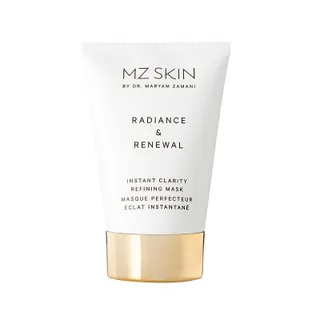
“Helps to eliminate pigmented cells, resulting in a clear and bright complexion. . Reduces the appearance of fine lines and wrinkles. . Refines pores and reduces imperfections. . Instantly revives dull, tired skin and promotes radiance and luminosity.”
This product can help reduce and prevent fine lines and wrinkles, improve skin elasticity and firmness because it contains lactobionic acid.
Keep in mind that it typically takes at least 6 weeks to notice any results because the changes that are needed to improve fine lines and elasticity happen in the deeper layers of the skin. No topical anti-aging product can “erase” wrinkles or fully reverse signs of aging.
Evens skin toneLactobionic acid, Hydrolyzed yeast extract + 1 moreWorks well
“A 10% concentrate fruit acid complex stimulates cell turnover, refines pores and helps to eliminate pigmentation to brighten and restore luminosity.”
This product can help reduce hypepigmentation and even out the skin tone because it contains the following effective ingredients: lactobionic acid
Keep in mind that you would need to apply any topical skincare targetted at hypigmentation consistently for a couple of months to get a result. No topical skincare product can help get rid of hyperpigmentation (including post-acne marks and age spots) instantly.
ExfoliationLactobionic acid, Lactic acidWorks well
“Contains a 10% Alpha Hydroxy complex which deeply exfoliates and stimulates cell turnover to restore a healthy glow. .”
This product can help exfoliate the skin. In other words, it helps break down the bonds between dead cells on the surface of the skin and speed up the skin turnover. Skin often appears softer and brighter after exfoliation, but overdoing it can result in disrupted skin barrier. The following ingredient is doing the exfoliating job in this product: lactobionic acid.
Anti-oxidationSide benefit · Lactobionic acid, Hydrolyzed yeast extractWorks well
This product contains antioxidants (lactobionic acid) that can help neutralize free radicals in skin. By doing so, they can lessen the damage the skin gets from the UV light (sun).
MoisturizingSide benefit · Lactobionic acid, Glycerin + 6 moreWorks well
This product contains good ingredients to attract water to the upper layer of the skin. These ingredients are called "humectants": glycerin, hydrolyzed yeast extract.
When humectants are on the surface of the skin, they “pull in” the moisture from the outside environment, or from within deeper layers of the skin. If the air is dry, humectants can speed up the moisture loss from the skin. This is why it is a good idea to use another product on top of this one to help "seal in" the moisture (look for ingredients like dimethicone, squalane, oils and butters).
The following ingredients in this product are especially good for supporting the skin barrier and helping with the hydration level: lactobionic acid
Can it cause trouble?
Irritancy6 strong irritants: Citrus limon peel oil, Mentha piperita oil + 4 more — patch-test recommendedHigh risk
Comedogenic1 ingredient rated 2 or more on the 0–5 pore-clogging scale1 flagged

User reviews
Be the first — your take helps the next person decide.
Ingredients
Filter by role to see what each ingredient is doing.
Water~40–60%
Lactobionic acid~4.6–7%
- Irritation risk
- Medium
A polyhydroxy acid (PHA) that helps shed dead cells from the surface of the skin revealing a smoother, more even skin. PHAs tend to be gentler on the skin compared to AHAs (for example, glycolic acid). It also has hydrating properties and helps attract water to the upper layer of the skin. It can help calm down inflammation in skin and support restoration of the barrier function. It has an anti-oxidant effect as well. It can help reduce fine line, wrinkles and improve skin elasticity
More about Lactobionic acidPropylene glycol~3.4–5.2%
- Irritation risk
- High
Helps oil and water mix together and can enhance the penetration of other ingredients into the skin. It can be irritating
More about Propylene glycolAmmonium acryloyldimethyltaurate/vp copolymer~2.7–4.1%
- Irritation risk
- Low
Increases thickness of a product. Texture enhancer for oil-in-water emulsions
More about Ammonium acryloyldimethyltaurate/vp copolymerGlycerin~2.1–3.2%
- Irritation risk
- Low
One of the best moisturizing ingredients. Naturally present in skin. It attracts water to the upper layer of the skin working as a humectant
More about GlycerinHydrolyzed yeast extract~1.7–2.5%
- Irritation risk
- Low
Helps attract water to the upper layer of the skin and might have some anti-oxidant and skin lightening properties
More about Hydrolyzed yeast extractLactic acid~1.4–2.1%
- Irritation risk
- Medium
An exfoliating and moisturizing alpha-hydroxy acid (AHA). Typically causes less irritation than other AHAs, for example, glycolic acid. At high concentrations (about 15%), lactic acid can help reduce lines and wrinkles. Recent studies show that lactic acid can support the "good" bacteria living on skin's surface (healthy skin microbiome)
More about Lactic acidSodium lactate~1.3–1.9%
- Irritation risk
- Medium
Helps attract water to the upper layer of the skin. Is often used to adjust the pH level of the product
More about Sodium lactatePhenoxyethanol~0.5–1%
- Irritation risk
- Low
A preservative. It helps prevent bacterial growth in cosmetic products
More about PhenoxyethanolSynthetic fluorphlogopite~0.9–1.35%
- Irritation risk
- Low
A mineral that is used as an optical filter (makes the skin looks nicer through light reflection) and to improve the texture of cosmetic products
More about Synthetic fluorphlogopiteAdipic acid/neopentyl glycol crosspolymer~0.55–1.3%
- Irritation risk
- Low
Helps optically blurr skin imperfections such as fine lines and pores
More about Adipic acid/neopentyl glycol crosspolymerCitrus limon peel oil~0.4–0.95%
Ethylhexylglycerin~0.4–0.9%
Disodium edta~0.35–0.8%
Tropaeolum majus flower/leaf/stem extract~0.3–0.7%
- Irritation risk
- Low
Cetyl hydroxyethylcellulose~0.35–0.8%
- Irritation risk
- Low
Used to create a thicker product consistency and stabilize formulations
More about Cetyl hydroxyethylcelluloseMentha piperita oil~0.2–0.75%
Parfum~0.15–0.7%
- Irritation risk
- High
An aromatic blend of unspecified and possibly irritating ingredients
More about ParfumCarbomer/papain crosspolymer~0.15–0.7%
- Irritation risk
- Low
Polyglucuronic acid~0.15–0.65%
- Irritation risk
- Low
Often used to support the moisturization effect of polysaccharides (contained, for example, in yeast extract)
More about Polyglucuronic acidPotassium sorbate~0.15–0.6%
Sodium benzoate~0.25–0.5%
Tin oxide~0.2–0.75%
- Irritation risk
- Low
A colorant that can add a pearl-like appearance to the formulation
More about Tin oxideLecithin~0.15–0.55%
- Irritation risk
- Low
Used mostly for creating emulsions - helping oil and water mix together. Helps soften the upper layer of the skin
More about Lecithin1,2-hexanediol~0.1–0.35%
Caprylyl glycol~0.1–0.45%
- Irritation risk
- Medium
Helps preserve products and creates a nice product texture
More about Caprylyl glycolAlgin~0.1–0.3%
- Irritation risk
- Low
- Comedogenicity
- 3/5
Used to thicken product formulation. Can help attract water to the upper layer of the skin
More about AlginCi 77891~0.05–0.3%
- Irritation risk
- Low
Titanium dioxide~0.1–0.45%
- Irritation risk
- Low
Works as a UV filter when used in high concentrations. It is photostable and is effective mostly against the UVB light, with some protection in the UVA range. In small concentrations, used for its ability to improve the color of cosmetic products. Is usually well tolerated by the skin
More about Titanium dioxideCitral~0.05–0.15%
Limonene~0.05–0.1%
- Irritation risk
- High
A common frangrance that can easily irritate skin, especially if exposed to air, light or heat
More about LimoneneLinalool~0.01–0.1%
Ingredient list view
Water, Lactobionic acid, Propylene glycol, Ammonium acryloyldimethyltaurate/vp copolymer, Glycerin, Hydrolyzed yeast extract, Lactic acid, Sodium lactate, Phenoxyethanol, Synthetic fluorphlogopite, Adipic acid/neopentyl glycol crosspolymer, Citrus limon peel oil, Ethylhexylglycerin, Disodium edta, Tropaeolum majus flower/leaf/stem extract, Cetyl hydroxyethylcellulose, Mentha piperita oil, Parfum, Carbomer/papain crosspolymer, Polyglucuronic acid, Potassium sorbate, Sodium benzoate, Tin oxide, Lecithin, 1,2-hexanediol, Caprylyl glycol, Algin, Ci 77891, Titanium dioxide, Citral, Limonene, Linalool
Compare prices
Retailers ranked by price — lowest first.
Affiliate links · As an Amazon Associate, WIMJ earns from qualifying purchases.
Worth comparing, line by line.
Match % combines shared ingredients, the first five ingredients, shared actives and hero ingredients, irritancy (lower counts in the alternative's favour), texture and body area. Only products in the same routine step are compared.
| MZ SkinRadiance and RenewalYOUR PRODUCT | Derma EFerulic Acid Resurfacing Pads | LixirskinNight Switch PHA/AHA 10% | CliniqueClarifying Do-Over Peel | |
|---|---|---|---|---|
| Match | — | 55% | 54% | 53% |
| Price | $193.00 | $20.76−$172.24 | $21.16−$171.84 | $21.22−$171.78 |
| Shared key ingredients | — | 3 of 5 | 3 of 5 | 3 of 5 |
| Key difference | — | Gluconolactone | — | Salicylic Acid |
| Irritancy | High | Medium | Low | Medium |
| Drying alcohol | — | — | — | Contains drying alcohol |
| View product | Shop | Shop | Shop |


More alternatives: MDSUN Skin Exfoliation PadsIl makiage Power repair
Sources cited in this review
Every concentration estimate and effectiveness label is anchored to one of these 15 studies and safety reviews.
- 1Lactobionic acidmdedge.com
- 2
- 3
- 4The use of polyhydroxy acids (PHAs) in photoaged skinncbi.nlm.nih.gov
- 5Surfactants and experimental irritant contact dermatitisncbi.nlm.nih.gov
- 6Propylene Glycolpubmed.ncbi.nlm.nih.gov

Affiliate links · As an Amazon Associate, WIMJ earns from qualifying purchases.