Works for
MoisturizingCaprylic/capric triglyceride, Glycerin + 9 moreWorks
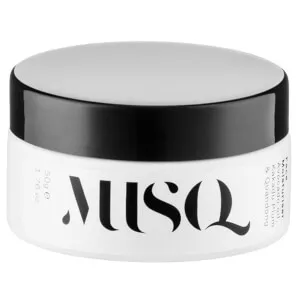
“Face Moisturiser”
This product can help improve hydration of the skin with the two types of ingredients.
The first type is called “humectants”:
these ingredients help attract water.
When humectants are on the surface of the skin, they “pull in” the moisture from the outside environment, or from
within deeper layers of the skin. The following ingredients in this product do the job:
glycerin.
This product also contains ingredients called “occlusives”. They help reduce the speed with which our skin loses moisture to the outside environment. These ingredients also help soften the upper layer of the skin, so it feels less tight and nicer to the touch. The following ingredients in this product do the job: caprylic/capric triglyceride, glycine soja oil.
Anti-agingLactic acid ~0.2–0.8%, below the ~2% it needsUnder-dosed
“With anti-aging kakadu plum and quandong to brighten and protect.”
Effective ingredients missing or their concentration is too low.
Can it cause trouble?
Irritancy3 strong irritants: Sodium anisate, Backhousia citriodora leaf oil + 1 more — patch-test recommendedHigh risk
Comedogenic2 ingredients rated 2 or more on the 0–5 pore-clogging scale2 flagged
User reviews
Be the first — your take helps the next person decide.
Ingredients
Filter by role to see what each ingredient is doing.
Water~40–60%
Caprylic/capric triglyceride~6.5–9.8%
- Irritation risk
- Medium
A good mix of fatty acids that forms a protective layer on the skin. Improves the shelf life of products. Derived from coconut and glycerin
More about Caprylic/capric triglycerideGlycerin~3.7–5.6%
- Irritation risk
- Low
One of the best moisturizing ingredients. Naturally present in skin. It attracts water to the upper layer of the skin working as a humectant
More about GlycerinCetearyl alcohol~2.3–3.4%
- Irritation risk
- Low
- Comedogenicity
- 2/5
A non-drying alcohol. Works as an emollient. Helps water and oil mix together and creates a nice product texture
More about Cetearyl alcoholPersea gratissima oil~2.2–3.2%
- Irritation risk
- Medium
An emollient that helps soften the skin and could be helpful in repairing its barrier function
More about Persea gratissima oilMacadamia integrifolia seed oil~1.8–2.6%
- Irritation risk
- Low
A plant oil that helps soften the upper layer of the skin
More about Macadamia integrifolia seed oilCetearyl olivate~1.4–2.1%
Sorbitan olivate~1.1–1.7%
Glyceryl stearate citrate~1–1.5%
- Irritation risk
- Low
Helps oil and water mix together while softening the upper layer of the skin
More about Glyceryl stearate citrateSodium levulinate~0.8–1.25%
Tocopherol~0.5–1.2%
- Irritation risk
- Low
Pure form of vitamin E. Can help moisturise and protect the skin from free radicals. Often used to help stabilise other ingredients or the formula itself
More about TocopherolCetearyl glucoside~0.4–1%
- Irritation risk
- Medium
Helps water and oil in the product mix well together and improves product texture
More about Cetearyl glucosideSodium anisate~0.35–0.85%
Lactic acid~0.2–0.8%
- Irritation risk
- Medium
An exfoliating and moisturizing alpha-hydroxy acid (AHA). Typically causes less irritation than other AHAs, for example, glycolic acid. At high concentrations (about 15%), lactic acid can help reduce lines and wrinkles. Recent studies show that lactic acid can support the "good" bacteria living on skin's surface (healthy skin microbiome)
More about Lactic acidGlycine soja oil~0.2–0.75%
- Irritation risk
- Medium
- Comedogenicity
- 2/5
A good emollient that helps soften the skin and helps repair its barrier function. It can clog pores if used in high concentrations.
More about Glycine soja oilBackhousia citriodora leaf oil~0.1–0.45%
- Irritation risk
- High
A plant oil containing volatile compounds. Used as a fragrance and can be irritating
More about Backhousia citriodora leaf oilSimmondsia chinensis seed oil~0.15–0.6%
- Irritation risk
- Medium
Softens the upper layer of skin and helps restore the healthy skin barrier. Has shown to help calm down inflammation in skin. It is a stable oil, meaning that it retains its properties even when exposed to air.
More about Simmondsia chinensis seed oilAloe barbadensis leaf juice powder~0.1–0.3%
- Irritation risk
- Medium
Traditionally used to treat sunburns, dermatitis and inflammation, but evidence for its effectiveness is lacking. The extract can contain humectants that help attract water into the skin
More about Aloe barbadensis leaf juice powderTerminalia ferdinandiana fruit extract~0.05–0.25%
- Irritation risk
- Medium
A plant extract that might have some anti-oxidant effect in skin, but evidence is lacking
More about Terminalia ferdinandiana fruit extractSantalum acuminatum fruit extract~0.05–0.2%
- Irritation risk
- High
Used as a fragrance. Can be irritating
More about Santalum acuminatum fruit extractAnthemis nobilis flower oil~0.05–0.1%
- Irritation risk
- High
An essential oil that is used as a fragrance and can be irritating. It might have some anti-oxidant effect in skin
More about Anthemis nobilis flower oilIngredient list view
Water, Caprylic/capric triglyceride, Glycerin, Cetearyl alcohol, Persea gratissima oil, Macadamia integrifolia seed oil, Cetearyl olivate, Sorbitan olivate, Glyceryl stearate citrate, Sodium levulinate, Tocopherol, Cetearyl glucoside, Sodium anisate, Lactic acid, Glycine soja oil, Backhousia citriodora leaf oil, Simmondsia chinensis seed oil, Aloe barbadensis leaf juice powder, Terminalia ferdinandiana fruit extract, Santalum acuminatum fruit extract, Anthemis nobilis flower oil
Compare prices
Retailers ranked by price — lowest first.
Worth comparing, line by line.
Match % combines shared ingredients, the first five ingredients, shared actives and hero ingredients, irritancy (lower counts in the alternative's favour), texture and body area. Only products in the same routine step are compared.
| MUSQFace MoisturiserYOUR PRODUCT | Planeta Organica PureКрем для лица и тела “Липидовосстанавливающий" | SheaMoistureBalancing Moisturizer | JurliqueCalendula Redness Rescue Soothing Moisturizing Cream | |
|---|---|---|---|---|
| Match | — | 47% | 46% | 46% |
| Price | — | — | $12.99 | $45.84 |
| Shared key ingredients | — | 5 of 6 | 6 of 6 | 6 of 6 |
| Key difference | — | Niacinamide | Oatmeal Extract | Panthenol |
| Irritancy | High | Low | Medium | Medium |
| Drying alcohol | — | — | — | — |
| View product | Shop | Shop | Shop |



More alternatives: Glow Lab Pro-Collagen Plumping Night CreamJack Black Dry Erase Ultra-Calming Face Cream
Sources cited in this review
Every concentration estimate and effectiveness label is anchored to one of these 9 studies and safety reviews.
- 1
- 2
- 3Vitamin E in dermatologyncbi.nlm.nih.gov
- 4Vitamin E and Skin Healthlpi.oregonstate.edu
- 5Epidermal and dermal effects of topical lactic acidncbi.nlm.nih.gov
- 6Dual Effects of Alpha-Hydroxy Acids on the Skinpdfs.semanticscholar.org

Affiliate links · As an Amazon Associate, WIMJ earns from qualifying purchases.