Works for:
based on ingredients and %- Cleansing
Can it cause trouble?
- Irritation risk: high
- Comedogenic risk ingredients: 2
Key actives

Works for
Cleansing
What does the product description say?
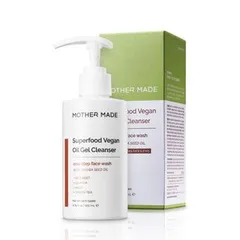
Superfood Vegan Oil Gel Cleanser
Source: From product name
This product works by removing dirt and oil from the surface of the skin. It uses a combination of mild cleansing agents (c12-14 pareth-12, carbomer, coco-glucoside, decyl glucoside, hydrogenated lecithin, polyglyceryl-4 caprate, potassium cocoate, sucrose palmitate) and should be able to cleanse the skin gently. Still keep in mind that any cleansing can disrupt the skin barrier, and most people do not need to cleanse their skin more than once per day.
Even though this formulation is mild, the following cleansing agents could trigger an irritation or allergy for some people: coco-glucoside, decyl glucoside
Helps oil and water mix together
Helps create a thicker or gel-like product texture. It is not a surfactant but can be used in gentle cleansing formulations
Used as a cleansing agent (surfactant) in cleansers. Helps water and oil mix together in lotions. Can be irritating
Helps oil and water mix together. Can be irritating
Helps to retain moisture by creating a protective barrier on the skin. Rich in fatty acids. Improves product texture and helps with the penetration of other ingredients.
Helps oil and water mix together and works as a cleansing agent
How honest is this product?
| Promise | Can it deliver? |
|---|---|
| Cleansing |
Total Promises Fulfilled score: 100/100.
We receive a small commission for purchases made through these links at no cost for you. Thank you for your support! Learn more
Potential irritants
Comedogenic ingredients
User reviews (0)
Averages from community submissions.
No reviews yet for this product.
Be the first to share your experience!
Tried this product?
Help capture what the ingredient list can't—texture, finish, pilling, scent, and more. Answer what you can, skip the rest.
Takes ~30 seconds.
Reviews are shown in aggregate. No personal details.
Key Actives
A plant extract that has been shown to be able to reduce inflammation in skin, support restoration of skin barrier function, as well as support collagen production. Contains active compounds called centelloids: asiaticoside, madecasosside, asiatic acid and madecassic acid. Might be helpful in preventing stretch marks. It can be itself be irritating though.
Can contain potent anti-oxidant compounds (abbreviated ECG, GCG, EGC, and EGCG) that might help protect the skin from free radicals. Can help calm down inflammation and has some anti-bacterial properties. Unfortunately, these antioxidants are unstable and lose their effectiveness very quickly in products. The concentration of the antioxidant compounds in the extract also tends to be low to be effective in topical formulation
Helps attract water to the upper layer of the skin, calm down inflammation and irritation, restore the barrier function and support wound healing. It can be helpful in reducing fine lines and wrinkles
Pure form of vitamin E. Can help moisturise and protect the skin from free radicals. Often used to help stabilise other ingredients or the formula itself
Can be helpful in reducing inflammation in skin, including inflamed acne. It can be irritating
A type of lipid similar to ceramides naturally present in skin. Helps to soften the upper layer of the skin and supports the skin barrier function to keep it hydrated. Can help to prevent inflammation in skin
A great emollient that can also have anti-oxidant properties
Helps oil and water mix together. Can be irritating
Used as a cleansing agent (surfactant) in cleansers. Helps water and oil mix together in lotions. Can be irritating
Seaweed extract that might help to attract water to the upper layer of the skin and have some anti-oxidant properties
Helps soften the upper layer of the skin
A plant extract that can help neutralize free radicals. The concentrations typically used in cosmetics are too small to have an effect
Helps to retain moisture by creating a protective barrier on the skin. Rich in fatty acids. Improves product texture and helps with the penetration of other ingredients.
Softens the upper layer of skin and helps restore the healthy skin barrier. Has shown to help calm down inflammation in skin. It is a stable oil, meaning that it retains its properties even when exposed to air.
Helps create a thicker or gel-like product texture. It is not a surfactant but can be used in gentle cleansing formulations
Helps attract water to the upper layer of the skin and improves the product texture
One of the best moisturizing ingredients. Naturally present in skin. It attracts water to the upper layer of the skin working as a humectant
Help attract water to the upper layer of the skin
One of the best moisturizing ingredients. Attracts water into the upper layer of the skin. A version of it is naturally present in skin
Helps oil and water mix together and works as a cleansing agent
Potential irritants
Used as a cleansing agent (surfactant) in cleansers. Helps water and oil mix together in lotions. Can be irritating
A plant extract that is mostly used as a fragrance. Might have some anti-oxidant effect
Can be helpful in reducing inflammation in skin, including inflamed acne. It can be irritating
Used for fragrance and contains volatile compounds that can irritate the skin
Used as a fragrance. Canbe irritating
A plant extract that can help soften the upper layer of the skin. It can be irritating
A plant extract that one one hand, can contain compounds that can help calm down skin irritation, but, on the other hand, its other compounds (especially fragrant ones) can themselves be irritating
Helps preserve products. Can mask unpleasant smell. Could be irritating
Might be helpful in neutralizing free radicals in skin but solid research is lacking. Helps attract water to the upper layer of the skin
A plant extract that might have some antioxidant properties, but mostly used in cosmetics for its color
A plant extract that can help neutralize free radicals. The concentrations typically used in cosmetics are too small to have an effect
A plant extract that has been shown to be able to reduce inflammation in skin, support restoration of skin barrier function, as well as support collagen production. Contains active compounds called centelloids: asiaticoside, madecasosside, asiatic acid and madecassic acid. Might be helpful in preventing stretch marks. It can be itself be irritating though.
A plant extract tha can have anti-oxidant properties, but evidence of effectiveness in skin is lacking
Cedarwood oil. Used as a fragrance. Can be irritating
Softens the upper layer of skin and helps restore the healthy skin barrier. Has shown to help calm down inflammation in skin. It is a stable oil, meaning that it retains its properties even when exposed to air.
A great emollient that can also have anti-oxidant properties
An emollient that helps soften the skin but is not effective for restoring its barrier function. Might be helpful to calm down inflammation
An exfoliating and moisturizing alpha-hydroxy acid (AHA). Typically causes less irritation than other AHAs, for example, glycolic acid. At high concentrations (about 15%), lactic acid can help reduce lines and wrinkles. Recent studies show that lactic acid can support the "good" bacteria living on skin's surface (healthy skin microbiome)
Helps oil and water mix together and works as a cleansing agent
Comedogenic ingredients
Seaweed extract that might help to attract water to the upper layer of the skin and have some anti-oxidant properties
All ingredients
Helps to dissolve other ingredients in a formulation. Slows down the rate of product drying
Acts as a solvent for other ingredients. Speeds up the absorption of other ingredients into the skin
Used as a cleansing agent (surfactant) in cleansers. Helps water and oil mix together in lotions. Can be irritating
A plant extract that is mostly used as a fragrance. Might have some anti-oxidant effect
Seaweed extract that might help to attract water to the upper layer of the skin and have some anti-oxidant properties
Might be helpful in neutralizing free radicals in skin but solid research is lacking. Helps attract water to the upper layer of the skin
A plant extract that might have some antioxidant properties, but mostly used in cosmetics for its color
Can be helpful in reducing inflammation in skin, including inflamed acne. It can be irritating
Used for fragrance and contains volatile compounds that can irritate the skin
Used as a fragrance. Canbe irritating
A plant extract that can help soften the upper layer of the skin. It can be irritating
A plant extract that one one hand, can contain compounds that can help calm down skin irritation, but, on the other hand, its other compounds (especially fragrant ones) can themselves be irritating
Can contain potent anti-oxidant compounds (abbreviated ECG, GCG, EGC, and EGCG) that might help protect the skin from free radicals. Can help calm down inflammation and has some anti-bacterial properties. Unfortunately, these antioxidants are unstable and lose their effectiveness very quickly in products. The concentration of the antioxidant compounds in the extract also tends to be low to be effective in topical formulation
A plant extract that can help neutralize free radicals. The concentrations typically used in cosmetics are too small to have an effect
A plant extract that has been shown to be able to reduce inflammation in skin, support restoration of skin barrier function, as well as support collagen production. Contains active compounds called centelloids: asiaticoside, madecasosside, asiatic acid and madecassic acid. Might be helpful in preventing stretch marks. It can be itself be irritating though.
A plant extract tha can have anti-oxidant properties, but evidence of effectiveness in skin is lacking
An effective moisturizing and skin barrier repair ingredient. Helps calm down inflammation and has some anti-oxidant properties
Cedarwood oil. Used as a fragrance. Can be irritating
Helps to retain moisture by creating a protective barrier on the skin. Rich in fatty acids. Improves product texture and helps with the penetration of other ingredients.
Softens the upper layer of skin and helps restore the healthy skin barrier. Has shown to help calm down inflammation in skin. It is a stable oil, meaning that it retains its properties even when exposed to air.
A great emollient that can also have anti-oxidant properties
A plant oil that helps soften the upper layer of the skin
An emollient that helps soften the skin but is not effective for restoring its barrier function. Might be helpful to calm down inflammation
Helps create a thicker or gel-like product texture. It is not a surfactant but can be used in gentle cleansing formulations
Helps attract water to the upper layer of the skin and improves the product texture
Used to create a nice product texture and help delivery of other ingredients. Might be somewhat helpful in attracting water to the upper layer of the skin
One of the best moisturizing ingredients. Naturally present in skin. It attracts water to the upper layer of the skin working as a humectant
A sugar that is used to stabilize the product formulation. Can help attract water to the upper layer of the skin
Helps attract water to the upper layer of the skin, calm down inflammation and irritation, restore the barrier function and support wound healing. It can be helpful in reducing fine lines and wrinkles
One of the best moisturizing ingredients. Attracts water into the upper layer of the skin. A version of it is naturally present in skin
An exfoliating and moisturizing alpha-hydroxy acid (AHA). Typically causes less irritation than other AHAs, for example, glycolic acid. At high concentrations (about 15%), lactic acid can help reduce lines and wrinkles. Recent studies show that lactic acid can support the "good" bacteria living on skin's surface (healthy skin microbiome)
Pure form of vitamin E. Can help moisturise and protect the skin from free radicals. Often used to help stabilise other ingredients or the formula itself
Helps oil and water mix together and works as a cleansing agent
Helps preserve products. Can mask unpleasant smell. Could be irritating
A type of lipid similar to ceramides naturally present in skin. Helps to soften the upper layer of the skin and supports the skin barrier function to keep it hydrated. Can help to prevent inflammation in skin
Ingredient list view
Water, Decyl glucoside, Polyglyceryl-4 caprate, Dipropylene glycol, Propanediol, Coco-glucoside, 1,2-hexanediol, Theobroma cacao seed extract, Eclipta prostrata leaf extract, Laminaria japonica extract, Brassica oleracea acephala leaf extract, Chenopodium quinoa seed extract, Beta vulgaris root extract, Houttuynia cordata extract, Rosmarinus officinalis leaf extract, Lavandula angustifolia extract, Ocimum basilicum flower/leaf extract, Foeniculum vulgare fruit extract, Althaea officinalis leaf/root extract, Anthemis nobilis flower extract, Camellia sinensis leaf extract, Ficus carica fruit extract, Centella asiatica extract, Vaccinium angustifolium fruit extract, Avena sativa kernel extract, Juniperus virginiana oil, Cedrus atlantica bark oil, Amyris balsamifera bark oil, Pogostemon cablin oil, Hydrogenated lecithin, Simmondsia chinensis seed oil, Vitis vinifera seed oil, Macadamia integrifolia seed oil, Olea europaea fruit oil, Carbomer, C12-14 pareth-12, Tromethamine, Betaine, Butylene glycol, Glycerin, Disodium edta, Dextrin, Fructooligosaccharides, Copaifera officinalis resin, Hydrolyzed corn starch, Beta-glucan, Hydrolyzed hyaluronic acid, Lactic acid, Tocopherol, Potassium cocoate, P-anisic acid, Sucrose palmitate, Ceramide np, Hydroxyacetophenone, Ethylhexylglycerin
- Ecofriendly surfactant is allergen of the year
- In Vitro Assessment of Skin Irritation Potential of Surfactant-based Formulations by Using a 3-D Skin Reconstructed Tissue Model and Cytokine Response
- Allergen of the Year—Alkyl Glucoside
- The influence of alkane chain length on the skin irritation potential of 1,2-alkanediols
- Allergic contact dermatitis induced by rosemary leaf extract in a cleansing gel
- Safety Assessment of Rosmarinus officinalis (Rosemary)-Derived Ingredients as Used in Cosmetics
- Rosmarinus officinalis Extract Suppresses Propionibacterium acnes–Induced Inflammatory Responses
- Anti-Inflammatory Effect of Titrated Extract of Centella asiatica in Phthalic Anhydride-Induced Allergic Dermatitis Animal Model
- Centella asiatica in cosmetology
- Triterpene Composition and Bioactivities of Centella asiatica
- Asiaticoside induction for cell-cycle progression, proliferation and collagen synthesis in human dermal fibroblasts
- Assessment report on Centella asiatica (L.) Urban, herba
- Contact dermatitis due to Madecassol
- The Effects of a Standardized Extract of Centella asiatica on Postlaser Resurfacing Wound Healing on the Face: A Split-Face, Double-Blind, Randomized, Placebo-Controlled Trial
- Anti-Inflammatory and Neuroactive Properties of Selected Fruit Extracts
- Fatty acids profile of oil from nine varieties of Macadamia nut
- Use of “natural” oils for moisturization: Review of olive, coconut, and sunflower seed oil
- Safety Assessment of Tromethamine as Used in Cosmetics
- Glycerol and the skin: holistic approach to its origin and functions
- β-Glucans: Multi-Functional Modulator of Wound Healing
- Anti-Wrinkle Therapy: Significant New Findings in the Non-Invasive Cosmetic Treatment of Skin Wrinkles with Beta-Glucan
- Skin Health Promotion Effects of Natural Beta-Glucan Derived from Cereals and Microorganisms: A Review
- Anticancer properties of low molecular weight oat beta-glucan – An in vitro study
- A critical review on production and industrial applications 2 of beta-glucans
- Improving skin function with CM-glucan, a biological response modifier from yeast
- Preparation, characterization, and biological properties of β-glucans
- Characterization of a new beta(1-3)-glucan branching activity of Aspergillus fumigatus
- Efficacy of a New Topical Nano-hyaluronic Acid in Humans
- Physiochemical properties and application of hyaluronic acid: a systematic review
- Epidermal and dermal effects of topical lactic acid
- Dual Effects of Alpha-Hydroxy Acids on the Skin
- Vitamin E in dermatology
- Vitamin E and Skin Health
- Sodium anisate
- Skin hydration is significantly increased by a cream formulated to mimic the skin’s own natural moisturizing systems
- Topically Applied Ceramides Interact with the Stratum Corneum Lipid Matrix in Compromised Ex Vivo Skin