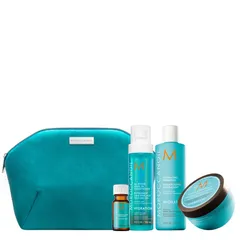
Works for:
based on ingredients and %- Moisturizing
- Anti-aging
- Anti-blemish
- Anti-oxidation
Can it cause trouble?
- Irritation risk: high
- Comedogenic risk ingredients: 9
Key actives

Product Summary
"Moroccanoil - Magic of Hydration" is effective for: Moisturizing
This product could be helpful for: Anti-aging, Anti-blemish, Anti-oxidation and Evens skin tone, but its actives are not the most effective or are not well-studied.
Ingredient callouts
- this product includes a form of Retinoids (vitamin A) - retinyl palmitate 0.70% - 1.05%, but this type of vitamin A is not very effective. It could in theory help with fine lines and wrinkles, but the effect is most likely minimal.
- Humectants (cyclomethicone 0.30% - 0.60%, anhydroxylitol 0.30% - 0.60%, xylitylglucoside 0.30% - 0.60%, glycerin 0.40% - 0.60%, soy amino acids 0.30% - 0.60%, glycerin 0.35% - 0.60%, sodium pca 0.30% - 0.55%, xylitylglucoside 0.30% - 0.55%, anhydroxylitol 0.30% - 0.55% and glycerin 1.30% - 1.60%). These ingredients help attract water to the upper layer of the skin and improve the skin hydration.
About the brand
According to Cruelty-Free Kitty "Moroccanoil" is cruelty free and so is its parent company.
Moisturizing
What does the product description say?
Magic of Hydration
Source: From product name
This product can help improve hydration of the skin with the two types of ingredients.
The first type is called “humectants”:
these ingredients help attract water.
When humectants are on the surface of the skin, they “pull in” the moisture from the outside environment, or from
within deeper layers of the skin. The following ingredients in this product do the job:
anhydroxylitol, cyclomethicone.
This product also contains ingredients called “occlusives”. They help reduce the speed with which our skin loses moisture to the outside environment. These ingredients also help soften the upper layer of the skin, so it feels less tight and nicer to the touch. The following ingredients in this product do the job: chondrus crispus extract, dimethicone.
The following ingredients in this product are especially good for supporting the skin barrier and helping with the hydration level: linoleic acid
One of the best moisturizing ingredients. Naturally present in skin. It attracts water to the upper layer of the skin working as a humectant
An amino-acid that helps to attract water to the upper layer of the skin. In combination with other amino-acids, might help to reduce fine lines and wrinkles
Naturally present in skin and helps to attract water to its upper layer
Help attract water to the upper layer of the skin
An amino-acid that helps to attract water to the upper layer of the skin. In combination with other amino-acids, might help to reduce fine lines and wrinkles
A seaweed extract that helps attract water to the upper layer of the skin and might have an anti-oxidant effect
Helps attract water to the upper layer of the skin and repair the skin barrier function
A silicone that helps to reduce water loss from the surface of the skin. Can temporarily "fill in" lines and wrinkles, absorb oil, and create a nice product finish
Helps attract water to the upper layer of the skin and repair the skin barrir function
An emollient that helps soften the upper layer of the skin. Might have some weak anti-oxidant properties
An amino acid that is naturally present in skin and helps keep it hydrated. When used together with AHAs, it can reduce their irritating effect on the skin
Brown seaweed extract. Can help attract water to the upper layer of the skin and might have some antioxidant effect
Red algae extract that helps attract water to the upper layer of the skin and create a nicer product consistency
A type of silicone that leaves a nice silky finish on the skin and can help soften its upper layer
A great emollient due to its high linoleic acid content. One of the most effective plant oils in helping skin hydration and repairing skin barrier function
An excellent emollient. Helps soften the skin, restore its barrier function, and can help to calm down inflammation. It can be helpful to prevent blemishes and clogged pores
Red algae extract that helps attract water to the upper layer of the skin
Used to stabilize the product formulations and works as an emollient
A non-drying alcohol. Works as an emollient. Helps water and oil mix together and creates a nice product texture
Helps attract water to the upper layer of the skin. Could be helpful in restoring the skin barrier function
Helps attract water to the upper layer of the skin. Might have some anti-oxidant properties
Inhibits acne-causing bacteria on the surface of the skin. Can help to reduce inflammation caused by bacteria. Helps neutralize free radicals in skin. Helps to attract water to the upper layer of the skin
A non-drying alcohol that works to soften the skin and stabilize product formulations helping oil and water mix together
Helps preserve products and creates a nice product texture
Might help to attract water to the upper layer of the skin
Used to thicken product formulation. Can help attract water to the upper layer of the skin
An exfoliating and moisturizing alpha-hydroxy acid (AHA). Typically causes less irritation than other AHAs, for example, glycolic acid. At high concentrations (about 15%), lactic acid can help reduce lines and wrinkles. Recent studies show that lactic acid can support the "good" bacteria living on skin's surface (healthy skin microbiome)
A good mix of fatty acids that forms a protective layer on the skin. Improves the shelf life of products. Derived from coconut and glycerin
A seaweed extract that contains sugars and can be helpful in attracting water to the upper layers of the skin if used in high enough concentrations
Pure form of vitamin E. Can help moisturise and protect the skin from free radicals. Often used to help stabilise other ingredients or the formula itself
Anti-aging
This product contains retinyl palmitate, serine, threonine. These ingredients might be able to help reduce and prevent fine lines and wrinkles, improve skin elasticity and firmness, but there is not enough evidence that it actually works.
Three steps removed from the active form of vitamin A - retinoic acid. To have an effect in the skin, it first needs to be converted twice to become the retinoic acid. This means it is less potent than retinol, but could also be less irritating. Once converted to the retinoic acid in the skin, it helps against all signs of aging, improves skin cell turnover and helps fight blemishes and clogged pores. However, in many cosmetic formulations, it is used in a concentration that is too low to have the full effect
An amino-acid that helps to attract water to the upper layer of the skin. In combination with other amino-acids, might help to reduce fine lines and wrinkles
An amino-acid that helps to attract water to the upper layer of the skin. In combination with other amino-acids, might help to reduce fine lines and wrinkles
An exfoliating and moisturizing alpha-hydroxy acid (AHA). Typically causes less irritation than other AHAs, for example, glycolic acid. At high concentrations (about 15%), lactic acid can help reduce lines and wrinkles. Recent studies show that lactic acid can support the "good" bacteria living on skin's surface (healthy skin microbiome)
A seaweed extract that contains sugars and can be helpful in attracting water to the upper layers of the skin if used in high enough concentrations
Pure form of vitamin E. Can help moisturise and protect the skin from free radicals. Often used to help stabilise other ingredients or the formula itself
Anti-blemish
This product might be able to help reduce blemishes and clogged pores because it contains chitosan.
The following ingredient (ingredients) in this product might be helpful, but there is no evidence to confirm that it actually works: linoleic acid, retinyl palmitate
Inhibits acne-causing bacteria on the surface of the skin. Can help to reduce inflammation caused by bacteria. Helps neutralize free radicals in skin. Helps to attract water to the upper layer of the skin
Three steps removed from the active form of vitamin A - retinoic acid. To have an effect in the skin, it first needs to be converted twice to become the retinoic acid. This means it is less potent than retinol, but could also be less irritating. Once converted to the retinoic acid in the skin, it helps against all signs of aging, improves skin cell turnover and helps fight blemishes and clogged pores. However, in many cosmetic formulations, it is used in a concentration that is too low to have the full effect
An excellent emollient. Helps soften the skin, restore its barrier function, and can help to calm down inflammation. It can be helpful to prevent blemishes and clogged pores
Helps water and oil mix together. Has anti-bacterial properties that might be helpful in preventing blemishes
Anti-oxidation
This product contains antioxidants (chitosan) that might be able to help neutralize free radicals in skin to lessen the damage it gets from the UV light (sun). There is not enough evidence to confirm their effectiveness in skin though.
Inhibits acne-causing bacteria on the surface of the skin. Can help to reduce inflammation caused by bacteria. Helps neutralize free radicals in skin. Helps to attract water to the upper layer of the skin
Red algae extract that helps attract water to the upper layer of the skin
A seaweed extract that helps attract water to the upper layer of the skin and might have an anti-oxidant effect
Brown seaweed extract. Can help attract water to the upper layer of the skin and might have some antioxidant effect
A grain extract. It might contain compounds that help neutralize free radicals in skin
Helps attract water to the upper layer of the skin. Might have some anti-oxidant properties
An emollient that helps soften the upper layer of the skin. Might have some weak anti-oxidant properties
Pure form of vitamin E. Can help moisturise and protect the skin from free radicals. Often used to help stabilise other ingredients or the formula itself
Evens skin tone
The following ingredient (ingredients) in this product might be helpful, but there is no evidence to confirm that it actually works: retinyl palmitate.
Three steps removed from the active form of vitamin A - retinoic acid. To have an effect in the skin, it first needs to be converted twice to become the retinoic acid. This means it is less potent than retinol, but could also be less irritating. Once converted to the retinoic acid in the skin, it helps against all signs of aging, improves skin cell turnover and helps fight blemishes and clogged pores. However, in many cosmetic formulations, it is used in a concentration that is too low to have the full effect
An exfoliating and moisturizing alpha-hydroxy acid (AHA). Typically causes less irritation than other AHAs, for example, glycolic acid. At high concentrations (about 15%), lactic acid can help reduce lines and wrinkles. Recent studies show that lactic acid can support the "good" bacteria living on skin's surface (healthy skin microbiome)
How honest is this product?
| Promise | Can it deliver? |
|---|---|
| Moisturizing |
Total Promises Fulfilled score: 100/100.
We receive a small commission for purchases made through these links at no cost for you. Thank you for your support! Learn more
Potential irritants
Comedogenic ingredients
User reviews (0)
Averages from community submissions.
No reviews yet for this product.
Be the first to share your experience!
Tried this product?
Help capture what the ingredient list can't—texture, finish, pilling, scent, and more. Answer what you can, skip the rest.
Takes ~30 seconds.
Reviews are shown in aggregate. No personal details.
Key Actives
Three steps removed from the active form of vitamin A - retinoic acid. To have an effect in the skin, it first needs to be converted twice to become the retinoic acid. This means it is less potent than retinol, but could also be less irritating. Once converted to the retinoic acid in the skin, it helps against all signs of aging, improves skin cell turnover and helps fight blemishes and clogged pores. However, in many cosmetic formulations, it is used in a concentration that is too low to have the full effect
Pure form of vitamin E. Can help moisturise and protect the skin from free radicals. Often used to help stabilise other ingredients or the formula itself
An exfoliating and moisturizing alpha-hydroxy acid (AHA). Typically causes less irritation than other AHAs, for example, glycolic acid. At high concentrations (about 15%), lactic acid can help reduce lines and wrinkles. Recent studies show that lactic acid can support the "good" bacteria living on skin's surface (healthy skin microbiome)
Inhibits acne-causing bacteria on the surface of the skin. Can help to reduce inflammation caused by bacteria. Helps neutralize free radicals in skin. Helps to attract water to the upper layer of the skin
An excellent emollient. Helps soften the skin, restore its barrier function, and can help to calm down inflammation. It can be helpful to prevent blemishes and clogged pores
An emollient that helps soften the upper layer of the skin. Might have some weak anti-oxidant properties
Brown seaweed extract. Can help attract water to the upper layer of the skin and might have some antioxidant effect
Red algae extract that helps attract water to the upper layer of the skin
A seaweed extract that contains sugars and can be helpful in attracting water to the upper layers of the skin if used in high enough concentrations
A seaweed extract that helps attract water to the upper layer of the skin and might have an anti-oxidant effect
An emollient that helps soften the upper layer of the skin. Might have some weak anti-oxidant properties
A silicone that helps to reduce water loss from the surface of the skin. Can temporarily "fill in" lines and wrinkles, absorb oil, and create a nice product finish
An emollient that helps soften the upper layer of the skin. Might have some weak anti-oxidant properties
A silicone that helps to reduce water loss from the surface of the skin. Can temporarily "fill in" lines and wrinkles, absorb oil, and create a nice product finish
An amino acid that is naturally present in skin and helps keep it hydrated. When used together with AHAs, it can reduce their irritating effect on the skin
An amino-acid that helps to attract water to the upper layer of the skin. In combination with other amino-acids, might help to reduce fine lines and wrinkles
An amino-acid that helps to attract water to the upper layer of the skin. In combination with other amino-acids, might help to reduce fine lines and wrinkles
A silicone that helps to reduce water loss from the surface of the skin. Can temporarily "fill in" lines and wrinkles, absorb oil, and create a nice product finish
An emollient that helps soften the upper layer of the skin. Might have some weak anti-oxidant properties
One of the best moisturizing ingredients. Naturally present in skin. It attracts water to the upper layer of the skin working as a humectant
Red algae extract that helps attract water to the upper layer of the skin and create a nicer product consistency
A good mix of fatty acids that forms a protective layer on the skin. Improves the shelf life of products. Derived from coconut and glycerin
Helps attract water to the upper layer of the skin and repair the skin barrir function
Helps attract water to the upper layer of the skin and repair the skin barrier function
Naturally present in skin and helps to attract water to its upper layer
One of the best moisturizing ingredients. Naturally present in skin. It attracts water to the upper layer of the skin working as a humectant
A great emollient due to its high linoleic acid content. One of the most effective plant oils in helping skin hydration and repairing skin barrier function
Help attract water to the upper layer of the skin
One of the best moisturizing ingredients. Naturally present in skin. It attracts water to the upper layer of the skin working as a humectant
A good mix of fatty acids that forms a protective layer on the skin. Improves the shelf life of products. Derived from coconut and glycerin
Helps attract water to the upper layer of the skin and repair the skin barrier function
Helps attract water to the upper layer of the skin and repair the skin barrir function
A type of silicone that leaves a nice silky finish on the skin and can help soften its upper layer
Potential irritants
Helps water and oil mix together. Used as a cleansing ingredient. Could be an allergen
An aromatic blend of unspecified and possibly irritating ingredients
Three steps removed from the active form of vitamin A - retinoic acid. To have an effect in the skin, it first needs to be converted twice to become the retinoic acid. This means it is less potent than retinol, but could also be less irritating. Once converted to the retinoic acid in the skin, it helps against all signs of aging, improves skin cell turnover and helps fight blemishes and clogged pores. However, in many cosmetic formulations, it is used in a concentration that is too low to have the full effect
Helps oil and water mix together and can enhance the penetration of other ingredients into the skin. It can be irritating
A fragrance. Potential allergen and can be irritating
A drying alcohol. Can increase skin's sensitivity and cause dryness and irritation
A preservative that releases formaldehyde and can be irritating
A fragrance. Can trigger allergic reactions and be irritating
A preservative. Can be used to mask unpleasant smell. Can be irritating
Helps oil and water mix together and works as a cleansing agent
Used as a cleansing agent. Helps water and oil mix together
An emollient that helps soften the upper layer of the skin. Might have some weak anti-oxidant properties
Used to stabilize the product formulation
A good mix of fatty acids that forms a protective layer on the skin. Improves the shelf life of products. Derived from coconut and glycerin
Helps preserve products and creates a nice product texture
Helps water and oil mix together. Has anti-bacterial properties that might be helpful in preventing blemishes
An exfoliating and moisturizing alpha-hydroxy acid (AHA). Typically causes less irritation than other AHAs, for example, glycolic acid. At high concentrations (about 15%), lactic acid can help reduce lines and wrinkles. Recent studies show that lactic acid can support the "good" bacteria living on skin's surface (healthy skin microbiome)
Can work as an exfoliant but is typically used to adjust the product pH
Inhibits acne-causing bacteria on the surface of the skin. Can help to reduce inflammation caused by bacteria. Helps neutralize free radicals in skin. Helps to attract water to the upper layer of the skin
Comedogenic ingredients
Red algae extract that helps attract water to the upper layer of the skin and create a nicer product consistency
Red algae extract that helps attract water to the upper layer of the skin
A seaweed extract that contains sugars and can be helpful in attracting water to the upper layers of the skin if used in high enough concentrations
Helps water and oil mix together. Has anti-bacterial properties that might be helpful in preventing blemishes
A non-drying alcohol. Works as an emollient. Helps water and oil mix together and creates a nice product texture
A non-drying alcohol. Works as an emollient. Helps water and oil mix together and creates a nice product texture
Used to stabilize the product formulations and works as an emollient
Used to thicken product formulation. Can help attract water to the upper layer of the skin
All ingredients
Helps oil and water mix together and works as a cleansing agent
Used as a cleansing agent. Helps water and oil mix together
Helps water and oil mix together. Used as a cleansing ingredient. Could be an allergen
An aromatic blend of unspecified and possibly irritating ingredients
One of the best moisturizing ingredients. Naturally present in skin. It attracts water to the upper layer of the skin working as a humectant
An emollient that helps soften the upper layer of the skin. Might have some weak anti-oxidant properties
Three steps removed from the active form of vitamin A - retinoic acid. To have an effect in the skin, it first needs to be converted twice to become the retinoic acid. This means it is less potent than retinol, but could also be less irritating. Once converted to the retinoic acid in the skin, it helps against all signs of aging, improves skin cell turnover and helps fight blemishes and clogged pores. However, in many cosmetic formulations, it is used in a concentration that is too low to have the full effect
Pure form of vitamin E. Can help moisturise and protect the skin from free radicals. Often used to help stabilise other ingredients or the formula itself
Red algae extract that helps attract water to the upper layer of the skin and create a nicer product consistency
Brown seaweed extract. Can help attract water to the upper layer of the skin and might have some antioxidant effect
Red algae extract that helps attract water to the upper layer of the skin
A seaweed extract that contains sugars and can be helpful in attracting water to the upper layers of the skin if used in high enough concentrations
A seaweed extract that helps attract water to the upper layer of the skin and might have an anti-oxidant effect
Used to stabilize the product formulation
A good mix of fatty acids that forms a protective layer on the skin. Improves the shelf life of products. Derived from coconut and glycerin
Helps attract water to the upper layer of the skin and repair the skin barrier function
Helps soften the upper layer of the skin and create a nice product finish
Helps attract water to the upper layer of the skin. Could be helpful in restoring the skin barrier function
Helps oil and water mix together and can enhance the penetration of other ingredients into the skin. It can be irritating
Helps preserve products and creates a nice product texture
Used to create an even product consistency. Can help boost efficiency of sunscreen filters
Helps attract water to the upper layer of the skin and repair the skin barrir function
Helps attract water to the upper layer of the skin and repair the skin barrier function
Naturally present in skin and helps to attract water to its upper layer
Helps water and oil mix together. Has anti-bacterial properties that might be helpful in preventing blemishes
An excellent emollient. Helps soften the skin, restore its barrier function, and can help to calm down inflammation. It can be helpful to prevent blemishes and clogged pores
An exfoliating and moisturizing alpha-hydroxy acid (AHA). Typically causes less irritation than other AHAs, for example, glycolic acid. At high concentrations (about 15%), lactic acid can help reduce lines and wrinkles. Recent studies show that lactic acid can support the "good" bacteria living on skin's surface (healthy skin microbiome)
A preservative. It helps prevent bacterial growth in cosmetic products
A fragrance. Potential allergen and can be irritating
A non-drying alcohol. Works as an emollient. Helps water and oil mix together and creates a nice product texture
An emollient that helps soften the upper layer of the skin. Might have some weak anti-oxidant properties
One of the best moisturizing ingredients. Naturally present in skin. It attracts water to the upper layer of the skin working as a humectant
A silicone that helps to reduce water loss from the surface of the skin. Can temporarily "fill in" lines and wrinkles, absorb oil, and create a nice product finish
A non-drying alcohol that works to soften the skin and stabilize product formulations helping oil and water mix together
An aromatic blend of unspecified and possibly irritating ingredients
Can work as an exfoliant but is typically used to adjust the product pH
A drying alcohol. Can increase skin's sensitivity and cause dryness and irritation
A preservative that releases formaldehyde and can be irritating
A fragrance. Potential allergen and can be irritating
A fragrance. Can trigger allergic reactions and be irritating
A non-drying alcohol. Works as an emollient. Helps water and oil mix together and creates a nice product texture
Acts as a solvent for other ingredients. Speeds up the absorption of other ingredients into the skin
A non-drying alcohol that works to soften the skin and stabilize product formulations helping oil and water mix together
An emollient that helps soften the upper layer of the skin. Might have some weak anti-oxidant properties
A great emollient due to its high linoleic acid content. One of the most effective plant oils in helping skin hydration and repairing skin barrier function
A grain extract. It might contain compounds that help neutralize free radicals in skin
An aromatic blend of unspecified and possibly irritating ingredients
Helps attract water to the upper layer of the skin. Might have some anti-oxidant properties
Might help to attract water to the upper layer of the skin
Can work as an exfoliant but is typically used to adjust the product pH
Helps attract water to the upper layer of the skin. Could be helpful in restoring the skin barrier function
One of the best moisturizing ingredients. Naturally present in skin. It attracts water to the upper layer of the skin working as a humectant
A silicone that helps to reduce water loss from the surface of the skin. Can temporarily "fill in" lines and wrinkles, absorb oil, and create a nice product finish
A good mix of fatty acids that forms a protective layer on the skin. Improves the shelf life of products. Derived from coconut and glycerin
A drying alcohol. Can increase skin's sensitivity and cause dryness and irritation
Helps attract water to the upper layer of the skin and repair the skin barrier function
Helps water and oil mix together and create a nice product texture
Helps attract water to the upper layer of the skin and repair the skin barrir function
Used to stabilize the product formulations and works as an emollient
Helps attract water to the upper layer of the skin and repair the skin barrier function
Helps soften the upper layer of the skin and create a nice product finish
Helps soften the upper layer of the skin and create a nice product finish
An amino acid that is naturally present in skin and helps keep it hydrated. When used together with AHAs, it can reduce their irritating effect on the skin
An amino-acid that helps to attract water to the upper layer of the skin. In combination with other amino-acids, might help to reduce fine lines and wrinkles
An amino-acid that helps to attract water to the upper layer of the skin. In combination with other amino-acids, might help to reduce fine lines and wrinkles
Used to thicken product formulation. Can help attract water to the upper layer of the skin
Inhibits acne-causing bacteria on the surface of the skin. Can help to reduce inflammation caused by bacteria. Helps neutralize free radicals in skin. Helps to attract water to the upper layer of the skin
A preservative. Can be used to mask unpleasant smell. Can be irritating
A preservative. It helps prevent bacterial growth in cosmetic products
A type of silicone that leaves a nice silky finish on the skin and can help soften its upper layer
A silicone that helps to reduce water loss from the surface of the skin. Can temporarily "fill in" lines and wrinkles, absorb oil, and create a nice product finish
An emollient that helps soften the upper layer of the skin. Might have some weak anti-oxidant properties
An aromatic blend of unspecified and possibly irritating ingredients
Ingredient list view
Unknown, Tin, Water, Sodium lauroyl sarcosinate, Cocamidopropyl hydroxysultaine, Cocamidopropyl betaine, Parfum, Lactamide mea, Acrylates/palmeth-25 acrylate copolymer, Glycerin, Argania spinosa kernel oil, Retinyl palmitate, Tocopherol, Chondrus crispus extract, Ascophyllum nodosum extract, Palmaria palmata extract, Laminaria saccharina extract, Undaria pinnatifida extract, Sodium sarcosinate, Diethylhexyl syringylidenemalonate, Caprylic/capric triglyceride, Xylitol, Polyquaternium-7, Glucose, Propylene glycol, Caprylyl glycol, Styrene/acrylates copolymer, Anhydroxylitol, Peg-150 pentaerythrityl tetrastearate, Xylitylglucoside, Peg-6 caprylic/capric glycerides, Sodium pca, Peg-20 glyceryl laurate, Lauric acid, Ethanolamine, Polysorbate 20, Linoleic acid, Lactic acid, Sodium benzoate, Chlorphenesin, Phenoxyethanol, Alpha-isomethyl ionone, Linalool, Tin, Water, Cetearyl alcohol, Argania spinosa kernel oil, Glycerin, Dimethicone, Cetrimonium chloride, Cetyl alcohol, Parfum, Linum usitatissimum seed extract, Citric acid, Isopropyl alcohol, Behentrimonium chloride, Dmdm hydantoin, Ci 19140, Ci 15985, Alpha-isomethyl ionone, Linalool, Butylphenyl methylpropional, Water, Cetearyl alcohol, Propanediol, Cetyl alcohol, Argania spinosa kernel oil, Helianthus annuus seed oil, Hordeum vulgare seed extract, Parfum, Hydrolyzed rice protein, Hydrolyzed quinoa, Wheat amino acids, Soy amino acids, Citric acid, Glucose, Glycerin, Dimethicone, Caprylic/capric triglyceride, Behentrimonium methosulfate, Stearamine oxide, Olealkonium chloride, Behentrimonium chloride, Amodimethicone, Isopropyl alcohol, Caprylic/capric glycerides polyglyceryl-10 esters, Xylitylglucoside, Guar hydroxypropyltrimonium chloride, Anhydroxylitol, Glyceryl stearate se, Cinnamidopropyltrimonium chloride, Xylitol, Trideceth-12, Polyquaternium-7, Polyquaternium-11, C12-13 pareth-9, Cetrimonium chloride, Arginine hcl, Serine, Threonine, Algin, Chitosan, Potassium sorbate, Sodium benzoate, Benzyl alcohol, Phenoxyethanol, Cyclomethicone, Dimethicone, Argania spinosa kernel oil, Parfum, Linum usitatissimum seed extract, Ci 26100, Ci 15850, Ci 47000, Yellow 11
- Glycerol and the skin: holistic approach to its origin and functions
- Natural vegetable fats in the prevention of irritant contact dermatitis
- Vitamin E in dermatology
- Vitamin E and Skin Health
- Safety Assessment of Brown Algae-Derived Ingredients as Used in Cosmetics
- The effect of laminaria saccharina extract on suppressing pigmentation in in-vitro system
- Topical Glucose Induces Claudin-1 and Filaggrin Expression in a Mouse Model of Atopic Dermatitis and in Keratinocyte Culture, Exerting Anti-inflammatory Effects by Repairing Skin Barrier Function
- Surfactants and experimental irritant contact dermatitis
- Propylene Glycol
- Skin-sensitizing and irritant properties of propylene glycol
- Amended Safety Assessment of Acrylates Copolymers as Used in Cosmetics
- The Permeability Barrier in Essential Fatty Acid Deficiency: Evidence for a Direct Role for Linoleic Acid in Barrier Function
- Digital image analysis of the effect of topically applied linoleic acid on acne microcomedones.
- Epidermal and dermal effects of topical lactic acid
- Dual Effects of Alpha-Hydroxy Acids on the Skin
- Dimethicone as a protective ingredient in topical medications
- Final Report on the Safety Assessment of Dimethicone Copolyol
- Analysis of Dyes in Cosmetics: Challenges and Recent Developments
- Effect of Olive and Sunflower Seed Oil on the Adult Skin Barrier: Implications for Neonatal Skin Care
- Topically Applied Sunflower Seed Oil Prevents Invasive Bacterial Infections in Preterm Infants in Egypt
- Effect of topically applied lipids on surfactant-irritated skin
- Impact of topical oils on the skin barrier: possible implications for neonatal health in developing countries
- Protection Against Free Radicals (UVB Irradiation) of a Water-Soluble Enzymatic Extract from Rice Bran. Study Using Human Keratinocyte Monolayer and Reconstructed Human Epidermis
- Amended final report on the safety assessment of Oryza Sativa (rice) Bran Oil, Oryza Sativa (rice) Germ Oil, Rice Bran Acid,Oryza Sativa (rice) Bran Wax, Hydrogenated Rice Bran Wax, Oryza Sativa (rice)Bran Extract, Oryza Sativa (rice) Extract, Oryza Sativa (rice) Germ Powder, Oryza Sativa (rice) Starch, Oryza Sativa (rice) Bran, Hydrolyzed Rice Bran Extract, Hydrolyzed Rice Bran Protein, Hydrolyzed Rice Extract, and Hydrolyzed Rice Protein
- Final Report on On the Safety Assessment of Galactomannans As Used in Cosmetics
- Topical palmitoyl pentapeptide provides improvement in photoaged human facial skin
- Chitosan against cutaneous pathogens
- Antimicrobial and anti-inflammatory activity of chitosan-alginate nanoparticles: a targeted therapy for cutaneous pathogens
- Chitosan preparations for wounds and burns: antimicrobial and wound-healing effects
- Cosmetics and Cosmeceutical Applications of Chitin, Chitosan and Their Derivatives